
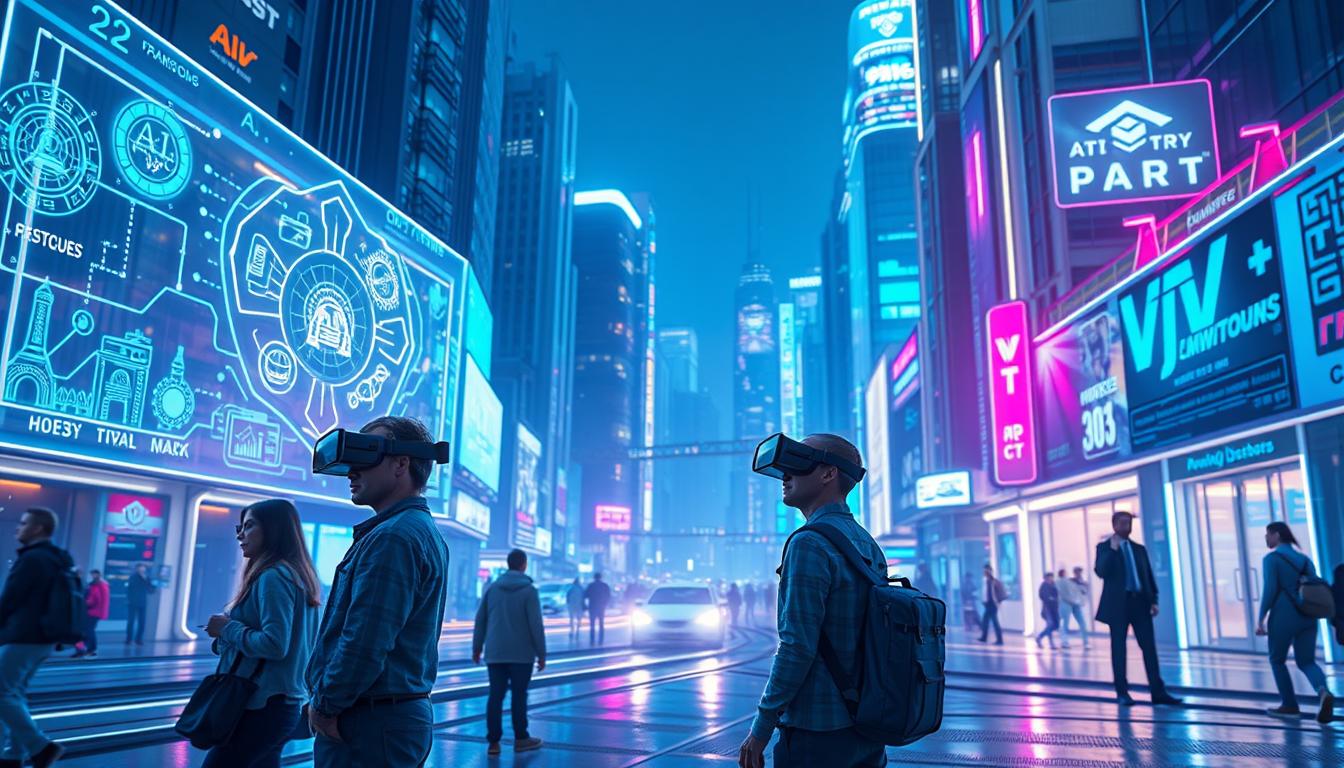
The line between science fiction and reality is blurring faster than ever. As we step into 2025, we’re witnessing the dawn of technologies that were once confined to the realm of imagination. This isn’t just another year of incremental updates—it’s a transformative leap where AI develops agency, virtual worlds become indistinguishable from physical ones, and our gadgets anticipate our needs before we do. The future isn’t approaching—it’s unfolding right before our eyes, reshaping how we work, play, create, and connect.
AI Breakthroughs: From Assistants to Agents
Artificial intelligence in 2025 is experiencing a paradigm shift from reactive tools to proactive partners. The evolution from basic language models to fully autonomous systems marks one of the most significant emerging technology trends 2025 has to offer. This transition is redefining our relationship with technology across industries and daily life.
Agentic AI: The Rise of Autonomous Intelligence
The most transformative AI development of 2025 is the emergence of agentic AI—systems that can reason, plan, and act independently. Unlike the reactive AI assistants of previous years that simply responded to prompts, these new systems can initiate actions, manage complex workflows, and adapt to changing conditions without human intervention.
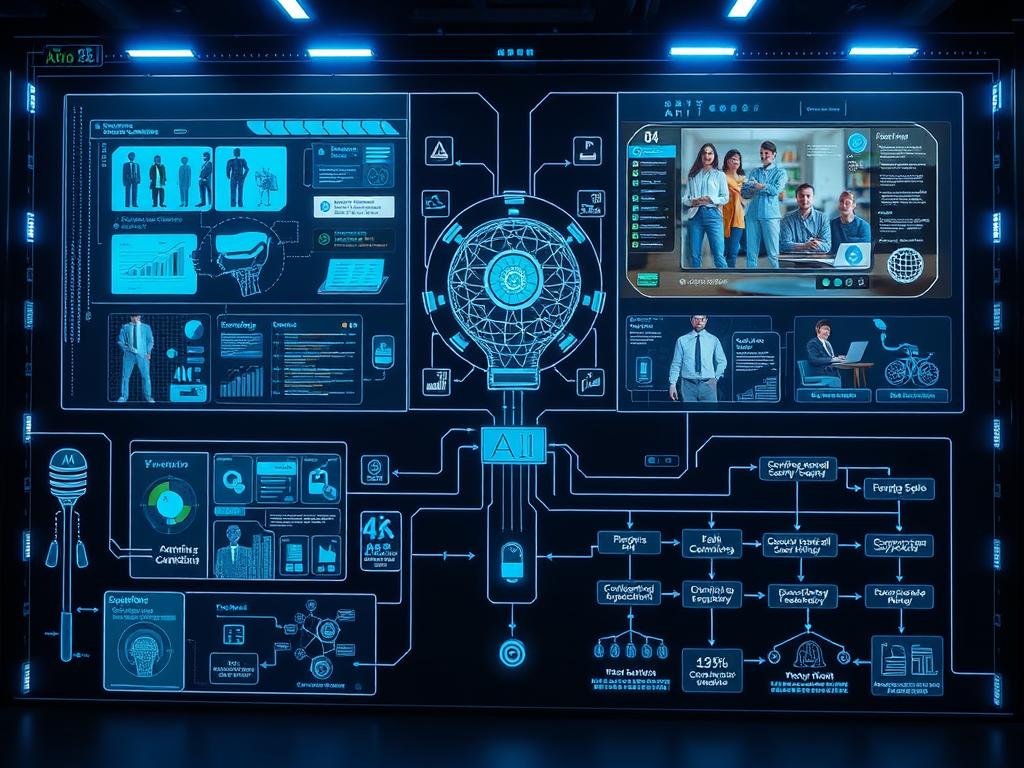
Example: Multi-Domain Orchestration
In 2025, enterprise AI agents can simultaneously manage marketing campaigns, optimize supply chains, and handle customer service—all while continuously improving their performance. A marketing professional might open their dashboard at 9 AM to find that their AI agent has already built, tested, and launched campaigns overnight, adjusted spending based on real-time performance, and drafted the next batch of creative content.
“By 2026, organizations deploying agentic AI systems will report 171% ROI on average, with 62% of CIOs expecting more than 100% return on their investments.”
What Changes for Users
The shift to agentic AI fundamentally changes how we interact with technology:
- Work transitions from “doing tasks with AI help” to “supervising AI that handles complete workflows”
- Decision-making becomes more data-driven as AI continuously processes and analyzes information
- Creative processes blend human direction with AI execution, allowing for unprecedented scale and personalization
- Technical barriers lower as natural language becomes the primary interface for complex systems
- Time allocation shifts toward strategic thinking as routine tasks become fully automated
- New ethical considerations emerge around AI autonomy, oversight, and accountability
Near-Future Prediction
By late 2025, we’ll see the first wave of truly autonomous AI systems that can manage entire business functions with minimal human oversight. These systems will increasingly collaborate with each other, forming AI ecosystems that can tackle complex, multi-domain challenges. The most successful organizations will be those that develop effective human-AI collaboration frameworks, focusing human talent on creative direction, ethical oversight, and strategic decision-making.
AI Governance and Ethical Frameworks
As AI capabilities expand, 2025 marks the year when AI governance transitions from theoretical discussions to operational necessity. With regulations like the EU AI Act taking effect, organizations are implementing comprehensive frameworks to ensure their AI systems are transparent, fair, and accountable.
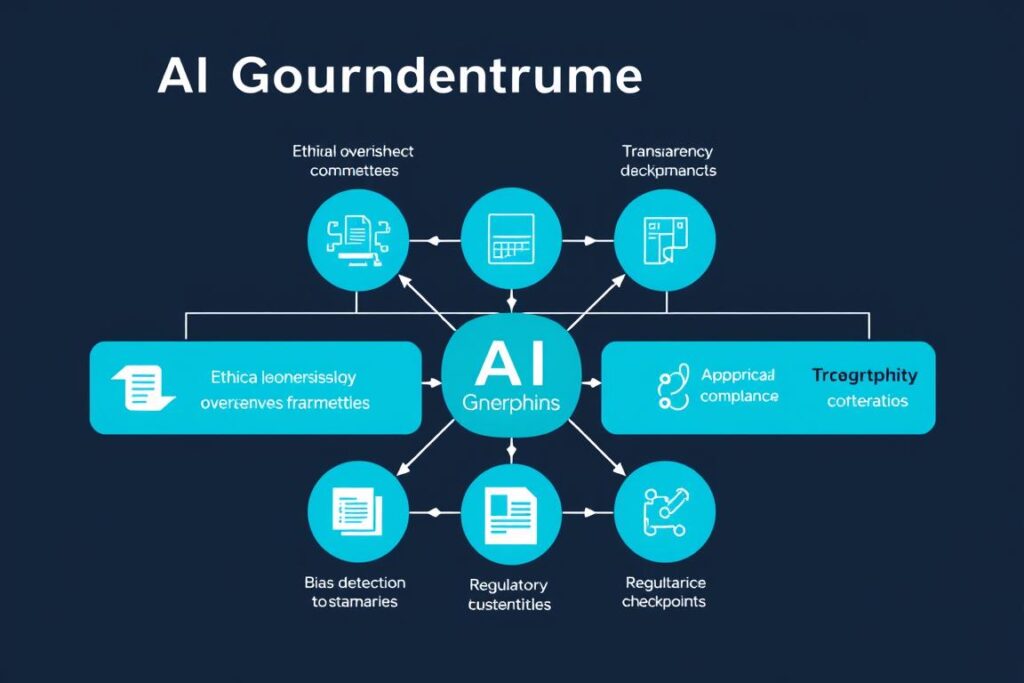
Companies are deploying model registries, fairness audits, and explainability dashboards as standard practice. These governance systems are becoming competitive advantages, helping organizations build trust with customers and partners while avoiding regulatory penalties.
VR Headsets: The New Reality Revolution
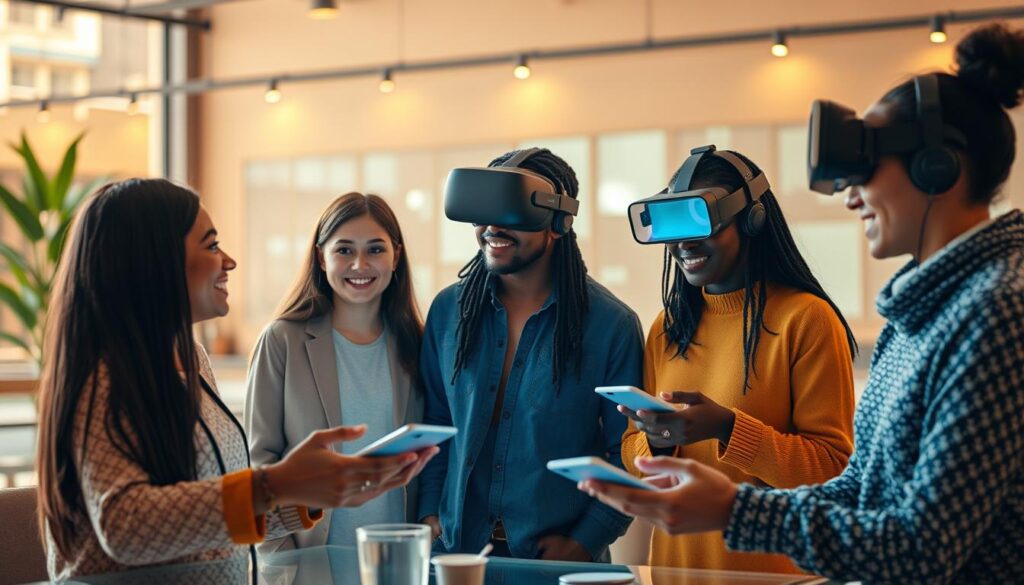
Virtual reality in 2025 has transcended its gaming origins to become an essential platform for work, education, and social connection. The latest generation of VR headsets combines unprecedented visual fidelity with comfort and accessibility, making extended immersion not just possible but preferable for many applications.
Next-Generation Hardware: Beyond the Screen
The VR headsets of 2025 represent a quantum leap in immersive technology. With 8K-per-eye resolution, 200-degree field of view, and advanced haptic feedback systems, these devices deliver experiences that are increasingly indistinguishable from physical reality.
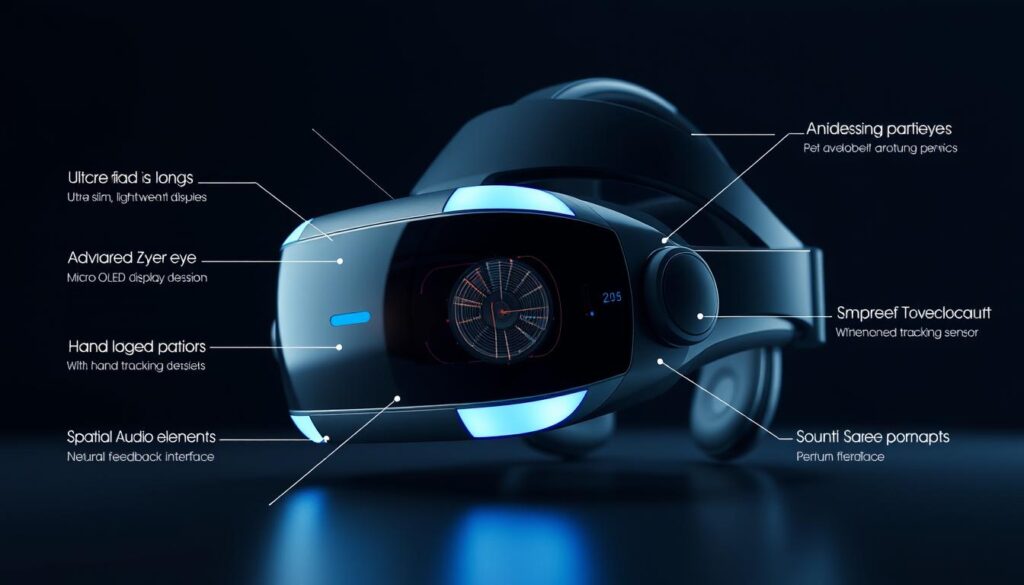
Example: Standalone Neural Interfaces
Leading the 2025 VR revolution are standalone headsets with integrated neural interfaces. These devices can detect and respond to subtle neural signals, allowing users to control virtual environments with thoughts alone. Combined with eye tracking and hand detection, these systems create a natural, intuitive interaction model that removes the learning curve traditionally associated with VR.
| Feature | 2023 VR | 2025 VR | User Impact |
| Resolution | 2K per eye | 8K per eye | Text readability, detail perception |
| Field of View | 110 degrees | 200 degrees | Peripheral vision, spatial awareness |
| Weight | 470g | 185g | Extended comfort, reduced fatigue |
| Battery Life | 2-3 hours | 8-10 hours | All-day workability |
| Input Method | Controllers, hand tracking | Neural interface, eye tracking | Intuitive control, reduced learning curve |
What Changes for Users
The 2025 VR revolution is transforming multiple aspects of daily life:
Work Transformation
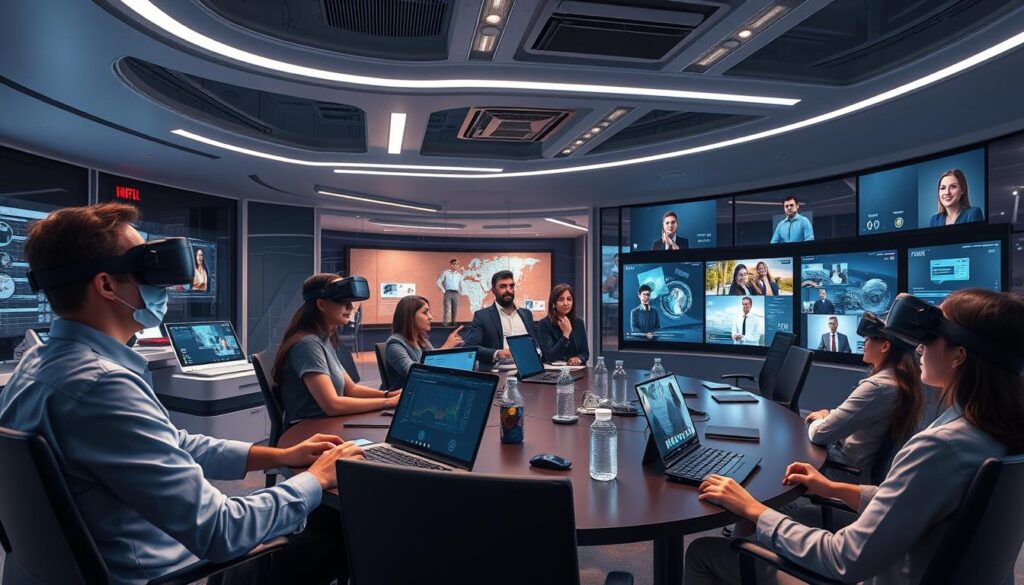
Virtual workspaces now surpass physical offices in functionality, allowing distributed teams to collaborate in shared environments with access to unlimited virtual screens, 3D models, and data visualization tools.
Education Revolution
Immersive learning environments enable students to experience historical events, explore molecular structures, or practice surgical procedures with unprecedented realism and engagement.
Social Connection
Photorealistic avatars with accurate facial expressions and body language create genuine social presence, making virtual gatherings feel increasingly like physical ones.
Near-Future Prediction
By the end of 2025, we’ll see the first “VR-first” organizations—companies that design their workflows, spaces, and culture around virtual reality as the primary medium for collaboration. Physical offices will evolve into hybrid spaces optimized for both in-person and virtual participation. The distinction between “remote” and “in-office” work will fade as virtual presence achieves parity with physical presence.
Consumer Gadgets: Intelligence Everywhere
The consumer technology landscape of 2025 is characterized by ambient intelligence—devices that blend seamlessly into our environment while delivering contextual, personalized experiences. These gadgets represent the practical application of emerging technology trends 2025 has developed, bringing advanced capabilities into everyday life.
Wearable Ecosystem: Beyond the Watch
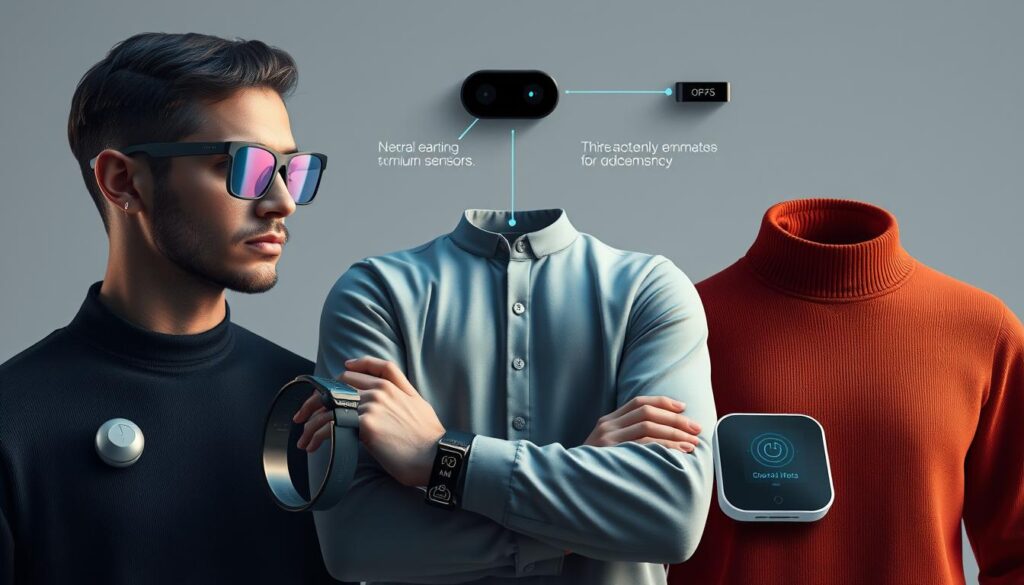
Wearable technology in 2025 has evolved from isolated devices to interconnected ecosystems that monitor health, augment cognition, and mediate our interaction with the world. These systems combine advanced sensors, edge AI, and seamless connectivity to deliver personalized experiences that adapt to our needs and context.
Example: Neural Earbuds
Neural earbuds represent one of the most transformative consumer gadgets of 2025. These devices combine spatial audio, real-time translation, ambient sound processing, and neural interfaces in a form factor barely larger than traditional earbuds. They can filter background noise, enhance specific sounds, translate conversations in real-time, and even respond to thought-based commands.
“The neural interface market is projected to reach $24.8 billion by 2026, growing at 42% CAGR, with consumer applications driving the majority of adoption.”
What Changes for Users
The new generation of consumer gadgets is changing how we interact with technology and our environment:
- Technology fades into the background, responding to needs without requiring explicit interaction
- Health monitoring becomes continuous and preventative rather than reactive
- Language barriers dissolve through real-time translation and cultural context
- Environmental adaptation occurs automatically as devices adjust to context and preferences
- Cognitive augmentation becomes normalized through ambient information delivery
- Device boundaries blur as the ecosystem functions as a unified experience
Smart Home Evolution: Ambient Intelligence
The smart home of 2025 has evolved from collections of connected devices to truly intelligent environments that understand and anticipate needs. Advanced spatial computing combines with edge AI to create homes that adapt to occupants’ preferences, routines, and emotional states.

Example: Emotional Response Systems
Leading smart home systems in 2025 incorporate emotional response technology that detects occupants’ moods through facial expression, voice tone, and biometric signals. These systems can adjust lighting, temperature, music, and even scent to improve emotional wellbeing—brightening a room during seasonal depression or creating a calming atmosphere after detecting stress.
Near-Future Prediction
By mid-2026, we’ll see the emergence of truly predictive environments that not only respond to current needs but anticipate future ones based on behavioral patterns, physiological signals, and environmental factors. The most advanced systems will begin to demonstrate a form of environmental empathy—understanding not just what users want, but why they want it, and finding novel ways to meet those deeper needs.
Sci-Fi Releases: When Fiction Becomes Reality
The relationship between science fiction and technology has never been more symbiotic than in 2025. As emerging technologies accelerate, sci-fi creators are pushing the boundaries of imagination while technology companies are racing to turn fictional concepts into marketable products.
Interactive Narratives: Beyond Passive Consumption
The most innovative sci-fi releases of 2025 are no longer passive experiences but interactive worlds that adapt to individual viewers. Combining generative AI, virtual reality, and neural feedback, these narratives create personalized stories that respond to viewers’ emotional reactions and choices.
Example: Neural Narrative Frameworks
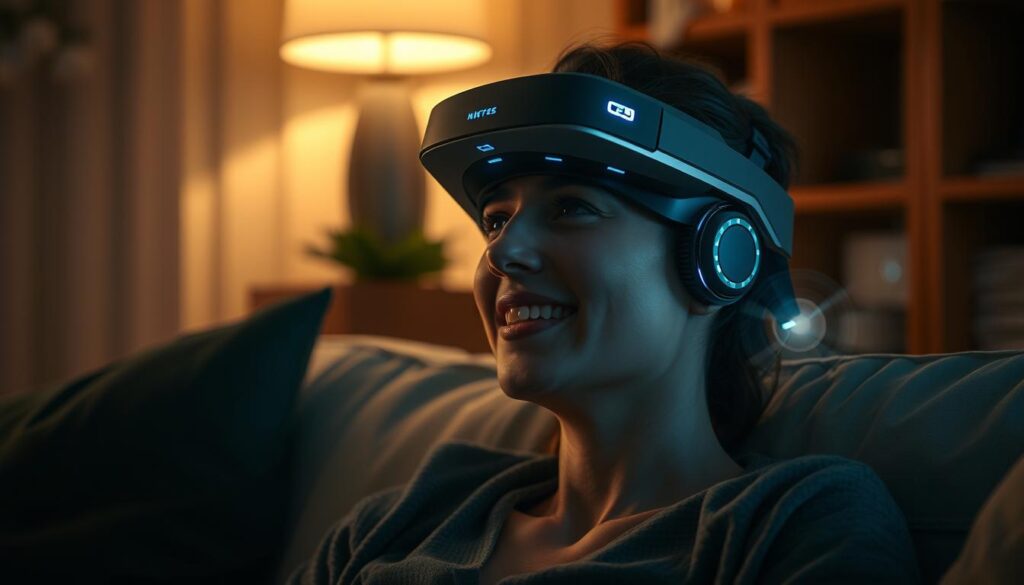
Leading entertainment studios have released neural narrative frameworks that adapt storylines based on viewers’ emotional responses. These systems can detect when viewers are bored, confused, or engaged, and dynamically adjust pacing, character development, and plot complexity to maintain optimal engagement. Some advanced systems can even generate entirely new narrative branches based on viewers’ emotional preferences.
| Major 2025 Sci-Fi Release | Technology Featured | Real-World Parallel |
| “Quantum Nexus” (Interactive Series) | Neural interfaces, quantum communication | Early neural interface consumer products, quantum network prototypes |
| “Synthetic” (VR Experience) | Agentic AI, digital consciousness | Autonomous AI agents, advanced personality simulation |
| “Biome” (Immersive World) | Synthetic biology, environmental engineering | CRISPR applications, climate restoration projects |
| “Mindcraft” (Neural Game) | Thought-controlled environments, shared dreaming | BCI gaming interfaces, collaborative VR spaces |
What Changes for Users
The evolution of sci-fi media is transforming entertainment and its relationship with technology:
- Passive consumption gives way to active participation and co-creation
- Personalization extends beyond recommendations to the content itself
- Emotional engagement deepens as stories adapt to individual psychology
- The line between consumer and creator blurs as AI enables collaborative storytelling
- Fiction becomes a testing ground for potential technological and social futures
- Media experiences extend beyond entertainment to education and empathy building
Technology-Inspired Worldbuilding
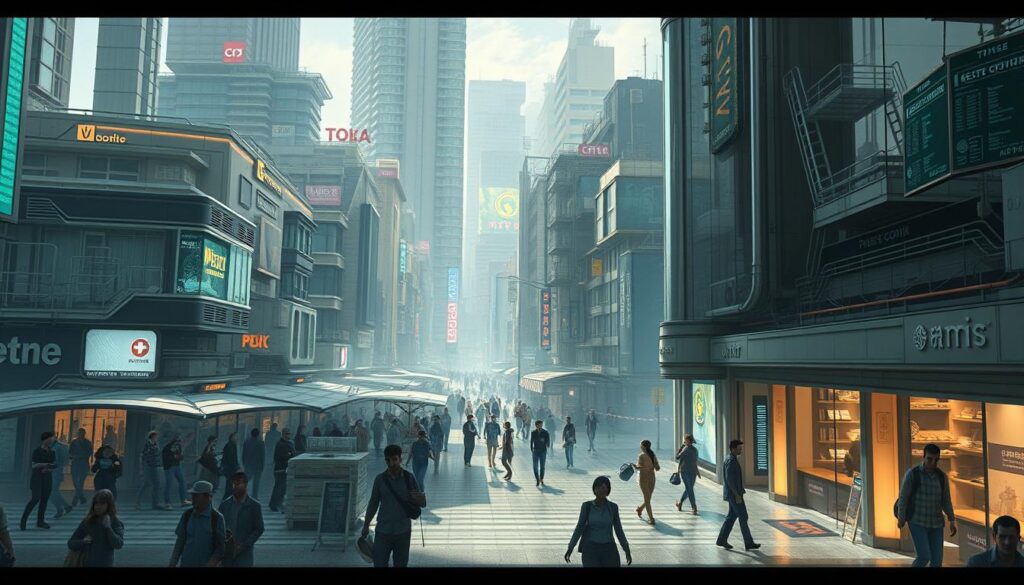
The most compelling sci-fi worlds of 2025 are built around deep explorations of emerging technologies and their societal implications. Rather than using technology as mere set dressing, these narratives engage seriously with how innovations like agentic AI, neural interfaces, and synthetic biology might reshape human experience.
Near-Future Prediction
By late 2025, we’ll see the emergence of “technology-first” entertainment studios that develop real innovations as part of their worldbuilding process. These studios will employ scientists and engineers alongside writers and directors, creating functional prototypes of fictional technologies that can later be developed into consumer products. The boundary between entertainment company and technology company will continue to blur, with major studios filing patents based on concepts developed for their fictional worlds.
The Convergence Revolution: When Technologies Collide
Perhaps the most significant of all emerging technology trends 2025 has produced is not any single innovation but the unprecedented convergence of multiple technologies. As AI, VR, neural interfaces, and advanced computing systems begin to work in concert, we’re witnessing capabilities that far exceed the sum of their parts.

Hybrid Intelligence Systems
The most powerful systems of 2025 combine multiple forms of intelligence—human, artificial, collective, and environmental. These hybrid systems leverage the unique strengths of each intelligence type: human creativity and ethical reasoning, AI pattern recognition and tireless computation, collective wisdom of groups, and the embedded intelligence of responsive environments.
“The most valuable innovations of 2025 aren’t single technologies but convergence points where multiple technologies intersect to create entirely new capabilities and experiences.”
Example: Collaborative Design Environments
Advanced design studios now employ convergent systems where human designers work in virtual environments alongside AI agents, with neural interfaces accelerating the translation of concepts to prototypes. These environments can simulate decades of product usage in minutes, testing thousands of variations against multiple scenarios to identify optimal designs that human creators can then refine and humanize.
What Changes for Users
Technology convergence is creating new paradigms for human-technology interaction:
- Interfaces become multimodal, combining voice, gesture, thought, and environmental awareness
- Technology adapts to humans rather than humans adapting to technology
- Capabilities emerge that were impossible with any single technology
- The boundary between digital and physical reality becomes increasingly permeable
- Human capabilities extend beyond biological limitations through technological symbiosis
- Complex problems become tractable through multi-system approaches
Near-Future Prediction
By early 2026, we’ll see the first “convergence-native” applications—systems designed from the ground up to leverage multiple emerging technologies in concert. These applications will deliver capabilities that seem almost magical compared to traditional software, adapting not just to explicit commands but to contexts, intentions, and needs. The organizations that thrive will be those that develop expertise not just in individual technologies but in their creative combination and orchestration.
Sustainable Innovation: Technology with Purpose
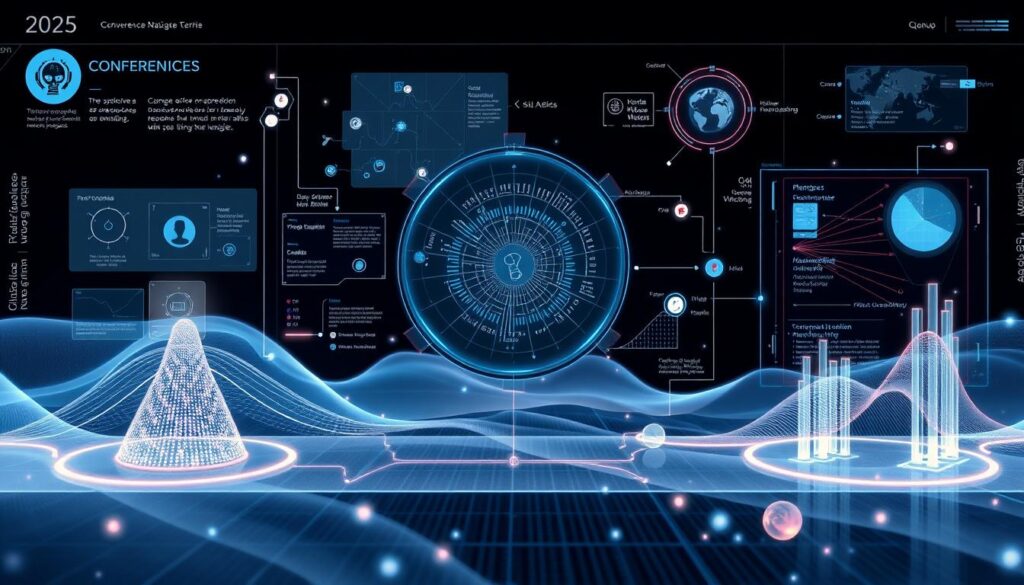
A defining characteristic of emerging technology trends 2025 has embraced is the integration of sustainability as a core design principle rather than an afterthought. The most successful innovations now deliver not just functional and economic value but environmental and social benefits as well.
Green Computing Revolution
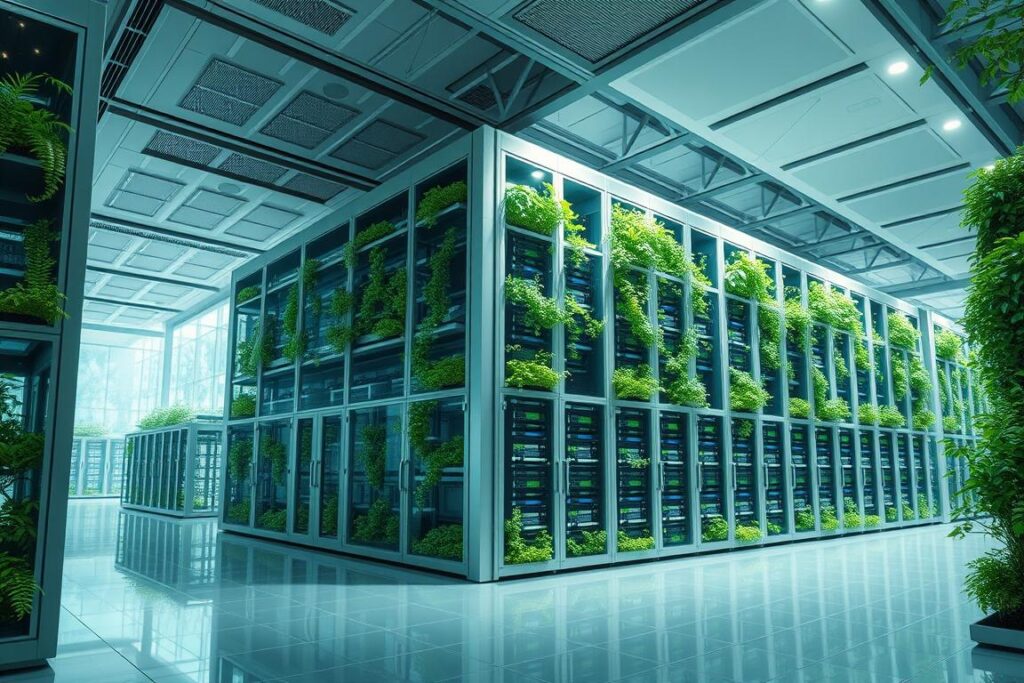
As AI and virtual environments drive exponential growth in computing demands, 2025 has seen a corresponding revolution in energy-efficient computing. From carbon-aware scheduling to energy-harvesting devices, the technology sector is reinventing itself to deliver more capability with less environmental impact.
Example: Quantum-Classical Hybrid Systems
Leading cloud providers now offer quantum-classical hybrid computing that optimizes workloads across different architectures based on energy efficiency. These systems can solve complex problems with a fraction of the energy required by traditional approaches, using quantum processors for specific calculations they excel at while leveraging classical systems for others.
| Sustainable Technology | Innovation | Environmental Impact |
| Carbon-Aware Computing | Workloads shift to regions with clean energy availability | 30-45% reduction in carbon emissions |
| Biodegradable Electronics | Circuits and components that safely decompose | 80% reduction in e-waste toxicity |
| Energy-Harvesting Wearables | Devices powered by body heat and movement | Elimination of battery waste |
| AI-Optimized Resource Usage | Systems that predict and minimize resource consumption | 15-25% reduction in overall consumption |
What Changes for Users
The sustainable technology revolution is changing how we interact with and think about our devices:
- Device longevity becomes a key selling point, with modular design enabling upgrades
- Energy awareness becomes integrated into user interfaces and experience design
- Consumers gain visibility into the environmental impact of their technology usage
- Sustainability features command price premiums rather than being seen as compromises
- Repair, reuse, and recycling become seamlessly integrated into product lifecycles
- Environmental benefits become as important as performance in purchase decisions
Near-Future Prediction
By mid-2026, we’ll see the emergence of “regenerative technology”—systems designed not just to minimize harm but to actively restore environmental systems. These technologies will integrate with natural processes, using biological principles to create solutions that strengthen ecosystems while meeting human needs. The most successful companies will be those that view environmental challenges not as constraints but as design opportunities that drive innovation.
Conclusion: Navigating the Future
The emerging technology trends 2025 has introduced represent more than just new gadgets or incremental improvements—they signal a fundamental transformation in our relationship with technology. As AI develops agency, virtual and physical realities merge, and our devices become extensions of our cognition, we’re entering an era where technology is not just a tool we use but an environment we inhabit and a partner we collaborate with.
This transformation brings both extraordinary opportunities and profound responsibilities. The technologies reshaping our world in 2025 have the potential to solve our most pressing challenges, from climate change to healthcare access, but they also raise important questions about privacy, autonomy, and equity. The choices we make now—as creators, consumers, and citizens—will shape not just which technologies succeed in the marketplace but how they influence our collective future.
What’s clear is that the future is arriving faster than ever before. The science fiction of yesterday is becoming the reality of today, and the innovations of tomorrow are already taking shape in labs, studios, and startups around the world. For those who stay curious, adaptable, and engaged, this accelerating future offers unprecedented possibilities to create, connect, and contribute to a world enhanced by technology but guided by human values.
Stay Ahead of Tomorrow’s Technology
The pace of innovation isn’t slowing down. Subscribe to My Nerdy Planet and never miss a breakthrough, release, or trend that shapes our technological future. Join our community of forward-thinkers and be the first to know what’s next.