
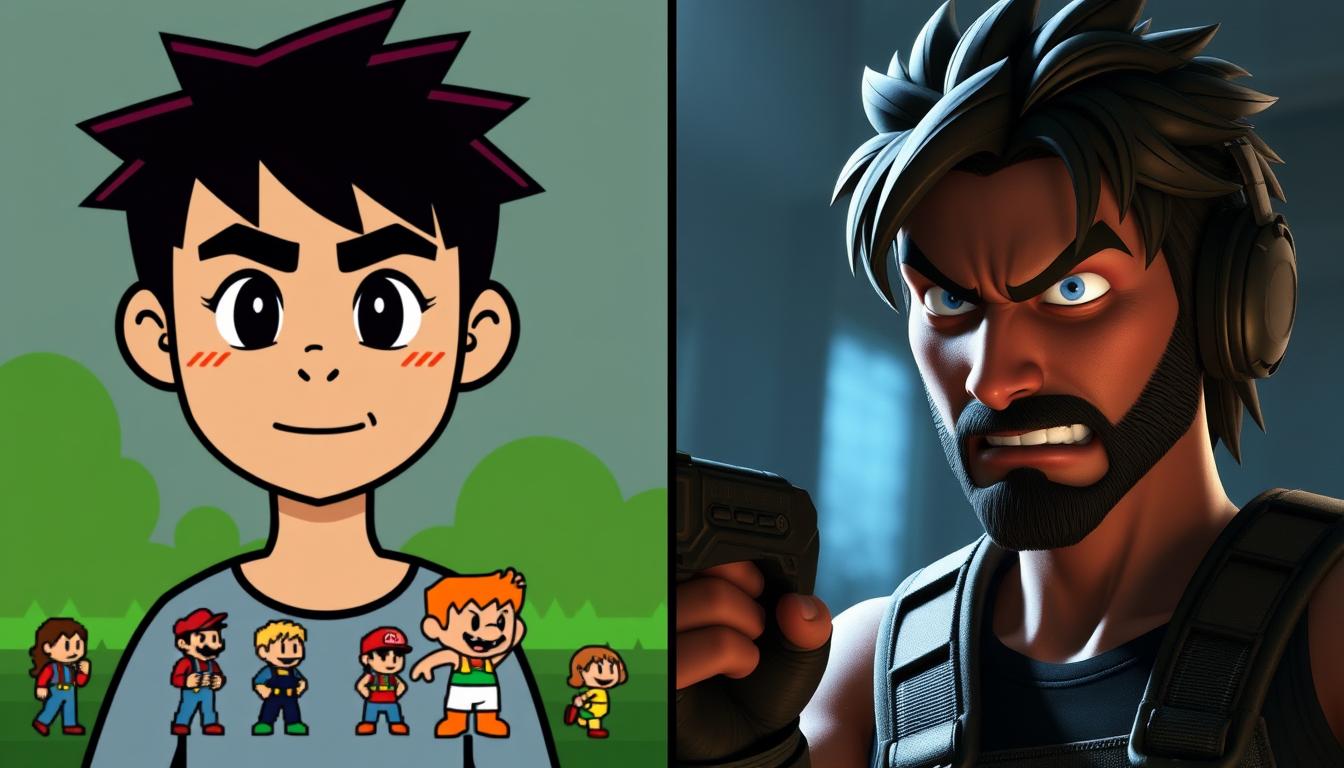
Remember the first time a video game made you feel something? Perhaps it was the triumph of rescuing the princess, the heartbreak of losing a digital companion, or the wonder of exploring a new world made of nothing but pixels and imagination. Gaming has evolved from simple entertainment into a powerful medium for emotional storytelling, creating experiences that resonate with us long after we’ve set down the controller. Join us as we explore the remarkable emotional journey of gaming, from the beeping 8-bit adventures of yesterday to the cinematic masterpieces of today.
The visual evolution of gaming has enabled increasingly complex emotional storytelling
Humble Beginnings: When Pixels First Spoke to Our Hearts
In the early days of gaming, developers worked within severe technical limitations. A character might be represented by just a handful of pixels, with perhaps two or three frames of animation. Yet somehow, these simple representations managed to forge emotional connections with players. Games like Pac-Man gave us a lovable hero to root for, while Space Invaders created genuine tension as alien hordes descended ever closer.
The Nintendo Entertainment System (NES) era marked a significant leap forward in gaming’s emotional vocabulary. Suddenly, our heroes had names, backstories, and motivations. We weren’t just controlling abstract avatars; we were guiding Mario on his quest to save Princess Peach or helping Link defeat Ganon to restore peace to Hyrule. These simple narratives created a framework for emotional investment that would become the foundation for gaming’s future.
Rediscover the Classics
Experience the charm of gaming’s early emotional pioneers through modern collections and remasters.
The Narrative Revolution: When Games Learned to Tell Stories
As technology advanced through the 16-bit and 32-bit eras, games began to tell more sophisticated stories. Titles like Final Fantasy VI and Chrono Trigger demonstrated that video games could deliver emotional narratives on par with other media. Players found themselves genuinely caring about digital characters, celebrating their triumphs and mourning their losses.

The PlayStation era brought us games like Final Fantasy VII, whose infamous plot twist left millions of players in genuine shock and grief. Metal Gear Solid explored complex themes of identity, loyalty, and the horrors of war. These games proved that the medium could tackle serious emotional territory, challenging the notion that video games were merely childish diversions.
“The most powerful stories in gaming aren’t just told to us—they’re experienced through our own actions and choices, creating emotional resonance that other media simply cannot match.”
This period marked a turning point in gaming’s emotional journey. Players weren’t just overcoming challenges; they were becoming invested in rich narrative worlds populated by characters with depth and nuance. The emotional connection was no longer just about winning or losing—it was about the journey itself.
The Indie Revolution: Small Teams, Big Feelings
While major studios pushed technical boundaries, the indie game revolution of the 2000s and 2010s demonstrated that emotional impact didn’t require massive budgets or cutting-edge graphics. Games like Journey offered wordless but profoundly moving experiences, while titles like To the Moon explored themes of memory, regret, and love with remarkable sensitivity.

Journey (2012) proved that games could create profound emotional experiences without words
Indie developers, freed from commercial pressures, often took creative risks that major studios couldn’t. This led to games that explored difficult emotions and unconventional themes:
- Celeste examined anxiety and self-acceptance through challenging platforming
- Undertale subverted gaming conventions to make players question their actions
- Firewatch explored loneliness and human connection in a beautiful wilderness
- That Dragon, Cancer shared a family’s experience with terminal illness

Discover Indie Emotional Masterpieces
Explore these indie gems that prove the most powerful emotional experiences often come from the smallest teams.
Technological Leaps: When Games Could Show Every Tear
As technology advanced into the HD era and beyond, games gained the ability to render facial expressions and body language with unprecedented fidelity. Suddenly, characters could convey subtle emotions through a raised eyebrow or slumped shoulders. Motion capture technology brought real actors’ performances into the digital realm, blurring the line between games and film.

Games like The Last of Us leveraged these technological advances to tell stories with unprecedented emotional impact. The opening sequence of the game remains one of the most heart-wrenching moments in gaming history, demonstrating how far the medium had come in its ability to evoke genuine emotional responses from players.
Virtual reality added yet another dimension to gaming’s emotional palette. By placing players directly into digital worlds, VR created a sense of presence that traditional gaming couldn’t match. Games like Half-Life: Alyx demonstrated that this immersion could create moments of awe, terror, and wonder that felt startlingly real.
The Power of Choice: When Our Decisions Matter
Perhaps the most significant evolution in gaming’s emotional journey has been the rise of player choice and consequence. Games like Mass Effect, The Walking Dead, and Life is Strange put meaningful decisions in players’ hands, creating personalized emotional experiences that reflect individual values and priorities.

These choice-driven narratives create a unique form of emotional investment. When we know our decisions have consequences—sometimes life or death for characters we’ve grown to care about—each choice carries emotional weight. The best of these games force us to confront our own values and question what we would do in difficult situations.
Why do player choices create stronger emotional connections?
When players make meaningful choices in games, they become active participants in the narrative rather than passive observers. This agency creates a sense of responsibility for outcomes, making emotional moments more impactful because players feel personally invested in the consequences of their decisions. Additionally, choice-driven games often reflect players’ own values back to them, creating a more personalized emotional experience.
The emotional impact of these choice-driven narratives often stays with players long after they’ve finished the game, prompting reflection on their decisions and the values those choices revealed. Many players report replaying these games to explore different choices and their consequences, extending the emotional journey beyond a single playthrough.
Beyond the Screen: The Shared Emotional Journey
Gaming’s emotional journey extends beyond individual experiences to encompass the communities that form around beloved games. From guilds in MMORPGs to speedrunning communities to fan art creators, these social connections amplify gaming’s emotional impact through shared experiences.

Multiplayer experiences create their own emotional landscapes. The triumph of victory after coordinating with teammates, the tension of a close match, the camaraderie formed through shared challenges—these social emotions add rich new dimensions to gaming’s emotional palette.
“The games that stay with us aren’t just the ones with the best graphics or mechanics—they’re the ones that made us feel something, whether that was joy, grief, wonder, or connection with others.”
For many players, gaming communities provide support and connection that extends far beyond the games themselves. Friendships formed through shared gaming experiences often last for years, creating emotional bonds that transcend the digital worlds where they began.
Share Your Gaming Journey
Every gamer has a story about a game that moved them. Share yours and connect with others who understand gaming’s emotional power.
The Nostalgia Effect: When Games Become Memories
A unique aspect of gaming’s emotional journey is how games become intertwined with our personal memories. The games we played as children or during significant life events often carry emotional associations that go beyond the games themselves. Hearing the Super Mario Bros. theme or the Zelda “item discovered” jingle can instantly transport players back to childhood moments of wonder and discovery.

Revisiting the games of our childhood often brings powerful emotional responses
Game companies understand this nostalgic power and often leverage it through remakes, remasters, and spiritual successors. When Final Fantasy VII Remake was released, many players reported emotional responses simply from hearing reimagined versions of the original soundtrack or seeing beloved characters rendered with modern technology.
This nostalgic dimension adds a unique emotional layer to gaming that few other media can match. As the first generations to grow up with video games reach middle age and beyond, these nostalgic connections continue to deepen and evolve, creating lifelong emotional relationships with beloved gaming worlds and characters.
Healing Through Play: Gaming’s Therapeutic Potential
Beyond entertainment, games are increasingly recognized for their therapeutic potential. Games designed specifically to help process grief, manage anxiety, or cope with depression are emerging as valuable tools in mental health care. Titles like Sea of Solitude and Gris use gameplay mechanics and artistic expression to externalize internal emotional struggles, helping players process difficult feelings.

Even mainstream games can offer therapeutic benefits:
- Animal Crossing provides a sense of routine and accomplishment during uncertain times
- Puzzle games like Tetris can help interrupt traumatic flashbacks and reduce anxiety
- Cooperative games build social skills and provide safe spaces for connection
- Role-playing games allow players to explore different aspects of their identity

Researchers are increasingly studying how games can be designed specifically for emotional and psychological benefits. Projects like “EndeavorRx,” the first FDA-approved video game treatment (for ADHD), point to a future where games might be prescribed alongside traditional therapies for a range of conditions.
If you’re struggling with mental health challenges, consider exploring games designed for emotional well-being, but remember that they should complement, not replace, professional mental health support.
The Future: New Frontiers in Emotional Gaming
As we look to the future, gaming’s emotional journey continues to evolve in exciting ways. Artificial intelligence promises characters who can respond to players with unprecedented emotional nuance. Procedural storytelling may create personalized narratives that adapt to individual players’ emotional responses. Virtual and augmented reality continue to push the boundaries of immersion and presence.
Emerging technologies like biofeedback may allow games to respond to players’ emotional states in real-time, adapting experiences to maintain engagement or achieve specific emotional outcomes. Imagine a horror game that knows exactly when you’re feeling comfortable and chooses that moment to introduce a scare, or a therapeutic game that can detect rising anxiety and adjust its difficulty accordingly.
As these technologies mature, games may become even more powerful tools for emotional exploration, empathy building, and personal growth. The line between entertainment and emotional experience will continue to blur, creating new possibilities for how we connect with games and with each other through them.
The Continuing Journey: From Pixels to Profound
From simple pixels that somehow captured our hearts to complex narratives that move us to tears, gaming’s emotional journey reflects our own evolution as players and as people. What began as basic challenges of skill has grown into a sophisticated medium capable of exploring the full spectrum of human emotion.

Gaming’s emotional journey continues to connect generations through shared experiences
As players, we’ve grown alongside the medium, developing a more sophisticated emotional vocabulary for understanding and appreciating the experiences games offer. What once might have seemed like simple entertainment now stands revealed as a powerful art form capable of moving us, challenging us, and connecting us in ways we never imagined when we first picked up a controller.
The most beautiful aspect of gaming’s emotional journey is that it continues to evolve. Each new generation of players and creators brings fresh perspectives and innovations, expanding the medium’s emotional palette and finding new ways to touch our hearts. From the simplest indie game to the most technically advanced AAA title, the power to move us emotionally remains at the core of what makes gaming special.
As we look to the future, one thing remains certain: wherever technology takes us, the games that will truly stand the test of time are those that make us feel—that spark joy, provoke thought, inspire wonder, or move us to tears. In the end, gaming’s greatest achievement isn’t technical but emotional—its unique ability to transport us to new worlds, connect us with others, and help us understand ourselves a little better along the way.
Continue Your Gaming Journey
From retro classics to cutting-edge experiences, there’s a whole world of emotional gaming adventures waiting to be discovered.