
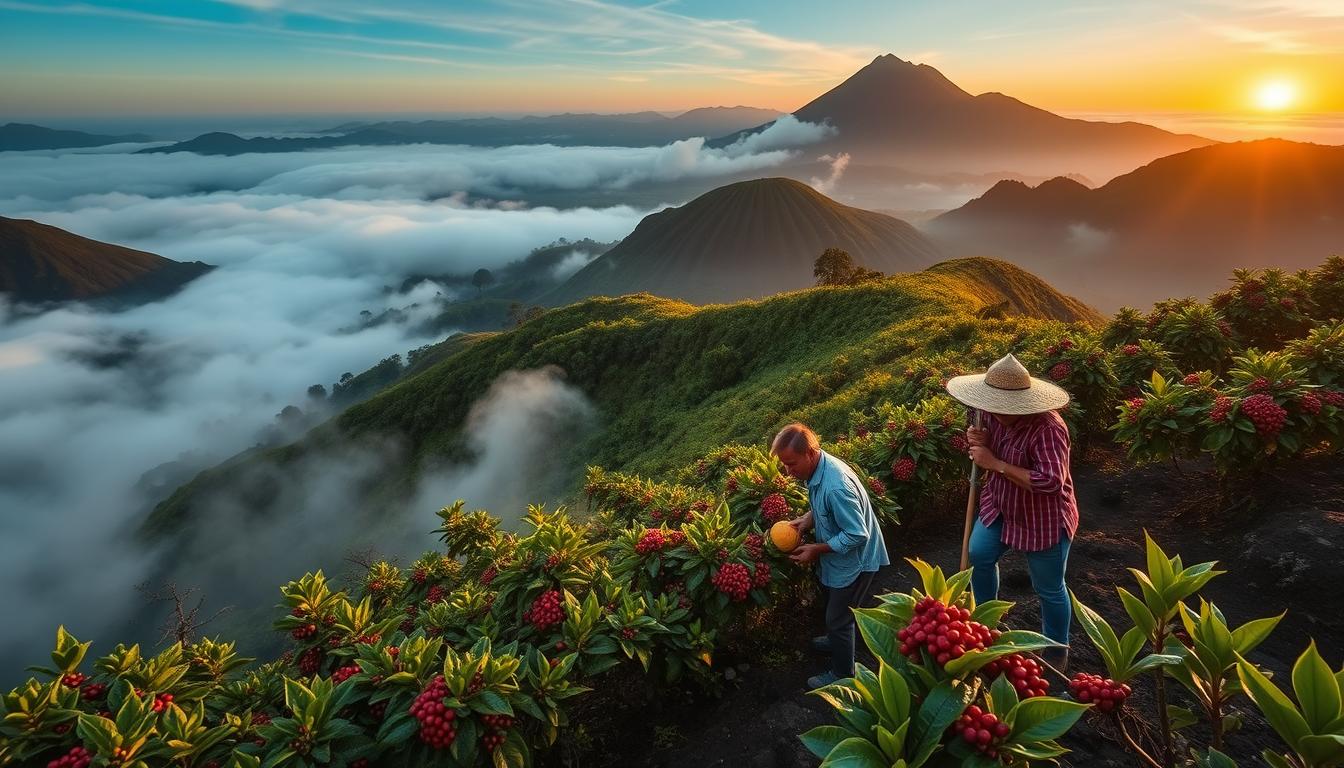
Join us on a sensory journey through the highlands of Guatemala, where every cup tells a story of tradition, innovation, and the remarkable connection between land and flavor. From the cobblestone streets of Antigua to the cloud-touched peaks of Huehuetenango, we’ll explore what makes Guatemalan coffee one of the world’s most cherished treasures.
Morning harvest in the volcanic highlands of Guatemala, where some of the world’s finest coffee is cultivated
Volcanic Origins: How Geography Shapes Flavor
Guatemala’s coffee excellence begins with its extraordinary geography. Situated in the Ring of Fire, the country’s landscape is dominated by over 30 volcanoes that have blessed the soil with mineral-rich deposits. This volcanic foundation creates the perfect growing medium for coffee trees, infusing the beans with distinctive characteristics that cannot be replicated elsewhere.
The highlands of Guatemala sit at elevations between 4,600-6,500 feet (1,400-2,000 meters), creating the ideal conditions for slow-maturing coffee cherries. This extended development time allows the beans to develop complex sugars and acids that translate to the cup as vibrant flavor notes and remarkable balance.
Each of Guatemala’s growing regions benefits from a unique microclimate. The interplay of altitude, rainfall, humidity, and temperature variations creates distinct flavor profiles that coffee connoisseurs can identify by region – from the chocolate notes of Antigua to the bright citrus characteristics of Huehuetenango.
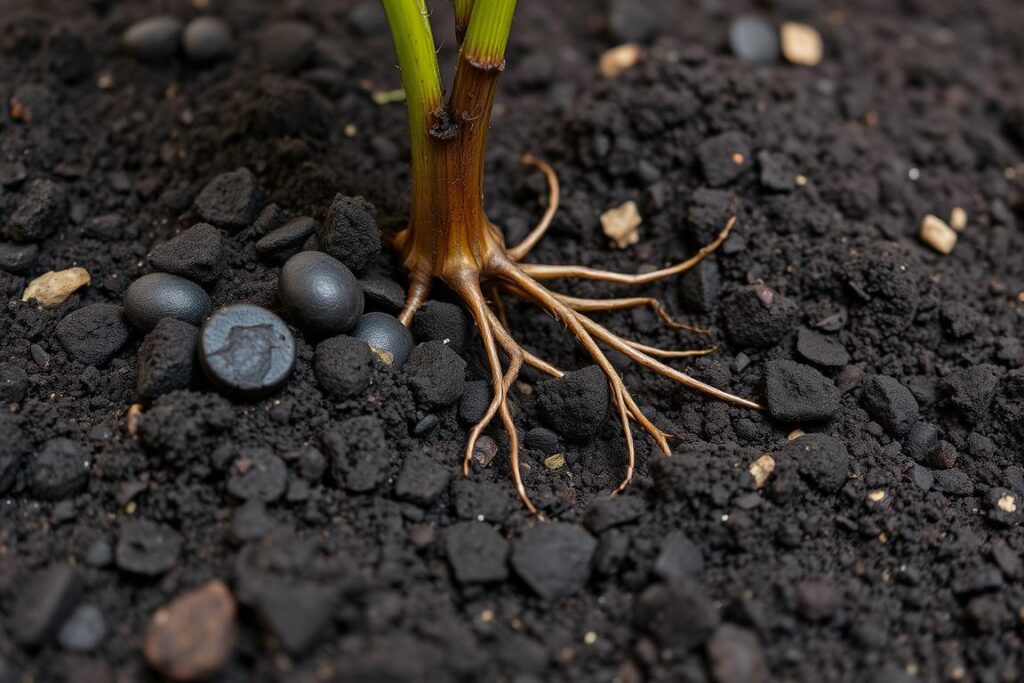
The mineral-rich volcanic soil that gives Guatemalan coffee its distinctive character
“The volcanic soil of Guatemala is like a signature that nature signs on every coffee bean. It creates a foundation of flavor that cannot be replicated anywhere else in the world.”
A Rich History: Coffee’s Journey in Guatemala
Coffee cultivation in Guatemala dates back to the 1750s when Jesuit missionaries first introduced coffee plants as ornamental shrubs in their gardens. However, it wasn’t until the 1860s that coffee production began to flourish as a commercial enterprise, quickly becoming the country’s leading export and a cornerstone of its economy.
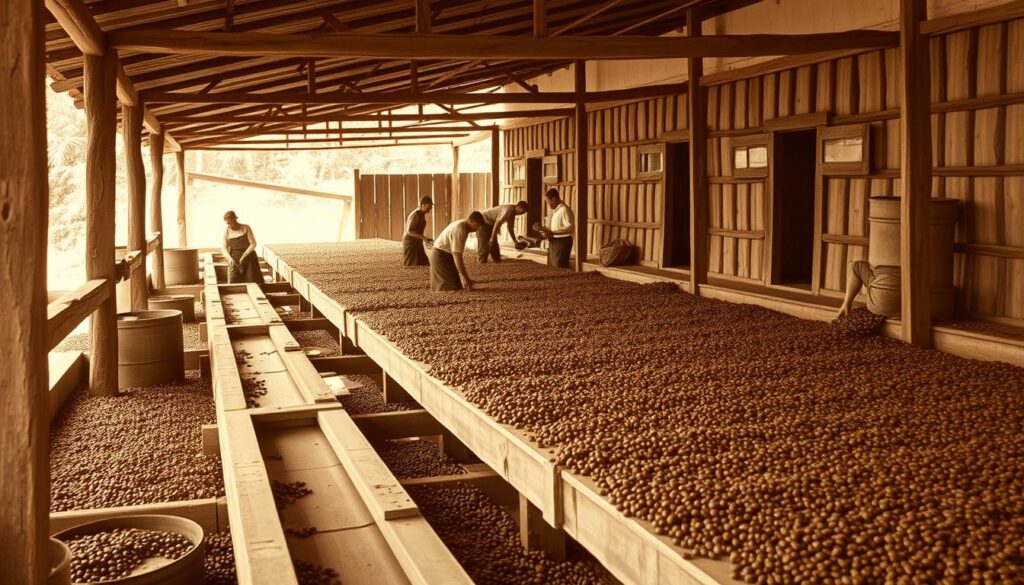
Traditional coffee processing methods have been passed down through generations
Through political upheavals, economic challenges, and natural disasters, coffee has remained a constant in Guatemalan life. The industry has evolved from large colonial plantations to include thousands of smallholder farmers who now produce some of the country’s most exceptional coffees.
In 1960, Guatemala established Anacafé (Asociación Nacional del Café), the National Coffee Association, which has played a crucial role in developing the country’s coffee industry through research, quality control, and marketing initiatives. This organization helped establish the eight distinct coffee-growing regions that Guatemala is known for today.
Experience Authentic Guatemalan History in Every Cup
Taste the legacy of generations of coffee cultivation with our premium Guatemalan coffee selections. Each bean carries centuries of tradition and expertise.
Cultural Rituals: Coffee in Guatemalan Society
In Guatemala, coffee is far more than a morning beverage – it’s a cultural institution that brings people together and marks important moments in daily life. From sunrise gatherings of farmers planning their day to afternoon conversations in town squares, coffee rituals are woven into the fabric of Guatemalan society.
One beloved tradition is “el cafecito” – the small cup of coffee shared between friends and family members as a gesture of hospitality. Refusing a cafecito is considered impolite, as it represents not just the beverage itself but the time and conversation that accompanies it.
In rural communities, coffee preparation remains a ritual that honors tradition. Many families still use a chorreador (a wooden stand with a cloth filter) or ceramic drip brewers that have been passed down through generations. The careful pouring, the familiar aroma filling the home, and the shared moment of enjoyment connect modern Guatemalans to their ancestors.
Traditional Guatemalan Coffee Recipe
Try this traditional preparation method: Bring water to a boil with cinnamon and a pinch of salt. Add freshly ground Guatemalan coffee and a small piece of orange peel. Let steep for 4 minutes, then strain and serve with a touch of raw sugar. This method highlights the natural chocolate and spice notes in the coffee.
Preserving Traditions Through Sustainable Farming
Guatemala’s coffee farmers are increasingly embracing sustainable practices that not only preserve the environment but also protect the cultural heritage of coffee cultivation. Many farms maintain traditional shade-grown methods, where coffee plants thrive under a canopy of native trees that provide habitat for birds and other wildlife.
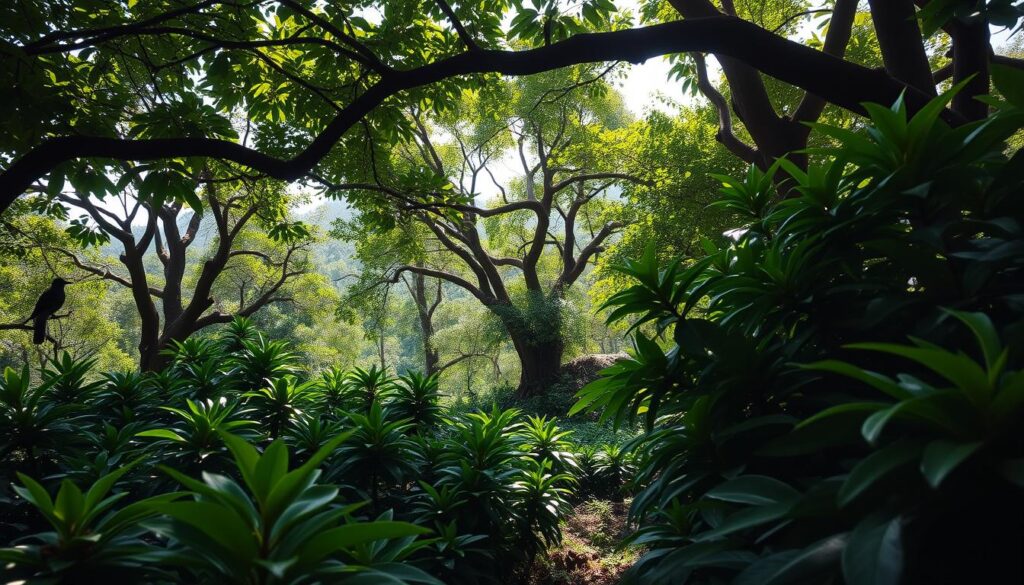
Shade-grown coffee farms preserve biodiversity while producing exceptional beans
These sustainable methods often draw from indigenous knowledge that has been passed down for generations. Water conservation techniques, natural pest management, and organic fertilization practices honor ancestral wisdom while meeting modern environmental standards.
Many coffee cooperatives are now obtaining organic and Fair Trade certifications, ensuring that traditional farming methods are economically viable for future generations. These certifications help small-scale farmers access premium markets and receive fair compensation for their dedication to quality and sustainability.
Sustainable Practices
- Shade-grown cultivation preserving native forest canopy
- Water recycling systems for processing
- Composting coffee pulp for natural fertilizer
- Hand-picking only ripe cherries for quality control
- Supporting biodiversity and bird habitats
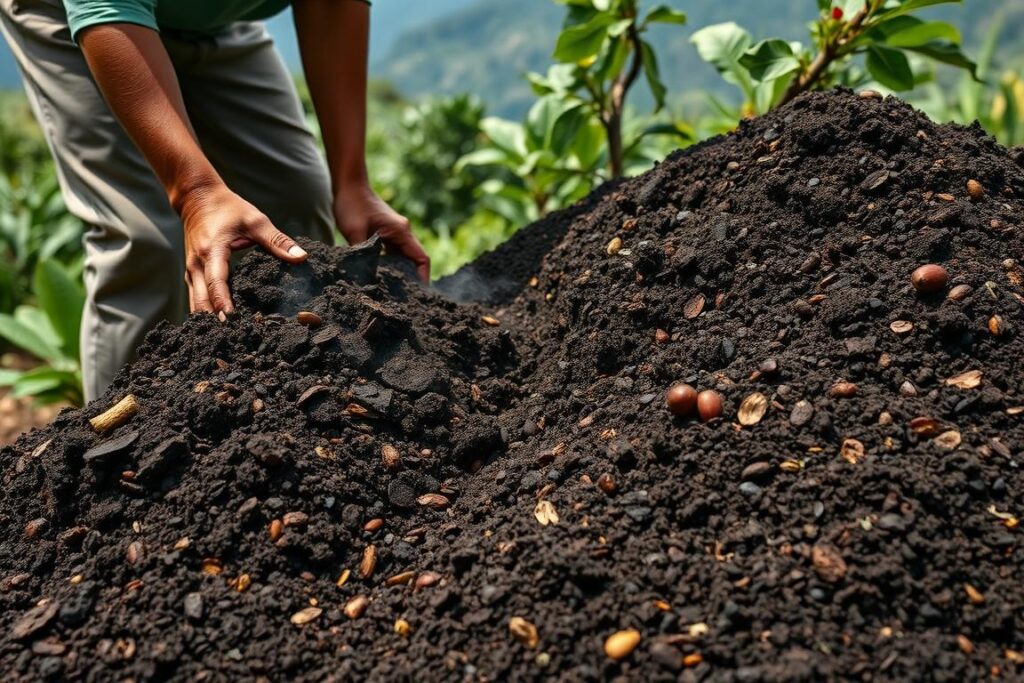
Coffee cherry pulp being composted to create natural fertilizer
Support Sustainable Coffee Farming
By choosing certified organic Guatemalan coffee, you’re helping preserve traditional farming methods and supporting communities that protect the environment.
The Hands That Nurture: Stories from Guatemalan Coffee Farmers
Behind every exceptional cup of Guatemalan coffee are the dedicated farmers who pour their knowledge, passion, and hard work into cultivating the perfect bean. These are their stories – narratives of resilience, tradition, and deep connection to the land.
Maria Ramirez: Guardian of Tradition
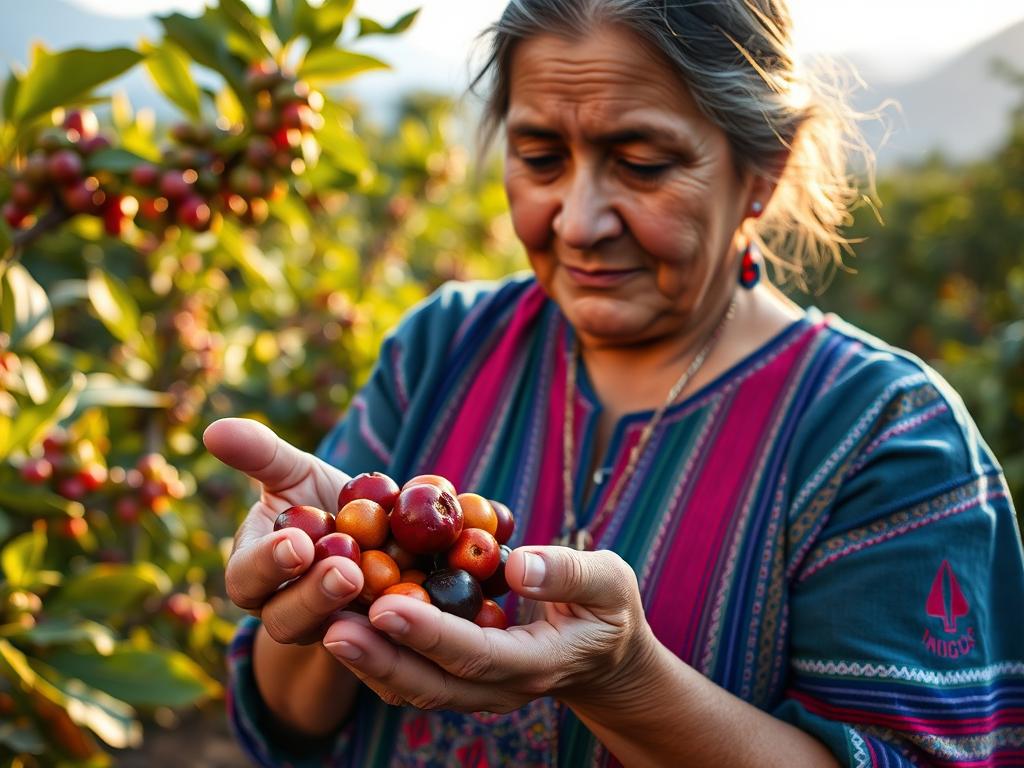
Maria Ramirez inspects the ripeness of coffee cherries on her family farm
Maria Ramirez is a third-generation coffee farmer from Huehuetenango who inherited not just land but a legacy of coffee cultivation from her grandmother. “Coffee is in our blood,” she explains. “My grandmother taught me to listen to the plants, to understand when they are thirsty or hungry, to know exactly when each cherry is perfect for picking.”
Maria’s farm sits at 1,800 meters above sea level, where the cool nights and warm days create the perfect conditions for her award-winning coffee. Despite opportunities to sell her land to larger operations, she remains committed to preserving her family’s traditional methods and passing them to her children.
The ASOBAGRI Cooperative: Strength in Unity
Founded in 1989 by twenty Mayan coffee farmers, the ASOBAGRI cooperative has grown to include over 1,200 members from the Huehuetenango region. Together, these small-scale farmers have been able to access international markets, obtain organic certification, and secure fair prices for their exceptional coffee.
“Before the cooperative, we were at the mercy of middlemen who paid whatever they wanted,” explains José Mendez, one of the founding members. “Now we have direct relationships with buyers who value our coffee and our traditional methods. Our children see that there is a future in coffee farming.”
Café Culture: From Antigua to Huehuetenango
While Guatemala exports most of its premium coffee, a vibrant café culture has emerged in cities and towns across the country. These cafés not only serve exceptional local coffee but also serve as community gathering spaces where traditions are honored and new coffee innovations are embraced.
Antigua: Colonial Charm
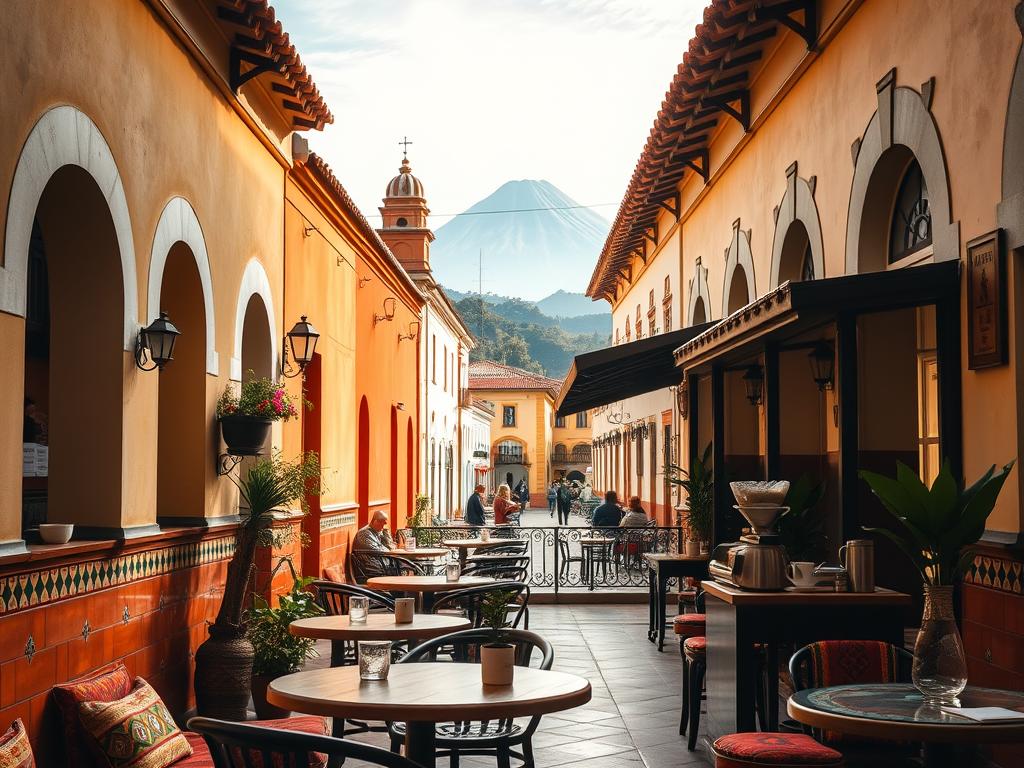
A traditional café in Antigua with views of Volcán de Agua
In the colonial city of Antigua, cafés occupy centuries-old buildings with thick walls and interior courtyards. Here, baristas prepare everything from traditional preparations to modern espresso drinks using beans from nearby farms. The backdrop of three volcanoes adds to the magical atmosphere as visitors and locals alike savor the region’s chocolate-forward coffee profile.
Huehuetenango: Mountain Traditions
A highland café in Huehuetenango where traditional brewing methods prevail
In the remote highlands of Huehuetenango, cafés serve as important community hubs where farmers and visitors can experience the region’s distinctive coffee. These establishments often use traditional brewing methods like cloth filters that highlight the region’s renowned bright acidity and complex fruit notes. Many cafés display the photos and stories of the local farmers who supply their beans.
Major coffee-growing regions of Guatemala
A First Taste: The Sensory Experience of Guatemalan Coffee
The first time I tasted authentic Guatemalan coffee remains etched in my memory – a moment of sensory revelation that changed my understanding of what coffee could be. It was a cup from Antigua, prepared by a barista who treated the process with the reverence of a sacred ritual.
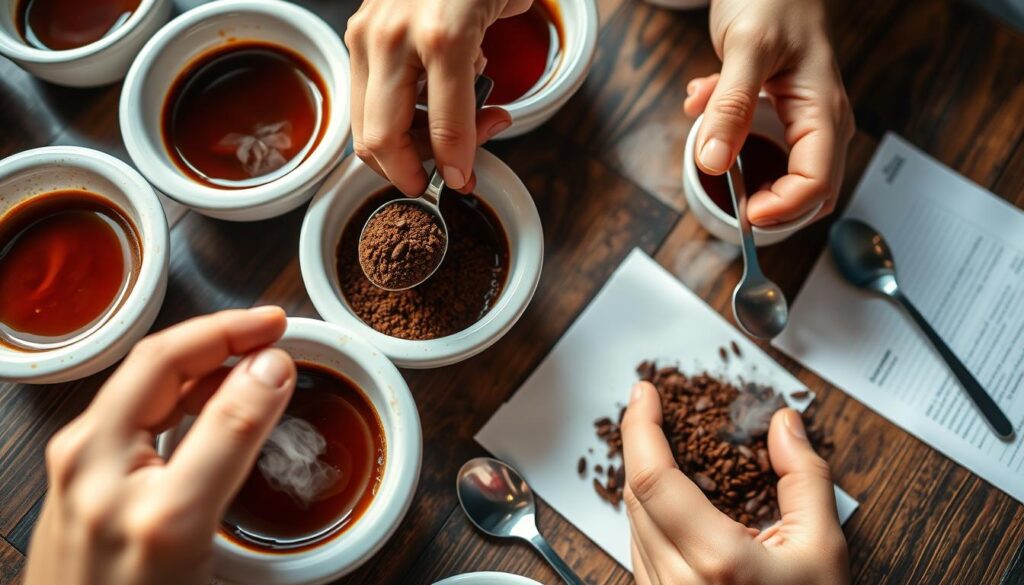
Professional cupping session evaluating the nuanced flavors of different Guatemalan coffees
The aroma hit me first – a complex bouquet of chocolate, orange blossom, and something reminiscent of honey. The first sip revealed a perfect balance of brightness and body – a gentle acidity that sparkled without overwhelming, carrying notes of cocoa, cinnamon, and a subtle citrus sweetness that lingered pleasantly.
What struck me most was the coffee’s remarkable clarity – each flavor note distinct yet harmonious, creating a cup that was simultaneously complex and approachable. This balance is the hallmark of exceptional Guatemalan coffee, a reflection of the country’s unique growing conditions and the careful attention of its farmers.
“Guatemalan coffee doesn’t shout for attention – it invites you into a conversation. Each sip reveals another layer of flavor, another story from the volcanic soil and the hands that tended it.”
Guatemalan Coffee Flavor Profile: What Makes It Unique
The flavor profile of Guatemalan coffee is celebrated for its remarkable balance and complexity. While each growing region imparts its own characteristics, certain qualities are distinctly Guatemalan – a medium to full body, vibrant yet balanced acidity, and a clean, lingering finish.
Antigua
Flavor Notes
- Chocolate
- Spice
- Smoke
- Caramel
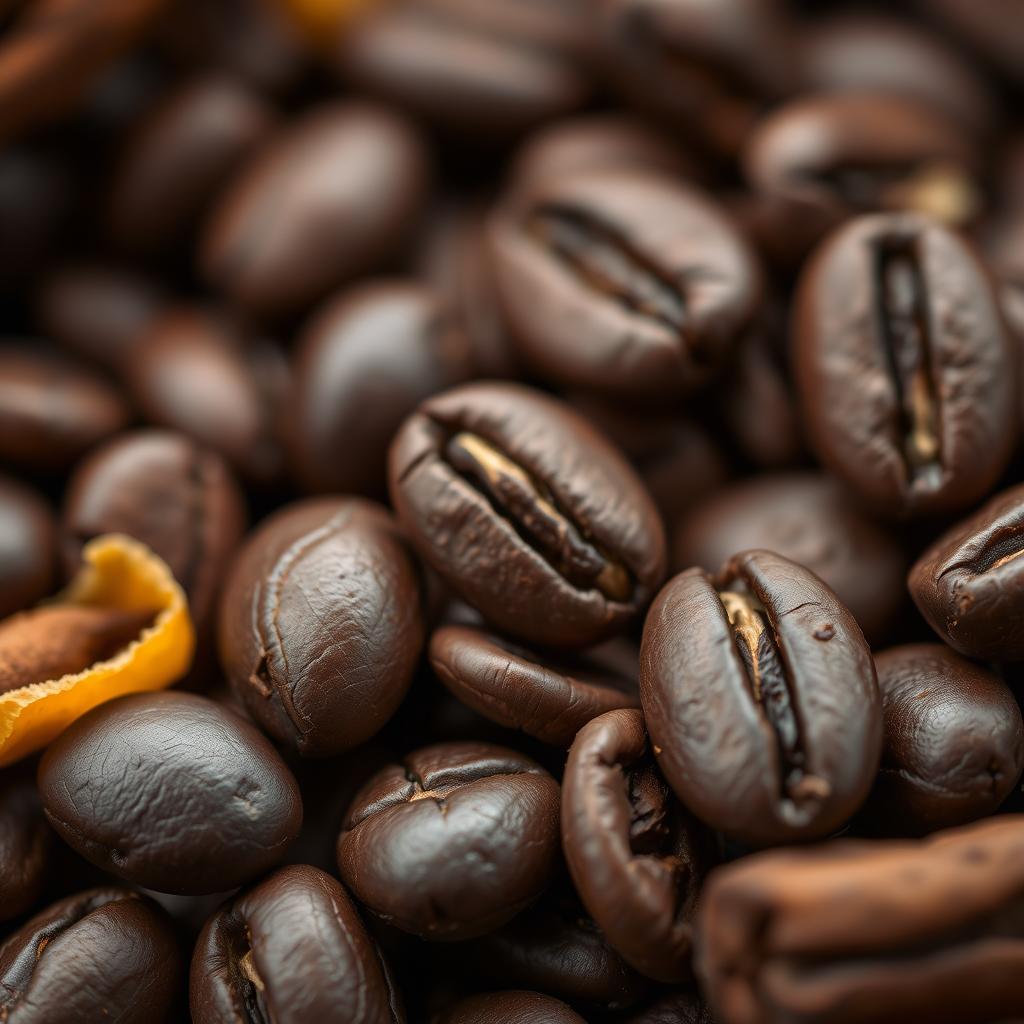
Grown in the shadow of three volcanoes, Antigua coffee is known for its full body and chocolate-forward profile with a smoky finish.
Huehuetenango
Flavor Notes
- Apricot
- Floral
- Honey
- Citrus
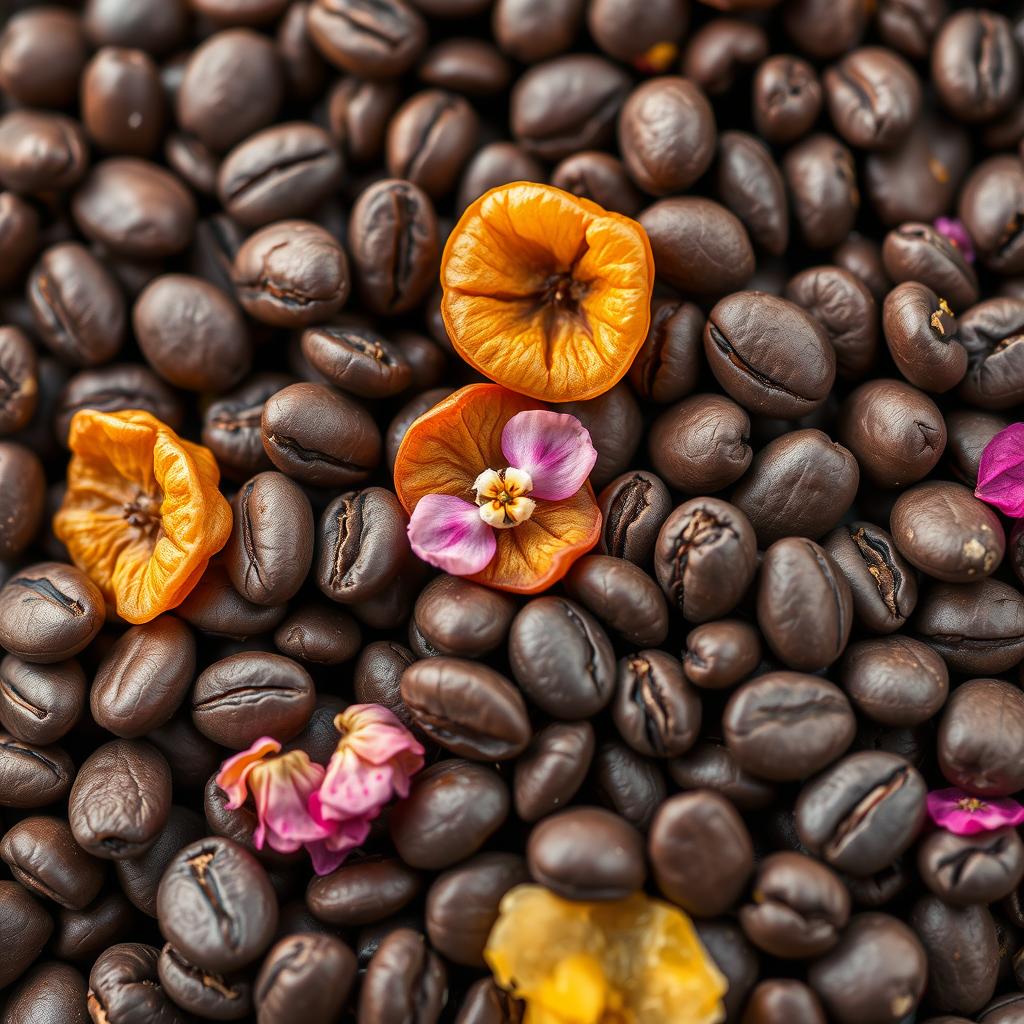
The highest and driest of Guatemala’s non-volcanic regions, Huehuetenango produces coffee with bright acidity and distinct fruit notes.
Cobán

Flavor Notes
- Spice
- Tropical Fruit
- Cedar
- Toffee
The misty, rainy climate of Cobán creates coffee with a distinct spicy quality and notes of tropical fruit.
Experience the Distinct Flavors of Guatemala
Discover your favorite Guatemalan coffee region with our curated selection of single-origin beans. Free shipping on orders over $50!
Best Coffee Regions to Visit in Guatemala
For coffee enthusiasts, a journey through Guatemala’s diverse growing regions offers an unforgettable experience. Each region not only produces distinctive coffee but also provides unique cultural and natural attractions that make them worth exploring.
Antigua: Colonial Charm and Volcanic Views
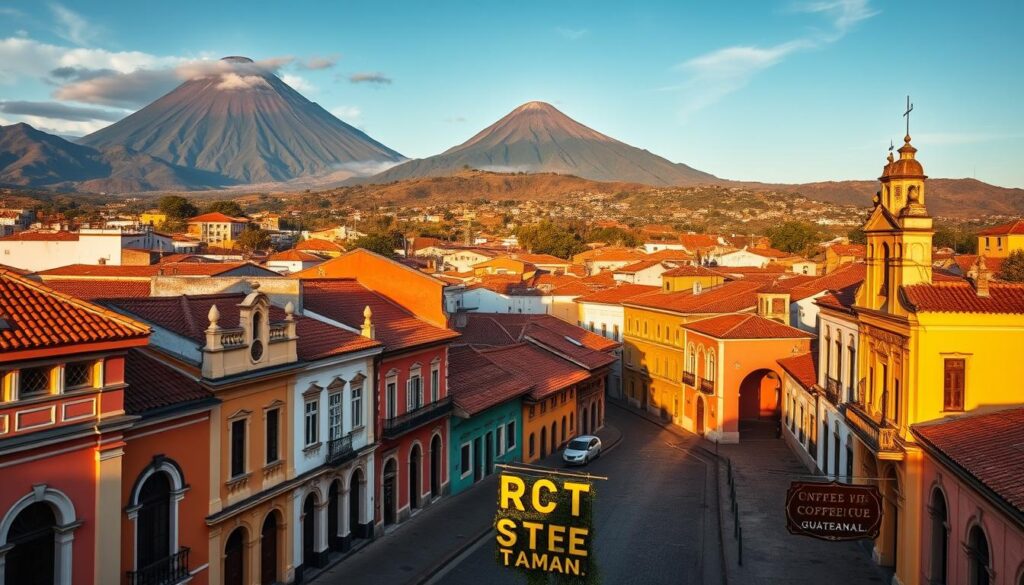
The colonial city of Antigua with Volcán de Agua in the background
Just an hour from Guatemala City, Antigua combines accessibility with extraordinary coffee. The former capital’s Spanish colonial architecture provides a stunning backdrop for coffee tours and tastings. Many plantations around Antigua offer tours where visitors can experience the entire process from cherry to cup.
Best time to visit: November to February during the harvest season when you can participate in coffee picking and processing.
Visitor Tip
Don’t miss the annual Antigua Coffee Festival in February, where producers showcase their finest beans and visitors can participate in cupping sessions and barista workshops.
Huehuetenango: Highland Adventures
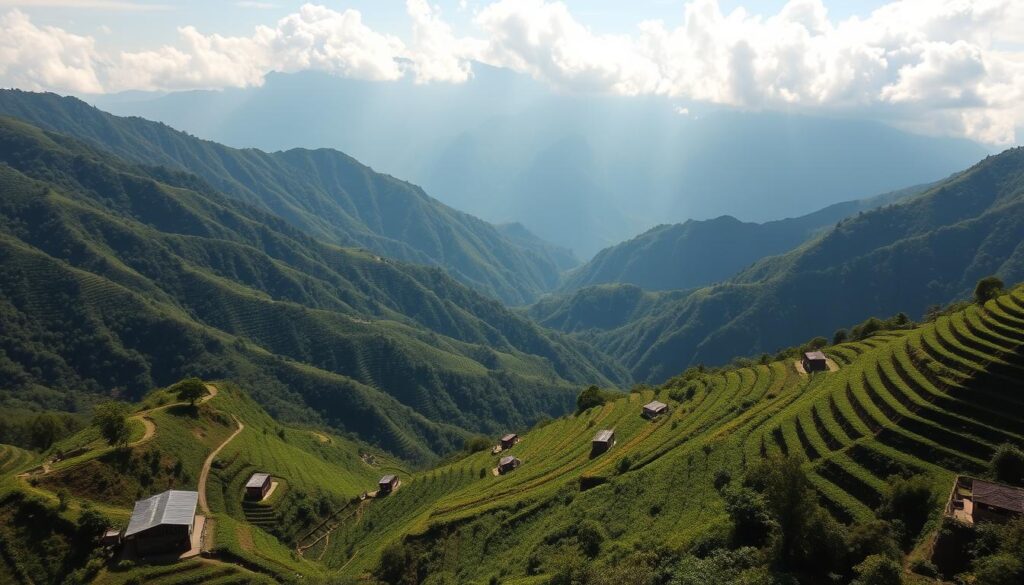
The dramatic highlands of Huehuetenango where some of Guatemala’s most prized coffee is grown
For the more adventurous traveler, Huehuetenango offers a glimpse into traditional Maya culture alongside exceptional coffee experiences. This remote northwestern region requires more effort to reach but rewards visitors with spectacular mountain scenery and some of Guatemala’s most distinctive coffee.
Many small-scale farmers welcome visitors who make the journey, offering intimate tours of their sustainable growing practices and traditional processing methods that have been passed down for generations.
Visitor Tip
Combine your coffee tour with visits to nearby Maya archaeological sites and colorful local markets where you can purchase textiles directly from artisans.
Why Guatemala Produces One of the World’s Most Balanced Coffees
The exceptional balance found in Guatemalan coffee is no accident – it’s the result of a perfect convergence of natural factors and human expertise that few other origins can match.
The Perfect Growing Environment
Guatemala sits at the ideal latitude for coffee cultivation, with highlands that provide the perfect elevation range of 4,600-6,500 feet. This elevation slows the maturation of coffee cherries, allowing complex sugars and acids to develop fully.
The country’s unique microclimate creates distinct wet and dry seasons that align perfectly with coffee’s growth cycle. Consistent rainfall during the development phase followed by drier conditions during harvest ensures optimal flavor development and processing conditions.
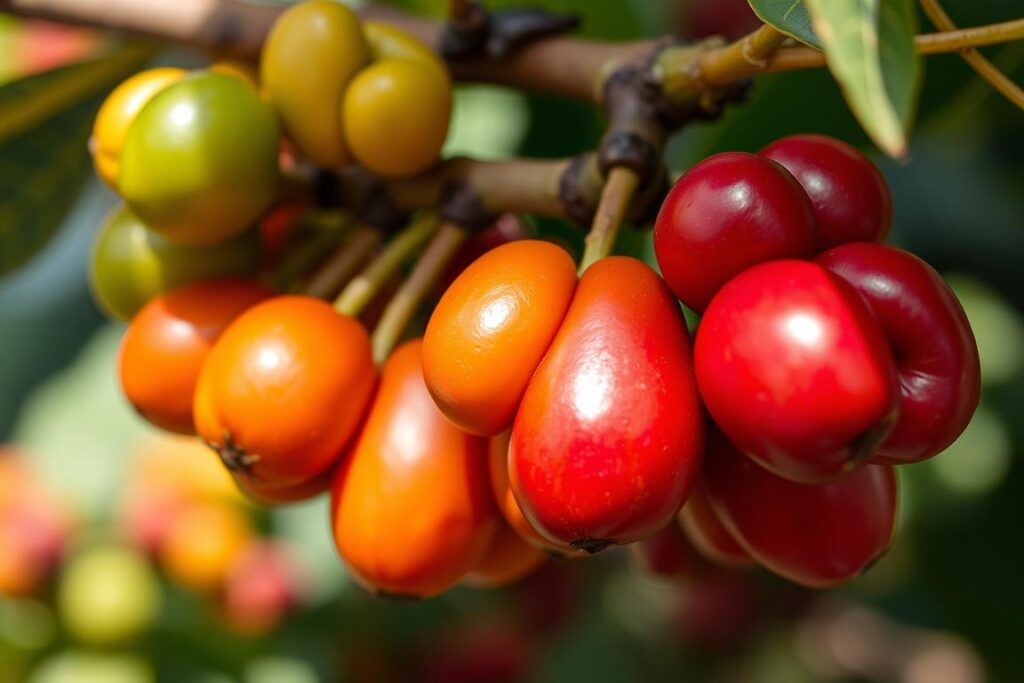
The slow maturation of coffee cherries at high elevations contributes to complex flavor development
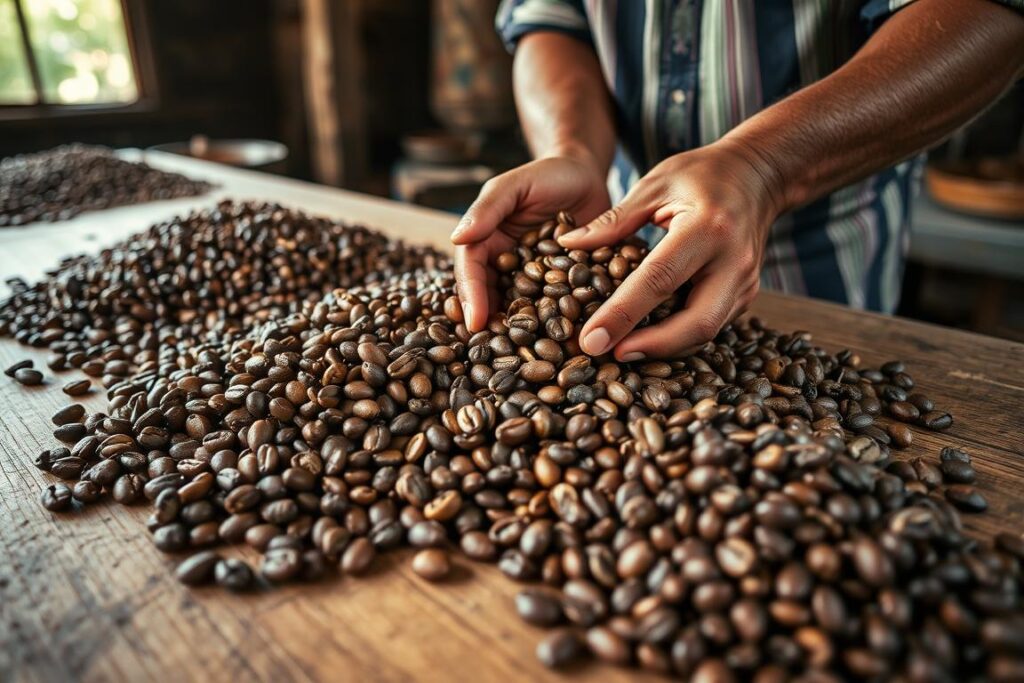
Meticulous sorting ensures only the highest quality beans make it to market
Generational Expertise
Many Guatemalan coffee farms have been in the same families for generations, allowing for the accumulation and transfer of specialized knowledge. These farmers understand their specific microclimates intimately and have developed techniques perfectly suited to their unique conditions.
This expertise extends to processing methods, where traditional wet processing (washed) techniques have been refined over decades to highlight the clean, bright characteristics that Guatemalan coffee is known for.
“What makes Guatemalan coffee special is the combination of exceptional growing conditions and the dedication of farmers who see coffee not just as a crop, but as their legacy and their art.”
Taste the Perfect Balance
Experience the remarkable harmony of flavor that makes Guatemalan coffee world-renowned. Subscribe and save 20% on your first order!
From Volcanic Soil to Your Cup: The Continuing Legacy
The story of Guatemalan coffee is one of remarkable natural gifts enhanced by human dedication and expertise. From the mineral-rich volcanic soil to the careful hands of farmers who have perfected their craft over generations, every step in the journey contributes to the exceptional cup that has earned Guatemala its place among the world’s most respected coffee origins.
As global appreciation for specialty coffee continues to grow, Guatemala’s diverse growing regions offer an endless exploration of flavor, culture, and tradition. Whether you’re planning a visit to the coffee highlands or simply enjoying a cup at home, you’re participating in a legacy that connects the ancient volcanoes of Central America to coffee lovers around the world.
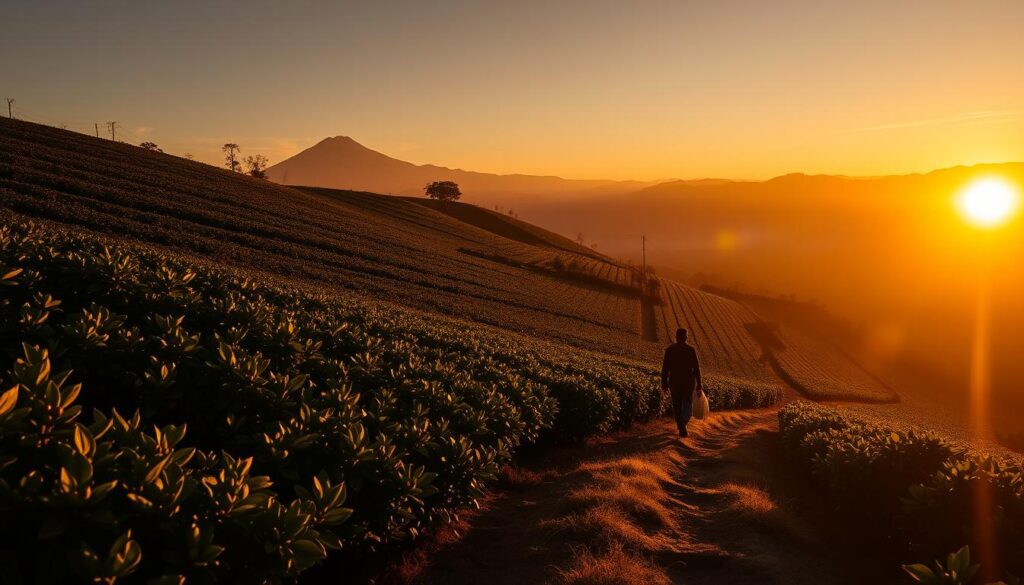
As the day ends in the highlands, the legacy of Guatemalan coffee continues