
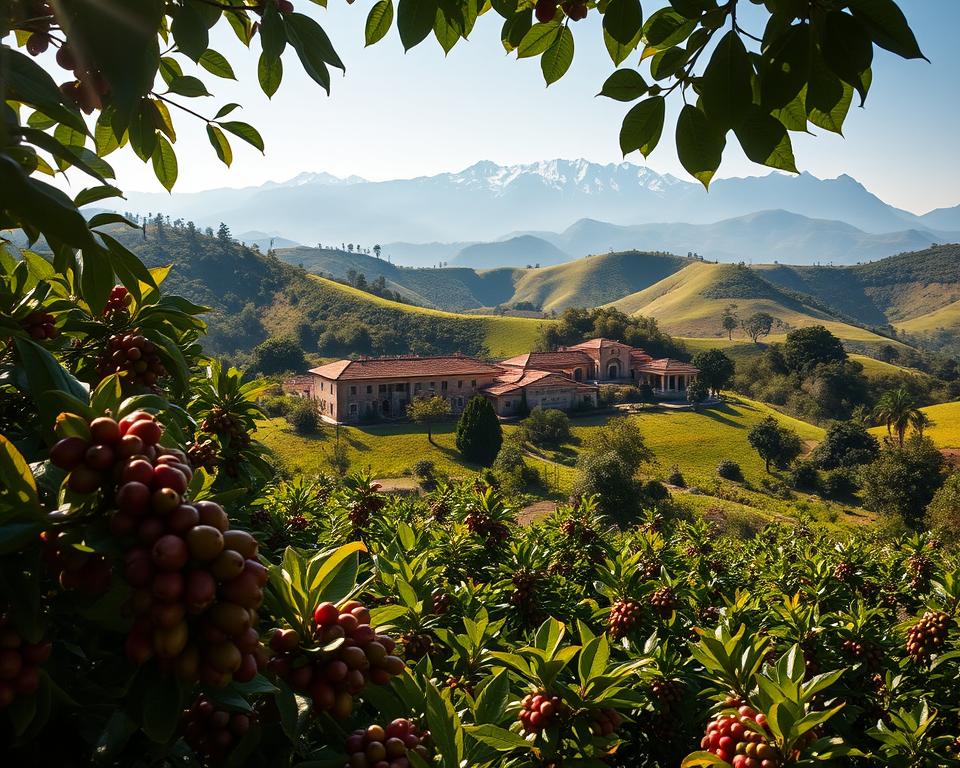
Guatemala’s soil and climate are perfect for growing coffee. This has helped the country’s economy a lot. The story of Guatemala’s coffee exports is one of growth and change, shaping the world’s coffee industry.
Guatemala’s coffee has made a big impact worldwide. It has helped set records in coffee production and grown the industry. Guatemala remains a key player in the global coffee market, leaving a lasting legacy.
The Origins of Coffee in Guatemala
Coffee came to Guatemala in the 1700s, thanks to Jesuit priests. This marked the start of Guatemala’s role in the global coffee world. At first, coffee was grown on a small scale, mainly for people in the area.
As coffee farming grew, more places became good for growing it. Alta Verapaz, Huehuetenango, and San Marcos stood out. They had the right climate and high altitudes for coffee.
| Region | Climate | Altitude |
|---|---|---|
| Alta Verapaz | Subtropical | 1,500 meters |
| Huehuetenango | Highland | 2,000 meters |
| San Marcos | Mountainous | 1,800 meters |
Guatemala’s rich soil and varied climates helped it enter the global coffee market. Today, it’s a top coffee exporter, famous for its high-quality Arabica coffee.
How to Trace Guatemala’s First Coffee Exports
The story of Guatemala’s coffee exports starts with detailed records and historical events. To grasp the beginnings and growth of this industry, we must look at the coffee market’s past and export data.
To find out about Guatemala’s first coffee exports, we need to follow a few steps. First, we look at old records from the early 19th century. This is when coffee started growing in Guatemala. These records tell us about the first shipments and where they went.
Then, we analyze coffee export numbers over time. This helps us see trends and important moments that changed the industry. For example, new coffee types or shifts in global demand can affect how much coffee is exported.
Big historical events, like building railroads or ports, also mattered a lot. They helped shape Guatemala’s coffee export business. By studying these events and their effects, we can really understand how Guatemala became a key player in coffee exports.
By mixing old records, export data, and knowing about key events, researchers can follow how Guatemala’s coffee exports grew. They can also see its lasting impact on the world’s coffee market.
Understanding the Geography Behind Guatemala’s Coffee Success
Guatemala’s coffee success comes from its great geography. The country has volcanic highlands, rich soil, and a climate with wet and dry seasons. This makes it perfect for growing coffee.
Guatemala’s different regions also add to its coffee success. Each area has its own flavor because of the soil and climate. For example, Antigua is famous for its balanced coffee with chocolate and spice notes. Huehuetenango, on the other hand, is known for bright acidity and fruit flavors.
| Region | Climate | Flavor Profile |
|---|---|---|
| Antigua | Mild, with distinct wet and dry seasons | Balanced, with notes of chocolate and spice |
| Huehuetenango | Cooler, with a shorter growing season | Bright acidity, with fruit notes |
| Atitlán | Moderate, with a mix of sun and rain | Complex, with floral and citrus notes |
Knowing about Guatemala’s geography is key to understanding its coffee. The country’s geography shapes the quality and taste of its coffee. It also plays a big role in its place in the global coffee market.
Discovering Traditional Cultivation Methods That Shaped Guatemala’s Coffee Identity
Guatemala’s coffee taste comes from old farming ways. These methods have been passed down for years. They help make Guatemala’s coffee special.
Guatemala’s coffee farmers use shade-grown coffee. This means coffee plants grow under trees. It keeps nature around and makes Guatemalan coffee taste complex.
The way Guatemala exports coffee is linked to its farming traditions. Knowing these methods helps us see why Guatemalan coffee is so good.
| Cultivation Method | Impact on Coffee Quality | Regional Significance |
|---|---|---|
| Shade-Grown | Complex flavor profiles | High in regions like Antigua |
| Organic Farming | Reduced chemical use | Increasingly popular across Guatemala |
| Hand-Picked | Higher quality beans | Common in most coffee regions |
Looking at Guatemala’s old farming ways helps us understand its coffee. It shows us what makes Guatemalan coffee unique.
The History of Coffee Exports: Guatemala’s Path to Global Recognition
The story of coffee exports in Guatemala is one of hard work and creativity. It shows how the country became known worldwide. Coffee started to grow in Guatemala in the late 1800s. It soon became a big export item.
Guatemala’s geography is perfect for growing coffee. The volcanic highlands and rich soil make great coffee. The growers used old methods to make Guatemalan coffee taste unique.
Guatemala has faced many challenges like diseases and market changes. But, the country kept its place in the global coffee market. For more on Guatemala’s coffee, check out Coffeynya’s blog.
| Year | Milestone | Impact |
|---|---|---|
| 1850s | Coffee introduced to Guatemala | Beginning of coffee cultivation |
| 1900s | Establishment of coffee cooperatives | Improved production and export quality |
| 2000s | Adoption of sustainable practices | Enhanced environmental sustainability |
Now, Guatemala is famous for its top-notch coffee. Its coffee exports are a big part of the country’s economy. The history of coffee in Guatemala shows the country’s strength and dedication to quality.
Exploring the Development of Guatemala’s Coffee Regions
Guatemala’s coffee regions have been key to the country’s coffee success. It’s known worldwide for its high-quality coffee. This has made Guatemala a top coffee exporter.
Guatemala’s coffee industry is diverse, with each region offering something special. Huehuetenango and Cobán are two standout areas.
Huehuetenango’s Unique Characteristics
Huehuetenango is famous for its coffee grown at high altitudes. This gives the coffee a unique taste. The dry climate and tough terrain mean farmers must use special methods.
- High-altitude coffee production
- Dry climate
- Rugged terrain
Cobán’s Distinctive Profile
Cobán is known for its lush, cloud-covered mountains. The coffee from here has a balanced acidity and rich flavor.
- Lush, cloud-covered mountains
- Balanced acidity
- Rich flavor
Both Huehuetenango and Cobán are important for Guatemala’s coffee exports. Their unique qualities make them stand out in the global market.
Assessing the Economic Impact of Coffee Exports on Guatemala’s Development
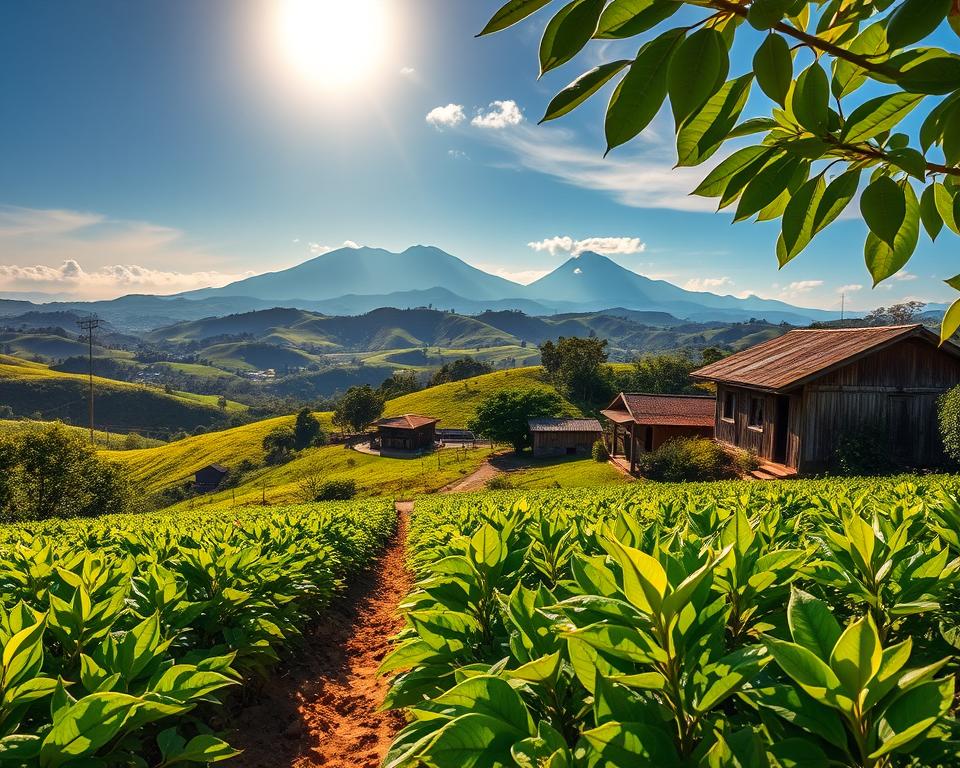
Coffee exports have a big impact on Guatemala’s economy. They bring in a lot of money and create jobs. This helps the country grow and develop.
The coffee industry faces ups and downs. Prices and weather can change things. But coffee is still key, helping rural areas and boosting the GDP.
Looking at coffee market trends shows the industry’s strength. The table below shows important economic numbers for Guatemala’s coffee.
| Year | Coffee Exports (tons) | Revenue (USD millions) | Employment (thousands) |
|---|---|---|---|
| 2018 | 220,000 | 450 | 120 |
| 2019 | 210,000 | 420 | 115 |
| 2020 | 230,000 | 480 | 125 |
In conclusion, coffee exports are very important for Guatemala. They help the country grow. Knowing about coffee exports and market trends is key for making good choices.
Identifying Guatemala’s Coffee Varieties and Their Global Reputation
Guatemala’s coffee varieties are key to the country’s success in coffee production. The country’s varied regions and climates support a wide range of coffee types.
The main coffee varieties in Guatemala are Antigua, Atitlán, and Huehuetenango. Each variety has its own unique flavor and high quality.
| Coffee Variety | Flavor Profile | Global Demand |
|---|---|---|
| Antigua | Balanced acidity, chocolate notes | High |
| Atitlán | Fruity, floral notes | Moderate |
| Huehuetenango | Bright acidity, citrus notes | High |
The growth of coffee exports in Guatemala has boosted its coffee’s global reputation. This has made Guatemalan coffee highly sought after worldwide.
Navigating Challenges Throughout Guatemala’s Coffee Export History
Guatemala’s coffee industry has faced many challenges over the years. These have affected its growth and reputation worldwide. Environmental conditions have been a big factor.
Climate change has caused unpredictable weather, impacting coffee yields and quality. Market changes have also shaped the industry’s path.
| Challenge | Impact | Mitigation Strategy |
|---|---|---|
| Environmental Factors | Reduced coffee yields and quality | Sustainable farming practices |
| Market Fluctuations | Price volatility affecting profitability | Diversification of export markets |
| Production Issues | Increased costs due to labor shortages | Mechanization and training programs |
It’s important to understand these challenges and how they’re being tackled. This shows Guatemala’s coffee industry’s strength. By looking at coffee trade routes and trends, we can better handle the global coffee market’s complexities.
Mastering Guatemala’s Coffee Processing Techniques
The way Guatemala processes coffee is key to keeping up its coffee production records. Coffee makers in Guatemala have perfected different methods to process, dry, and package coffee. This ensures top-quality coffee that boosts the global coffee trade.
Guatemala’s coffee processing includes steps like pulping and drying, all needing careful attention. The washed method is popular, giving coffee a clean and bright taste. Some are also trying honey and natural methods to add variety to flavors.
Guatemala’s focus on coffee processing quality helps its reputation in the global coffee market. By excelling in these techniques, Guatemalan coffee makers keep setting the bar high for coffee worldwide.
Analyzing Guatemala’s Position in Today’s Global Coffee Market
Guatemala’s coffee exports are a big deal in today’s coffee world. It’s one of the leading coffee exporters. This makes Guatemala’s coffee industry very important.
Guatemala’s history in the coffee market has helped it a lot. Its special coffee types and old farming ways give it an edge.
The global coffee market is very competitive. Many countries are trying to get more of the market. But Guatemala stands out because of its high-quality coffee.
| Country | Coffee Export Volume (tons) | Market Share (%) |
|---|---|---|
| Guatemala | 250,000 | 3.5 |
| Brazil | 2,000,000 | 30 |
| Colombia | 800,000 | 12 |
Guatemala has to deal with challenges like climate change and market ups and downs. But its deep coffee culture and focus on quality help it stay strong.
Conclusion: Appreciating the Enduring Legacy of Guatemala’s Coffee Tradition
Guatemala’s coffee tradition has made a lasting impact on the world. The History of Coffee Exports from here shows the country’s deep culture and hard work in coffee making.
The way coffee exports have changed in Guatemala is interesting. It’s because of the country’s special geography, old farming ways, and new coffee-making methods. This has made Guatemalan coffee famous for its unique tastes and quality.
Looking back, Guatemala’s coffee journey shows more than just making coffee. It’s about keeping a tradition that has lasted for many years. This tradition is loved by coffee lovers all over the world.
In short, Guatemala’s coffee tradition shows the country’s dedication to quality, new ideas, and its culture. As the world of coffee keeps changing, Guatemala’s coffee will always be a big part of its story and identity.