
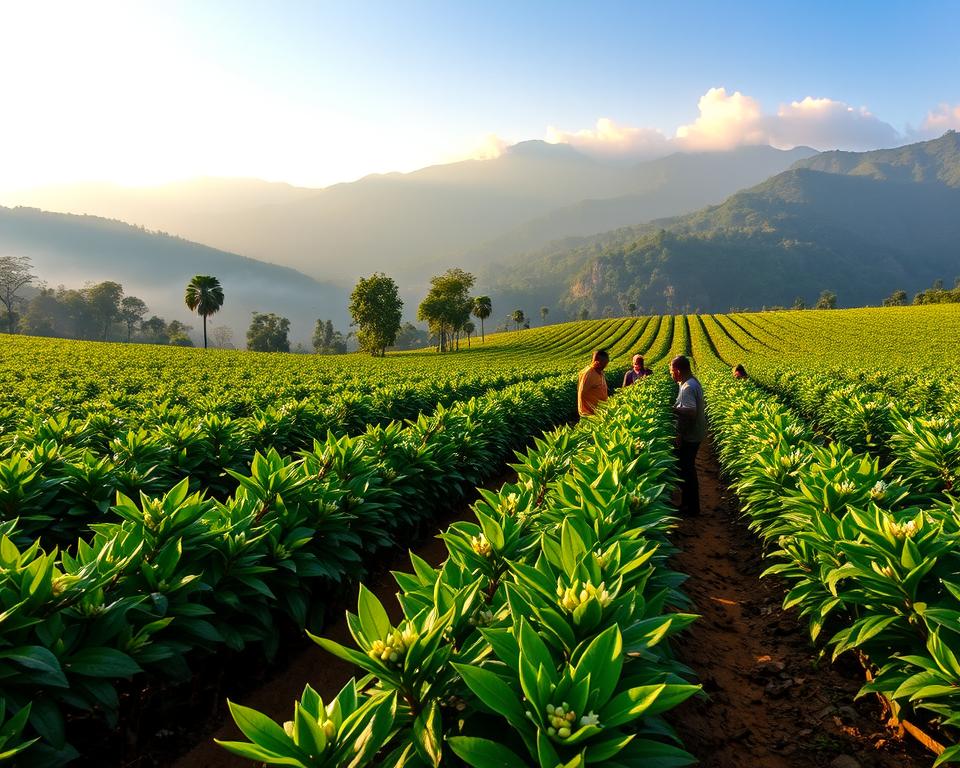
Guatemala is famous for its top-notch coffee. Sustainable farming practices are key to this fame. The use of organic fertilizers and natural composting is growing in Guatemala’s coffee world.
These green methods boost coffee quality and help the environment. Natural composting makes soil healthier. It also cuts down on synthetic fertilizers and supports more plant and animal life.
These practices bring many benefits. They lead to higher crop yields and better disease resistance. So, Guatemala’s coffee industry is getting greener and more aware of the environment.
Understanding Organic Fertilizers in Coffee Cultivation
Organic fertilizers are key in coffee farming. They offer a green choice over synthetic ones. Farmers choose them to keep soil healthy, cut down on harm to the environment, and grow top-notch coffee.
Key Differences from Synthetic Fertilizers
Organic fertilizers come from natural stuff like animal waste and vegetable scraps. They give out nutrients slowly, helping soil microbes thrive. This slow release is a big plus, as it keeps coffee plants well-fed.
Learn more about the benefits of organic fertilizer coffee here.
Certification Standards for Organic Inputs
Fertilizers must pass strict organic standards to be called organic. These rules differ by country but all ban synthetic chemicals and GMOs. For coffee farmers, picking the best organic fertilizer for coffee plants means finding products that fit these rules and their soil types.
The soil’s microbes are vital for coffee quality. Organic fertilizers feed these microbes, boosting soil health. This leads to better nutrient uptake by coffee plants, making the coffee taste better.
Guatemala’s Unique Soil Conditions
Guatemala’s coffee lands have special soil, with lots of volcanic ash and organic matter. Knowing these details helps farmers pick the best organic fertilizers. This ensures better coffee production.
The Benefits of Organic Fertilizer Coffee Production
Using organic fertilizers in coffee production has many benefits. It makes the soil healthier, supports green farming, and helps the coffee industry be more eco-friendly.
Reduced Chemical Runoff in Guatemala’s Watersheds
One big plus of organic fertilizer coffee is less chemical runoff. Coffee farms avoid synthetic fertilizers, keeping pollutants out of water. This protects nature and keeps water clean for people nearby.
Organic fertilizers also help with carbon capture. They improve soil health, which traps more carbon dioxide. This helps fight climate change.
Organic Fertilizers and Cup Scores
Organic fertilizers can make coffee taste better, leading to higher scores. They help plants grow well and improve flavor. This makes coffee beans more valuable to specialty roasters.
Building Resilience Against Climate Change
Organic fertilizer coffee also makes farms more resilient to climate change. It helps soil hold water and keeps plants strong. This means farms can handle droughts and heavy rains better.
In summary, organic fertilizers bring many benefits to coffee production. They protect the environment, improve coffee quality, and help farms face climate change. As the coffee world grows, organic fertilizers will be key to sustainable farming.
Common Organic Fertilizer Types for Coffee Farms
Guatemalan coffee farmers are now using organic fertilizers to boost their coffee yields. This move to organic farming improves coffee quality and helps the environment.
Chicken Manure Applications
Chicken manure is full of nitrogen, phosphorus, and potassium. It’s great for coffee plants because it makes the soil better and helps roots grow strong.
Cattle and Sheep Manure Considerations
Cattle and sheep manure are also good for coffee farms. They’re packed with nutrients and keep the soil healthy, which is key for growing coffee well.
Coffee pulp, a leftover from processing, can be turned into fertilizer. It’s full of nutrients and cuts down on waste while making the soil better.
Local Green Waste Options
Using local green waste as compost is smart for coffee farmers. It’s good for the environment and makes the soil richer and more fertile.
Volcanic Rock Dust for Guatemala’s Coffee
Guatemala’s coffee farms can benefit from volcanic rock dust. It adds minerals and makes the soil better, especially in volcanic areas.
By using these organic fertilizers, Guatemalan coffee farmers can grow more coffee. They do it in a way that’s good for the planet and their farms.
Natural Composting Techniques for Coffee Growers
Coffee growers in Guatemala can boost their crop’s yield by using natural composting. Composting makes the soil better, leading to higher quality coffee and a greener farm.
Materials Available on Coffee Farms
Coffee farms have many organic materials for composting. These include coffee cherry husks, pulp, and spent coffee grounds. You can also add cow manure, green leaves, and branches to the pile.
- Coffee processing waste
- Animal manure
- Green leaves and branches
- Other organic farm waste
Layering Techniques for Faster Decomposition
Layering materials in the compost pile is key. Start with coarse materials like branches. Then, mix in green and dry materials. This keeps the pile aerated and speeds up decomposition.
- Start with a 4-6 inch layer of coarse materials
- Add a mix of green and dry materials
- Repeat the layers, ending with a layer of dry materials on top
Setting Up Worm Bins
Worm composting, or vermicomposting, is great for coffee growers. You need to layer bedding materials, add red wiggler worms, and feed them coffee grounds and waste.
Harvesting and Applying Worm Castings
Worm castings are a nutrient-rich compost. Harvest them by separating the worms from the castings. Then, use the castings as a natural fertilizer.
Fermenting coffee processing waste breaks down the organic matter into a nutrient-rich liquid. This method is good for managing large amounts of coffee cherry pulp.
Application Timing for Maximum Benefits
When you apply compost is important. Apply it during the rainy season or before flowering. This helps the plants absorb nutrients better and increases yields.
By using these composting methods, Guatemalan coffee growers can make their farms more sustainable. This leads to better coffee quality and environmental care.
How to Make Organic Fertilizer for Coffee Plants
Making organic fertilizer for coffee plants is easy and boosts soil health. Natural composting helps your coffee trees grow well.
Step-by-Step Mixing Process
Start by collecting organic stuff like coffee cherry husks, vegetable scraps, and manure. Mix them in a way that balances carbon-rich stuff (like dried leaves) with nitrogen-rich stuff (like manure or vegetable scraps).
Keep the mix at 2/3 carbon-rich and 1/3 nitrogen-rich. This mix is key for good composting.
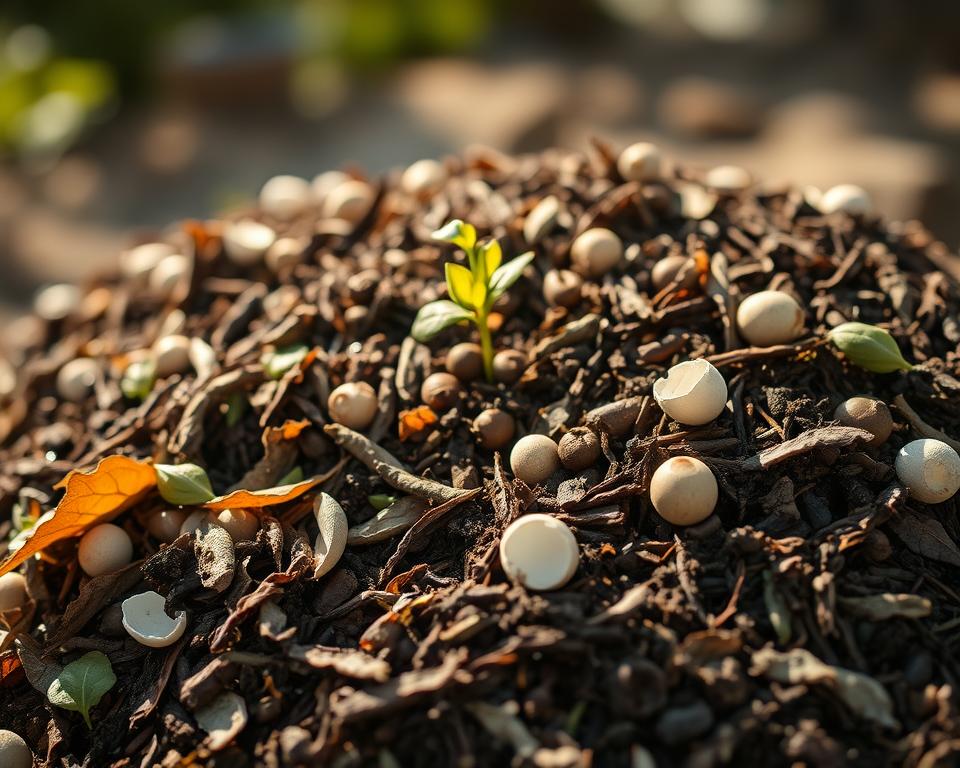
It’s important to balance carbon and nitrogen for a rich fertilizer. Carbon-rich stuff gives energy to microbes. Nitrogen-rich stuff helps them grow.
Monitoring Temperature and Moisture
Check the compost pile’s temperature and moisture often. It should be between 130°F and 140°F for active composting. Keep it moist, like a damp sponge.
Curing and Storage Guidelines
After composting, let it cure for a few weeks. This makes sure it’s fully broken down and ready. Store it in a dry, well-ventilated spot.
Customizing Nutrient Ratios
You might need to tweak the fertilizer’s nutrient ratios for your plants. For example, add banana peels for more potassium.
Testing Compost Readiness
To see if your compost is ready, check its texture and smell. Good compost is dark, crumbly, and smells earthy. If it smells like the original stuff or is too wet, it needs more time.
By following these steps, you can make a great organic fertilizer for your coffee plants. This helps them grow well and supports sustainable farming.
Applying Organic Fertilizer Coffee: Best Practices
To get the most out of organic fertilizer coffee, it’s important to apply it right. These fertilizers give plants the nutrients they need to grow well.
Before flowers start to grow, it’s key to use organic fertilizers. This helps plants grow strong and set fruit well.
Post-harvest Replenishment
After picking coffee, plants need nutrients back. Organic fertilizers help bring soil back to life and help plants recover.
Techniques for Young Plants
Young coffee plants need gentle care with organic fertilizers. Mix the fertilizers into the soil near the plants to keep roots safe.
Methods for Established Trees
Older coffee trees need more of organic fertilizers. You can spread them around the trees or mix them into the soil.
Bourbon and Typica Requirements
Bourbon and Typica coffee need special nutrients. They do well with organic fertilizers that have lots of potassium and phosphorus.
Catuai and Caturra Considerations
Catuai and Caturra coffee have their own needs too. They like organic fertilizers with balanced nutrients to grow well and produce more.
By using these organic fertilizer coffee application tips, farmers can make their coffee plants healthier. This leads to better-tasting coffee.
Integrating Organic Fertilizers with Guatemala’s Coffee Growing Regions
Organic fertilizers are used differently in Guatemala’s coffee areas. The country’s varied regions face unique challenges and chances for organic coffee farming.
Antigua Valley Approaches
The Antigua Valley has rich volcanic soil. Organic fertilizers boost its fertility. Compost from coffee cherry pulp greatly improves soil health.
Huehuetenango Considerations
Huehuetenango’s high-altitude farms need careful fertilizer use. Organic coffee grounds are very effective here, providing needed nutrients.
Acatenango and Lake Atitlán Areas
The Acatenango and Lake Atitlán areas have different climates. They benefit from various organic fertilizers. Natural compost keeps the soil healthy.
Cobán and Eastern Region Adaptations
Cobán and the eastern regions have special soil needs. Organic fertilizer brands are making products for these areas.
| Region | Organic Fertilizer Type | Benefits |
|---|---|---|
| Antigua Valley | Coffee cherry pulp compost | Improved soil fertility |
| Huehuetenango | Organic coffee grounds | Essential nutrient supply |
| Acatenango and Lake Atitlán | Natural compost | Maintained soil health |
Coffee farmers in Guatemala can improve their farming by using organic fertilizers. This makes their coffee better and more sustainable.
Troubleshooting Common Issues with Organic Fertilizer Applications
Using organic fertilizers on coffee plants can lead to some challenges. Growers need to quickly spot and fix these problems. This ensures the plants grow well and produce plenty of coffee.
Identifying Symptoms in Coffee Plants
Coffee plants show signs when they don’t get enough nutrients. These signs include yellow leaves, slow growth, or not enough fruit.
Corrective Organic Amendments
After spotting the symptoms, it’s time to take action. This might mean changing the fertilizer type or amount. Or, adding other organic helpers to fix specific problems.
| Symptom | Possible Cause | Corrective Measure |
|---|---|---|
| Yellowing Leaves | Nitrogen Deficiency | Apply compost tea or fish emulsion |
| Stunted Growth | Lack of Phosphorus | Use bone meal or rock phosphate |
| Poor Fruiting | Potassium Deficiency | Apply kelp meal or wood ash |
Beneficial Insects and Biodiversity
It’s important to keep beneficial insects and biodiversity in check. This helps the coffee plants stay healthy. It’s best to avoid using too many chemicals.
For pests, try using natural solutions like neem oil or diatomaceous earth. These are better for the planet and people than chemical sprays.
Troubleshooting Compost Issues
Compost is key for organic fertilizers. Problems like bad smells or pests can be fixed. Just adjust the compost mix or make sure it’s well-aired.
Accelerating Breakdown in Guatemala’s Climate
Guatemala’s weather can slow down compost breakdown. To speed it up, keep the compost moist and turn it often.
By tackling these common problems, coffee farmers can get the most out of organic fertilizers. This leads to healthier plants and better farming methods.
Sustainable Coffee Farm Management with Organic Inputs
Using organic fertilizers in coffee farming boosts coffee quality and supports sustainable farming. Organic methods help improve soil health, lessen environmental harm, and encourage biodiversity.
Waste Stream Analysis for Coffee Farms
Doing a waste stream analysis lets farmers find ways to use organic waste as fertilizers. This cuts down on waste and makes farming more sustainable.
Implementing Circular Economy Principles
Applying circular economy ideas in coffee farming means recycling organic stuff and cutting down on waste. This makes the farming process more eco-friendly.
| Practice | Benefit |
|---|---|
| Organic Fertilizer Application | Improved Soil Health |
| Mulching | Reduced Soil Erosion |
| Efficient Irrigation | Water Conservation |
Picking the right coffee type for Guatemala’s weather is key for sustainable farming. Arabica is often chosen for its quality and how well it grows.
By using these methods, coffee farmers in Guatemala can make their farms more sustainable. This improves their coffee’s quality and the environment’s health.
Conclusion: Embracing Organic Fertilizers for Superior Guatemala Coffee
Organic fertilizers and natural composting have changed coffee farming in Guatemala. These methods help farmers make their coffee better in taste and quality.
Using organic fertilizers has many advantages. It makes the soil healthier, boosts biodiversity, and is kinder to the environment. These benefits lead to coffee that tastes richer and smells better.
Guatemala is a big name in coffee worldwide. Using organic fertilizers helps farmers stay ahead while caring for the planet. The quality of Guatemala coffee stays high because of these practices.
By using organic fertilizers, farmers in Guatemala make their coffee industry stronger. This is good for the environment and the local people.