
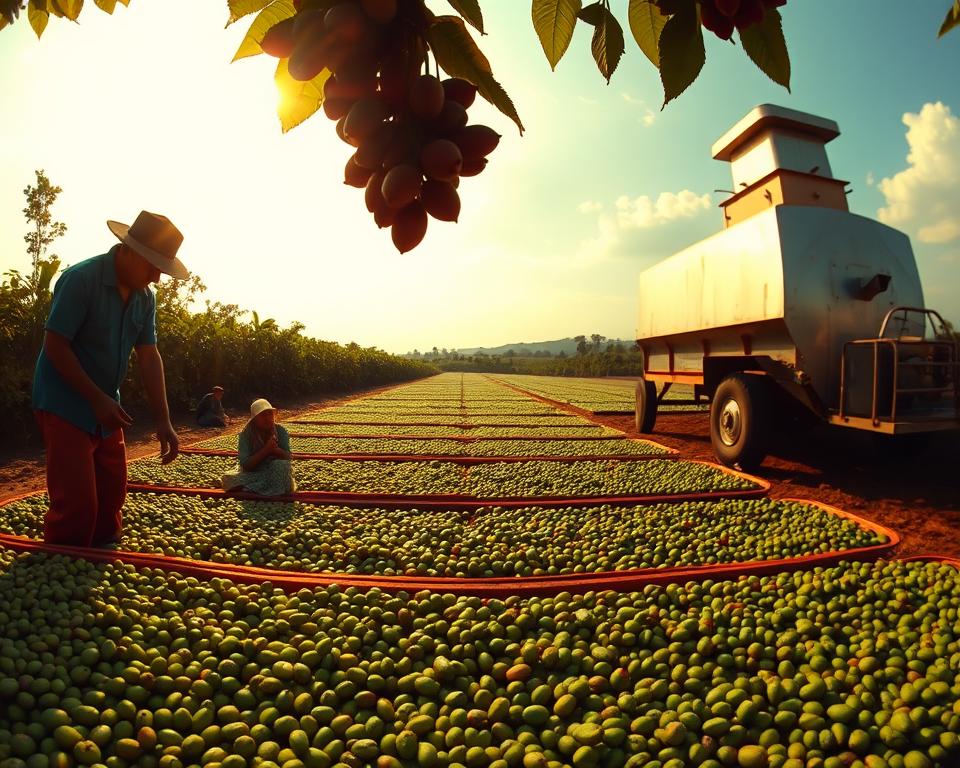
Guatemala coffee is famous for its deep flavor and aroma. The drying method used is key to getting top-quality coffee beans. There are two main methods: sun drying and mechanical drying, each with its own benefits and drawbacks.
Choosing the right coffee processing methods is crucial to enhance the flavor of coffee beans. Sun drying is a traditional way that uses the sun to dry the beans. On the other hand, mechanical drying uses machines to dry the beans fast.
It’s important for coffee producers to know the pros and cons of each method. This ensures they make high-quality coffee beans that coffee lovers around the world will enjoy.
The Crucial Role of Drying in Coffee Processing
Drying is key in coffee processing. It keeps the coffee’s natural flavors and smells. This step is crucial in making high-quality coffee.
In Guatemala, there’s a debate between sun drying and mechanical drying. Each has its pros and cons. Using eco-friendly drying methods helps reduce environmental harm while keeping coffee quality high.
The drying method greatly affects coffee’s taste and quality. Different drying methods have unique features. Knowing these helps coffee makers choose the best process.
Understanding Guatemala’s Coffee Landscape
Guatemala is known for its perfect mix of climate, soil, and altitude. This makes it a key player in the world’s coffee market. The country’s coffee thrives due to its rich volcanic soil, mild weather, and varied landscapes.
Climate and Geography’s Impact on Coffee Production
Guatemala’s different areas, like Antigua, Huehuetenango, and Atitlán, have unique climates and terrains. These conditions shape how coffee is grown and dried in each region.
In Guatemala, coffee is often dried naturally on patios or raised beds. This slow drying process adds to the coffee’s rich taste.
The way coffee is processed in Guatemala is influenced by its climate and geography. Growers face challenges like unpredictable weather and pests. These can affect the quality of the coffee beans.
Guatemala’s coffee scene is rich and diverse, with traditional drying methods and high-quality beans. Knowing about these aspects helps us appreciate Guatemalan coffee’s complexity.
Sun Drying vs. Mechanical Drying Coffee: A Comprehensive Comparison
Drying is a key step in coffee making. The choice between sun drying and mechanical drying affects the coffee’s quality. It’s important for producers to know the pros and cons of each method.
Sun drying uses the sun to dry coffee beans. It’s cheaper and can make the coffee taste better. But, it depends on the weather and needs a lot of work to turn and check the beans.
Mechanical drying uses machines to dry coffee beans fast, no matter the weather. It’s quicker and more controlled than sun drying. But, it uses a lot of energy and costs more. For more on coffee processing and drying, check out this detailed review.
| Drying Method | Cost | Efficiency | Impact on Flavor |
|---|---|---|---|
| Sun Drying | Low initial investment | Weather-dependent, labor-intensive | Can enhance flavor profile |
| Mechanical Drying | High initial investment | Fast, controlled, and consistent | Risk of over-drying, potential for flavor loss |
In conclusion, picking between sun drying and mechanical drying depends on many things. These include the producer’s resources, the climate, and the coffee quality they want. Knowing the good and bad of each method helps improve coffee making.
How to Implement Effective Sun Drying
Effective sun drying is key for top-notch Guatemala coffee. This traditional method needs careful handling and the right conditions for the best results.
First, the drying area must be clean, dry, and shielded from the weather. Coffee beans should be laid out thinly, usually on concrete or brick patios. This helps them dry evenly.
It’s important to rake the beans regularly. This stops them from sticking together and ensures they dry evenly. It also prevents them from drying too much, which can ruin their taste and smell.
- Keep a close eye on the weather to protect the beans from rain or too much sun.
- Use raised beds or drying tables for better air flow and to avoid contamination.
- Rotate the beans to dry them evenly and prevent some from drying too much or too little.
- Cover the beans at night to keep them dry and safe from dew.
By following these steps, Guatemala coffee makers can improve their sun drying. This leads to better-tasting coffee that meets global standards. Sun drying also helps make coffee production more sustainable.
Using sustainable sun drying methods is good for the environment too. It reduces waste and cuts down on carbon emissions from coffee making. This makes the coffee industry greener.
Advantages of Sun Drying for Guatemala Coffee
The sun drying process is great for Guatemala coffee, making it taste better. It lets coffee beans dry slowly, which adds to their flavor. This slow drying keeps more of their natural oils and tastes, making the coffee richer and more complex.
Sun drying highlights Guatemala coffee’s unique tastes. It keeps the coffee’s regional flavors, making each batch special. Plus, it’s cheaper than using machines, helping small farmers.
It also makes the coffee better. Farmers watch over the drying to avoid mistakes. This care is key to making top-notch coffee that sells well worldwide.
Overcoming Challenges in Sun Drying
Sun drying coffee comes with its own set of challenges, like weather changes and contamination risks. This traditional method is used in many countries, including Guatemala. But, it relies heavily on good weather.
Farmers face risks with sun drying and must take steps to protect their coffee. They use raised beds or patios for air to flow. They also turn the beans often and cover them when it rains or gets dark to keep moisture out.
Contamination is another big issue in sun drying. It can come from insects, animals, or other objects. To fight this, farmers check their coffee often and use covers to protect it.
Adjusting to different weather is key. In places with a lot of humidity or rain, farmers might need to dry their coffee longer or use other drying methods. This helps get the coffee to the right moisture level.
By tackling the challenges of sun drying, coffee producers in Guatemala can make better coffee. This not only makes the coffee taste better but also increases its value worldwide.
How to Implement Effective Mechanical Drying
To get the best coffee quality, knowing how to use mechanical drying is key. This method provides a controlled setting that boosts coffee bean quality. It’s especially helpful in places with changing weather, like Guatemala.
Good mechanical drying needs the right temperature, airflow, and energy use. These factors help cut down energy use and lessen harm to the environment.
Optimizing Mechanical Drying Equipment
It’s vital to make your drying equipment work its best. Here are some tips:
- Keep your drying gear in top shape for the best results
- Get advanced temperature control to avoid overheating
- Choose energy-saving drying tech to use less energy
- Watch the moisture in coffee beans to know when to stop drying
By following these steps, coffee makers in Guatemala can make better coffee and be kinder to the planet.
Looking at different drying methods can help pick the right one. Here’s a table showing what each method offers:
| Drying Method | Energy Consumption | Drying Time |
|---|---|---|
| Rotary Drying | High | Fast |
| Fluid Bed Drying | Medium | Moderate |
| Infrared Drying | Low | Slow |
In summary, good mechanical drying is key for Guatemala’s coffee. By learning how to do it right and keeping equipment in top shape, coffee makers can make better coffee. They also help the environment.
Advantages of Mechanical Drying for Guatemala Coffee
Mechanical drying has changed the coffee game in Guatemala. It makes drying faster and more consistent. This leads to better coffee quality overall.
One big plus of mechanical drying is its precision. Farmers can tweak temperature and airflow for each coffee batch. This keeps the coffee’s taste and smell just right.
It’s also super efficient. Mechanical drying can handle lots of coffee cherries at once. This is great for big coffee producers in Guatemala. It saves time and effort, letting them make more coffee without losing quality.
In short, mechanical drying is a game-changer for Guatemala coffee. It boosts quality, efficiency, and control over drying. As the coffee world grows, using mechanical drying is a smart move for producers wanting to stand out globally.
Overcoming Challenges in Mechanical Drying
Despite its benefits, mechanical drying faces challenges like high energy costs and equipment upkeep. Coffee producers in Guatemala, where coffee is a big deal, must tackle these issues. Mechanical drying is key in coffee making.
High energy costs are a big hurdle. To tackle this, producers can look into energy-saving dryers or solar power. Keeping the equipment in good shape is also vital. It helps the equipment last longer and keeps the coffee quality up.
To get the most out of mechanical drying, producers should keep an eye on temperature and moisture. Using tech like sensors and automated systems can help with this.
| Challenge | Solution | Benefit |
|---|---|---|
| High Energy Costs | Invest in energy-efficient dryers or alternative energy sources | Reduced operational costs |
| Equipment Maintenance | Regular maintenance and inspection | Extended equipment lifespan and improved coffee quality |
| Temperature and Moisture Control | Use of advanced technologies like sensors and automated controls | Improved drying efficiency and coffee quality |
By tackling these challenges, coffee producers in Guatemala can improve their drying methods. This leads to better coffee quality and lower costs. Good mechanical drying is essential for Guatemalan coffee to stay competitive worldwide.
Developing Hybrid Drying Approaches for Optimal Results
Hybrid drying methods are becoming popular in Guatemala’s coffee industry. They aim to boost quality and sustainability. By mixing sun drying and mechanical drying, producers can get the best results.
Hybrid drying is flexible. It helps producers deal with weather changes and improve coffee quality. For example, they might start with sun drying and then use mechanical drying to get the right moisture level.
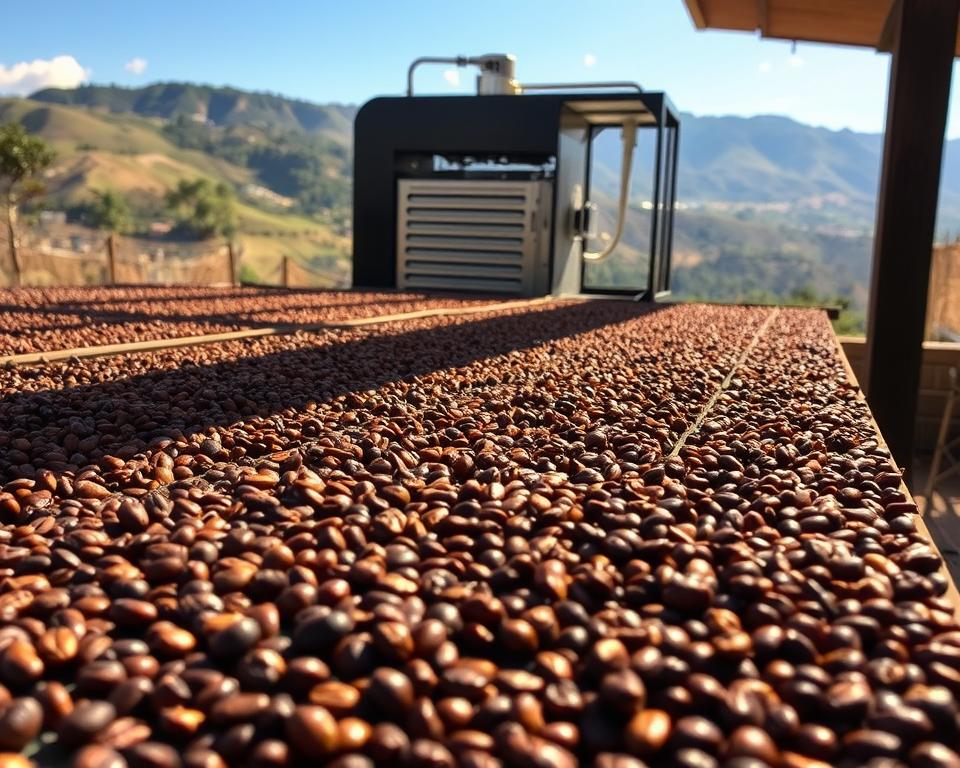
Comparing different drying methods shows the benefits of hybrids. Here’s a table that highlights the advantages:
| Drying Method | Quality Impact | Environmental Impact |
|---|---|---|
| Sun Drying | High quality, distinct flavor | Low environmental impact |
| Mechanical Drying | Consistent quality, faster processing | Higher energy consumption |
| Hybrid Drying | Balanced quality, adaptable | Moderate environmental impact |
Using hybrid drying, Guatemala’s coffee makers can make their process more sustainable. They can keep high-quality coffee while facing environmental challenges. This method makes coffee production more resilient.
Conclusion: Selecting the Best Drying Method for Your Guatemala Coffee
Choosing the right drying method for Guatemala coffee is key to getting top-quality beans. Sun drying and mechanical drying each have their own pros and cons. The choice depends on things like the weather, what equipment you have, and how good you want your coffee to be.
Understanding coffee processing well is important. This includes knowing how to handle coffee beans. By using sustainable methods, coffee makers in Guatemala can make better coffee. They also help the environment.
The best drying method should be good, affordable, and eco-friendly. By looking at these factors and maybe mixing different drying methods, Guatemala’s coffee makers can improve. They can meet global market needs while keeping their coffee special.