

In Guatemala’s coffee world, some players are key. They help local farmers reach global markets. They handle the sourcing, processing, and delivery of top-notch coffee beans.
Coffee brokers offer market know-how, networking, and risk handling. They help producers and buyers deal with the trade’s complexities.
Knowing the role of these middlemen helps us see the coffee trade’s details. It shows how crucial quality is in Guatemala’s coffee industry.
Guatemala’s Coffee Industry: A Brief Overview
Guatemalan coffee is known for its unique flavors and high-quality beans. It’s a big part of the country’s economy. Many smallholder farmers depend on coffee for their income.
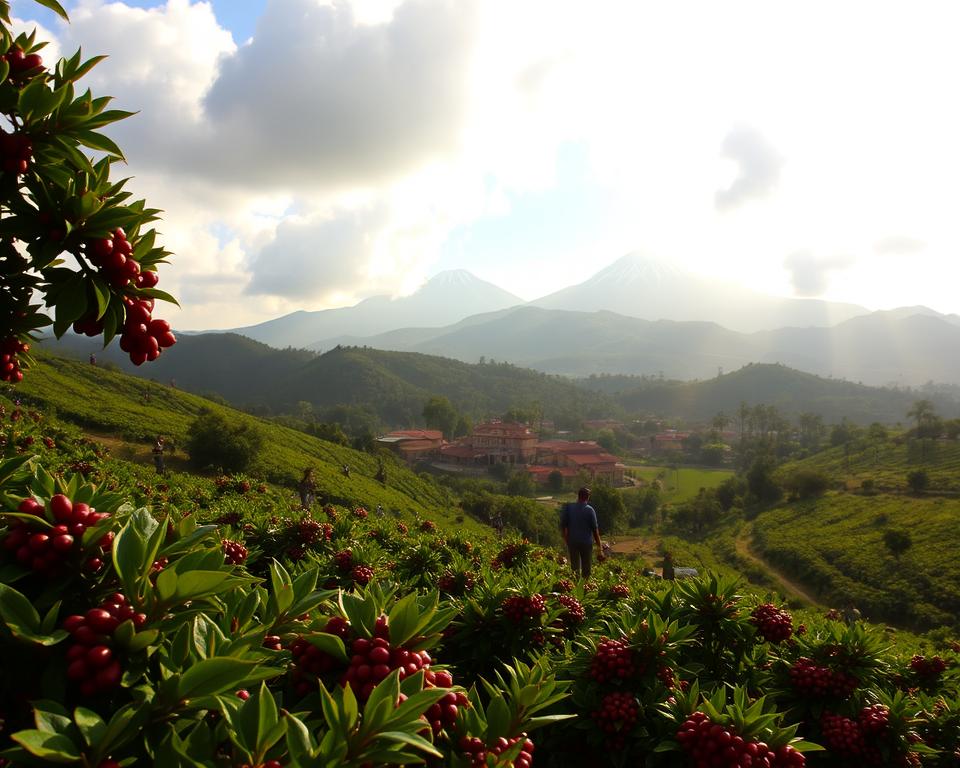
“Coyotes,” local intermediaries, connect farmers to the global market. Cooperatives also play a key role. They offer training, resources, and market access. These cooperatives work with coffee sourcing specialists to export high-quality beans.
International Brokers and Exporters
International brokers and exporters link Guatemalan coffee producers to buyers worldwide. They export green coffee to countries globally. They work with “green coffee suppliers” to meet international roasters’ needs. These brokers have strong ties with local cooperatives and farmers, ensuring quality coffee beans.
How Intermediaries Connect Farmers to Global Markets: Intermediaries, like coyotes and international brokers, are crucial. They provide market access, helping farmers sell their coffee at good prices. By focusing on quality, farmers can rely on agents for export logistics.
How to Navigate the Guatemalan Coffee Supply Chain
Understanding the Guatemalan coffee supply chain is key. It’s important to work with wholesale coffee distributors and coffee trading experts. They offer insights into the market.
Direct Trade vs. Traditional Broker Channels
You have two options in the Guatemalan coffee supply chain: direct trade or traditional broker channels. Direct trade gives you more control. Traditional broker channels have established supplier relationships. Coffee supply chain brokers help with transactions and communication.
Value-Added Services to Consider
Look for value-added services from coffee intermediaries and brokers. Coffee procurement professionals can help with quality control, logistics, and market analysis. These services can improve your coffee sourcing and supply chain efficiency.