
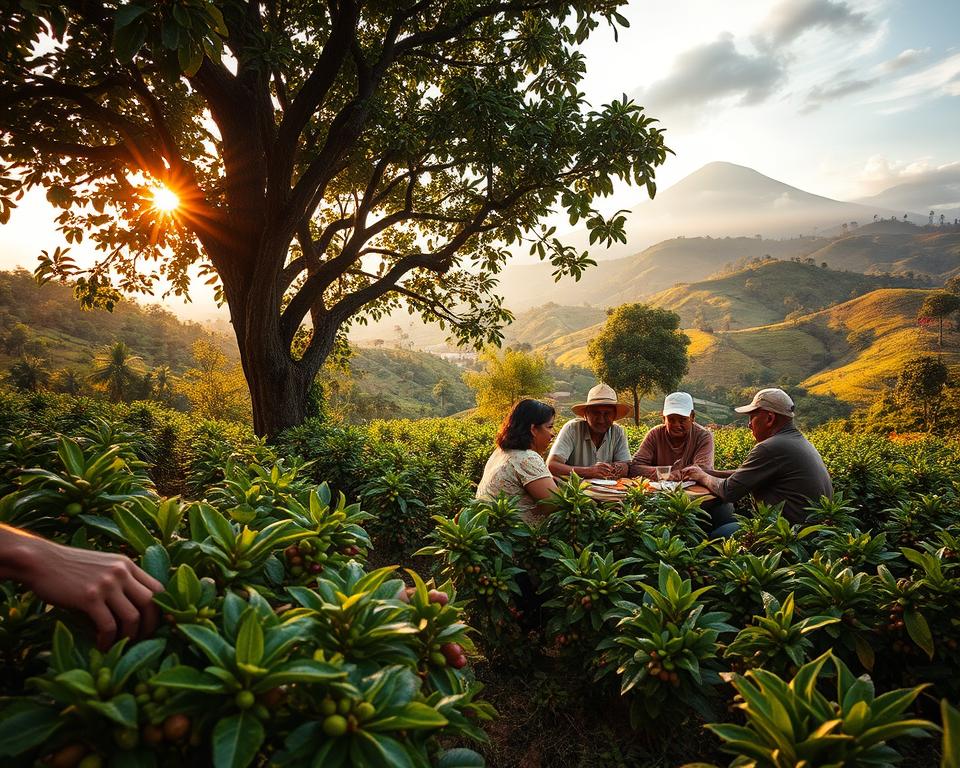
Coffee has been key to Guatemala’s economy and culture for centuries. At its core are the families who work hard in coffee production. They have shaped the country’s rich coffee heritage.
These families have not only worked the land but also helped make Guatemala famous for its coffee. Their skills, passed down through generations, have made Guatemalan coffee unique and of high quality.
Their stories show their dedication, creativity, and love for coffee. By learning about their practices and experiences, we understand the local coffee scene better. We also see the people who make it succeed.
The Rich Heritage of Guatemalan Coffee
Guatemalan coffee has a rich heritage thanks to the country’s perfect conditions and skilled coffee families. For many years, these families have grown coffee sustainably. This not only protects the environment but also adds to the coffee’s unique taste.
Guatemala’s geography, with its volcanic soil and varied climate, is perfect for coffee. The country’s coffee is grown in different regions, each with its own flavor. This variety means Guatemalan coffee can taste bright and acidic or rich and chocolatey.
Coffee families in Guatemala play a big role in keeping the country’s coffee tradition alive. They have shared their knowledge and methods for generations. Their dedication to sustainable coffee production is clear in every cup, making Guatemalan coffee famous around the world.
Understanding Guatemala’s Coffee Regions
Guatemala’s coffee regions, from Antigua to Huehuetenango, are famous for their unique terroir and top-notch coffee beans. The country’s varied geography and climate make it perfect for growing coffee.
Guatemala boasts several key coffee-producing areas, each with its own special traits. Some of the most famous regions include:
- Antigua: Known for its balanced coffee with notes of chocolate and spice.
- Huehuetenango: Produces coffee with a bright acidity and flavors of citrus and berries.
- Atitlán: Characterized by its coffee’s balanced acidity and rich, fruity flavors.
The unique tastes of these regions come from things like soil type, altitude, and climate. For example, coffee from high-altitude places like Huehuetenango matures slower. This leads to a more complex flavor.
Knowing about these regional differences helps us appreciate Guatemalan coffee’s diversity. By understanding each region’s unique qualities, coffee lovers can truly enjoy the quality and complexity of Guatemalan coffee.
Coffee-Producing Families in Guatemala: A Legacy of Excellence
The legacy of Guatemalan coffee is rooted in family traditions. For decades, families have worked hard to make high-quality coffee. They follow the fair trade coffee Guatemala principles.
Family-owned farms in Guatemala are known for their detailed coffee production. They manage every step, from planting to harvesting, to ensure top quality.
These families have shared their knowledge and techniques for generations. Their coffee is among the best worldwide. They also support their local communities by providing jobs and boosting local economies.
Many farms follow fair trade practices. This means farmers get a fair price for their coffee. It helps keep their communities sustainable. The stories of these families show their dedication and love for coffee.
How to Recognize Quality Guatemalan Family-Produced Coffee
To spot quality Guatemalan family coffee, look at a few key things. Guatemalan coffee is famous for its unique tastes. These tastes come from the country’s varied regions and climates.
Flavors can be smooth and balanced or complex and fruity. For example, Antigua coffee is known for its balanced taste and rich flavor. Coffee from Atitlán might taste like citrus and berries.
How the coffee is made is also important. Small-scale farmers in Guatemala often use traditional methods. Shade-grown coffee, for instance, adds to the flavor and helps the environment.
Certifications like Fair Trade are also a sign of quality. They mean the coffee is made fairly and is good for the planet.
By looking at these points, you can find top-notch Guatemalan coffee. It’s not just delicious but also helps local communities and the environment.
The Mendez Family: Learning from Pioneers of Shade-Grown Coffee
In Guatemala’s heart, the Mendez family leads in shade-grown coffee. Their farm in the highlands shows how old coffee methods meet new ones. It’s a model for quality and care for the environment.
The Mendez family focuses on sustainability and caring for the earth. They stick to the shade-grown method. This method keeps biodiversity and makes their coffee taste richer.
They work hard to make sure every coffee bean is of the highest quality. From planting to picking, they pay attention to every detail. Here are some key points about their coffee production:
| Practice | Description | Benefit |
|---|---|---|
| Shade-Grown Method | Coffee grown under a canopy of trees | Preserves biodiversity, enhances flavor |
| Organic Fertilizers | Use of natural fertilizers | Soil health, reduced environmental impact |
| Hand-Picked Coffee | Coffee beans picked at peak ripeness | Ensures high-quality coffee beans |
The Mendez family’s dedication to shade-grown coffee helps the local ecosystem. It also sets a high standard for coffee families in Guatemala.
The Ramirez Estate: Implementing Traditional and Innovative Methods
In the heart of Guatemala, the Ramirez Estate is leading the way in coffee production. They mix old traditions with new ideas. This family has been making great coffee for many years, always looking to get better.
They use a mix of old and new ways to grow coffee. They farm organically and have the latest in irrigation. This helps them grow the best coffee cherries.
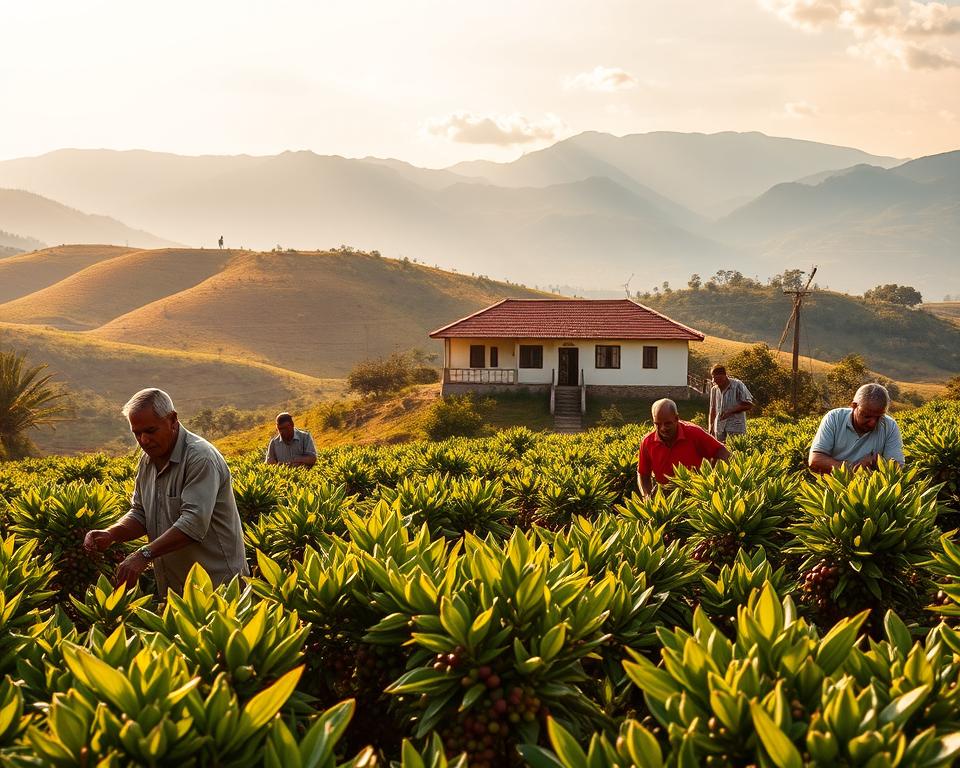
This blend of old and new gives their coffee a unique taste. It’s rich in history but also top-notch in quality. Because of this, they’re known and loved by coffee lovers everywhere.
Not only does their coffee taste amazing, but it also helps the environment. They’re a great example for other coffee farmers in Guatemala.
How to Support Indigenous Cooperatives of the Highlands
Supporting indigenous cooperatives is key for fair trade coffee in Guatemala. These groups in the highlands keep traditional coffee methods alive. They also promote green practices.
Consumers can help these cooperatives by making smart choices. Here are some ways to do it:
- Choose coffee with Fair Trade and Organic labels. These ensure the coffee is good for farmers and the planet.
- Buy coffee straight from these cooperatives or from roasters who do.
- Support companies that are open about their supply chain. They should also pay fair prices to farmers.
Buying coffee from these cooperatives helps Guatemala’s coffee culture. It supports practices that are good for the environment and people.
Also, talking about fair trade coffee Guatemala helps. It raises awareness about the importance of indigenous cooperatives.
Brewing Guide: Maximizing the Flavors of Guatemalan Coffee
To truly enjoy Guatemalan coffee, you need to know how to brew it right. This coffee is famous for its balanced taste and rich flavors. The secret to bringing out its best is in the coffee-to-water ratio and the brewing method.
A good coffee-to-water ratio is 1:15 to 1:17. This ratio helps get the most out of its complex flavors. When brewing with pour-over or drip, use fresh, filtered water at about 200°F.
The way you brew is also key. For pour-over, pour water in a circle to soak the grounds evenly. For French press, steep for 4 minutes before pressing. Choose a method that suits the coffee’s taste.
Guatemalan coffee growers focus on sustainable coffee production. Choosing coffee from sustainable sources helps the environment. It also supports the farmers and improves the coffee’s taste.
Try different brewing methods and ratios to find your favorite. Whether you’re a coffee expert or new to it, exploring Guatemalan coffee is a fun journey.
How to Implement Sustainable Practices Inspired by Guatemalan Farmers
Guatemalan coffee producers are leading the way in eco-friendly practices. They use methods that improve coffee quality and protect the environment. These practices are a great example for us to follow worldwide.
Shade-grown coffee is a key practice. It involves growing coffee under trees. This method boosts biodiversity, cuts down on pesticides, and enriches the soil. Small-scale farmers in Guatemala have seen their coffee quality rise and their ecosystems thrive.
Organic farming is another important practice. It avoids harmful chemicals. This approach makes the soil healthier, the coffee better, and keeps farmers and communities safe.
| Sustainable Practice | Benefits | Implementation |
|---|---|---|
| Shade-Grown Coffee | Biodiversity, reduced pesticides, improved soil health | Plant coffee under a canopy of trees |
| Organic Farming | Improved soil health, better coffee quality, healthier farmers | Avoid synthetic fertilizers and pesticides |
By embracing these sustainable practices, we can make the coffee industry greener. The success of Guatemalan farmers shows us the way. It encourages others to follow their lead.
Planning a Visit to Guatemala’s Coffee Farms
The coffee farms of Guatemala are more than just places to make coffee. They are keepers of tradition and culture. Visiting these farms gives you a special look into Guatemala’s coffee history and the hard work of family-owned farms.
When you plan your trip, think about when to go. The coffee harvest season is from November to March. This is your chance to see how coffee is made from start to finish. Many family farms in Guatemala open their doors to visitors, showing them the coffee journey.
It’s important to be a respectful tourist at Guatemala’s coffee farms. This means caring for the land, the farmers, and the local people. Visitors should think about how they impact the environment and help the local economy by buying coffee directly from the farms.
- Learn about the coffee production process and the challenges faced by local farmers.
- Respect the farm’s operations and private areas.
- Support local communities by buying coffee and other local products.
By following these tips, visitors can help the Guatemala coffee industry grow in a good way. This supports a fair and sustainable coffee culture.
How to Support Guatemalan Coffee Families From Abroad
Supporting Guatemalan coffee families from abroad is key. There are several ways to do this. One effective method is buying their coffee.
Buying fair trade coffee Guatemala directly helps these families. It ensures they get more money from their hard work.
| Method | Impact |
|---|---|
| Purchasing Fair Trade Coffee | Direct financial support to coffee-producing families |
| Participating in Direct Trade | Increased revenue for farmers through reduced intermediaries |
| Spreading Awareness | Educating consumers about the challenges and stories of Guatemalan coffee families |
It’s also important to spread the word about Guatemalan coffee families. By teaching others, we can grow a stronger support network for them.
Conclusion: The Future of Guatemala’s Coffee-Producing Families
Guatemala’s coffee families have a rich history and a bright future. Their focus on sustainable coffee production Guatemala keeps their farms thriving. This also ensures their coffee remains top-notch.
We, as consumers, have a big role to play. By picking high-quality, sustainably made Guatemalan coffee, we help these families. We also support their communities.
The Mendez and Ramirez estates show the value of old and new ways in coffee making. Their work to protect the environment and better their lives shows the potential of coffee farming families Guatemala to succeed.
Looking ahead, the success of Guatemala’s coffee families is up to us. By backing sustainable coffee, we can help these families and their communities flourish.