
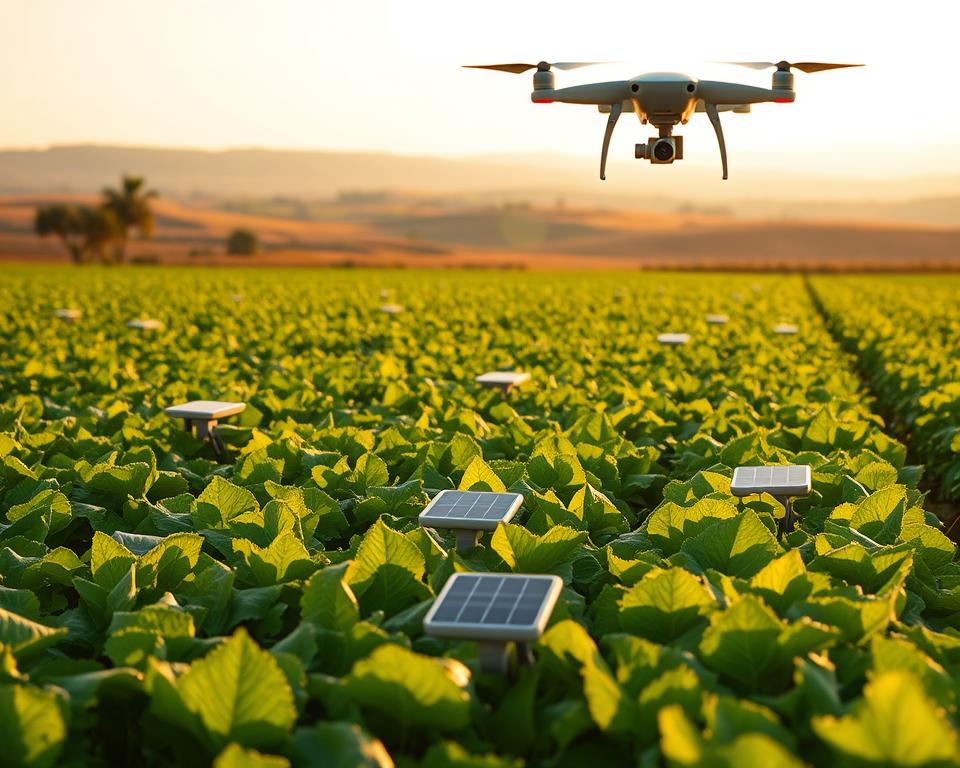
Guatemala’s coffee plantations are famous for their top-notch coffee. But keeping up this quality is a big challenge. Precision agriculture techniques have changed how farmers watch over their crops.
Farmers can spot problems early and cut down on losses. They can also use resources better. This not only makes crops healthier but also helps the environment.
With new monitoring tools, farmers get detailed info on their crops. This helps them make better choices and grow more coffee.
The Evolution of Coffee Farming in Guatemala
The coffee industry in Guatemala has a rich history. It combines traditional farming with modern technology. For years, farmers used methods passed down through generations.
But, new technologies have changed coffee farming. Drones and sensors have brought more efficiency and accuracy to farming.
Traditional Methods vs. Modern Technology
Before, farmers in Guatemala did everything by hand. This was hard work and sometimes not very precise.
Now, drones with sensors help farmers check on their crops. They can spot problems early and make better choices.
This mix of old and new ways of farming boosts productivity. It also makes farming more sustainable. The combination of traditional knowledge and modern tech is changing Guatemalan coffee farming. It makes farming more competitive and better for the environment.
Understanding Drones Sensors Coffee Monitoring Technology
The use of UAV sensors in coffee monitoring is a game-changer for Guatemalan farmers. Drones with advanced sensors can capture detailed data on coffee crops. This helps farmers make better decisions.
UAV sensors collect data in many ways, like multispectral and hyperspectral imaging. These technologies help check crop health and growth. The data shows insights into crop stress, soil moisture, and temperature changes.
- Multispectral sensors capture data across several spectral bands, helping to assess crop health.
- Hyperspectral sensors provide detailed spectral information, enabling the detection of subtle changes in crop conditions.
- Thermal sensors measure temperature variations, useful for monitoring soil moisture and detecting stress.
Guatemalan coffee farmers can now optimize their farming with UAV sensors and sensor technology. This leads to better crop yields and less environmental impact. The use of UAV sensors is a big step forward in precision agriculture.
Benefits of Drone Technology for Guatemalan Coffee Farmers
Drone technology is changing the game for Guatemalan coffee farmers. It helps them improve their farming, leading to better yields and sustainable operations.
Drone technology is great for monitoring crops. Drones with advanced sensors take detailed images and data. This lets farmers spot problems early and fix them fast. It boosts crop yields and makes farming more eco-friendly.
Cost-Effectiveness and Sustainability
Drone technology is a cost-effective way for farmers to check on their crops. It cuts down on the need for manual checks and helps spot issues early. This saves time and money. Plus, the data drones collect helps farmers use resources like fertilizers and water more wisely.
- Improved crop monitoring and early issue detection
- Enhanced data analytics for informed decision-making
- Cost savings through reduced manual inspections and optimized resource use
- More sustainable farming practices through precision agriculture
By using drones, Guatemalan coffee farmers can keep up with the global market. They also help make coffee production more sustainable. The use of
Getting Started: Equipment Selection and Setup
The journey to precision agriculture starts with picking the right drones and sensors for coffee farming. In Guatemala, coffee farmers are using drones to watch over their crops better. First, they need to know about the drones and sensors for coffee monitoring.
There are mainly two types of drones: fixed-wing and rotary-wing. Fixed-wing drones are great for big areas and can fly far. Rotary-wing drones are more flexible and work well for the complex terrains of Guatemalan coffee farms.
After choosing the right drone and sensors, the next important step is setting them up and calibrating them. Proper calibration makes sure the data is accurate and trustworthy. This means adjusting the drone’s flight settings, sensor sensitivity, and making sure the GPS is right.
- Make sure the drone’s firmware is current.
- Calibrate the sensors as the maker says.
- Do a test flight to check everything works.
By picking the best equipment and setting it up carefully, Guatemalan coffee farmers can use drones and sensors to improve their coffee monitoring. This not only boosts crop yields but also helps in farming more sustainably.
Step-by-Step Guide to Drone Flight Planning
Drone flight planning is key for Guatemalan coffee farmers using UAV sensors for crop monitoring. A good plan makes data collection efficient and accurate. It also meets the farmer’s needs.
The first step is to set the mission goals. This means figuring out what data is needed, like crop health or soil moisture. Knowing what you need helps choose the right sensors and set up the drone.
- Identifying the area to be surveyed
- Determining the optimal flight altitude and speed
- Setting the overlap between images to ensure comprehensive coverage
Before flying, check the weather. Look for wind speed, rain, and cloud cover. These affect data quality.
On the day of the flight, stick to the plan but be ready to adjust. Drone apps help follow the plan and get great data.
By following these steps, Guatemalan coffee farmers can improve crop monitoring. This leads to better yields and farm management.
Collecting and Analyzing Drone Data
Drone technology has changed how coffee farmers in Guatemala check on their crops. They use drones with sensors to get detailed info on crop health and growth.
First, drones with sensors like multispectral or hyperspectral cameras collect data. These cameras take images and data to check the coffee crops’ health and strength.
Analyzing Data for Insights
After collecting data, it’s analyzed with special software for useful insights. This helps farmers spot problems like pests, nutrient gaps, and water issues. They can then take specific actions.
The analysis involves cleaning, processing, and showing the data. Advanced methods like algorithms and machine learning find patterns and trends in the data.
| Data Type | Description | Insights Gained |
|---|---|---|
| Multispectral Imagery | Captures data across various spectral bands | Crop health, growth stages |
| Thermal Imagery | Measures temperature variations | Water stress, irrigation needs |
| Hyperspectral Imagery | Detailed spectral data for precise analysis | Pest infestations, nutrient deficiencies |
Guatemalan coffee farmers use drone data and analytics to make better choices. They can manage their farms better, leading to higher yields and quality.
Integrating Drone Data with Farm Management Practices
Drone technology is changing the game for coffee farmers in Guatemala. They can now make better decisions about their farms. The data from drones helps improve crop yields and cut down costs.
By analyzing data on crop health and soil moisture, farmers can fine-tune their irrigation and fertilization. For example, drones can spot stressed crops, helping farmers act quickly.
| Farm Management Practice | Drone Data Application | Benefit |
|---|---|---|
| Irrigation Management | Soil Moisture Monitoring | Water Conservation |
| Fertilization Planning | Crop Health Analysis | Reduced Chemical Use |
| Pest Control Measures | Early Detection of Stress | Increased Crop Yield |
Using drone data in farm management makes coffee farming more efficient and sustainable. Guatemalan farmers can compete better in the global market. They also reduce their environmental impact.
As drone technology gets better, we’ll see even more ways it helps coffee farms. It’s an exciting time for coffee farm monitoring and more.
Practical Applications in Guatemala’s Coffee Regions
Drones are changing how farmers in Guatemala watch over their coffee crops. They use drones to gather data on how healthy the crops are, how wet the soil is, and more. This info is key for growing great coffee.
In places like Antigua and Huehuetenango, drones help farmers spot where they need to water and fertilize more carefully. This way, they grow more coffee and use less water and chemicals. It’s good for the environment too.
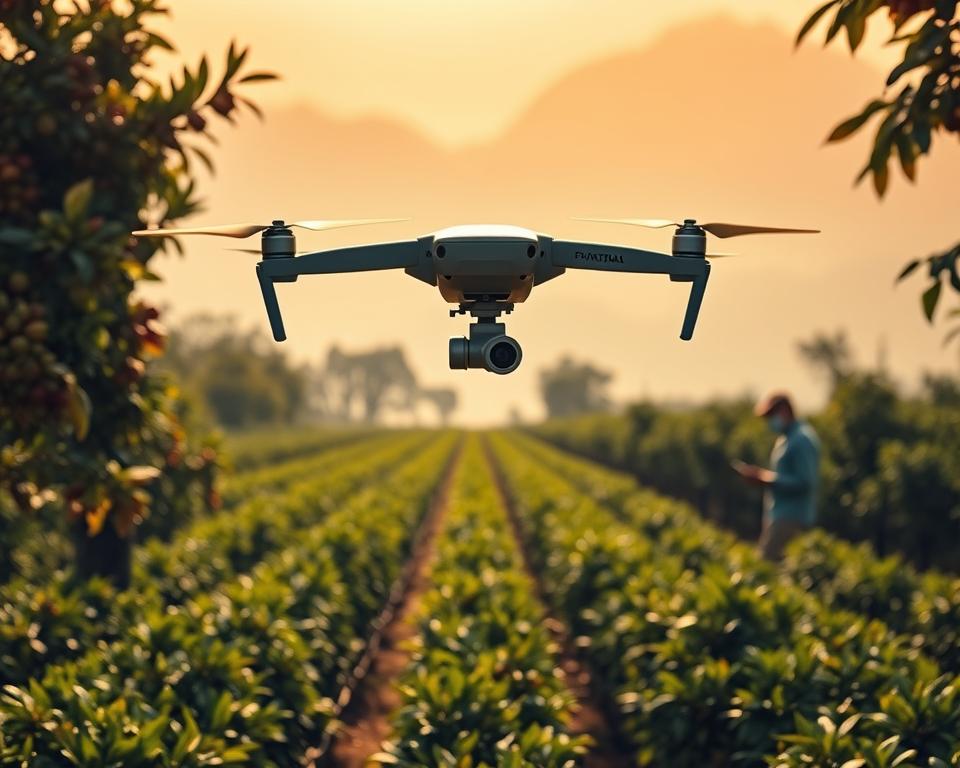
Drone use varies in Guatemala’s coffee areas because of different landscapes and weather. For example, in the highlands, drones check on crops in hard-to-reach spots.
| Region | Primary Use of Drones | Benefits |
|---|---|---|
| Antigua | Crop Health Monitoring | Improved Yield, Reduced Chemical Use |
| Huehuetenango | Soil Moisture Monitoring | Better Water Management, Increased Efficiency |
| Atitlán | Topographic Mapping | Enhanced Farm Planning, Improved Drainage |
Guatemalan coffee farmers are making their farms better by using drones. This helps the coffee industry grow in a green way. As drones get better, they’ll help farmers even more, making coffee farming more efficient and productive.
Conclusion: The Future of Coffee Monitoring in Guatemala
The coffee industry in Guatemala is on the verge of a big change. This change comes from using drones and sensors to monitor coffee. With billions of coffee plants and millions of tons of coffee made every year, drones could make a huge difference.
Drones will help farmers find problems like coffee leaf rust early. This disease can really hurt coffee production. A study on PMC shows drones can help reduce these losses and make farming better.
The future of coffee in Guatemala looks even brighter. By using new technologies, farmers will work more efficiently. This means better coffee for everyone.