
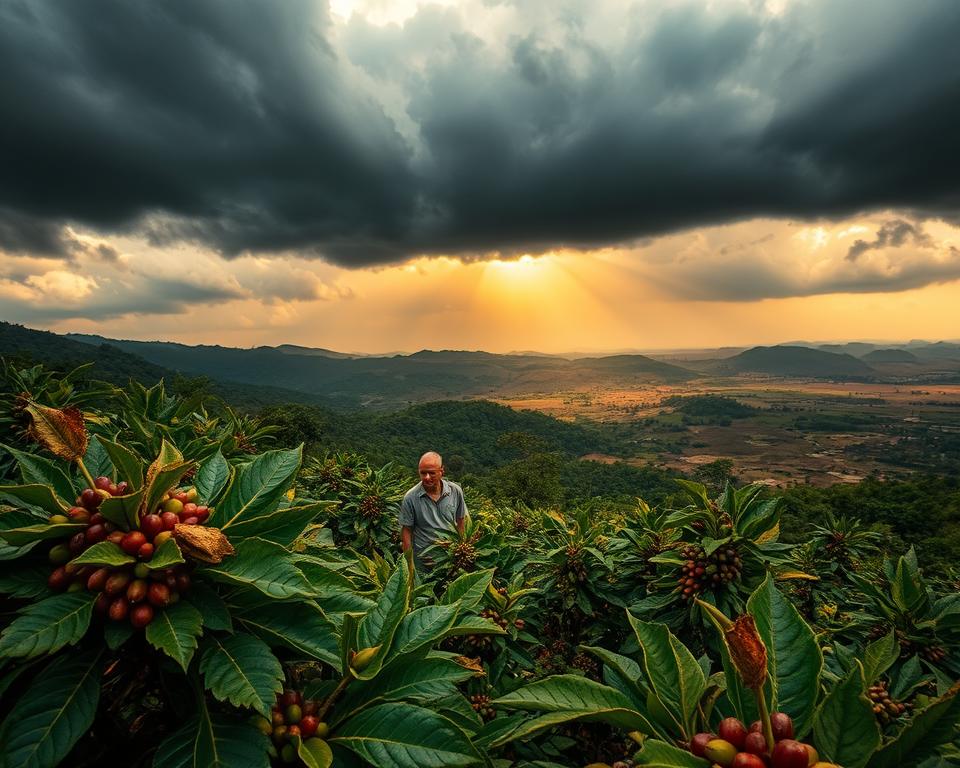
Guatemalan coffee is known for its rich taste and unique flavors. But, the climate crisis is putting it at risk. Rising temperatures and changing rain patterns are messing with the coffee plants’ needs.
Experts say climate change could cut coffee yields and reduce growing areas by 2050. This danger affects coffee farmers’ jobs and the rich coffee culture of Guatemala.
The climate shift is making coffee plants more susceptible to pests and diseases. It’s also changing the taste of the beans. To save Guatemalan coffee, farmers are trying new ways to grow it despite these challenges.
The Rich Heritage of Guatemalan Coffee
Coffee in Guatemala is a tale of passion, culture, and hard work that goes back centuries. It has been a big part of Guatemalan life since the colonial times.
From Colonial Crop to National Treasure
Coffee was first grown in Guatemala’s highlands and soon became very valuable. It grew into a symbol of the country’s rich culture and its economic strength.
Cultural Practices and Ceremonies Around Coffee
Coffee deeply affects Guatemalan culture, touching many parts of life and rituals. It’s key in harvest festivals and coffee ceremonies, helping to bring people together and show their identity.
Guatemala has eight coffee-growing areas, each with its own special features. From Antigua’s volcanic highlands to Huehuetenango’s highlands, these places give Guatemalan coffee its varied tastes.
Altitude, Soil, and Microclimate Advantages
The country’s different altitudes, rich soils, and good climates make it perfect for growing coffee. These natural gifts not only make the coffee better but also help farmers grow it in an eco-friendly way.
Understanding Coffee and Climate Change
It’s key to know how climate change affects coffee. Coffee growing depends a lot on the weather. Changes in temperature and rain can hurt coffee crops.
Temperature Thresholds for Arabica Cultivation
Arabica coffee needs a certain temperature to grow well. It should be between 15°C and 25°C. If it’s too hot or cold, the coffee won’t grow as well.
Rainfall Patterns and Flowering Cycles
Rain is very important for coffee to bloom. Coffee needs rain, then dry weather, to bloom. But, if the rain is unpredictable, it messes up this process.
Weather during the ripening stage is also important. Too much heat can make the beans ripen too fast. This can make the coffee taste bad.
Climate’s Role in Flavor Profile Formation
The weather affects how coffee tastes. Cool weather and clear wet and dry seasons make coffee taste complex. But, if the weather changes, so does the taste.
| Climate Factor | Impact on Coffee |
|---|---|
| Temperature Increase | Reduced yields, lower quality |
| Unpredictable Rainfall | Disrupted flowering cycles |
| Extreme Weather Events | Damage to crops, infrastructure |
Knowing these things helps us grow coffee smarter. We can fight climate change’s effects on coffee this way.
Current Climate Challenges Facing Guatemalan Coffee Farmers
Rising temperatures and changing rain patterns are making life hard for Guatemalan coffee farmers. The climate crisis is changing the way coffee plants grow. This leads to many challenges for farmers.
Upward Migration of Suitable Growing Areas
As it gets warmer, the best places for growing coffee move to higher places. This change is a big problem for farmers. They often have to start new farms or move their old ones.
Reduced Land Availability for Traditional Varieties
The changing climate means less land for growing traditional coffee. Farmers must try new varieties or ways of farming. This could change how coffee has been grown for years.
Coffee leaf rust, a fungal disease, is spreading because of the climate. This disease can cut down coffee yields a lot. It hurts farmers’ ways of making a living.
Coffee Berry Borer and Other Climate-Sensitive Pests
The coffee berry borer and other pests are becoming more common because of the climate. These pests can harm coffee crops a lot. This adds to the risk of farmers losing money.
How Extreme Weather Events Disrupt Coffee Production
Extreme weather events are threatening coffee production in Guatemala. Heavy rainfall, droughts, and high temperatures harm coffee yields and quality.
These weather events damage roads and bridges. This makes it hard to move coffee beans to processing facilities. Such delays can lead to big harvest losses.
Long-term Recovery Challenges After Major Storms
After big storms, coffee farms face big challenges. Soil erosion and losing shade trees are major issues. These problems reduce biodiversity and make farms more vulnerable to future storms.
| Weather Event | Impact on Coffee Production | Mitigation Strategy |
|---|---|---|
| Heavy Rainfall | Infrastructure damage and soil erosion | Implement soil conservation techniques |
| Drought | Reduced coffee yields | Use irrigation management systems |
| High Temperatures | Decreased coffee quality | Implement shade management practices |
Irrigation Needs in Traditionally Rain-Fed Areas
In areas that usually get rain, extreme weather shows the need for irrigation. This is to help coffee grow during dry times.
Water Conservation Techniques During Dry Periods
Using water-saving methods like mulching and drip irrigation helps. These methods reduce drought’s impact on coffee crops. They make coffee production more sustainable.
By understanding and tackling the effects of extreme weather, Guatemalan coffee farmers can lessen their environmental impact. This is crucial for sustainable coffee production.
The Economic Impact of Climate Change on Coffee Communities
Coffee communities are facing tough economic times because of climate change. The changing weather affects coffee yield, quality, and market value. This leads to many economic problems.
Production Fluctuations and Income Instability
Climate change brings unpredictable weather, causing coffee production to go up and down. This makes it hard for farmers to have stable income. It’s tough for them to plan for the future.
Quality Concerns and Premium Market Access
Changes in weather can make coffee quality go down. Lower quality coffee means farmers can’t get into the high-end markets. This cuts down their income even more.
Generational Shifts Away from Coffee Farming
When coffee farming is unstable, young people might choose other jobs. They might leave coffee farming for careers that are more stable.
Preserving Coffee Knowledge Through Economic Hardship
Even with tough times, keeping traditional coffee knowledge is key. Sustainable farming and community support help farmers keep their jobs.
| Economic Impact | Description |
|---|---|
| Production Fluctuations | Unpredictable weather patterns affecting coffee yield |
| Quality Concerns | Climate change impacting coffee quality and market access |
| Generational Shifts | Younger generations seeking more stable careers |
Climate change has many effects on coffee communities. It impacts production, quality, and farmers’ lives. To tackle these issues, we need a big plan. This plan should include sustainable farming and support for coffee farmers.
Traditional Knowledge: A Foundation for Resilience
Traditional knowledge is key for Guatemalan coffee farmers. It helps them face climate change. For years, farmers have used old ways to grow coffee. Now, these methods are seen as ways to fight climate change.
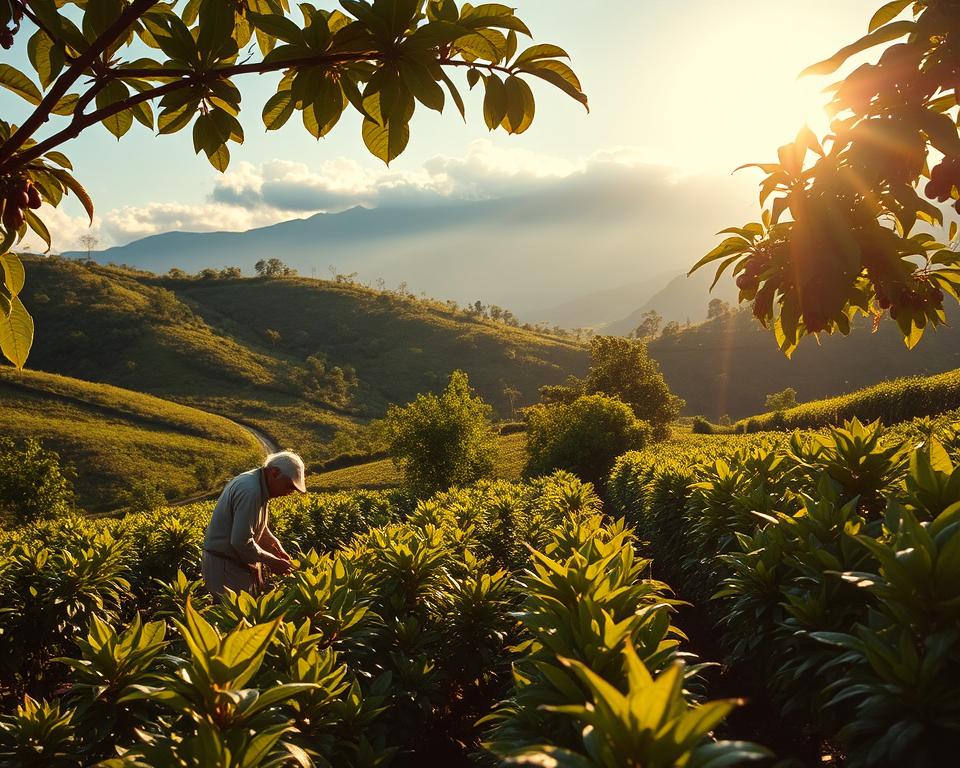
Maya farming techniques, like growing different crops and organic farming, are being used today. These methods help the soil and add to biodiversity. This makes coffee farms stronger against climate change.
Traditional Weather Prediction and Adaptation
Old ways of predicting the weather are helping farmers adjust to climate changes. By knowing weather patterns, farmers can plan better. They can decide when to plant and harvest their coffee.
Family-Based Training and Skill Development
Teaching within families is important for keeping traditional knowledge alive. Farmers share their knowledge with younger generations. This ensures that climate-resilient coffee farming continues.
Community Cooperatives Preserving Traditional Methods
Community cooperatives are key in keeping traditional farming alive. They let farmers share knowledge and resources. These groups help promote smart coffee farming and support farmers in adapting to climate change.
Step-by-Step Guide to Climate-Smart Coffee Cultivation
Climate-smart coffee cultivation is a detailed approach. It includes several key strategies. Guatemalan coffee farmers can become more resilient to climate change by using these practices. This ensures their coffee production stays sustainable.
Mapping Microclimates and Risk Zones
It’s important to understand the microclimates and risk zones on a coffee farm. Farmers need to identify areas that are more likely to face frost, drought, or too much rain. This lets them plan their strategies based on these conditions.
Documenting Weather Patterns and Changes
Keeping detailed records of weather patterns and changes is crucial. This helps farmers prepare for extreme weather events. The data is key for making smart decisions about planting, harvesting, and managing the farm.
Native shade trees are key in regulating temperature and supporting biodiversity. Choosing the right species is essential for a balanced ecosystem.
| Shade Tree Species | Benefits |
|---|---|
| Guava | Provides fruit and shade, improves soil health |
| Cherry | Enhances biodiversity, acts as a windbreak |
| Ceiba | Regulates temperature, supports ecosystem services |
Optimal Canopy Density for Temperature Regulation
Keeping the canopy density optimal is crucial for temperature regulation. It protects coffee plants from extreme temperatures.
Rainwater Harvesting Systems for Coffee Farms
Using rainwater harvesting systems can greatly reduce a farm’s need for external water. This helps during droughts.
Efficient Irrigation Methods During Dry Periods
Efficient irrigation during dry periods ensures coffee plants get the water they need. This is done without wasting water.
Composting and Organic Matter Management
Composting and managing organic matter improve soil health. They increase water retention and boost the farm’s resilience.
Erosion Control on Sloped Coffee Plantations
Implementing erosion control measures on sloped plantations is vital. It prevents soil loss and keeps the soil intact. Techniques like terracing and cover cropping are effective.
Innovative Adaptation Strategies in Guatemalan Coffee Farming
Climate change is a big challenge for coffee farming in Guatemala. Farmers are finding new ways to keep their coffee production going. They are looking at different strategies to make sure coffee farming stays sustainable.
Heat-Tolerant Varieties That Maintain Quality
One big idea is to grow coffee that can handle the heat without losing quality. Scientists are working on creating coffee plants that can stand up to warmer temperatures. This way, the coffee can still taste great.
Experimental Plots and Variety Testing
They are testing new coffee types in special plots. This lets them see which ones do best in different weather. It helps find the most hardy and productive coffee varieties.
Another strategy is to plant coffee in layers. This protects the plants from harsh weather. It also helps keep the soil in place and provides shade.
Companion Crops That Support Coffee Health
Planting other crops with coffee is also a good idea. Crops like bananas or beans help keep the soil healthy. They also give farmers another way to make money.
| Adaptation Strategy | Benefits |
|---|---|
| Heat-Tolerant Varieties | Improved resilience to rising temperatures |
| Multi-Story Planting | Reduced soil erosion and shade provision |
| Companion Cropping | Improved soil health and additional income |
Weather Monitoring Tools for Small-Scale Farmers
Small farmers now have tools to track the weather. This helps them decide when to plant and harvest.
Mobile Applications Supporting Climate Adaptation
There are apps to help farmers adapt to climate change. These apps give farmers info on weather, pests, and how to farm better.
By using these new methods, Guatemalan coffee farmers are getting better at dealing with climate change. This helps keep their coffee production going strong for years to come.
Sustainable Practices Reducing Carbon Footprint in Coffee Production
Guatemalan coffee farmers are now using new ways to cut down their carbon footprint. This change is key for coffee’s future as climate change grows. It’s all about making coffee farming sustainable.
Natural Pest Management Approaches
They’re turning to natural pest control instead of chemicals. This method is better for the environment and keeps the ecosystem in balance.
Reducing Chemical Inputs While Maintaining Yields
Farmers are using organic soil amendments to cut down on chemicals. This way, they keep their yields high while making their farming greener. It’s good for the soil and the planet.
Solar drying systems are a big step forward. They use the sun instead of fossil fuels, cutting down on emissions. It’s a greener way to dry coffee.
Water-Efficient Washing and Processing
They’re also saving water in their coffee making process. This helps protect our water resources and lessens the environmental harm of coffee making.
| Sustainable Practice | Environmental Benefit |
|---|---|
| Natural Pest Management | Reduces chemical use, maintains ecosystem balance |
| Solar-Powered Drying | Lowers greenhouse gas emissions |
| Water-Efficient Processing | Conserves water, reduces wastewater |
Collaborative Efforts: Farmers, Scientists, and Industry Partners
Farmers, scientists, and industry partners are working together to make coffee more resilient to climate change. This teamwork is key to finding ways to protect Guatemalan coffee from climate impacts.
On-farm trials let farmers test new ways to grow coffee in their fields. This hands-on method makes sure the solutions work well.
Knowledge Sharing Networks Among Producers
Knowledge sharing networks help coffee producers share tips and ideas. This way, farmers can learn how to deal with climate changes together.
Price Premiums Supporting Adaptation Investments
Higher prices for climate-resilient coffee give farmers the money they need to adapt. This support is vital for keeping coffee farming sustainable over time.
Long-term Buyer Partnerships During Climate Transitions
Long-term partnerships between buyers and farmers help keep farmers’ income stable. These partnerships are important for a steady supply chain and support during tough times.
Success Stories: Guatemalan Farmers Leading Climate Adaptation
Guatemalan coffee farmers are facing climate change head-on with new strategies. They’re making their farms sustainable and helping their communities become more resilient.
Innovative Terracing and Microclimate Management
Farmers use terracing to fight soil erosion and keep water. This method also creates microclimates that help coffee grow better.
Community-Based Climate Response Systems
Local groups and farmers are working together to adapt to climate change. They’re developing strategies that involve everyone.
| Adaptation Strategy | Benefits |
|---|---|
| Terracing | Reduces soil erosion, improves water retention |
| Community-Based Initiatives | Enhances climate resilience, fosters collaboration |
| Carbon Sequestration | Reduces carbon footprint, improves soil health |
| Biodiversity Conservation | Supports ecosystem services, enhances coffee resilience |
Carbon Sequestration Through Improved Farming Practices
Farmers are using agroforestry and organic amendments. These practices improve soil health and help sequester carbon.
Biodiversity Conservation Supporting Coffee Resilience
Keeping biodiversity on farms is key for coffee’s future. Diverse ecosystems make crops less vulnerable to climate stress.
Conclusion: Preserving Coffee Traditions in a Changing Climate
The coffee industry is at a critical juncture, facing the pressing issue of climate change. Rising temperatures and extreme weather events are impacting coffee production. This threatens the livelihoods of farmers and the rich heritage of Guatemalan coffee.
To address the impact of climate change on coffee, it is essential to adopt climate-smart practices. This includes better farming techniques and more efficient on-farm processing. Collaborative efforts between farmers, scientists, and industry partners are also crucial in developing and implementing effective adaptation strategies.
By supporting these initiatives and celebrating success stories, we can work towards a sustainable coffee future. Preserving coffee traditions in the face of climate change requires a concerted effort. This involves not only adapting to the changing climate but also reducing the industry’s carbon footprint.
The future of Guatemalan coffee depends on our ability to address the challenges posed by Coffee and Climate Change. By working together, we can protect the traditions and heritage that make Guatemalan coffee renowned worldwide.