
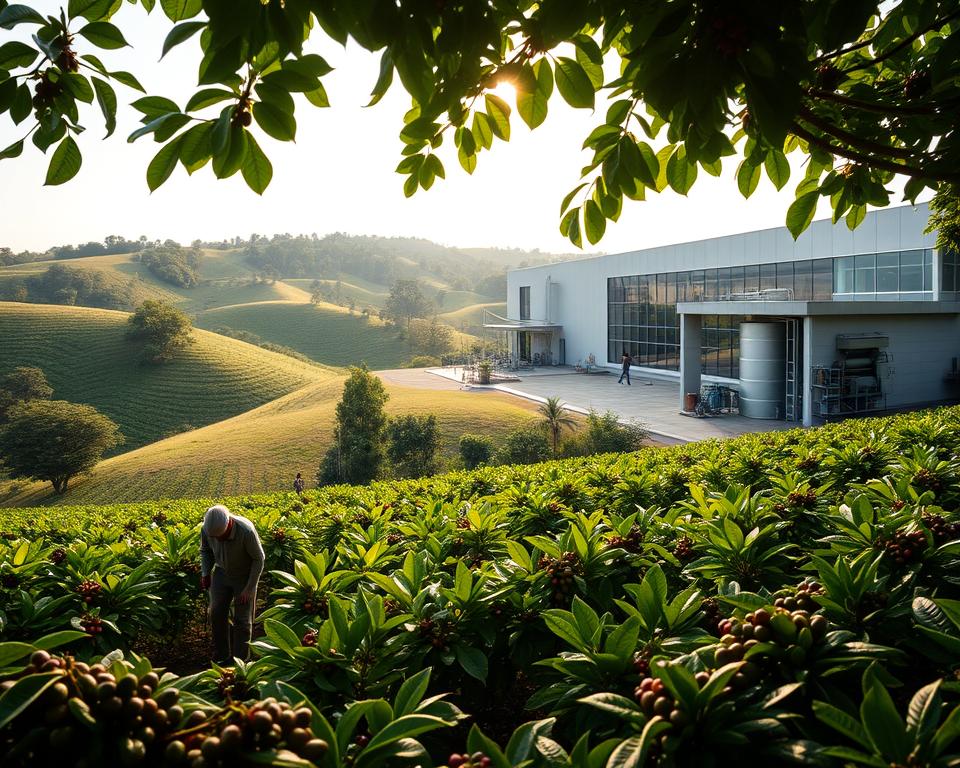
Guatemala’s coffee is famous for its quality. But, making and roasting coffee can harm the environment. Now, the industry is moving towards greener ways.
Using sustainable coffee production helps the planet and makes coffee better. Roasters and farmers can cut down waste by managing it better. They can also use coffee byproducts again.
This guide will show why reducing waste is key in Guatemala’s coffee world. It will also share ways roasters and farmers can be more eco-friendly.
The Environmental Impact of Coffee Production in Guatemala
Coffee production in Guatemala faces several environmental challenges. These include deforestation, water pollution, and waste generation. Deforestation happens when forests are cut down for coffee plantations. This leads to a loss of biodiversity and soil erosion.
Water pollution is another big issue. Coffee processing needs a lot of water, which can pollute nearby water sources if not handled right. Also, the waste from coffee processing can harm the environment if not disposed of properly.
The coffee industry needs to adopt sustainable practices. Using eco-friendly roasting methods and focusing on sustainability can lessen the environmental harm of coffee production in Guatemala.
By using less water and setting up good waste management systems, the coffee industry can reduce its environmental impact. This helps in creating a more sustainable future.
Understanding Coffee Production Waste Streams
The coffee industry creates a lot of waste during its production. It’s key to understand these waste streams to reduce waste in the coffee industry. This is especially true in countries like Guatemala, where coffee is a big crop.
Coffee production waste includes things like coffee cherry pulp, parchment, and other by-products. For example, coffee cherry pulp is the outer skin of the coffee cherry. It makes up about 45% of the coffee cherry’s total weight. For more info on coffee roasting and its environmental impact, check out this detailed guide on coffee roasting.
To manage waste in coffee production well, we need to know where the waste comes from. We can then use sustainable practices to handle it. This might mean composting coffee cherry pulp or using it for animal feed or energy. By doing this, coffee producers and roasters can lessen their environmental impact. They help make the coffee industry more sustainable.
Pre-Harvest Waste Reduction Strategies
Pre-harvest waste reduction is crucial for sustainable coffee in Guatemala. By cutting down waste before picking, farmers can lessen their impact on the environment.
Pruning is a good method. It gets rid of sick or broken plants, leading to better coffee. Also, keeping the soil healthy means less need for harmful chemicals and less soil loss.
Integrated Pest Management (IPM) is also key. It uses different methods to fight pests and diseases. This way, farmers use fewer chemicals, cutting down on waste and pollution.
Pre-Harvest Strategies and Their Benefits
| Strategy | Benefits |
|---|---|
| Pruning | Promotes healthier yields, reduces waste |
| Soil Conservation | Maintains soil health, reduces erosion |
| Integrated Pest Management | Reduces chemical use, minimizes waste |
For more on sustainable coffee, check out CBI’s coffee market info. By using these strategies, Guatemalan farmers help make coffee more sustainable.
Harvest-Time Waste Reduction Methods
The harvesting stage is key for reducing waste in coffee production. It needs careful planning and execution. Selective picking is a method that helps cut down waste. It involves picking coffee cherries when they are perfectly ripe.
This way, fewer unripe or overripe cherries are picked. These cherries can spoil the rest. It’s a smart move to reduce waste.
Careful handling of coffee cherries is also crucial. Damaged cherries can lower quality and increase waste. Farmers learn to handle cherries gently. This is to prevent damage during collection and transport.
Using these methods not only cuts down waste but also boosts coffee quality. The table below shows the advantages of selective picking and careful handling.
| Method | Benefits | Impact on Waste Reduction |
|---|---|---|
| Selective Picking | Improves coffee quality, reduces unripe/overripe cherries | High |
| Careful Handling | Prevents damage to coffee cherries, maintains quality | Medium |
| Combined Approach | Enhances overall efficiency, maximizes quality | Very High |
By adopting these methods, Guatemalan coffee producers can greatly reduce their environmental impact. They also improve their coffee’s quality. This approach supports eco-friendly roasting and green coffee roasting practices. It makes the coffee production process more sustainable.
Waste Reduction in Coffee Processing
Guatemalan coffee producers are now focusing on reducing waste in coffee processing. This is part of their effort to be more eco-friendly. The processing stage is where a lot of waste can happen, but there are ways to cut down on it.
Honey processing is one effective method. It removes the coffee cherry’s skin but keeps some or all of the mucilage. This method uses less water and gives the coffee a unique taste.
Setting Up Small-Scale Honey Processing Operations
For small coffee producers in Guatemala, starting honey processing needs careful planning. Important things to consider include:
- Getting the right equipment to handle the cherries well.
- Training staff on honey processing to keep quality high.
- Watching the drying process to avoid over-fermentation.
By using honey processing, Guatemalan coffee makers can stand out in the market. They also reduce their environmental impact.
Quality Control in Water-Reduced Processing
Water-reduced processing is becoming popular because it saves water. To keep quality up in these methods:
- Check the coffee’s moisture level often to avoid drying issues.
- Sort beans carefully to remove any that are not good.
- Use technology to keep an eye on fermentation and drying.
By focusing on quality, Guatemalan coffee makers can meet global standards. They do this while being kind to the environment.
In summary, reducing waste in coffee processing is key for sustainable coffee in Guatemala. By using honey processing and keeping quality high in water-reduced methods, producers can lessen their environmental impact.
Waste Reduction Coffee Roasting Techniques
Coffee roasting is getting better, thanks to new ways to cut down on waste. Chaff, the dry skin that falls off during roasting, is a big problem. But, finding good uses for chaff is key to making coffee roasting greener.
Innovative Uses for Chaff in Agricultural Applications
Chaff can be used in many ways to help coffee farms. Here are some cool uses:
- Compost: Chaff can be added to compost piles to create nutrient-rich soil for coffee plantations.
- Animal Feed: It can be used as a nutritious feed supplement for animals.
- Mulch: Chaff can be used as mulch to retain moisture and suppress weeds in coffee farms.
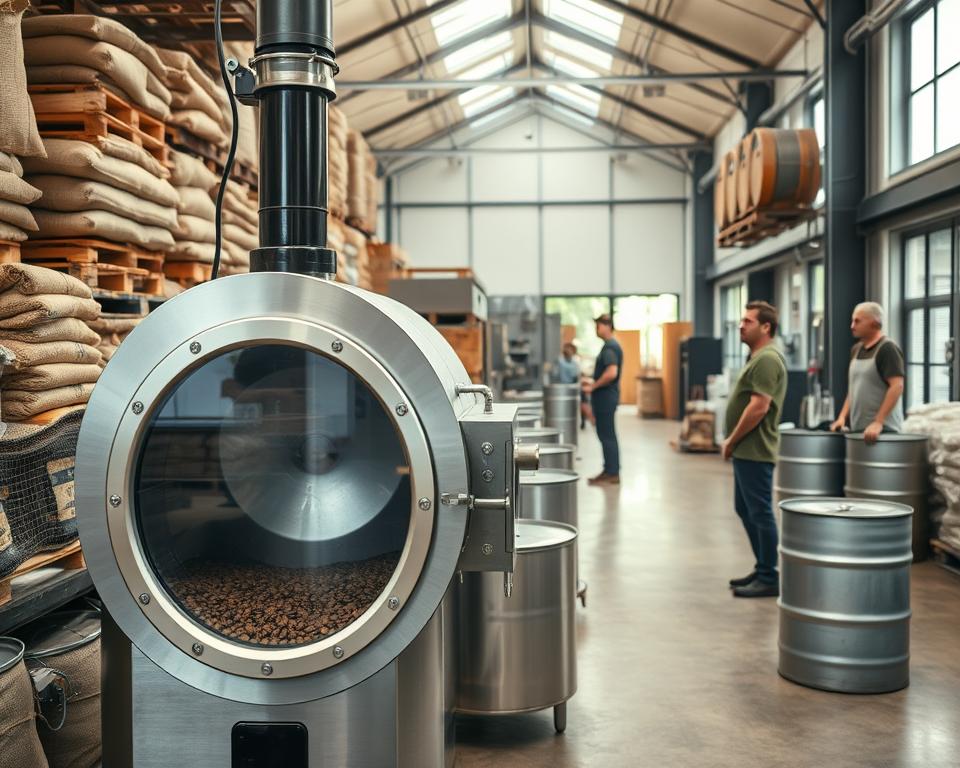
To really cut down on waste, coffee roasters need to set up good systems for collecting chaff and other waste. This means:
- Installing chaff collection systems that can catch the chaff during roasting.
- Keeping roasting equipment in top shape to avoid spills and waste.
- Starting recycling programs for the packaging used in roasting coffee.
By using these methods, coffee roasters can make a big difference. Becoming a zero waste coffee roaster is a big challenge. But, with new ideas and good waste management, it’s possible. This not only helps the planet but also makes the coffee industry more sustainable.
Repurposing Coffee By-Products in Guatemala
In Guatemala, coffee makers are making waste useful. They compost it. This method cuts down on waste and makes soil better.
Small-Scale Composting for Family Farms
Small family farms can easily compost coffee waste. It’s a cheap way to make soil better. They use coffee cherry pulp and other organic waste to make a natural fertilizer.
| Benefits | Small-Scale Composting | Commercial Composting |
|---|---|---|
| Cost | Low initial investment | Higher initial investment |
| Scalability | Limited by farm size | Can be scaled up significantly |
| Impact | Improves soil health for family farms | Can supply compost to multiple farms |
Commercial Composting Operations
Guatemala’s big composting operations use coffee waste too. They make lots of compost. This compost helps many farms, making the coffee industry greener.
Guatemalan coffee roasters are reducing their environmental impact. They use composting. This helps the coffee industry and the environment.
Packaging and Distribution Waste Reduction
The Guatemalan coffee industry is working hard to cut down on waste. They focus on making their packaging and distribution more eco-friendly. This means using green coffee beans and delivering them in a way that’s good for the planet.
They’re using biodegradable materials for packaging. This includes compostable bags and recyclable containers. They’re also making their packaging smaller without losing quality.
They’re also making their delivery routes more efficient. This helps lower carbon emissions. Using just-in-time delivery systems means less packaging and storage needs.
| Strategy | Description | Benefits |
|---|---|---|
| Biodegradable Packaging | Using compostable bags and recyclable containers | Reduces landfill waste, minimizes environmental impact |
| Minimized Packaging | Optimizing packaging design to use fewer materials | Reduces waste, lowers material costs |
| Logistics Optimization | Streamlining transportation routes, using fuel-efficient vehicles | Lowers carbon emissions, reduces distribution costs |
By using these methods, Guatemalan coffee producers and distributors are making a big difference. They’re helping to make the coffee industry more sustainable.
Implementing a Zero-Waste Coffee Roastery
Starting a zero-waste coffee roastery is a big step towards a greener coffee industry in Guatemala. It cuts down on environmental harm and makes roasting more efficient and profitable.
Creating a Waste Reduction Culture
It’s key to build a culture that values reducing waste. This means teaching staff about the need to cut down on waste. It also means finding ways to reuse and recycle materials in the roastery.
- Do regular waste audits to find ways to do better.
- Start recycling programs for coffee chaff and packaging.
- Work on making roasting profiles more efficient to reduce waste.
By focusing on sustainability, coffee roasteries can greatly lessen their impact on the environment.
Monitoring and Improvement Systems
Having good systems to track and improve waste is vital for going zero-waste. This means keeping an eye on waste, making changes when needed, and always looking for ways to do better.
| Waste Reduction Strategy | Implementation Steps | Expected Outcome |
|---|---|---|
| Reduce | Optimize roasting profiles, minimize packaging | Less waste generated |
| Reuse | Reuse coffee bags, implement chaff recycling | Reduced waste sent to landfills |
| Recycle | Implement recycling programs for packaging and chaff | Significant reduction in waste |
By using these strategies and always looking to improve, Guatemalan coffee roasteries can reach zero-waste status. This helps make the coffee industry more sustainable.
Technology and Innovation for Waste Reduction
New technologies are helping the coffee industry cut down on waste. These advancements make sustainable coffee production more efficient. They use advanced processing and waste management tech.
In Guatemala, coffee makers are using tech to lessen waste. New methods let them use coffee cherry by-products better. This cuts down on environmental harm.
By using by-products and saving water, coffee processing gets greener. Anaerobic digestion and composting are key in managing waste.
Technology in coffee making doesn’t just reduce waste. It also makes the coffee supply chain more sustainable. Guatemalan coffee producers can be better stewards of the environment. They can keep making high-quality coffee too.
Economic Benefits of Waste Reduction Programs
Waste reduction in coffee production helps the environment and boosts economic health. Coffee producers and roasters can cut their costs by reducing waste. This is done by lowering waste disposal costs and using resources more efficiently.
Creating new revenue streams is another big plus. Coffee by-products like husks and silver skin can be turned into organic fertilizers, animal feed, or biofuels. This can make businesses in the coffee industry more profitable.
Also, going green can make a company’s brand more appealing. Today’s consumers want to buy from brands that care about the planet. This can lead to more loyal customers and a bigger market share. Sustainability is key in the coffee world.
Waste reduction also means saving on energy and water. Using new technologies to reduce waste can help save even more. By cutting down on carbon footprint, companies can save money on energy and help the environment.
In short, waste reduction programs are a win-win for the coffee industry. They help cut costs, create new income sources, and improve a brand’s image. This makes the coffee industry more sustainable and profitable for everyone.
Conclusion: Building a Sustainable Future for Guatemalan Coffee
Guatemalan coffee is famous for its rich taste and quality. But, the industry’s environmental impact is a big worry. By using sustainable coffee production and reducing waste in roasting, we can lessen harm to the planet.
Strategies to cut down waste are key to sustainability. From picking to roasting, finding new uses for coffee by-products helps. Also, better packaging and distribution make the industry greener.
As more people want sustainable coffee, producers and roasters in Guatemala must join forces. By focusing on waste reduction and sustainability, the industry can protect the environment. This also helps farmers and keeps high-quality coffee coming.
The future of Guatemalan coffee depends on innovation, teamwork, and a green approach. With these steps, Guatemalan coffee can stay a favorite and eco-friendly choice for everyone.