
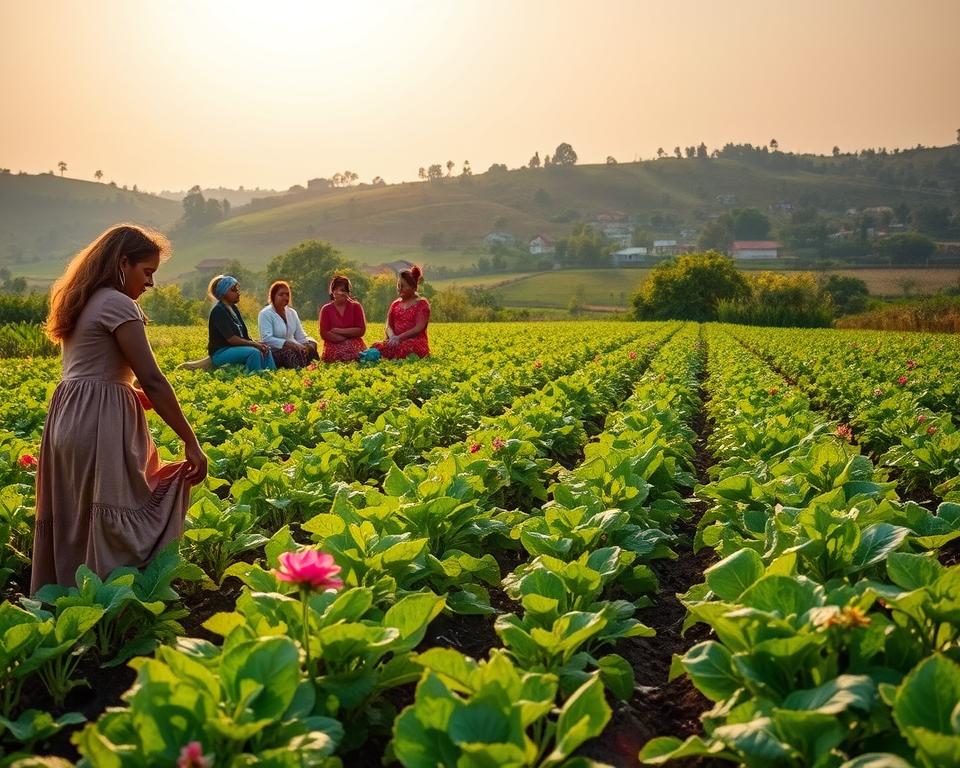
Guatemala’s coffee industry is changing thanks to women in sustainable agriculture. Their work is not just changing how coffee is made. It’s also making life better for those who grow it.
These efforts are making coffee production fairer and greener. Women are leading the way in sustainable practices. They are shaping Guatemala’s coffee future.
This change will help both local communities and the environment. It’s a big step forward.
The Current State of Guatemala’s Coffee Industry
Guatemala’s coffee industry is at a turning point. It’s trying to mix old farming ways with new, green methods. The country is famous for its top-notch coffee beans. Many farms are now using organic farming to help the environment.
Using organic farming makes the coffee better and helps keep nature and soil healthy. Fair trade coffee is also key. It makes sure farmers get a good price for their coffee, helping them live better.
But, the industry has big challenges like climate change, pests, and diseases. These can hurt coffee production and quality. Yet, there are chances for growth with green practices and fair trade.
By focusing on organic and fair trade, Guatemala’s coffee can help farmers and the planet. It’s a step towards a greener coffee world.
Understanding Women’s Role in Guatemalan Coffee Farming
Women are key in Guatemalan coffee farming. They help a lot with the country’s coffee. They do more than just work; they make important decisions too.
A World Trade Organization report shows women manage household resources. This includes coffee production making trade work for women.
Female coffee growers face many challenges. They struggle with getting credit, training, and access to markets. Yet, they are essential in using sustainable farming methods.
- Improving coffee quality through better processing techniques
- Promoting environmental sustainability
- Enhancing household income through diversified farming
Helping women in the coffee industry is vital. Training and resources can greatly improve their lives. This helps the whole coffee farming community.
Women Sustainable Agriculture Coffee: Pioneering Change
In Guatemala, women are changing the game in sustainable coffee production. They are key in making farming better for the environment and the economy. Their work improves coffee quality and ensures farming can continue for years to come.
Environmental Improvements
Women in Guatemalan coffee farming are using new methods that are kinder to the planet. They use organic fertilizers, grow coffee under shade, and manage water well. These steps help keep biodiversity, reduce deforestation, and protect water.
By choosing sustainable farming, women are making a big difference. They help preserve nature, cut down on deforestation, and keep water safe.
Economic Benefits
Women’s role in sustainable coffee farming brings big economic wins. They grow more coffee and make it better, which means they earn more money. Being part of coffee cooperatives and fair trade also gives them power over their finances. This helps their families and communities financially.
Women are leading a change in Guatemala’s coffee industry. They are balancing caring for the environment with making money. As more people want coffee that’s good for the planet, women’s work in coffee farming will be even more vital.
How to Implement Organic Farming Practices
Organic farming is a great way to make coffee farming in Guatemala more sustainable. It helps improve soil health, cuts down on environmental harm, and boosts crop yields.
Companion planting is a key part of organic farming. It means growing different crops together. This helps them grow better, keeps pests away, and adds to biodiversity.
Companion Planting Techniques
- Planting marigolds with coffee to deter nematodes and other pests.
- Using legumes to fix nitrogen in the soil, benefiting coffee plants.
- Incorporating herbs like basil and mint to repel pests and improve soil health.
Biological control is another important part of organic farming. It uses natural enemies to fight pests, cutting down on chemical pesticides.
Biological Control Methods
- Introducing beneficial insects such as ladybugs and lacewings to control aphids and other pests.
- Using fungi and bacteria to control diseases in coffee plants.
- Encouraging the presence of natural predators by maintaining ecological balance on the farm.
By using these organic farming practices, farmers in Guatemala can make their farms more sustainable. They also help the environment and grow stronger coffee crops.
Organic farming also helps farmers financially. It opens up high-value markets and can increase their earnings.
How to Establish Fair Trade Relationships
Fair trade helps women in Guatemala’s coffee farms a lot. It makes sure farmers get a fair price for their coffee. This helps improve their lives and helps the community grow.
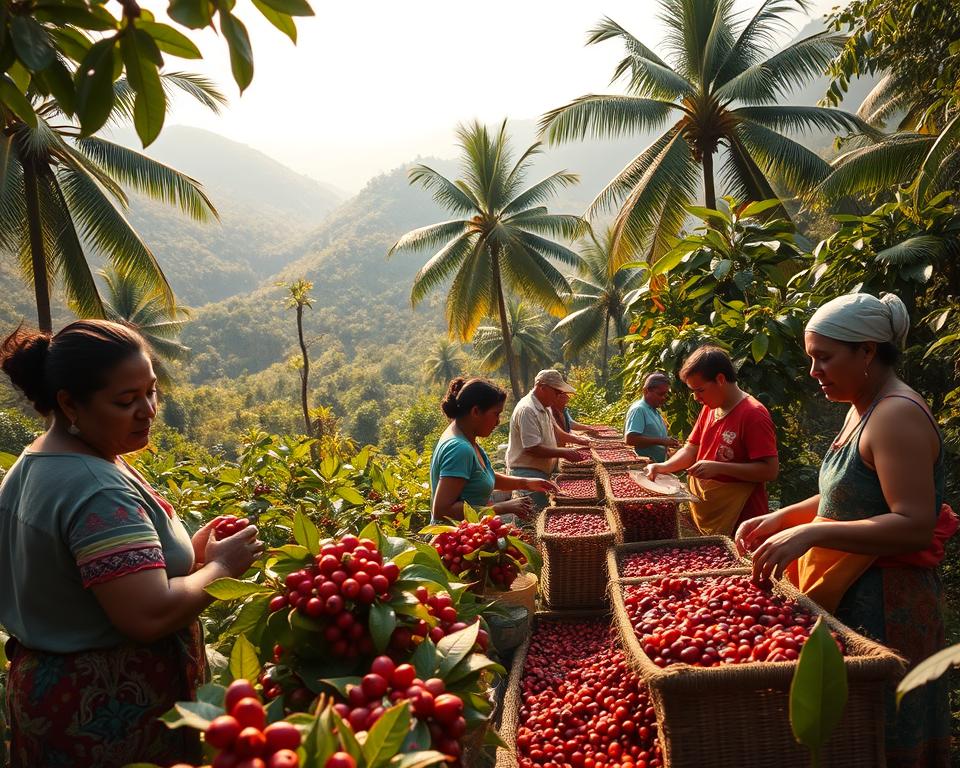
Collective bargaining is key in fair trade. It lets farmers, especially women, talk to buyers for better prices. This way, they can get fair deals and grow stronger together.
Value-Added Product Development
Creating special coffee products is another good idea. It lets farmers make more money and feel more secure. This way, they can earn more and live better.
| Strategy | Benefits | Impact on Women |
|---|---|---|
| Collective Bargaining | Better prices, improved terms | Empowers women through collective negotiation |
| Value-Added Products | Increased earnings, economic stability | Enhances economic independence for women |
Using these methods, Guatemala’s coffee can become fairer. It will help both the farmers and the people who buy coffee. This makes the coffee world better and more fair for everyone.
How to Create Sustainable Water Management Systems
Effective water management is key for coffee farming in Guatemala to last long. It helps save water, cuts down on environmental harm, and makes coffee better.
To make water management sustainable, there are a few strategies. Two main ones are using natural filtration and treating wastewater.
Natural Filtration Systems
Natural filtration uses nature to clean water, cutting down on chemical use. It’s great for coffee farms, where lots of water is needed for processing.
Wastewater Treatment Solutions
Wastewater treatment is vital for coffee processing waste. It makes coffee farming less harmful to the environment.
A study on sustainable farming showed water saving is crucial in coffee production. It’s good for the planet and makes coffee better, helping in ethical coffee sourcing.
| Water Management Strategy | Benefits | Implementation Cost |
|---|---|---|
| Natural Filtration Systems | Reduces chemical use, improves water quality | Moderate |
| Wastewater Treatment Solutions | Reduces environmental impact, conserves water | High |
| Rainwater Harvesting | Conserves water, reduces dependency on groundwater | Low to Moderate |
By using these water-saving methods, coffee farmers in Guatemala help make the coffee industry greener and more sustainable.
How to Develop Climate Resilience Strategies
Climate change is hitting coffee yields hard, making it key for Guatemalan farmers to get resilient. They need to keep producing coffee to make a living, even with climate change’s challenges.
Using companion crops is a smart way to boost resilience. These crops add shade, improve soil, and boost biodiversity. This makes coffee farming stronger against climate change.
Compatible Companion Crops
Companion crops are crucial for coffee farming. For instance, Inga or Guamo trees help with soil erosion and keep moisture in. Beans and maize alongside coffee improve soil and give farmers more income.
Creating microclimates is another smart move. Farmers plant trees to make cooler spots and protect against bad weather. This helps coffee grow better and helps women in farming make decisions.
In short, making farms resilient to climate change is vital for Guatemalan coffee. By using companion crops and microclimates, farmers can face climate change head-on. This ensures a better future for women in sustainable coffee farming.
How to Build Community Support Networks
Community support networks are key for women in Guatemala’s coffee industry. They help women share knowledge and resources. This makes it easier for them to use sustainable farming methods.
Creating childcare cooperatives is a big step. It lets women balance work and family better. This boosts their productivity and happiness.
Childcare Cooperatives
Childcare cooperatives bring many benefits. They include:
- More women can work in coffee farming
- Higher quality childcare from shared resources
- Stronger community ties through cooperative work
Flexible Work Arrangements
Flexible work is also important. It lets women manage their farm work and family duties together. This makes their job more satisfying.
Flexible work leads to happier workers and better productivity. It makes the coffee industry in Guatemala more welcoming and sustainable.
How to Access Markets and Build Sustainable Brands
The journey to market access and brand sustainability is tough but rewarding for women in Guatemala’s coffee sector. Women coffee farmers need strategies to boost their market presence and make their brands sustainable.
Participating in Specialty Coffee Events
Joining specialty coffee events is key to reaching new markets. These events let women coffee farmers show off their products, meet buyers, and learn about trends.
- Attend international coffee exhibitions to connect with global buyers.
- Participate in competitions to gain recognition and credibility.
- Engage in workshops and seminars to stay updated on industry practices.
Building direct consumer connections is also vital for a sustainable brand. By linking directly with consumers, women coffee farmers can earn more and build loyal customers.
- Use social media to share their stories and products.
- Create e-commerce websites for direct sales.
- Join community-supported coffee programs to build loyalty.
By using these strategies, women in Guatemala’s coffee industry can reach new markets and build sustainable brands. These brands reflect their values and quality commitment. This approach supports fair trade coffee production and empowers women in sustainable agriculture.
Conclusion: The Future of Women-Led Sustainable Coffee Production in Guatemala
Guatemala’s coffee industry is changing fast. Women are leading the way in sustainable coffee production. This shift is key for the industry’s future, promoting equality and sustainability.
Women coffee farmers are gaining power through sustainable farming. They get to sell their coffee in new markets, improve their farms, and earn more. Groups like El Café Guatemalteco (ECG) help by offering training and market access.
The outlook for women in Guatemala’s coffee is bright. Cooperatives like Entre las Montañas de Fuego (EMF) and Boxha’ are setting examples. More women in coffee means a more diverse, strong, and green industry. For details, check out research on AgDev Research.
As demand for eco-friendly coffee rises, women-led cooperatives are ready to thrive. Supporting women in coffee helps make the industry fairer and greener. This benefits farmers and coffee lovers everywhere.