
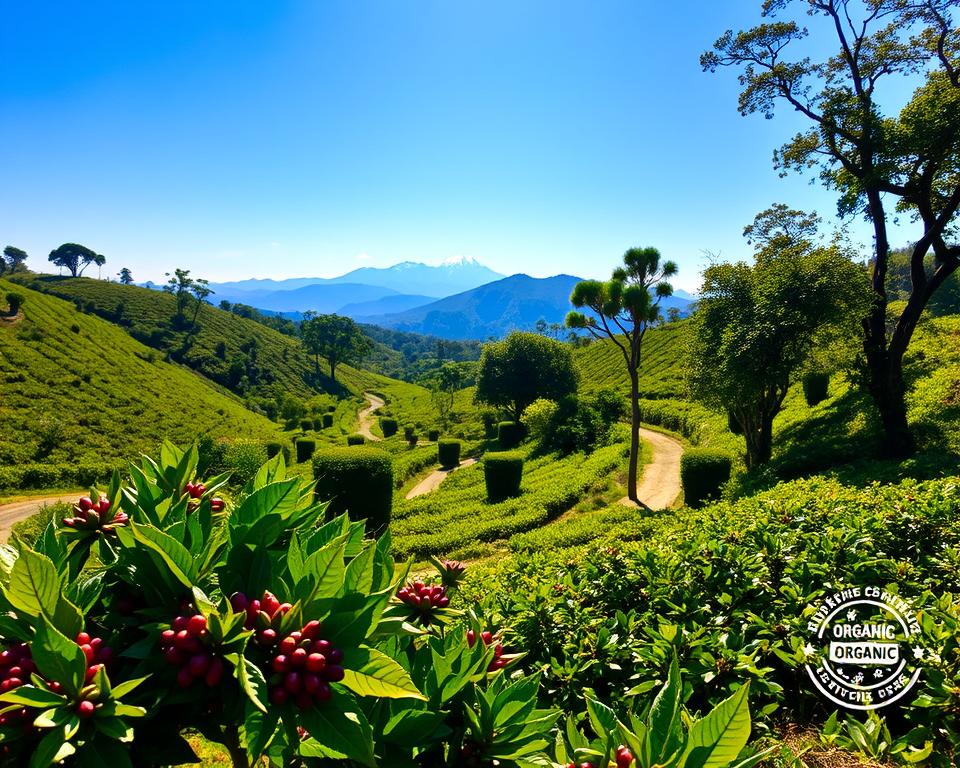
Guatemala’s coffee is famous for its high-quality Arabica beans. These beans grow in the country’s rich volcanic soil and perfect climate. As the world moves towards sustainability, the need for eco-friendly products grows. This makes carbon neutral coffee certification a big deal in the coffee world.
Getting these certifications boosts a product’s appeal. It also helps make the future greener. The process includes checking and cutting down greenhouse gas emissions from start to finish.
As the coffee industry changes, knowing how to get sustainable coffee industry practices is key. This article will show you how to get carbon neutral certifications. It will also explain why it’s important and the good it does for Guatemala’s coffee.
Understanding Carbon Neutrality in the Coffee Industry
The coffee industry is focusing on carbon neutrality due to climate change. Coffee production affects the environment a lot. This includes deforestation, water use, energy, and waste.
The industry’s carbon footprint is huge. It’s crucial to use eco-friendly practices. Carbon neutrality means cutting down emissions to zero or offsetting them.
Coffee producers aim for carbon neutrality. They use eco-friendly methods. Some strategies include:
- Using solar power or other renewable energy sources
- Implementing efficient irrigation systems to reduce water waste
- Promoting shade-grown coffee to preserve biodiversity
- Reducing, reusing, and recycling waste in coffee processing
To learn more about sustainable coffee production, visit tips to go green. These practices help reduce environmental harm.
The Business Case for Carbon Neutral Coffee Certification
Guatemalan coffee producers are now focusing on carbon neutral certification. This move boosts their brand and attracts eco-aware buyers. It helps them stand out in a crowded global market.
Carbon neutral coffee certification is a strong business argument, especially in green markets. People are ready to spend more on sustainable products. Guatemalan coffee makers can benefit from this trend, growing their sales and market presence.
To become carbon neutral, Guatemalan coffee producers must cut down on carbon emissions. They do this by using eco-friendly farming methods, saving energy, and supporting carbon offset projects. This not only lessens their environmental footprint but also makes their coffee more appealing to those who care about the planet.
In summary, getting carbon neutral certification is a smart move for Guatemalan coffee producers. It improves their brand image and market position. As more people seek sustainable products, the need for carbon offset coffee will likely increase.
Overview of Carbon Neutral Coffee Certification Programs
The demand for carbon neutral coffee is growing fast. Guatemala producers are in a great spot to take advantage of this trend. These programs aim to make coffee production more sustainable and cut down on carbon emissions.
Requirements and Process
To get carbon neutral coffee certification, producers must go through a detailed process. This includes:
- Conducting a carbon footprint assessment to identify areas of improvement
- Implementing sustainable farming practices to reduce greenhouse gas emissions
- Offsetting remaining emissions through verified carbon offset projects
- Maintaining detailed records of production and sustainability practices
Certification programs, like “green coffee certification,” check if producers follow these steps. Those who do get certified. This can make their coffee more appealing to eco-friendly buyers.
Suitability for Guatemala Coffee Producers
Guatemala coffee producers can really benefit from carbon neutral coffee certification. The country’s diverse nature and coffee history make it perfect for sustainable coffee. Getting certified can help them stand out in the market. This might even lead to higher prices for their eco-friendly coffee.
Step 1: Conducting a Carbon Footprint Assessment
The first step towards making coffee production carbon neutral is to assess the carbon footprint. This step is crucial. It shows where emissions can be cut down, making coffee production more sustainable.
Farm-Level Emissions
Farm-level emissions are a big part of coffee production’s carbon footprint. They come from using fertilizers, energy, and other farming practices. Coffee producers can use tools like the Cool Farm Tool to measure these emissions.
| Emission Source | Description | Potential Reduction Strategies |
|---|---|---|
| Fertilizer Use | Emissions from the production and use of fertilizers. | Use organic fertilizers, optimize fertilizer application rates. |
| Energy Consumption | Energy used for irrigation, machinery, and other farm operations. | Switch to renewable energy sources, improve energy efficiency. |
Processing Emissions
Processing emissions happen when coffee cherries are turned into green coffee. These come mainly from energy use. Producers can cut these emissions by making their processing more energy-efficient or using renewable energy.
Transportation and Distribution
Transportation and distribution emissions come from moving coffee from the farm to the processing facility and then to the final buyer. To lower these emissions, producers can optimize routes, use fuel-efficient vehicles, and explore other transport options.
By doing a thorough carbon footprint assessment, coffee producers in Guatemala can find key areas to improve. This leads to a more sustainable and eco-friendly coffee production process.
Step 2: Developing a Carbon Reduction Strategy
Creating a carbon reduction plan is key for coffee makers wanting to go carbon neutral. They need to set goals and find ways to cut down on emissions. These steps should be tailored to the coffee world.
First, coffee producers should look at what they’re doing now and find ways to cut down on emissions. This could mean using less energy, switching to green energy, or making their supply chain more efficient. For example, a study on the world’s first carbon neutral coffee shows new ways to do things.

It’s important to set goals that are clear and achievable. These goals should be specific, measurable, achievable, relevant, and time-bound (SMART). For instance, a coffee producer might want to cut energy use by 20% in two years. They could do this by using solar panels or making their equipment more efficient.
There are many ways to cut down on emissions, depending on the coffee producer’s operations. Some ideas include:
- Using energy-saving equipment and practices
- Switching to renewable energy
- Using water wisely and cutting down on waste
- Improving farming methods to use less synthetic fertilizers
By making a plan to reduce carbon, coffee producers in Guatemala can work towards being carbon neutral. This helps the whole coffee industry become more sustainable.
Step 3: Implementing Sustainable Farming Practices
Coffee producers in Guatemala are now using sustainable farming methods. This is key to making coffee production more eco-friendly. It helps them move towards being carbon neutral.
They are focusing on renewable energy sources.
Solar Power Solutions
Coffee farms are turning to solar power for energy. Solar energy cuts down on fossil fuel use and saves money over time. For example, a farm in Guatemala’s highlands uses solar for irrigation, cutting down on carbon emissions.
Coffee making creates a lot of organic waste. This waste can be turned into biogas through anaerobic digestion. The biogas can power farm operations. This way, coffee producers can lessen their environmental impact and earn more.
These sustainable practices have many benefits. They help lower carbon emissions and make coffee production more sustainable. By going green, coffee farmers in Guatemala can protect the environment, meet global standards, and stay competitive in the market.
In summary, sustainable farming is crucial for the coffee industry to reach carbon neutrality. By using solar power and making biogas from coffee waste, farmers in Guatemala can greatly reduce their environmental impact. As more people look for eco-friendly coffee, these practices will become even more important.
Step 4: Carbon Offsetting for Remaining Emissions
After using sustainable practices, coffee makers in Guatemala might still have to offset their carbon footprint. This means they pay for projects that cut down greenhouse gases elsewhere. This way, they balance out their emissions.
These projects can be anything from planting trees to using clean energy. For coffee farmers in Guatemala, helping out with local projects is very effective. This could be planting more trees or using better farming methods.
To offset carbon, farmers first figure out how much they need to offset. Then, they pick a good project and buy carbon credits. These credits show that one ton of CO2 has been cut down.
| Offsetting Project Type | Description | Benefits |
|---|---|---|
| Reforestation | Planting trees to absorb CO2 | Enhances biodiversity, improves soil quality |
| Renewable Energy | Investing in solar or wind energy | Reduces reliance on fossil fuels, lowers emissions |
| Sustainable Agriculture | Promoting practices that reduce agricultural emissions | Improves soil health, reduces synthetic fertilizer use |
By doing carbon offsetting, Guatemala’s coffee farmers can reach carbon neutrality. They also help fight global climate change. This step is key for the coffee industry’s future and caring for the environment.
The Application Process for Carbon Neutral Coffee Certification
To get green coffee certification, producers must go through an application process. This includes several important steps. First, they need to submit an application with details about their coffee making process.
This process has several key steps. Producers must show proof of their carbon footprint and how they cut down emissions. They also need to prove they offset any emissions left over.
The certification body will check the application and might ask for more info. They look at the producer’s green practices and make sure the carbon offsetting is real.
| Documentation Required | Description | Timeline for Submission |
|---|---|---|
| Carbon Footprint Assessment Report | Detailed report on the carbon footprint assessment conducted by the producer. | Within 3 months of application submission |
| Carbon Reduction Strategy | Documentation of the strategies implemented to reduce carbon emissions. | Within 3 months of application submission |
| Proof of Carbon Offsetting | Verification of carbon offsetting projects for remaining emissions. | Within 6 months of application submission |
If the review goes well, the producer gets the carbon neutral coffee certification. This certification is good for a while, then they need to get it again.
Knowing the application process helps coffee producers in Guatemala. It helps them get green coffee certification and make the coffee industry more sustainable.
Common Challenges and Solutions in Achieving Carbon Neutral Coffee Certification
As more people want climate-friendly coffee, producers in Guatemala face big challenges. Getting carbon neutral certification is good for the planet but is hard to do.
Guatemala coffee makers might struggle with high start-up costs, not knowing enough, and figuring out their carbon footprint. To beat these hurdles, they can get money help and training. They can also use easy-to-use tools and get help from certification groups.
| Challenge | Solution | Benefit |
|---|---|---|
| High initial investment | Financial assistance programs | Reduced financial burden |
| Lack of technical knowledge | Training and workshops | Enhanced capability |
| Complex carbon footprint assessment | Simplified assessment tools | Streamlined process |
For more info on sustainable coffee, check out carbon credits for coffee. By tackling these issues and using the right solutions, Guatemala coffee makers can get carbon neutral certification. This helps make the coffee world more green and fair.
Conclusion: The Future of Carbon Neutral Coffee in Guatemala
Guatemala’s coffee industry is set to grow, thanks to a rise in demand for eco-friendly products. The country is moving towards organic coffee sustainability. This move could greatly benefit the environment and the industry.
To achieve carbon neutral coffee certification, a detailed plan is needed. This includes assessing carbon footprints, creating a plan to reduce carbon, and using sustainable farming methods. By doing this, Guatemalan coffee producers can lessen their environmental impact and stand out in the global market.
The sustainable coffee industry is changing, and carbon neutral coffee certification will play a big role. By getting this certification, Guatemalan coffee producers can meet the growing need for green products. This will help make the coffee industry more sustainable for the future.