
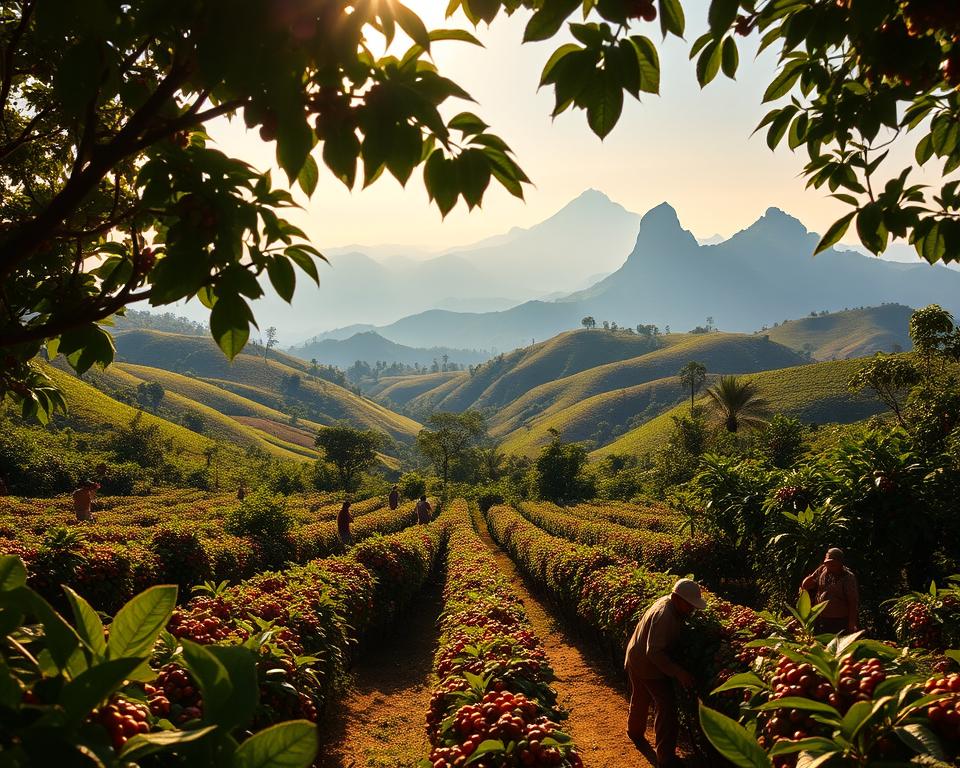
Guatemala is famous for its top-notch coffee. Different areas in the country add to its rich coffee culture. The varied geography and climate make it ideal for growing coffee.
Guatemalan coffee’s unique taste comes from its main growing areas. Each region has its own flavor and way of making coffee. Knowing about these places helps us understand Guatemalan coffee’s complexity.
Guatemala’s coffee ranges from highlands to lowlands. This variety offers many coffee experiences. This article will dive into the main regions and their role in Guatemala’s coffee world.
Guatemala’s Rich Coffee Heritage
Guatemala’s coffee history goes back over a century. It has become a big player in the global coffee scene. The country’s varied geography, with volcanoes and high places, makes it perfect for growing coffee.
Guatemala’s coffee areas have rich soil, lots of rain, and clear wet and dry seasons. These factors give its coffee its unique taste. The Antigua region is famous for its coffee, known for its balanced taste and strong flavor.
Guatemalan coffee makers use old and new methods to keep their coffee top-notch. This is why Guatemalan coffee is so loved worldwide.
How to Understand Guatemala’s Coffee-Growing Conditions
It’s important to know how Guatemala’s geography and climate affect its coffee. This knowledge helps us appreciate the high quality of Guatemalan coffee.
Factors Influencing Coffee Production
Several key factors shape Guatemalan coffee’s unique taste. These include:
- Climate: Guatemala’s climate varies across regions, impacting coffee flavor.
- Soil: Volcanic soil in many areas adds to the coffee’s taste.
- Altitude: Coffee grown at high altitudes in Guatemala has better quality and flavor.
Guatemala’s coffee is grown in different regions, each with its own conditions. This mix of factors leads to a wide variety of coffee flavors.
Knowing these conditions helps coffee lovers understand the complexity and quality of Guatemalan coffee.
The Coffee-Producing Regions in Guatemala: A Complete Guide
Guatemala’s diverse geography leads to many coffee-producing areas. Each region has its own special traits. The coffee here varies in taste and growing conditions.
Guatemala boasts several top coffee spots. Antigua is famous for its balanced coffee. Huehuetenango is known for high-altitude coffee. Atitlán is celebrated for its lakeside coffee.
For a deeper dive into Guatemalan coffee, check out our Guatemalan Coffee Guide.
Other key regions include Cobán, known for rainy region coffee. San Marcos is recognized for its first-harvest qualities. Fraijanes is celebrated for its volcanic coffee.
The climate and geography of these areas create a wide range of coffee flavors. You’ll find everything from balanced and smooth to bright and acidic. Knowing about each region helps coffee lovers appreciate Guatemalan coffee’s diversity.
How to Identify Antigua Coffee: The Crown Jewel
Antigua coffee is special because of its rich volcanic soil and unique climate. It’s grown in the shadow of three volcanoes: Agua, Fuego, and Acatenango. This terroir gives it a complex flavor.
Antigua coffee is known for its balanced taste and rich flavor. You can taste chocolate, caramel, and fruit in it. The coffee grows at high altitudes, between 1,500 and 1,700 meters. This slow ripening process makes the coffee more flavorful.
| Characteristics | Description |
|---|---|
| Flavor Profile | Balanced, with notes of chocolate, caramel, and fruit |
| Acidity | Moderate to bright |
| Altitude | 1,500 – 1,700 meters above sea level |
Antigua’s coffee is loved by coffee lovers because of its unique soil, high altitude, and climate. Knowing these facts helps us appreciate the quality and uniqueness of Antigua coffee.
Exploring Acatenango: Coffee from the Volcano’s Shadow
In the Acatenango region, the rich volcanic soil adds to the coffee’s complex flavor. This area, famous for its coffee in Guatemala, gets a special boost from the volcano.
The volcano’s terrain gives the coffee a unique taste. It’s both subtle and complex. Coffee lovers enjoy the detailed flavors from these beans.
Acatenango’s coffee is known for its balanced acidity and rich body. These qualities come from the soil. Farmers here are proud to grow beans that show off their land’s unique terroir.
So, Acatenango’s coffee is a standout in Guatemala. The mix of volcanic soil, climate, and farming skills makes it special. It’s a key area for growing coffee in Guatemala.
Discovering Atitlán: Lakeside Coffee Excellence
Lake Atitlán’s special microclimate makes some of Guatemala’s best coffee. The lake keeps the climate steady, with perfect temperatures and humidity for coffee. This is why the coffee here is so great.
The volcanic mountains around the lake add to the coffee’s quality. They protect the area and make the soil rich. This means the coffee farms get the best weather, thanks to the lake.
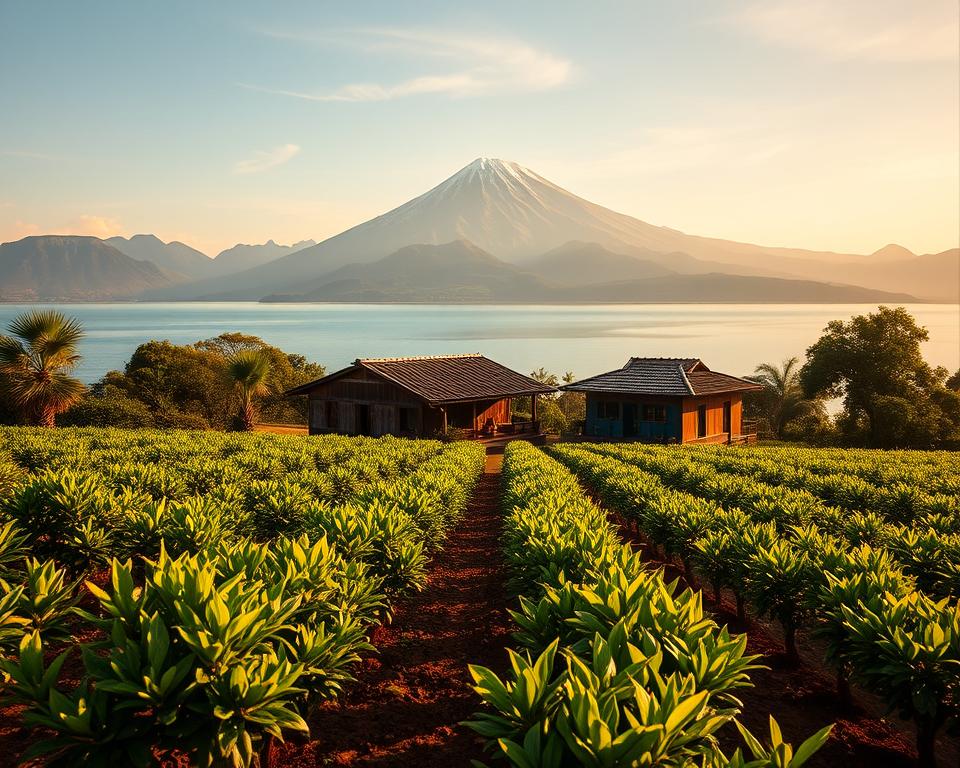
The coffee’s taste comes from the area’s unique environment. Farmers in Atitlán work hard to make top-notch coffee. Their efforts, along with the region’s natural gifts, make their coffee stand out.
Atitlán’s coffee shows Guatemala’s potential for amazing coffee. It’s a shining example of the country’s coffee excellence.
Mastering Huehuetenango: High-Altitude Coffee Appreciation
Guatemala’s Huehuetenango region is famous for its high-altitude coffee. This coffee matures slowly, leading to a complex flavor. It has vibrant and nuanced notes.
The high altitude in Huehuetenango makes the coffee’s flavor richer. The cooler temperatures and clear wet and dry seasons slow down the ripening of coffee cherries. This enhances the coffee’s acidity and body.
The unique qualities of Huehuetenango’s coffee can be summarized as follows:
| Flavor Profile | Acidity | Body |
|---|---|---|
| Complex, with notes of fruit and chocolate | Bright, with a wine-like acidity | Medium to full-bodied |
| Citrus and floral notes | Crisp acidity | Smooth, velvety texture |
Knowing these characteristics helps coffee lovers appreciate Huehuetenango’s coffee. It stands out among Guatemala’s top coffee regions.
Appreciating Cobán: Coffee from the Rainy Region
Cobán’s rainy climate brings both challenges and opportunities for coffee growers. The area’s high rainfall makes the coffee plantations lush and green. This creates a rich environment for the coffee plants to thrive.
The constant moisture and mild temperatures slow down the coffee cherries’ maturation. This can lead to a more complex flavor. But, the rain also increases the risk of diseases like coffee leaf rust.
Coffee farmers in Cobán have found ways to work with these conditions. They use sustainable farming methods, like shade-grown coffee. This helps protect the coffee from the heavy rain and diseases.
| Characteristics | Impact on Coffee |
|---|---|
| High Rainfall | Complex flavor profile, risk of disease |
| Mild Temperatures | Slower maturation, enhanced flavor |
| Shade-Grown Practices | Disease mitigation, biodiversity |
Cobán’s coffee is unique compared to other parts of Guatemala. The combination of rich soil, plenty of rain, and careful farming makes it highly valued by coffee lovers.
Exploring San Marcos: First-Harvest Region Qualities
San Marcos is a key player in Guatemala’s coffee scene. It’s known for its early coffee harvests. This means San Marcos coffee hits the market first, offering top-notch quality.
The coffee from San Marcos stands out because of its unique terroir. High altitudes, rich volcanic soil, and a great climate all play a part. Together, they create a complex flavor profile.
- A balanced acidity that enhances the coffee’s brightness
- A rich, full-bodied flavor with notes of chocolate and fruit
- A smooth, clean finish that leaves a lasting impression
Being a first-harvest region, San Marcos leads the way in Guatemalan coffee. Coffee producers here are dedicated to quality. They make sure San Marcos remains a top name in the coffee world.
Understanding Fraijanes: Volcanic Coffee Excellence
Frajanes is known for its rich volcanic soil, making it a top coffee region in Guatemala. The unique terroir of Fraijanes adds to the coffee’s distinct flavor. This makes it highly valued in the Guatemala coffee industry.
The volcanic terrain of Fraijanes gives its coffee a complex taste. The soil’s mineral content, boosted by volcanic activity, adds to this. This results in coffee with balanced acidity and a rich body, loved by coffee lovers.
Fraijanes’ coffee excellence comes from its soil and the care of local farmers. Their expertise and natural resources make Fraijanes a highlight in Guatemala’s coffee scene.
How to Select and Brew Guatemalan Coffee by Region
To truly enjoy Guatemalan coffee, you need to know how to pick and brew it. Guatemalan coffee farms offer a wide range of flavors. From Antigua’s balanced acidity to Cobán’s rich, chocolatey notes, there’s something for everyone.
When picking Guatemalan coffee, think about the region’s unique traits. For example, Atitlán coffee is known for its bright acidity and fruit notes. Huehuetenango coffee, on the other hand, has a balanced acidity and rich body.
To get the best flavors, adjust your brewing method based on the region. For Acatenango coffee, a pour-over method brings out its delicate floral notes. But for Cobán coffee, a French press enhances its rich, chocolatey flavors.
Here are some general brewing tips for different Guatemalan coffee regions:
- Antigua: Pour-over or drip brewing to highlight balanced acidity
- Atitlán: Pour-over to accentuate bright acidity and fruit notes
- Huehuetenango: French press or Chemex to bring out the rich body
- Cobán: French press to enhance chocolatey flavors
By understanding the unique traits of coffee from different regions, you can fully enjoy Guatemalan coffee. Adjusting your brewing technique lets you appreciate the diversity of Guatemalan coffee.
Try different brewing methods and ratios to find your perfect cup. Whether you’re exploring the top coffee regions in Guatemala or the various coffee-growing areas, experimenting is key.
Conclusion: Embracing the Diversity of Guatemalan Coffee
Guatemala’s coffee regions bring a wide range of tastes and qualities. This is thanks to the country’s varied geography and climate. From Antigua’s volcanic soils to Huehuetenango’s high altitudes, each place adds its own special touch to Guatemalan coffee.
The Coffee-Producing Regions in Guatemala show off the country’s deep coffee history. Knowing what makes each area unique helps coffee fans see the complexity and variety of Guatemalan coffee.
Exploring places like Atitlán’s lakeside or Cobán’s rainy areas is a discovery journey. By embracing this diversity, coffee lovers can fully enjoy the many flavors and subtleties Guatemalan coffee has to offer.