
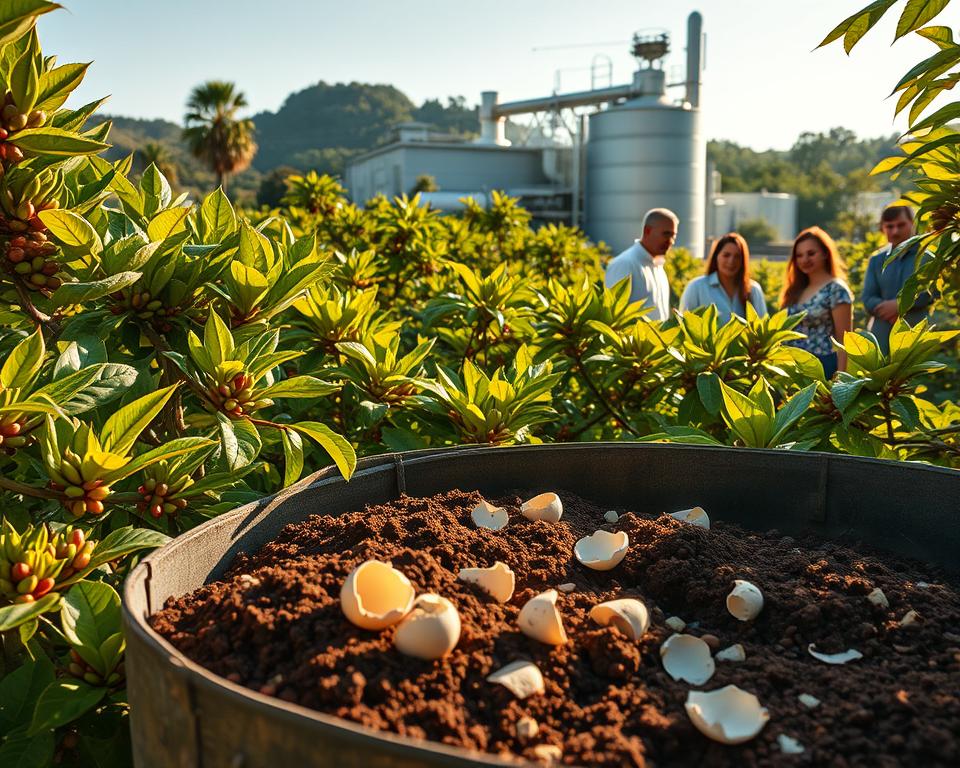
Guatemala is famous for its top-notch coffee. The coffee industry is a big part of the country’s economy. But, making coffee creates a lot of waste, like coffee cherry husks and pulp.
Using the circular economy can solve this problem. It’s a way to make the most of what we have. This means turning waste into something useful.
In Guatemala, using coffee byproducts in new ways is a big step. It can make biofuels, animal food, and even natural fertilizers. This not only cuts down on waste but also makes coffee production better for the planet.
Applying circular economy ideas in Guatemala’s coffee industry can change how coffee is made. It makes coffee production more eco-friendly and reduces harm to the environment.
The Coffee Waste Challenge in Guatemala
Coffee production in Guatemala creates a lot of waste. This includes pulp, cherry waste, husks, parchment, spent grounds, and wastewater. Finding new ways to recycle these byproducts is key.
Pulp and Cherry Waste
When coffee cherries are processed, a lot of pulp and cherry waste is left behind. This waste is full of nutrients but can pollute if not handled right.
Husks and Parchment
Coffee husks and parchment are also byproducts. They could be used in other ways but often become waste. This adds to environmental problems.
Spent Grounds and Wastewater
Spent coffee grounds and wastewater are also waste from coffee making. Finding good ways to manage them is important to protect the environment.
It’s vital to find ways to recycle coffee byproducts. This helps reduce waste in the coffee industry. By using sustainable methods, Guatemala’s coffee makers can lessen environmental damage and make their work more sustainable.
Circular Economy Principles for Coffee Production
Circular economy initiatives are changing coffee production. They focus on reducing waste and using resources better. This helps coffee producers cut down on environmental harm and boost their profits.
Cost Reduction Opportunities
One big plus of circular economy in coffee is saving money. By using byproducts and cutting down on waste, producers can spend less. For instance, coffee pulp can turn into organic fertilizers or animal food, creating new income sources.
| Circular Economy Practice | Cost Reduction Opportunity |
|---|---|
| Reusing coffee pulp | Production of organic fertilizers |
| Utilizing coffee husks | Generation of bioenergy |
| Recycling water | Reduced water consumption costs |
Climate Resilience Through Waste Reduction
Circular economy also makes coffee production more resilient to climate change. A study on sustainable coffee practices (available here) shows that less waste means less carbon footprint.
By adopting circular economy, Guatemala’s coffee industry can lessen its environmental impact. It can also make its economy stronger and more resilient to climate change.
Mapping Guatemala’s Coffee Value Chain
It’s key to understand the coffee value chain to spot where we can use circular economy ideas. Guatemala’s coffee industry is big for the country’s economy. Making its value chain better can help us be more green.
Farm-Level Opportunities
At the farm, we can work on better farming and less waste. Using green farming ways can help the environment.
Processing Facility Interventions
Processing places can go green by turning coffee grounds into useful stuff. This cuts down on waste and brings in new money.
Consumer and End-of-Life Solutions
For those who drink coffee, we can push for using coffee byproducts in a green way. This means composting or making products at home.
| Stage | Opportunities for Improvement | Circular Economy Practices |
|---|---|---|
| Farm | Sustainable farming practices | Composting coffee cherry husks |
| Processing | Waste reduction | Upcycling coffee grounds |
| Consumer | Eco-friendly consumption | Using coffee grounds in household products |
Transforming Coffee Pulp into Valuable Resources
Turning coffee pulp into useful products is key for a greener coffee cycle. Coffee pulp, a big byproduct of coffee making, can be recycled. It can become valuable resources like compost.
Equipment and Materials Needed
To start making compost from coffee pulp, you need some tools and stuff. Here’s what you’ll need:
- Composting bins or piles
- Turning equipment
- Moisture control tools
- Nutrient testing kits
Composting Process Timeline
The composting journey has many steps, from start to finish. The time it takes can change based on things like temperature and moisture.
| Stage | Duration | Description |
|---|---|---|
| Initial Decomposition | 1-2 weeks | Breaking down of organic matter |
| Active Composting | 4-6 weeks | Regular turning and monitoring |
| Curing | 2-4 weeks | Final stabilization of compost |
Nutritional Enhancement Techniques
To make the compost more nutritious, you can add other organic stuff or use microbial helpers.
Safety Considerations for Livestock
It’s important to make sure the compost is safe for animals. It should be free from harmful stuff and germs.
By doing this, Guatemalan coffee makers can cut down on waste. They can also make money by selling compost and other coffee pulp products.
Circular Economy Coffee Byproducts: Practical Applications
Guatemalan coffee producers are making coffee byproducts valuable. This shows the power of a circular economy. It cuts down on waste and brings in new money, all while being kind to the environment.
There are many ways to use coffee byproducts. You can compost them, feed animals, make bioenergy, or even create new products.
Financial Returns on Investment
Using coffee byproducts wisely can bring in good money. For example, making compost or bioenergy from coffee pulp saves on waste costs. It also brings in extra cash.
| Byproduct | Application | Financial Benefit |
|---|---|---|
| Coffee Pulp | Compost | Reduced waste disposal costs |
| Coffee Husks | Bioenergy | Additional income from energy sales |
| Coffee Silverskin | Animal Feed | Reduced feed costs for local farmers |
Carbon Footprint Reduction Metrics
Using coffee byproducts also helps cut down on carbon emissions. We measure this by looking at how much less greenhouse gas is made when we compost or make bioenergy.
By going circular, Guatemalan coffee makers can lessen their harm to the planet. They also make their businesses more stable.
Innovative Uses for Coffee Husks and Silverskin
The coffee industry is finding new ways to use coffee husks and silverskin. This reduces waste and opens up new income sources. What was once seen as waste is now a valuable resource.
Coffee husks, the outer layer of the coffee cherry, can make biogas. Research shows they’re good for biogas production.
Small-Scale Biogas Digester Construction
To make a small biogas digester, start by collecting coffee husks. Mix them with water and let it ferment. The biogas can power cooking or electricity.
Fuel Briquette Production Methods
Coffee husks can also make fuel briquettes, a green alternative to charcoal. First, dry the husks. Then, mix them with a binder and press into briquettes.
| Material | Energy Content (MJ/kg) | Moisture Content (%) |
|---|---|---|
| Coffee Husks | 15-18 | 10-15 |
| Fuel Briquettes | 20-25 | 5-10 |
Substrate Preparation Techniques
Coffee silverskin, from roasting, can grow mushrooms. First, pasteurize the silverskin. Then, add mushroom spores and keep it humid for growth.
Oyster Mushroom Production Guide
Oyster mushrooms grow well on coffee silverskin. Prepare the substrate, add spores, and keep it humid. They’re easy to grow and nutritious.

Using coffee husks and silverskin in new ways helps the coffee industry. It reduces waste, creates income, and supports sustainability.
Maximizing Value from Spent Coffee Grounds
Eco-conscious coffee byproduct utilization has opened new avenues for spent coffee grounds. Once considered waste, these grounds are now being repurposed in various innovative ways. This contributes to a more sustainable coffee industry.
Nutrient Enhancement Formulations
Spent coffee grounds are rich in nutrients, making them ideal for enhancing soil fertility. They can be formulated into nutrient-rich fertilizers. These fertilizers promote healthy plant growth.
Application Methods for Coffee and Non-Coffee Crops
These nutrient enhancement formulations can be applied to both coffee and non-coffee crops. For instance, they can be used as compost or directly incorporated into the soil.
| Crop | Application Method | Benefits |
|---|---|---|
| Coffee | Compost | Improved soil fertility |
| Vegetables | Direct soil incorporation | Enhanced nutrient uptake |
Exfoliants and Beauty Products
Spent coffee grounds are also used in the production of exfoliants and beauty products. Their abrasive texture makes them ideal for scrubs. Their antioxidant properties are beneficial in skincare products.
Eco-Friendly Materials Development
Furthermore, spent coffee grounds are being used in the development of eco-friendly materials. This includes bioplastics and sustainable building materials.
By maximizing the value of spent coffee grounds, the coffee industry can reduce waste and promote sustainability. This approach not only benefits the environment but also creates new economic opportunities.
Sustainable Wastewater Management in Coffee Processing
Efficient wastewater management is key in coffee processing. Coffee making creates a lot of wastewater. If not handled right, it can harm the environment. It’s vital to manage wastewater sustainably to lessen coffee’s environmental impact.
Materials and Construction Guide
Building wastewater systems in coffee plants requires the right materials and design. Concrete, steel, and plastic are often used. They’re durable and don’t rust easily.
| Material | Durability | Cost |
|---|---|---|
| Concrete | High | Moderate |
| Steel | High | High |
| Plastic | Moderate | Low |
Maintenance Requirements
Keeping wastewater systems running well needs regular checks. This includes looking over equipment, cleaning filters, and making sure everything works right.
Water Quality Monitoring Protocols
It’s important to watch water quality closely. This ensures the treated water is safe for the environment. We check pH, BOD, and COD levels.
Adding wastewater systems to coffee plants can make things more efficient and cheaper. It’s about looking at what you already have and finding ways to work better together.
By using these sustainable methods, coffee makers can greatly reduce their environmental harm. This helps make the coffee industry more eco-friendly.
Implementation Guide for Guatemalan Coffee Producers
To make coffee production more sustainable, Guatemalan producers need a clear guide. This guide will help them change their ways to cut down on waste. It will also show how to make the most of their coffee byproducts.
Waste Stream Audit Process
The first step is to do a detailed waste audit. This means finding and measuring all the waste from coffee making, from start to finish.
- Identify waste sources: pulp, husks, silverskin, and wastewater.
- Quantify waste: measure the volume of each type of waste.
- Analyze waste composition: understand the characteristics of each waste stream.
Prioritization Framework
After the waste audit, producers should pick the best circular economy projects. They should look at what’s easy, affordable, and will have a big impact.
| Initiative | Feasibility | Cost | Potential Impact |
|---|---|---|---|
| Coffee Pulp Composting | High | Low | Medium |
| Husk Biomass Energy | Medium | High | High |
| Silverskin Animal Feed | High | Low | Medium |
Low-Investment Starting Points
Starting small is a good idea. Producers can use coffee pulp for compost or animal feed. This cuts down waste and brings in extra money.
Scaling Strategies for Growing Operations
As businesses grow, they can take on bigger projects. They can invest in new tech, like making biogas from wastewater or using husks for energy.
By using this guide, Guatemalan coffee producers can make their operations more sustainable. They’ll reduce their environmental impact and boost their profits.
Building Regional Circular Coffee Economies
Creating regional circular coffee economies is key for sustainable coffee in Guatemala. Coffee producers can cut waste, boost efficiency, and find new ways to make money by using circular economy ideas.
Governance Structure Models
Good governance is vital for a successful circular coffee economy. This means working together. Farmers, processors, and others make decisions together.
Cost-Sharing Frameworks
Cost-sharing helps spread out the costs of going circular. This can include subsidies, grants, or low-interest loans for farmers and processors.
Finding the right partners is crucial for a strong circular coffee economy. This includes local businesses, NGOs, and government agencies that offer support and resources.
Creating Mutually Beneficial Agreements
It’s important to make agreements that work for everyone. This means fair deals and making sure everyone gets something good out of it.
| Initiative | Description | Benefits |
|---|---|---|
| Coffee Pulp Composting | Using coffee pulp to create compost for fertilizers | Reduces waste, creates new revenue stream |
| Coffee Husk Bioenergy | Converting coffee husks into bioenergy | Provides renewable energy, reduces greenhouse gas emissions |
| Coffee Grounds Reuse | Reusing spent coffee grounds for animal feed or gardening | Reduces waste, creates new products |
By using these strategies, Guatemalan coffee producers can create thriving circular coffee economies. This promotes using coffee byproducts in an eco-friendly way and helps make the coffee industry more sustainable.
Accessing Support for Circular Coffee Initiatives
Guatemalan coffee producers can now get help for their circular economy projects. Using circular economy in coffee making cuts down waste and brings in new money.
Grant Application Guidance
To get grants, coffee makers need a strong project plan. It should show the good it does for the planet and the economy. Important parts are:
- A clear plan with goals you can measure
- How it manages coffee waste in a green way
- A budget and schedule
Certification Programs with Premium Pricing
Certification for green coffee practices can lead to higher prices. These programs look at things like:
- Using water wisely and handling wastewater well
- Turning coffee waste into useful products
- Green farming methods
With these tools, Guatemalan coffee makers can boost their green image and make more money.
Conclusion: The Future of Sustainable Coffee Production in Guatemala
Guatemala’s coffee industry is ready for a big change. It will use eco-friendly ways to use coffee byproducts, cutting down on waste. This move will help the environment and bring in new money for farmers.
The coffee world throws away a lot, like coffee pulp and grounds. But, these can be turned into useful things like health products and fuels. A study on NCBI’s website shows how.
Guatemalan coffee farmers can get ahead by using these sustainable methods. They’ll make their coffee more valuable, help the planet, and support a greener coffee chain. As time goes on, more farmers will follow this path, making Guatemala’s coffee industry stronger and greener.