
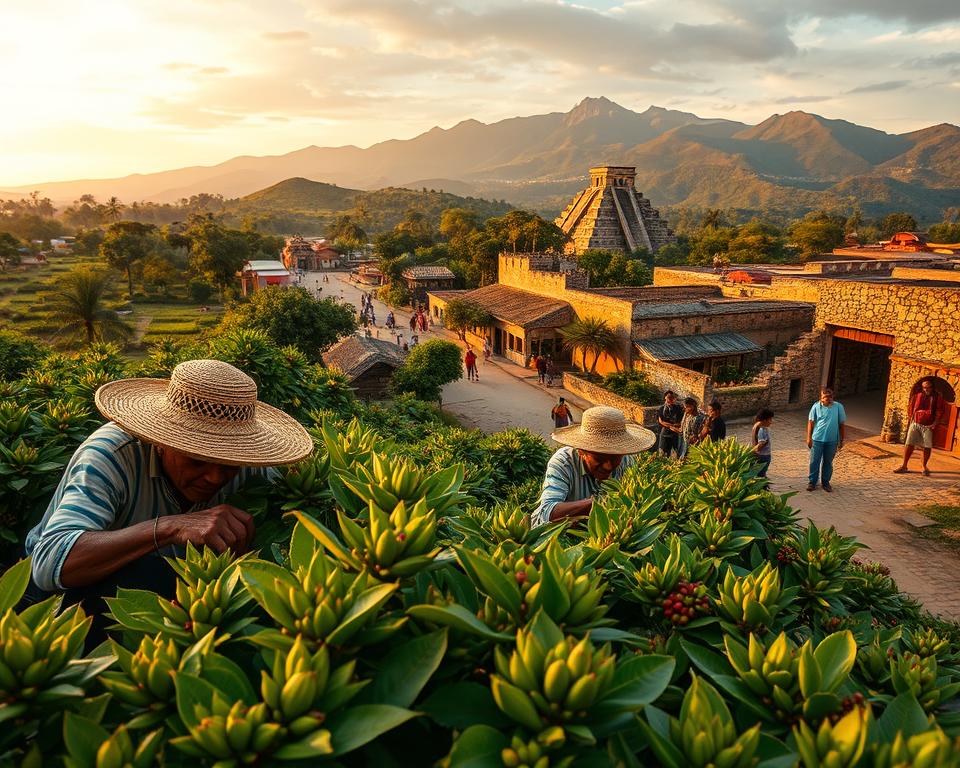
Guatemala is famous for its rich culture and big role in coffee making. The country’s coffee history is closely tied to its Mayan roots. For centuries, the Mayans have grown coffee.
The Mayan communities have greatly shaped Guatemala’s coffee industry. They brought ancient farming ways and a deep love for the land. This mix of old and new has created some of the world’s best coffee.
The Mayan coffee traditions still shape Guatemala’s coffee culture. This makes Guatemala’s coffee a special and important part of its identity.
The Ancient Roots of Coffee in Guatemala
Coffee’s history in Guatemala is complex and influenced by many cultures. It was introduced in the 18th century by Spanish missionaries. Soon, it became a key part of Guatemala’s farming.
Coffee’s roots in Guatemala are tied to the highlands, where the Mayans once lived. The country’s volcanic soil and varied climates make it perfect for growing coffee.
Over time, coffee changed Guatemala’s economy and culture. Now, Guatemala is famous for its top-notch coffee. Many farms still use old methods, passed down through generations.
How Coffee Transformed Guatemalan Culture
Coffee’s arrival in Guatemala was a big change for the country. It became a key part of the economy, affecting social life and traditions. Coffee plantations changed how land was used and how people worked, reshaping the country’s social and economic structure.
Coffee also deeply influenced daily life in Guatemala. It became a key part of social events and traditions. The coffee culture in Guatemala is known for its strong sense of community and family. Coffee often brings people together.
Coffee has greatly shaped Guatemala’s identity, making it a vital part of its heritage. Understanding coffee’s role in Guatemalan culture helps us appreciate the country’s rich traditions and customs.
Understanding Mayan Coffee Traditions
In Guatemala’s heart, Mayan coffee traditions flourish. They blend coffee making with cultural identity, spanning centuries. These customs are more than growing coffee; they’re part of Mayan spiritual and communal life.
Coffee making is a family task in Mayan areas. Skills and methods are shared across generations. The process includes rituals and ceremonies, showing the community’s bond with the land and heritage. For example, picking coffee beans is done with care, often with prayers and offerings for a good harvest.
Coffee’s role in Mayan communities goes beyond its economic value. It’s key in social events and ceremonies, bringing people together. The traditional ways of making and drinking coffee show Mayan heritage’s strength against modern changes.
To grasp Mayan coffee traditions, we must see the deep connection between Mayans, their land, and culture. It’s a complex mix of history, spirituality, and community. This makes Guatemalan coffee more than a product; it’s a symbol of a lively cultural identity.
The Eight Coffee Regions of Guatemala
Guatemala’s varied geography leads to eight unique coffee regions. Each has its own taste. These areas are Atitlán, Antigua, Huehuetenango, Fraijanes Plateau, Oriente, San Marcos, Nueva Santa Rosa, and Verapaces.
Every region’s climate, soil, and height add to its coffee’s flavor. For example, Atitlán’s coffee is known for its balanced taste and rich flavor. This is because of its volcanic soil and moderate climate.
Huehuetenango’s coffee stands out with its bright acidity and fruit notes. This is due to its high altitude and dry climate.
Antigua is famous for its balanced coffee, with hints of chocolate and spice. This is thanks to its rich volcanic soil. San Marcos, with its high altitudes and rich soil, offers coffee with bright acidity and wine-like flavors.
The other regions, like Fraijanes Plateau, Oriente, Nueva Santa Rosa, and Verapaces, also add to Guatemalan coffee’s diversity. Each brings its own unique qualities to the mix.
Knowing about these eight coffee regions is key to understanding Guatemalan coffee’s complexity. Whether you love coffee or are just starting to explore, learning about these regions can deepen your appreciation for Guatemalan coffee’s craftsmanship and tradition.
Traditional Harvesting Methods
In Guatemala, coffee harvesting is a tradition that spans generations. The country’s coffee farmers are proud of their methods. These methods ensure the highest quality coffee beans.
Identifying Ripe Cherries
Finding ripe cherries is key in traditional harvesting. Farmers check the coffee cherries carefully. They pick those that are bright red and ripe.
Basket weaving is important in traditional coffee harvesting. Farmers use handwoven baskets to gather ripe cherries. These baskets show the skill of Guatemalan craftsmen.
| Harvesting Method | Description | Benefits |
|---|---|---|
| Selective Picking | Picking ripe cherries one by one | Ensures high-quality coffee beans |
| Basket Collection | Using handwoven baskets to collect cherries | Traditional and sustainable method |
The mix of traditional techniques and detail makes Guatemala’s coffee famous. Guatemalan coffee farmers keep these methods alive. They continue to make some of the world’s best coffee.
How to Process Coffee the Mayan Way
The Mayan method of coffee processing is very detailed and hard work pays off. It involves several important steps to get the best coffee.
Pulping and Fermentation
First, the outer skin of the coffee cherry is removed in the pulping stage. Then, the beans ferment in water tanks. This step is key for the coffee’s taste.
Washing and Quality Control
Next, the beans are washed to get rid of any leftover pulp. This step is crucial for quality. It makes the coffee’s taste better and more acidic.
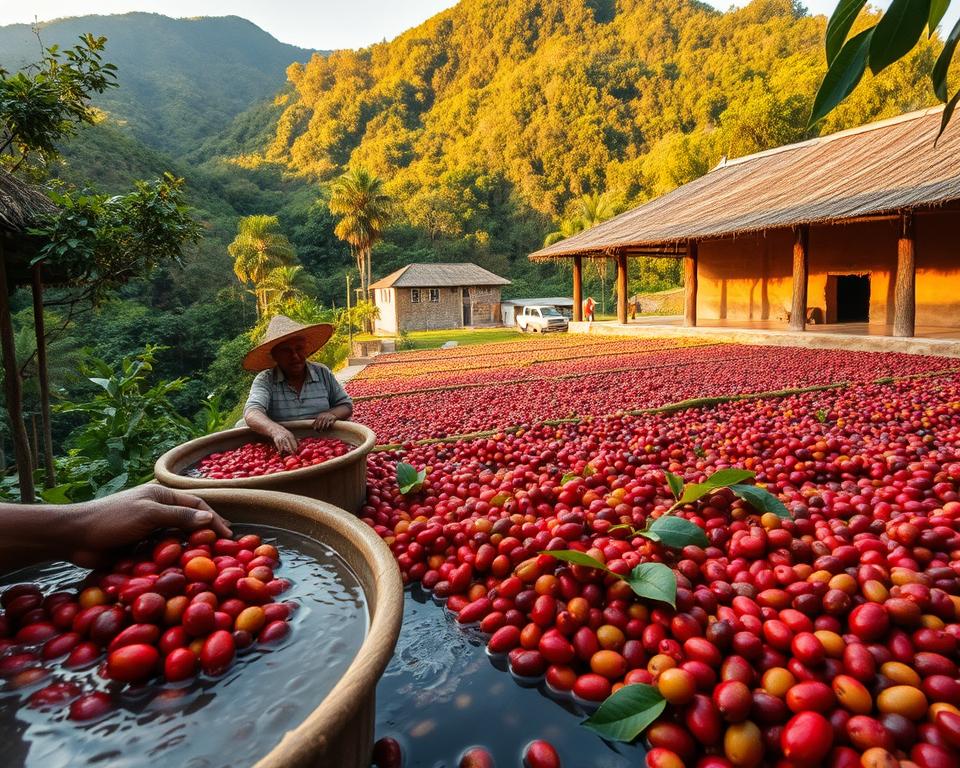
After washing, the beans dry on patios. These patios are made of concrete or covered with plastic. The beans are moved often to dry evenly.
Weather Considerations
Weather is very important for drying the coffee. Producers must watch the weather to keep the beans safe from rain or too much sun. This careful attention makes Mayan coffee special.
| Processing Stage | Description | Importance |
|---|---|---|
| Pulping | Removing the outer skin of the coffee cherry | Initial flavor development |
| Fermentation | Breaking down the mucilage | Flavor profile enhancement |
| Washing | Removing remaining pulp | Quality control and flavor refinement |
Step-by-Step Guide to Brewing Authentic Mayan Coffee
To enjoy Mayan coffee’s rich flavors, follow this guide. Mayan coffee is known for its unique taste. This comes from the traditional farming and processing methods of Mayan communities in Guatemala.
Start by choosing high-quality beans. Look for beans harvested and processed the Mayan way. The quality of the beans greatly affects the coffee’s taste.
Grind the beans just before brewing for the best flavor. Use a medium to fine grind, depending on your brewing method. You can brew Mayan coffee with pour-over, French press, or drip brewing.
Here’s a simple guide to brewing Mayan coffee with a pour-over method:
- Heat water to around 200°F (93°C).
- Place the filter in the pour-over dripper and rinse it with hot water.
- Add the ground coffee to the filter, typically 1 tablespoon of coffee for every 6 ounces of water.
- Pour the heated water over the coffee grounds in a circular motion, starting from the center.
- Allow the coffee to drip through, and then serve.
Brewing authentic Mayan coffee is more than a recipe. It’s about honoring the heritage and tradition in every cup. By following these steps, you can enjoy a genuine Mayan coffee experience.
Experiencing Mayan Coffee Traditions Firsthand
For those eager to dive into Guatemala’s coffee culture, experiencing Mayan coffee traditions is a unique chance. Visitors can explore where coffee grows and learn about the traditional practices. These practices have been passed down through generations.
Visiting local coffee farms is a great way to experience Mayan coffee traditions. Many farms offer tours that show the coffee-making process, from planting to harvesting. Guests can see the care and dedication that goes into making high-quality coffee.
Participating in a traditional Mayan coffee ceremony is another way to understand coffee’s cultural significance. These ceremonies involve traditional rituals. They offer a glimpse into the spiritual connection between the Mayan people and their land.
By experiencing Mayan coffee traditions, visitors gain a deeper appreciation for Guatemala’s coffee heritage. This experience also helps understand the importance of sustainable and responsible coffee production. It fosters a greater understanding of the role coffee plays in local communities.
The Cultural Significance of Coffee in Mayan Communities
In Guatemala’s heart, Mayan communities have grown coffee for ages. It’s a big part of their daily life and spiritual practices. Coffee is more than a crop; it’s a key part of their culture.
Coffee is very important in Mayan social and spiritual life. It’s often at the heart of community meetings and ceremonies. It brings people together, creating unity and cooperation.
- Coffee is used in traditional rituals and ceremonies, showing hospitality and respect for guests.
- It’s a big part of daily life, enjoyed at family gatherings and community events.
- The coffee-growing and harvesting process is a community effort. It strengthens social bonds within the community.
Keeping traditional coffee practices alive is key for Mayan communities. Supporting sustainable coffee and protecting old methods is vital. It helps keep their cultural heritage alive.
By understanding and valuing coffee’s role in Mayan communities, we can help them keep their traditions and way of life.
Preserving Ancient Mayan Coffee Traditions
Keeping ancient Mayan coffee traditions alive is a big job. It involves many people, from local farmers to big organizations. These traditions are a big part of Guatemala’s culture and help the economy a lot.
There are many ways to keep these traditions alive. One is by making coffee farming better for the planet. Mayan farmers use green methods to grow coffee. This keeps the environment safe and the coffee quality high.
Helping local communities is also key. They have grown coffee for a long time. Giving them tools and knowledge helps them grow more coffee and deal with new challenges. It also keeps their cultural ways alive, which is important to their identity.
Here are some important steps to keep these traditions going:
- Promoting sustainable agricultural practices
- Supporting local coffee cooperatives
- Protecting Mayan cultural heritage sites
- Encouraging eco-tourism
By taking these steps, we can help Mayan coffee traditions grow. This helps the local people and the planet. It also keeps a big part of Guatemala’s culture alive and makes coffee farming better for everyone.
How to Support Sustainable Mayan Coffee Production
To keep Guatemala’s coffee heritage alive, we must support sustainable Mayan coffee. This means choosing methods that help the environment and treat local farmers fairly.
Choosing fair trade coffee is a big step. Fair trade ensures farmers get a fair price for their coffee. This lets them improve their communities and farm sustainably. It also fights poverty and supports social justice.
Using eco-friendly farming methods is also key. Mayan coffee farms often use organic, traditional farming. This method avoids harmful chemicals, protecting nature and soil. Buying organic or shade-grown coffee helps save forests and cuts down on carbon emissions.
Being an informed buyer can make a big difference. Look for Fairtrade, Organic, or Rainforest Alliance certifications. Buying directly from farms or cooperatives that focus on sustainability ensures the benefits go to the farmers.
Supporting sustainable Mayan coffee helps preserve Guatemala’s coffee culture. It also promotes a fair and green coffee industry for everyone.
Conclusion: The Enduring Legacy of Guatemala’s Coffee Heritage
Guatemala’s coffee heritage is a rich mix of history, culture, and tradition. The Mayan coffee traditions have been passed down for generations. They play a big role in shaping the country’s identity.
The coffee legacy in Guatemala is more than just a drink. It’s about the people, the land, and the community. It shows the country’s strength and commitment to its cultural heritage.
Supporting sustainable coffee production is key to keeping this legacy alive. By promoting Guatemala’s coffee heritage, we help protect this beloved drink and the communities that rely on it.
The lasting legacy of Guatemala’s coffee culture reminds us of tradition, community, and the land. It inspires and nourishes both locals and visitors. It leaves a lasting impact on everyone who experiences it.