
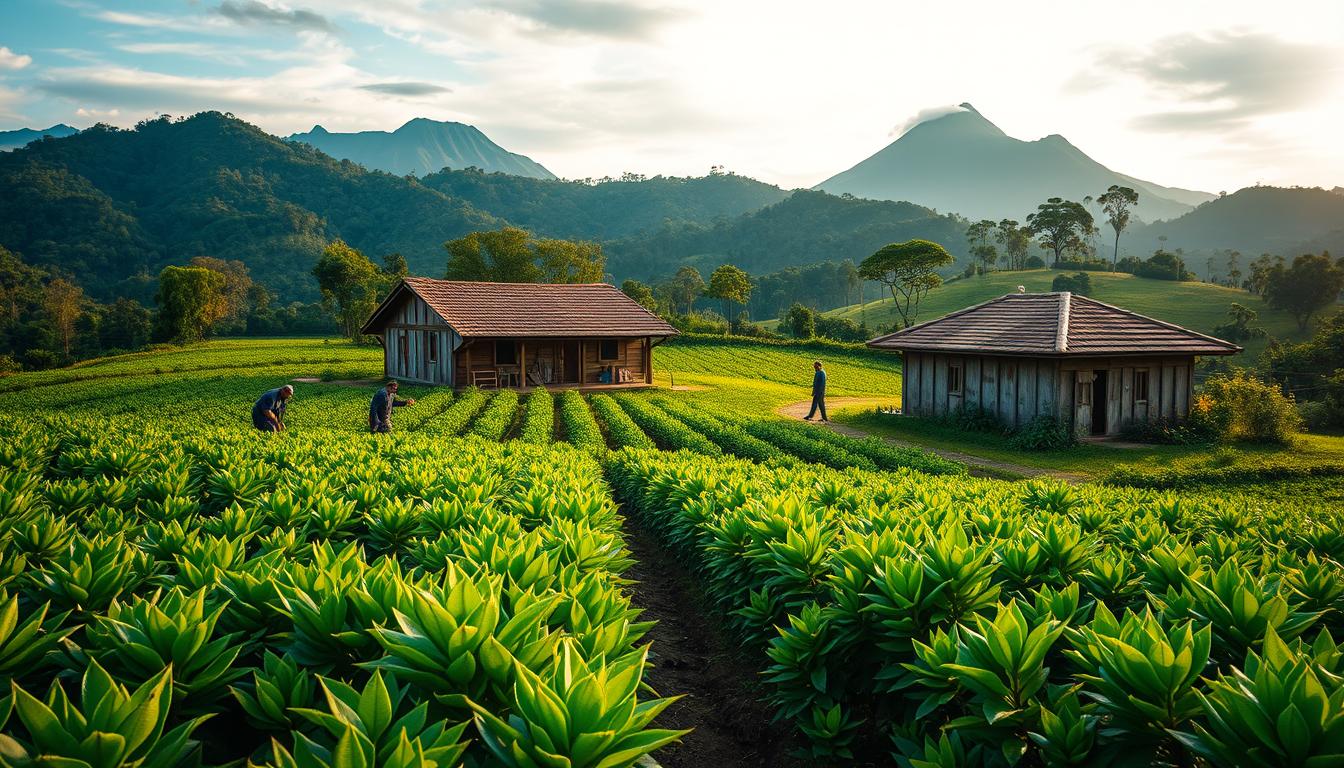
Guatemala is leading the global coffee industry thanks to sustainable farming practices. Places like Antigua, Huehuetenango, and Cobán are famous for their coffee. They use environmentally friendly ways to grow it.
The soil, climate, and farming methods in these areas make Guatemalan coffee top-notch. This has led to a big increase in demand for their coffee. More and more people want coffee that’s good for the planet.
Key Takeaways
- Sustainable farming practices are driving Guatemala’s coffee industry growth.
- Regions like Antigua, Huehuetenango, and Cobán are key coffee-producing areas.
- Guatemalan coffee is known for its high quality and unique flavor profiles.
- Environmentally friendly methods are being adopted by coffee farmers.
- The global demand for sustainably sourced coffee is on the rise.
Introduction to Guatemalan Coffee
Guatemalan coffee has a long history, starting in the 18th century. It has become a key part of the country’s culture and economy. Coffee’s arrival in Guatemala began a legacy that has shaped the nation’s identity and boosted its economy.
Guatemalan coffee is known for its complex flavors. These flavors come from the country’s different regions and climates. Places like Antigua, Huehuetenango, and Cobán are famous for their coffee. This has made Guatemalan coffee a favorite worldwide.
Key Factors Contributing to Guatemalan Coffee’s Success:
- Rich Volcanic Soil: The volcanic soil in many areas gives coffee its unique taste.
- Diverse Microclimates: Guatemala’s varied climates allow for many coffee types, each with its own flavor.
- Fair Trade Practices: Many farms follow Fair Trade, ensuring farmers get a fair price for their coffee.
Coffee is more than just a product in Guatemala. It’s a big part of the country’s culture and way of life. Coffee farms and cooperatives are community centers. They are where farmers share knowledge and help each other.
In summary, Guatemalan coffee is a result of the country’s fertile soil and good climate. It also represents Guatemala’s culture and strength. As people around the world look for quality, sustainable coffee, Guatemalan coffee is set to lead the way.
Historical Context of Coffee in Guatemala
Coffee in Guatemala has a rich history, deeply tied to the country’s culture. It started in the 18th century and has become crucial to the economy and heritage.
The Early Cultivation of Coffee
In the 18th century, coffee was first brought to Guatemala. It thrived in the highlands, thanks to the climate and soil. The first coffee plantations were in Antigua, known for its excellent coffee today.
Coffee as an Economic Pillar
Coffee quickly became key to Guatemala’s economy, offering jobs and income. The growth of coffee was helped by Anacafé, a cooperative that promoted Guatemalan coffee worldwide.
Cooperatives, like Anacafé, are vital for farmers. They offer help with quality, marketing, and finances. This support boosts farmers’ coffee production.
| Year | Coffee Production (tons) | Economic Impact |
|---|---|---|
| 1990 | 150,000 | $100 million |
| 2000 | 180,000 | $150 million |
| 2010 | 220,000 | $200 million |
Cultural Significance of Coffee
Coffee is deeply rooted in Guatemalan culture. Many families have coffee farms or are involved in the industry. Traditional coffee ceremonies show the pride in Guatemalan coffee.
Coffee’s impact goes beyond economics. It’s a big part of Guatemala’s identity and heritage.
Overview of Key Coffee Regions in Guatemala
Guatemala’s coffee regions are known worldwide for their quality. The country’s rich volcanic soil and varied climate make it perfect for coffee. You can find everything from chocolatey to fruity coffee here.
Each region in Guatemala has its own unique taste. This is due to factors like altitude, soil, and climate. Knowing these details helps us appreciate Guatemalan coffee’s complexity.
Antigua: The Heart of Coffee Culture
Antigua is famous for its coffee, known for its balanced taste with hints of chocolate and spice. The region’s coffee culture is deeply rooted in history and tradition.
The volcanic soil and mild climate in Antigua are perfect for growing coffee. Most farms here are family-owned, focusing on quality and sustainability.
Huehuetenango: Unique Flavor Profiles
Huehuetenango is in the highlands of Guatemala. It’s known for coffee with unique flavors. The coffee here is bright and fruity, with citrus and berry notes.
The high altitude and dry climate of Huehuetenango add to the coffee’s complexity. The region also leads in innovative farming and sustainability.
Cobán: Biodiversity and Quality
Cobán is in northern Guatemala, famous for its biodiversity and quality coffee. The coffee farms here are shaded, which helps the local ecosystem and biodiversity.
Cobán’s coffee is known for its balanced acidity and rich flavor. It has notes of caramel and fruit. The region’s focus on sustainable farming and environmental conservation is clear in its coffee production.
| Region | Altitude | Flavor Profile |
|---|---|---|
| Antigua | 1,500 – 1,700 meters | Balanced, chocolatey, spicy |
| Huehuetenango | 1,800 – 2,000 meters | Bright, fruity, citrusy |
| Cobán | 1,300 – 1,600 meters | Balanced, caramel, fruity |
The Role of Altitude and Volcanic Soil
Guatemala’s terroir, with its high altitudes and rich volcanic soils, shapes its coffee’s flavor. This unique mix makes Guatemalan coffee highly sought after worldwide.
Impact on Coffee Flavor
Altitude greatly affects coffee flavor. Coffee grown at high elevations matures slowly, leading to complex flavors. High-altitude coffee is known for its bright acidity and nuanced flavors, with notes of citrus and floral hints.

How Altitude Influences Quality
Altitude also impacts coffee quality. Coffee grown at higher altitudes has denser beans, indicating higher quality. The slower maturation process allows for even bean development, enhancing density and flavor.
| Altitude Range | Coffee Quality Characteristics |
|---|---|
| 1,500 – 2,000 meters | Balanced flavor, medium acidity |
| 2,000 – 2,500 meters | Bright acidity, nuanced flavors |
| Above 2,500 meters | High density, complex flavor profile |
Volcanic Soil Benefits
Guatemala’s volcanic soil is rich in minerals, enhancing coffee’s flavor. The soil’s mineral content and good drainage support healthy plant growth. Volcanic soil is great for coffee production, providing essential nutrients for robust plant development.
The combination of Guatemala’s high altitudes and volcanic soils creates an ideal terroir for coffee. Sustainable farming practices, like those promoted by Fair Trade and cooperatives, ensure Guatemalan coffee is of high quality and sustainably produced.
Sustainable Farming Practices
In Guatemala, coffee farming is changing for the better. Farmers are using shade-grown methods and organic certifications. This not only makes the coffee better but also helps the environment and local people.
Shade-Grown Techniques
Shade-grown coffee grows under trees, just like it would naturally. This method helps plants and animals live together better. It also makes the soil healthier and cuts down on harmful chemicals.
Benefits of Shade-Grown Coffee
- Enhanced biodiversity
- Improved soil health
- Reduced chemical use
- Better flavor profiles
Organic Certifications
Organic certifications are key for Guatemalan coffee farmers. They mean the coffee is made without harmful chemicals. Organic farming is good for the coffee, the environment, and the farmers.
“Organic farming is not just about avoiding chemicals; it’s about creating a balanced ecosystem that benefits both the farmer and the consumer.” – Maria Rodriguez, Organic Coffee Farmer
Fair Trade Initiatives
Fair Trade is important for Guatemalan coffee farmers. It ensures they get fair prices and work in good conditions. Fair Trade also supports sustainable farming and community projects.
| Initiative | Benefits | Impact |
|---|---|---|
| Shade-Grown Techniques | Biodiversity, Soil Health | Environmental Conservation |
| Organic Certifications | Reduced Chemical Use, Quality Improvement | Sustainable Agriculture |
| Fair Trade Initiatives | Fair Prices, Improved Labor Conditions | Community Development |
Shade-grown, organic, and Fair Trade are changing Guatemalan coffee. These methods make the coffee better and help the environment and people. It’s a win-win for everyone involved.
Local Cooperatives and Their Influence
Local cooperatives have a huge impact on Guatemalan coffee farmers. They offer support, resources, and a united voice. This helps shape the industry.
Building Stronger Communities
Anacafé and other cooperatives are key in building community among farmers. They promote unity and cooperation. This way, farmers can share knowledge and tackle challenges together.
Cooperatives host events, training, and workshops. These gatherings help farmers bond and learn from each other and experts. It’s a chance to grow and improve.
Empowering Farmers through Education
Cooperatives focus on education. They provide training and workshops. This helps farmers improve their farming and increase yields.
Topics covered include sustainable farming, crop management, and quality control. Farmers gain skills to compete globally and improve their lives.
Shared Resources and Knowledge
Cooperatives share resources and knowledge. Members get access to equipment, technology, and expertise. This is something individual farmers might not afford.
For example, cooperatives offer seeds, fertilizers, and equipment at lower prices. They also provide technical help. This helps farmers optimize their production.
| Cooperative | Services Offered | Benefits to Farmers |
|---|---|---|
| Anacafé | Training, Technical Assistance, Market Access | Improved Yields, Better Quality, Increased Income |
| Other Cooperatives | Shared Equipment, Seeds, Fertilizers | Reduced Costs, Improved Productivity |
In conclusion, local cooperatives are crucial for Guatemalan coffee farmers. They build community, educate farmers, and share resources. This is key to the coffee industry’s success and growth.
Community Projects Supporting Sustainability
Community projects are key in supporting sustainable farming practices in Guatemala’s coffee sector. They make coffee production more environmentally friendly. They also help farmers and their communities live better lives.
Environmental Conservation Initiatives
In Guatemala, many community projects focus on environmental conservation in coffee areas. They work on reforestation and biodiversity to keep the environment balanced for quality coffee. Local communities help by planting native trees, which shade coffee plants and support wildlife.
Some projects also work on sustainable water management for coffee processing. This reduces environmental harm. It helps the local ecosystem and supports coffee farming for the long term.
Farmer Cooperatives and Collective Growth
Farmer cooperatives are crucial in Guatemala’s coffee industry. They let small farmers share resources, knowledge, and get better prices. This way, farmers get training, help, and market info they couldn’t afford alone.
This teamwork improves Guatemalan coffee quality and consistency. It also makes farmers more financially stable. Together, they face market and environmental challenges better, ensuring sustainable coffee production.
Social Projects and Their Impact
Community projects also include social initiatives for coffee farmers and their families. They offer education and healthcare, improving well-being and quality of life. These efforts show that coffee farming’s sustainability depends on the health and education of those involved.
Some projects also empower women in coffee farming communities. They provide training and economic chances, promoting gender equality. This benefits individuals and helps the community’s overall prosperity.
Challenges Facing Guatemalan Coffee Farmers
Guatemalan coffee farmers are facing big challenges that threaten their farms. The coffee industry is key to Guatemala’s economy and culture. But, it’s hit by many obstacles that hurt its productivity and quality.
Rising Concerns: Climate Change and Its Effects
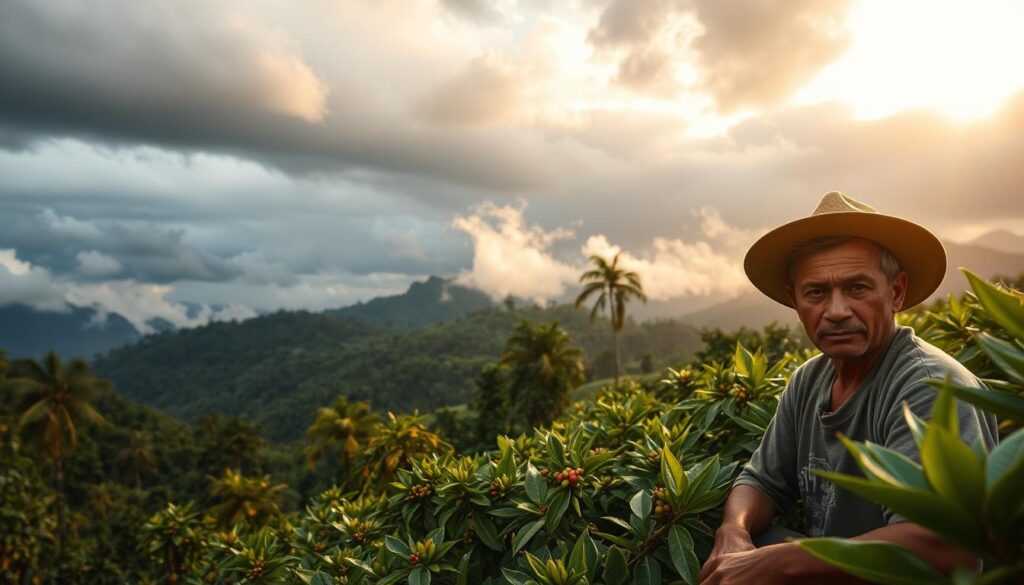
Climate change is a big problem for Guatemalan coffee farmers. Warmer temperatures and unpredictable weather are changing the coffee-growing conditions. This can lead to more pests and diseases, and damage crops.
Impact on Coffee Production: The changing climate also affects the coffee’s yield and quality. Farmers are trying new ways to keep their farms productive.
Economic Pressures on Small Farms
Small coffee farms in Guatemala face big economic challenges. The cost of making coffee is going up, and many farmers can’t earn enough from their sales. Fair Trade helps by making sure farmers get a fair price for their coffee.
| Challenge | Impact on Farmers | Potential Solution |
|---|---|---|
| Climate Change | Reduced crop yield and quality | Adopt climate-resilient practices |
| Economic Pressures | Low income for farmers | Fair Trade certifications |
| Market Access Issues | Limited market opportunities | Cooperatives and export partnerships |
Market Access Issues
Guatemalan coffee farmers struggle to get into international markets. Cooperatives help by combining resources and getting better prices.
The Role of Cooperatives: Cooperatives also improve market access. They offer training and resources, helping farmers compete globally.
By tackling these challenges, the Guatemalan coffee industry can ensure a sustainable future. This will help farmers keep producing quality coffee and improve their lives.
Innovations in Coffee Production
Sustainable farming and new tech are changing Guatemalan coffee for the better. The coffee world is always growing, with farmers using new ways to make better coffee and protect the planet.
Technology and Its Role in Sustainability
Technology is key in making coffee farming more sustainable. Precision agriculture uses drones and satellites to check on crops and water use. This helps farmers grow more while using less water and chemicals.
Also, digital tools give farmers updates on weather, prices, and tips. Anacafé, Guatemala’s coffee group, leads in using these tools to help its members.
Improving Quality Through Innovation
New methods are making Guatemalan coffee even better. Techniques like honey processing and natural processing create special tastes that coffee lovers want.
Also, better drying places and cupping labs have raised coffee quality. Groups of farmers are sharing what they know, leading to better coffee for everyone.
| Innovation | Description | Impact |
|---|---|---|
| Precision Agriculture | Use of drones and satellite imaging for crop monitoring | Improved crop yields and reduced environmental impact |
| Honey Processing | Processing method that leaves some mucilage on the bean | Unique flavor profiles |
| Digital Platforms | Real-time data on weather, market prices, and best practices | Better informed farmers and improved decision-making |
The Future of Guatemalan Coffee
Guatemalan coffee farms are set to lead the coffee industry’s future. They focus on sustainable farming and quality. This makes them ready to meet changing consumer needs.
Trends in Consumer Preferences
People now want products that are good for the planet. Guatemalan coffee fits this bill with its Fair Trade and organic focus. A survey shows over 70% of consumers are willing to pay more for sustainable products. This is a big chance for Guatemalan coffee farms.
“The demand for sustainable coffee is not just a trend; it’s a movement. Guatemalan coffee farmers are at the forefront of this movement, adopting practices that not only benefit the environment but also improve the livelihoods of local communities.”
Expanding Global Market Presence
Guatemalan coffee is reaching more markets through smart marketing and trade. The country’s coffee industry is teaming up with international partners. For example, the Guatemalan Coffee Association is promoting Guatemalan coffee in the U.S. and Europe.
| Market | Growth Rate | Key Initiatives |
|---|---|---|
| United States | 10% | Targeted marketing campaigns, trade shows |
| Europe | 8% | Partnerships with local coffee roasters, sustainability certifications |
Environmental Resilience Efforts
Guatemalan coffee farms are working on being more environmentally friendly. They use practices like shade-grown coffee and reforestation.
By growing different crops and using sustainable methods, farmers improve their coffee quality. They also become more resilient to climate change. A farmer said, “Sustainability is not just about the environment; it’s also about ensuring the long-term viability of our farms and communities.”
The future of Guatemalan coffee looks bright. It’s driven by a focus on sustainability, quality, and community. As the coffee market changes, Guatemalan farms will stay at the top.
Conclusion: The Promise of Guatemalan Coffee Farms
The future of coffee in Guatemala is looking good. Sustainable farming and cooperative models are leading the way. Guatemalan coffee farms are known for their top-notch coffee. But it’s their focus on the environment and community that really stands out.
Guatemalan farmers use shade-grown techniques and organic certifications. This not only makes great coffee but also helps nature and local health. Cooperatives help farmers keep up these green practices.
These green efforts do more than help the planet. They also strengthen communities. Farmers say being in a cooperative has helped them improve their farms and secure a brighter future.
“Sustainability is not just about the environment; it’s also about the people and the communities involved in coffee production.”
The good news about sustainable coffee farming in Guatemala is clear:
- Improved coffee quality thanks to better farming
- Helping the environment with shade-grown and organic farming
- Building stronger communities through cooperatives
As more people want high-quality, eco-friendly coffee, Guatemalan farms are ready. They’re dedicated to sustainable farming practices and working together. This not only helps their communities but also the global coffee world.
Call to Action: Supporting Sustainable Coffee
As the demand for high-quality coffee grows, we all have a role to play. Choosing Fair Trade coffee helps support sustainable farming and fair prices for farmers.
Empowering Farmers through Fair Trade
Groups like Anacafé are key in promoting sustainable farming. Buying Fair Trade coffee empowers farmers and helps their communities grow.
Raising Awareness about Sustainable Coffee
It’s important to spread the word about sustainable coffee. By learning and sharing, we can make the coffee industry better for everyone.
Together, we can make a difference for Guatemala’s coffee farmers and the environment.