
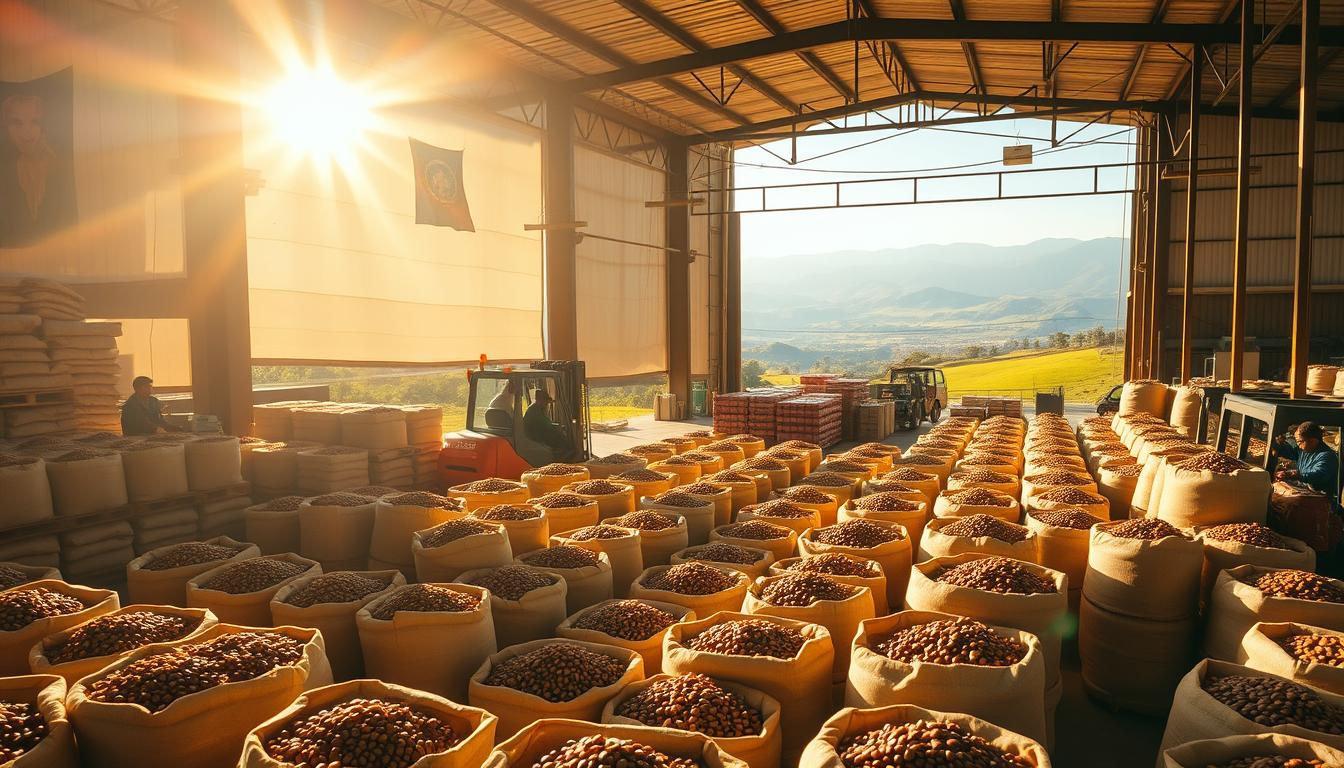
Guatemalan coffee is famous for its rich taste and top-notch quality. This is thanks to the country’s special geography and sustainable farming practices. The main coffee areas, like Antigua, Huehuetenango, and Atitlán, have volcanic soil and high altitudes. These factors make the coffee’s flavor unique.
The path from farm to cup is complex, involving logistics. It ensures the coffee beans are picked, processed, and shipped well. This journey needs precision and a deep understanding of the coffee’s origins and flavor.
Key Takeaways
- Guatemalan coffee is known for its rich flavor and high quality.
- Sustainable farming practices are prevalent in Guatemala’s main coffee regions.
- The country’s volcanic soil and high altitudes contribute to the coffee’s distinct taste.
- Logistics play a crucial role in the journey from farm to cup.
- The global market demands high-quality coffee, driving the need for precise logistics.
Introduction to Guatemala’s Coffee Heritage
Guatemalan coffee is more than a drink; it’s a cultural treasure. For years, coffee has shaped the country’s identity and economy. It has also made Guatemala known worldwide.
Coffee is deeply rooted in Guatemala’s culture. It shows the nation’s values, traditions, and history. The coffee industry is a source of pride, helping the country grow and supporting farmers and their families.
The Cultural Significance of Coffee
Coffee is key to Guatemalan culture, symbolizing hospitality and community. In rural areas, coffee is a way of life. It brings people together, creating unity and cooperation.
Coffee is also a big part of Guatemalan festivals and daily life. It represents the nation’s history, resilience, and love for quality.
Historical Overview of Coffee Production
Coffee has been grown in Guatemala since the 18th century. The industry has grown a lot, thanks to government policies, market trends, and the environment.
Guatemala’s coffee exports are vital to the economy. Coffee from places like Antigua, Huehuetenango, and Cobán is famous for its quality. This has made Guatemala known for its coffee.
The growth of coffee production has shaped Guatemala’s economy and society. Coffee has driven community projects to help farmers and their families.
Key Coffee Regions in Guatemala
Guatemala has several key coffee regions. These include the historic Antigua, the high-altitude Huehuetenango, and the biodiverse Cobán. Each region is known for producing high-quality coffee beans.
Antigua: The Crown Jewel of Coffee
Antigua is famous for its coffee. It has rich volcanic soil and an ideal climate. The coffee here is known for its balanced acidity and rich flavor, with hints of chocolate and spice.
- Produces coffee with balanced acidity
- Rich flavor profile with notes of chocolate and spice
- Ideal climate for coffee production
Huehuetenango: Elevation and Flavor
Huehuetenango is a high-altitude region. It produces coffee with unique flavor profiles. The coffee here is known for its bright acidity and fruit notes, making it a favorite among coffee lovers.
- High-altitude coffee production
- Bright acidity and fruit notes
- Distinct flavor profile
Cobán: Unique Climate and Biodiversity
Cobán is known for its unique climate and biodiversity. These factors contribute to its coffee’s distinct flavor. The coffee here is often described as having a smooth, balanced taste with hints of spice and fruit.
- Unique climate contributing to distinct flavor
- Biodiverse region with a variety of flora
- Smooth, balanced taste with hints of spice and fruit
The coffee from these regions is carefully roasted. This process enhances their unique flavors. Roasting is key in bringing out the distinct characteristics of each region’s coffee. This makes Guatemalan coffee highly regarded worldwide.
The Coffee Supply Chain: A Complex Journey
Producing Guatemalan coffee is a detailed and hard process. It starts with picking top-quality coffee seeds. These seeds are planted in nurseries for months before being moved to fields.
Guatemalan coffee’s sustainability depends on local farming practices. Many cooperatives use eco-friendly methods. These methods boost coffee quality and protect the environment.
From Seed to Harvest
From seed to harvest, there are key steps. Coffee trees are first planted in shaded areas. This helps keep biodiversity and cuts down pesticide use.
As trees grow, they need regular pruning and fertilizing. This ensures they produce well.
Coffee cherries are carefully hand-picked when they are ripe. This step is crucial for quality. Farmers with experience pick the cherries at the right time.
| Stage | Description | Sustainability Impact |
|---|---|---|
| Seed Selection | Choosing high-quality seeds for planting | Improves crop resilience and reduces waste |
| Nursery Stage | Nurturing seedlings before transfer to fields | Ensures healthy start for coffee trees |
| Harvesting | Hand-picking ripe coffee cherries | Reduces damage to unripe cherries and improves quality |
Processing: Washing and Drying Techniques
After picking, coffee cherries are processed. This includes removing the outer skin and pulp. There are different methods, like washing and natural drying.
The washing technique removes pulp and then soaks the beans. This method makes coffee taste brighter and cleaner.
Natural drying, on the other hand, dries cherries in their fruit. This makes coffee sweeter and fruitier. Both methods are chosen based on flavor and environmental impact.
Using sustainable processing techniques, Guatemalan coffee makers reduce their environmental impact. They keep their coffee quality high.
The Impact of Soil and Altitude on Flavor
Guatemala’s unique terroir, with its volcanic soil and varied altitude, greatly affects coffee flavor. This mix boosts the coffee’s quality, making it popular worldwide.
Volcanic Soil Benefits
Guatemala’s volcanic soil is packed with minerals, key for coffee growth. The volcanic soil offers a nutrient-rich setting for coffee plants. It also holds moisture well, cutting down on irrigation needs.
The minerals in this soil improve coffee taste. For example, potassium and magnesium balance acidity and add richness. This leads to a complex taste, often with chocolate and caramel notes.
The Role of Altitude in Coffee Quality
Altitude is crucial for Guatemalan coffee quality. Coffee grown high matures slower, ripening more evenly. This leads to a richer flavor with higher acidity.
Guatemala’s altitudes range from 1,500 to 2,000 meters, creating diverse microclimates. These microclimates add to the coffee’s flavor variety. Managing farms across these altitudes is tough, but the effort pays off, as the coffee is highly valued globally.
| Altitude Range (meters) | Flavor Profile Characteristics | Export Quality |
|---|---|---|
| 1,500 – 1,800 | Balanced acidity, notes of fruit and chocolate | High |
| 1,800 – 2,000 | Higher acidity, complex flavor with caramel notes | Premium |
| 2,000+ | Distinct acidity, floral and wine notes | Specialty |
The mix of volcanic soil and varied altitude in Guatemala boosts coffee flavor and quality. The detailed logistics of harvesting, processing, and exporting ensure top quality. This solidifies Guatemala’s standing as a top coffee producer.
Sustainable Farming Practices in Guatemala
The coffee industry in Guatemala is moving towards sustainable methods. This includes shade-grown coffee and organic farming. These changes aim to protect the environment, ensure coffee crops’ long-term viability, and improve farmers’ lives.
Shade-Grown Coffee Techniques
Shade-grown coffee is grown under a tree canopy. This method boosts biodiversity and cuts down on pesticide and fertilizer use. Shade-grown coffee also enhances the coffee’s flavor. Many Guatemalan farms are adopting this method, seeing its benefits for the environment and coffee quality.
Organic Certification and Its Importance
Organic certification is key in Guatemala’s sustainable farming. Farms must follow strict rules to get certified. These rules ban synthetic fertilizers, pesticides, and GMOs. This ensures a healthier environment and chemical-free coffee. Organic certification boosts Guatemalan coffee’s market appeal, as more people want eco-friendly products.
The shift to sustainable farming, like shade-grown and organic methods, is a positive trend in Guatemala’s coffee industry. It shows a commitment to sustainability and caring for the environment. These practices are crucial for the coffee industry’s long-term success.
Fair Trade Initiatives: Supporting Farmers
Fair Trade practices in Guatemala’s coffee sector have greatly helped local farmers. They ensure fair prices and better market access. This makes Fair Trade key to keeping Guatemalan coffee production sustainable.
Economic Benefits for Local Cooperatives
Local cooperatives in Guatemala have seen their economic stability grow thanks to Fair Trade. They get fair prices for their coffee, helping them cover costs and invest in their communities. The export of quality coffee, thanks to good logistics, adds to their economic gains.
Fair Trade certification helps cooperatives reach global markets better. This boosts their export revenue. They use this money for social projects like education and healthcare, helping the whole community.
| Cooperative | Region | Fair Trade Benefits |
|---|---|---|
| Atlántico | Antigua | Improved export prices, community development projects |
| Verde | Cobán | Enhanced market access, technical assistance |
| Montaña | Huehuetenango | Increased revenue, social programs for farmers |
Improving Livelihoods Through Fair Trade
Fair Trade directly helps Guatemalan coffee farmers improve their lives. They get a fair price for their coffee, which lets them better their living conditions and farm investments. Fair Trade stability also lets them focus on quality, boosting their international reputation.
The role of logistics in Fair Trade is huge. It ensures coffee gets to markets quickly and in good condition. This is key for keeping international buyers happy and coming back.
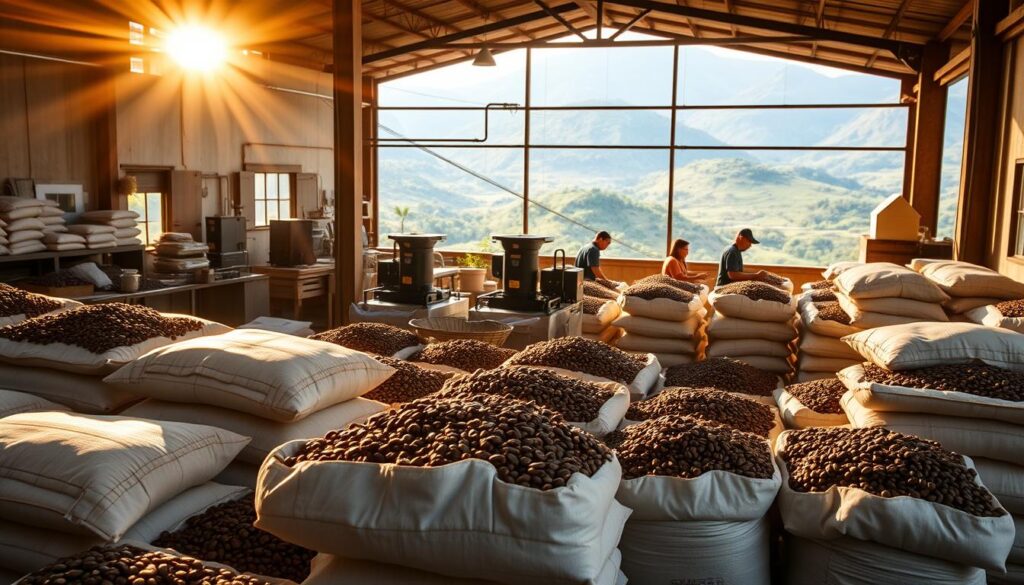
Supporting Fair Trade helps Guatemalan coffee farmers and their communities. It’s clear in the farmers’ improved lives and the sustainable growth of their areas.
Community Projects Enhancing Farmers’ Lives
In Guatemala, community projects are changing the lives of coffee farmers. They improve farmers’ well-being and the environment. These efforts are key for sustainability in coffee.
Education and Training Programs
Education and training are crucial in these projects. They teach farmers new farming methods and how to grow more coffee. For example, learning about organic farming techniques and efficient water use helps farmers protect the environment and grow more.
These programs also teach roasting and how to check coffee quality. This helps farmers make their coffee more valuable and get better prices.
Environmental Initiatives for Sustainability
Environmental efforts are a big part of these projects. They promote shade-grown coffee, which makes coffee better and protects nature. It also stops soil erosion.
Projects also include planting trees and using sustainable farming. This makes the environment healthier and coffee crops stronger.
Supporting these projects helps make the coffee industry better. They improve farmers’ lives and the quality of their coffee.
Challenges Facing Guatemalan Coffee Farmers
Guatemalan coffee farmers face big challenges like climate change and market ups and downs. These issues affect the quality and amount of coffee they make. They also impact the whole coffee industry.
Rising Temperatures and Changing Precipitation Patterns
Climate change affects Guatemalan coffee in many ways. Warmer temperatures and changes in rain can harm coffee plants. This can lead to more pests and diseases, and even damage crops.
Logistics are key in helping farmers deal with these changes. They ensure farmers get the supplies and tools they need quickly.
Market Fluctuations and Economic Pressures
Guatemalan coffee farmers also deal with tough economic issues. The global coffee market is unpredictable, with prices changing often. When prices fall, it’s hard for farmers who have already spent money on their crops.
The export market is very important for Guatemalan coffee. A lot of the country’s coffee is sold abroad. Changes in global demand and prices can hurt farmers’ lives.
| Challenge | Impact on Coffee Farmers | Potential Solution |
|---|---|---|
| Climate Change | Reduced coffee yields, increased pests and diseases | Implement sustainable farming practices, improve logistics for supply delivery |
| Market Fluctuations | Unstable income, difficulty in planning | Diversify export markets, improve market information systems |
By tackling these challenges, the Guatemalan coffee industry can keep growing. Improving logistics and stabilizing the export market are important steps.
The Future of Guatemalan Coffee
The future of Guatemalan coffee is promising. It’s thanks to new ways of farming and a growing love for quality coffee worldwide. Guatemalan farmers are ready to make the most of their country’s coffee history and care for the environment.
Innovations in Sustainable Practices
Guatemalan coffee farmers lead in sustainable farming. They use shade-grown coffee, organic farming, and save water. These methods help the planet and make Guatemalan coffee taste special.
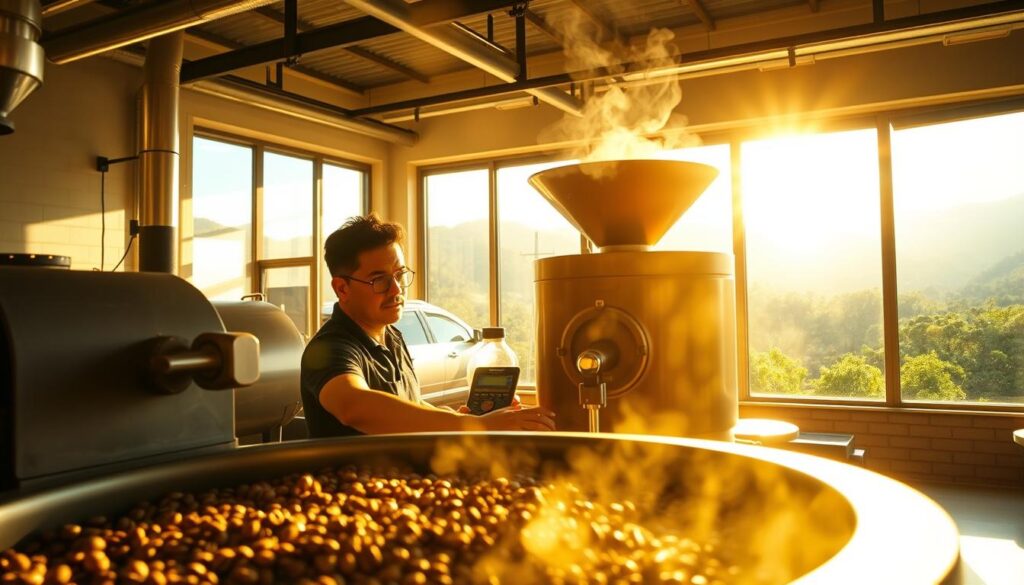
Sustainable roasting practices are also becoming popular. Roasters are using green methods to cut down waste and emissions. An expert says, “Sustainability is key for coffee’s future.”
“The way we produce coffee today will determine the quality of our coffee tomorrow.”
Potential for Growth in International Markets
Specialty coffee is in high demand globally, and Guatemalan coffee is ready to shine. Its rich taste and eco-friendly farming make it a hit with coffee lovers everywhere.
To meet this demand, Guatemalan coffee makers are working on their exports and marketing. They want to show off Guatemalan coffee’s unique taste and eco-friendly farming. This will help them reach more customers in the U.S. and Europe.
- Enhancing export capabilities
- Promoting sustainable practices
- Developing direct trade relationships
These plans should help Guatemalan coffee grow and become a top choice worldwide.
Conclusion: The Overall Journey of Guatemalan Coffee
The journey of Guatemalan coffee is complex. It starts on the farm and ends in our cups. It involves careful steps like growing, picking, processing, and exporting. Then, logistics make sure it gets to markets around the world.
Consumer Awareness and Sustainability
Consumer awareness is key for a sustainable coffee industry. By picking sustainable coffee, we support the planet and fair trade. Guatemalan coffee, known for its quality, often uses green methods. These help the environment and local people.
Celebrating Flavor and Culture Through Roasting
Guatemalan coffee’s unique taste is loved globally. Roasting brings out its special flavors and smells. Whether it’s a light roast or a dark one, roasting is an art.
As more people want quality, sustainable coffee, Guatemalan farmers are ready. By choosing fair trade and green coffee, we help the industry. We also get to enjoy great Guatemalan coffee, knowing we’re supporting a better world.