
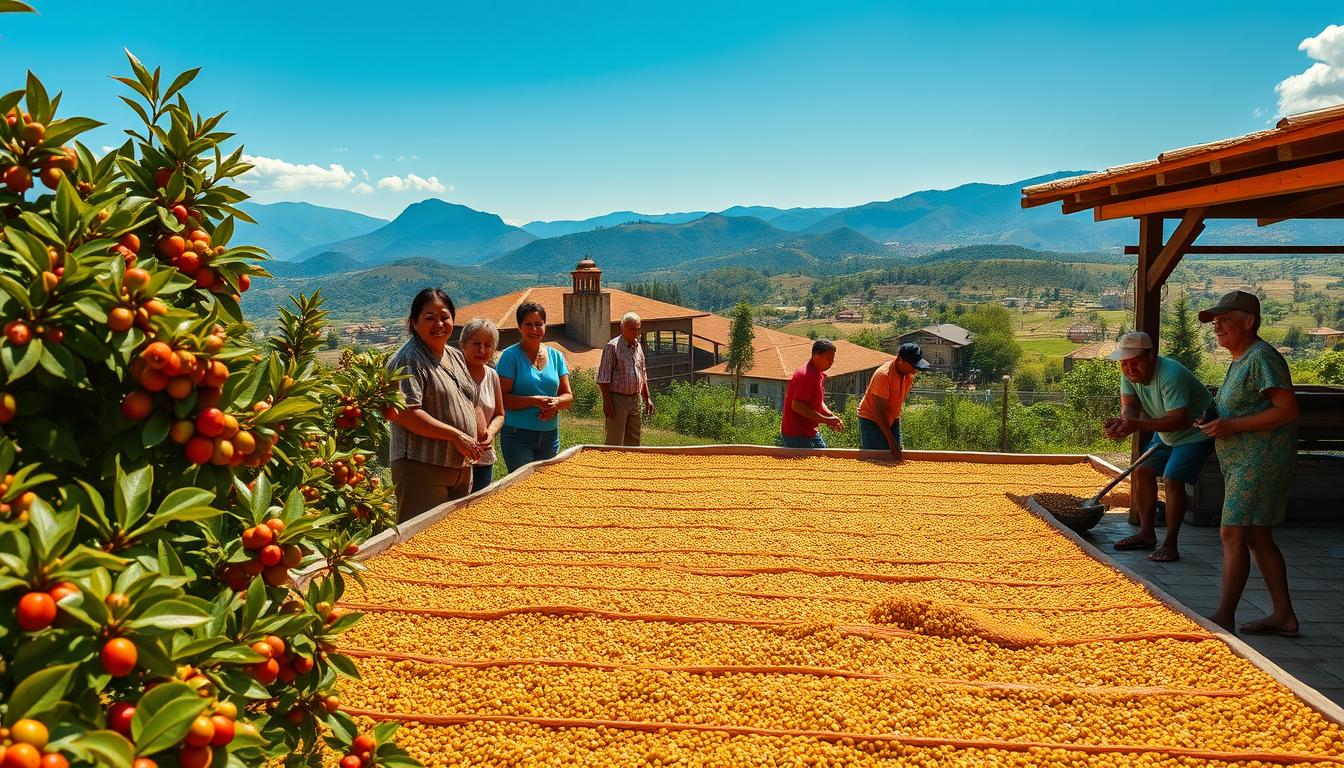
In Guatemala’s highlands, a thriving coffee industry is driven by local cooperatives. These groups empower farmers through sustainable practices and collective farming methods.
Places like Antigua, Atitlán, and Huehuetenango are famous for their top-notch coffee. Farmers use methods that care for the environment and help their communities.
By teaming up, farmers in these cooperatives can better their lives. They can also invest in their communities. And they produce some of the world’s finest coffee.
Key Takeaways
- Guatemalan coffee cooperatives play a crucial role in empowering local farmers.
- Sustainable farming practices are a hallmark of these cooperatives.
- Regions like Antigua and Atitlán are known for their high-quality coffee.
- Collective farming methods improve farmers’ livelihoods and community development.
- Cooperatives enable farmers to produce some of the world’s best coffee.
The Historical Significance of Coffee in Guatemala
Coffee has been key in shaping Guatemala’s economy and society since its arrival. Introduced in the 19th century, it has become a big part of Guatemala’s identity.
Coffee’s Introduction to Guatemala
Coffee first came to Guatemala in the 18th century. But it wasn’t until the 19th century that it grew on a large scale. The country’s soil, climate, and rainfall made it perfect for coffee.
As coffee production grew, so did its impact on the economy. It became a major export, helping to modernize the country. Foreign investment also increased, boosting the economy further.
Growth as an Economic Pillar
Coffee became a mainstay of Guatemala’s economy, creating jobs for thousands. The demand for Guatemalan coffee grew, pushing farmers to improve their methods.
The impact of coffee wasn’t just on farms. It also helped the broader economy through export taxes and jobs in related fields.
| Year | Coffee Production (tons) | Economic Impact |
|---|---|---|
| 1850 | 1,000 | Initial growth phase |
| 1900 | 10,000 | Significant economic contribution |
| 1950 | 50,000 | Major export crop |
Cultural Impact of Coffee Farming
Coffee farming has deeply influenced Guatemala’s culture. It has shaped the country’s identity and social fabric. Coffee farms, or “fincas,” are a big part of Guatemalan heritage, with many families working in the industry for generations.
“Coffee is not just a crop; it’s a way of life for many Guatemalans. It has shaped our culture, our economy, and our very identity.”
Coffee’s cultural significance is seen in traditional practices and celebrations. It’s a big part of Guatemalan life, showing the country’s values and traditions.
The empowerment of coffee farmers through cooperatives has been key to the industry’s success. By working together, farmers have improved their economic situation and helped the coffee industry stay sustainable.
In conclusion, coffee’s history in Guatemala is complex, touching on economics, society, and culture. Understanding this history helps us see the importance of coffee cooperatives in empowering farmers and promoting sustainable practices.
Guatemala’s Prime Coffee Regions
Guatemala is famous for its coffee, with Antigua, Huehuetenango, and Cobán leading the way. These places are known for their unique flavors and top-notch beans. They have the perfect conditions for growing coffee.
Antigua: The Jewel of Guatemalan Coffee
Antigua is a top spot for coffee in Guatemala. It has rich volcanic soil and a perfect climate. The coffee here is balanced, with hints of chocolate and spice.
Surrounded by history and volcanoes, Antigua’s coffee farms are truly special.
Huehuetenango: High Altitudes and Rich Flavors
Huehuetenango is known for its coffee farms at high altitudes. This leads to coffee with a complex flavor profile. The dry climate and rich soil add to its bright acidity and fruit notes.
Huehuetenango’s coffee is a favorite in the specialty market.
Cobán: The Heart of Cloud Forest Coffee
Cobán is famous for its cloud forest, creating a unique microclimate for coffee. The coffee here is balanced, with floral notes. The shaded farms add to the coffee’s distinct taste and support biodiversity.
Guatemala’s coffee regions are diverse, making the country known for quality coffee. Through coffee cooperatives, farmers share knowledge and work together. This improves their coffee’s quality and sustainability.
The Role of Cooperatives in Coffee Production
Cooperatives are key in Guatemala’s coffee world. They help improve quality and sustainability. By joining together, farmers gain economic stability and better coffee quality.
Empowering Farmers Through Collaboration
Cooperatives give farmers the tools they need to thrive. They offer:
- Training and education on best farming practices
- Access to markets and buyers
- Technical assistance in coffee production and processing
Working together, farmers share knowledge and cut costs. This boosts their bargaining power. It also makes their coffee better and helps them compete globally.
The Cooperative Model’s Financial Benefits
The cooperative model brings big financial wins. Farmers get:
- Better prices for their coffee from bulk sales
- Lower costs by sharing equipment and resources
- More stable and predictable income
This stability lets farmers invest in their farms. It improves their lives and boosts the local economy. The cooperative model is crucial for the economic empowerment of Guatemala’s coffee farmers.
Enhancing Quality and Sustainability Together
Cooperatives are vital for better coffee quality and sustainability. They focus on:
- Improving coffee quality through better processing and handling
- Promoting environmental sustainability with shade-grown coffee
- Supporting social sustainability by improving farming communities’ lives
These efforts help Guatemala’s coffee industry thrive. They make Guatemalan coffee stand out globally. This attracts consumers who value high-quality, sustainably made coffee.
Sustainable Farming Practices Employed
In Guatemala, coffee cooperatives are at the forefront of sustainable farming. They are setting a new standard for the coffee industry. These cooperatives use environmentally friendly techniques. These methods improve coffee quality and benefit both the environment and their members.
Shade-Grown Coffee and Its Benefits
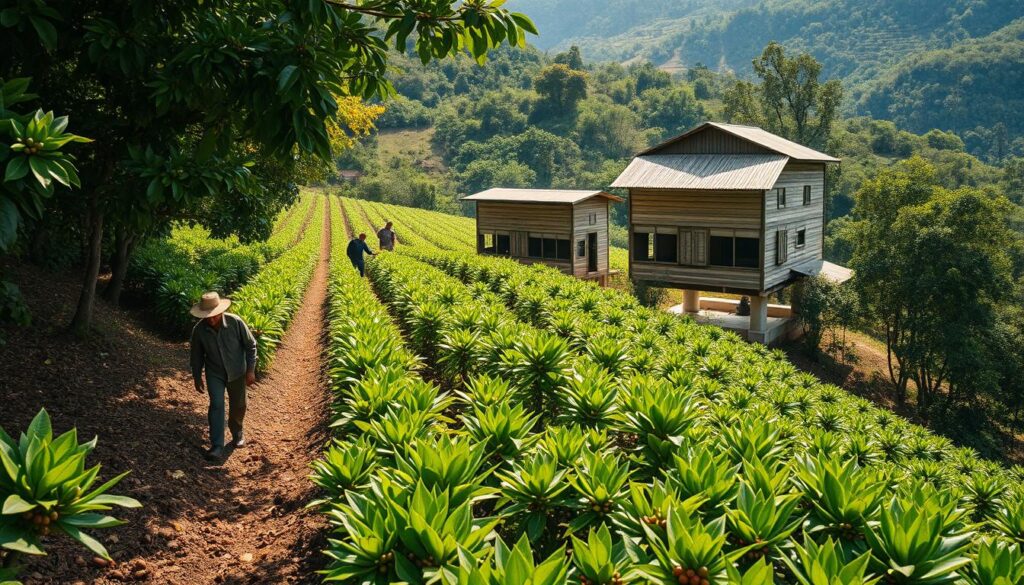
Guatemalan coffee cooperatives focus on shade-grown coffee. This method grows coffee under a tree canopy, mimicking nature. Shade-grown coffee boosts biodiversity, prevents soil erosion, and enhances coffee quality.
A study found that shade-grown farms support up to 40% more bird species than sun-grown farms. This method increases the farm’s ecological value. It also provides farmers with a stable income from high-quality coffee.
Organic Certification and Environmental Health
Guatemalan coffee cooperatives also seek organic certification. This means they follow strict standards for chemical use. Organic farming improves soil and water quality and conserves water.
“Organic farming practices have not only improved the health of our soil and water but have also resulted in higher-quality coffee that commands a better price in the market,” said a member of a Guatemalan coffee cooperative.
Fair Trade Initiatives Supporting Farmers
Fair Trade initiatives are key for Guatemalan coffee cooperatives. Fair Trade ensures farmers get a fair price for their coffee. It also provides a premium for community development projects.
| Initiative | Benefits |
|---|---|
| Shade-Grown Coffee | Biodiversity conservation, improved coffee quality |
| Organic Certification | Enhanced environmental health, improved soil quality |
| Fair Trade | Fair prices for farmers, community development projects |
These sustainable practices are vital for Guatemala’s coffee future. By using eco-friendly methods and ensuring fair treatment, cooperatives boost their economy. They also contribute to a sustainable coffee industry worldwide.
The Impact of Volcanic Soil on Coffee Flavor
Volcanic soil is key in shaping Guatemalan coffee’s flavor. The rich volcanic terrain in many coffee regions gives Guatemalan coffee its unique taste.
The volcanic soil in Guatemala is packed with minerals like potassium, magnesium, and calcium. These minerals help coffee plants grow strong, adding to the coffee’s complex flavors.
Minerals Contributing to Unique Tastes
Minerals in volcanic soil make coffee taste better. Potassium keeps the coffee plant healthy. Magnesium and calcium add to the coffee’s acidity and body.
- Potassium: Enhances plant health and resistance to disease.
- Magnesium: Contributes to the coffee’s acidity and flavor.
- Calcium: Supports cell wall development, improving coffee quality.
How Altitude Influences Coffee Characteristics
Altitude also shapes Guatemalan coffee’s traits. Coffee grown high up matures slower, leading to deeper flavors.
Coffee farms in places like Huehuetenango and Antigua benefit from high altitudes. The cooler weather and clear wet and dry seasons add to the coffee’s unique taste.
High-altitude coffee is famous for its bright acidity and complex flavors. The mix of volcanic soil and high altitude makes Guatemalan coffee a favorite in the specialty coffee world.
Community Projects Driven by Cooperatives
Coffee cooperatives in Guatemala do more than just grow coffee. They empower communities through various projects. These efforts improve the lives of farmers and their families, making communities better overall.
Education and Training for Sustainable Practices
Cooperatives offer education and training in sustainable farming. This helps farmers grow better coffee while protecting the environment. For example, they teach organic farming and soil conservation.
Key components of these educational initiatives include:
- Workshops on sustainable agriculture
- Training on organic certification processes
- Demonstrations of innovative farming techniques
Initiatives for Health and Nutrition in Farming Families
Cooperatives also focus on health and nutrition for farming families. They provide nutritional education, healthcare access, and food security programs.
| Initiative | Description | Benefit |
|---|---|---|
| Nutritional Education | Workshops on healthy eating and meal planning | Improved dietary habits among farming families |
| Healthcare Access | Partnerships with healthcare providers for discounted services | Better health outcomes due to timely medical interventions |
Environmental Protection Programs
Cooperatives also focus on environmental protection. They have programs for reforestation, water conservation, and biodiversity protection. This ensures coffee production is sustainable and eco-friendly.
Examples of environmental initiatives include:
- Reforestation efforts with native tree species
- Water conservation techniques to reduce waste
- Creation of biodiversity corridors to protect wildlife
Guatemalan coffee cooperatives are dedicated to empowering their members and protecting the environment. Through collective farming, they improve their livelihoods and help the planet.
Challenges Faced by Guatemalan Coffee Farmers
Guatemalan coffee farmers are dealing with many challenges. These issues threaten their way of life and the future of their coffee. Despite the country’s rich soil and good climate, farmers are finding it hard to keep up.
Climate Change and Its Effects on Production
Climate change is a big problem. It brings unpredictable weather, higher temperatures, and changes in rain. These changes cause:
- More pests and diseases
- Less coffee
- Lower quality beans
To fight these issues, farmers are using shade-grown coffee and reforestation efforts. But, more help is needed to help farmers adapt to the changing climate.
Economic Pressures in the Global Market
Guatemalan coffee farmers also face tough economic pressures. The coffee market is very competitive. Prices can change a lot because of global demand and supply. The main economic problems are:
- Prices that are too low to cover costs
- High costs for things like fertilizers and labor
- Hard to get to markets and fair trade
Coffee cooperatives are key in helping farmers. They offer support in marketing, finance, and trade.
Social Issues Impacting Farming Communities
Guatemalan coffee farmers also deal with social issues. These problems affect their communities. Some of these issues are:
- Not enough education and healthcare
- Youth leaving rural areas for cities
- Not enough equality for women in farming
Coffee cooperatives and other groups are working on these social problems. They do this through projects like education, healthcare, and promoting equality.
In summary, Guatemalan coffee farmers face many challenges. These challenges need solutions that cover all areas. By supporting farmers through cooperatives and other efforts, we can help keep Guatemala’s coffee industry going strong.
The Future of Coffee Cooperatives in Guatemala
Innovation and teamwork are key for Guatemala’s coffee cooperatives. They are changing to keep up with the global coffee market. This includes using new methods and technologies to make their coffee better and more sustainable.
Innovations in Sustainable Practices
Guatemalan coffee cooperatives lead in sustainable farming. They use shade-grown coffee, which boosts coffee quality and helps the environment. Sustainable practices are now a big part of their plans. They help reduce harm to the environment and improve farmers’ lives.
Many cooperatives are also going for organic certification. This makes their coffee more valuable and opens up new markets. Going green is good for the planet and helps farmers get better at farming.
The Importance of Global Partnerships
Global partnerships are key for Guatemalan coffee cooperatives. Working with international groups and coffee roasters helps them reach new markets. Partnerships also ensure they get fair prices and training. This keeps them competitive in a market that values quality and sustainability.
These partnerships also let cooperatives share knowledge and ideas. This is crucial for their growth and the coffee industry’s future.
Building Resilience Against Market Fluctuations
The coffee market is always changing, with prices going up and down. Guatemalan cooperatives are finding ways to stay strong against these changes. They are exploring new ways to make money and manage risks.
By working together and sharing resources, farmers can face market changes better. Cooperatives are also investing in education and training. This helps farmers adapt to new challenges and market trends.
The future looks bright for Guatemala’s coffee cooperatives. They are built on sustainability, innovation, and teamwork. As they grow and change, they will keep playing a big role in Guatemala’s coffee industry and the global market.
Recognition and Awards in the Coffee Sector
Guatemalan coffee is known for its excellence, thanks to many awards won by its cooperatives. The country’s coffee is famous for its high-quality Arabica beans. These beans come from different regions, each with its own taste.
The success of Guatemalan coffee cooperatives comes from their focus on sustainability, quality, and community. They have not only helped their members but also boosted Guatemalan coffee’s global reputation.
Notable Guatemalan Coffee Brands and Cooperatives
Many Guatemalan coffee cooperatives and brands are known worldwide for their outstanding coffee. Here are a few examples:
- Atitlán Coffee Cooperative: Known for its high-quality coffee and sustainable practices, Atitlán Coffee Cooperative has won numerous awards in international competitions.
- Huehuetenango Coffee Cooperative: This cooperative is renowned for its coffee grown in the high-altitude regions of Huehuetenango, which has received critical acclaim globally.
- Cobán Coffee Cooperative: Cobán Coffee Cooperative is celebrated for its coffee grown in the cloud forests of Cobán, offering unique flavor profiles that have been recognized internationally.
These cooperatives have not only succeeded in the global market. They have also promoted sustainable coffee production and supported their local communities.
International Competitions and Their Impact
International coffee competitions have greatly helped Guatemalan coffee. These events give Guatemalan cooperatives a chance to show off their coffee and compete with the best from around the world.
Winning awards in these competitions boosts Guatemalan coffee’s reputation. It increases local farmers’ confidence and attracts international buyers and coffee lovers.
“The recognition we receive in international competitions motivates us to continue improving our coffee quality and sustainable practices. It’s a testament to the hard work of our farmers and the rich coffee culture of Guatemala.”
The effects of these recognitions go beyond the cooperatives. They help the overall economy of the regions where they operate. As Guatemalan coffee keeps winning, its reputation as a top-quality coffee producer grows. This benefits the entire coffee industry in Guatemala.
The Role of Technology in Coffee Farming
Technology is key in making Guatemalan coffee farming better. It helps farmers grow more and use resources wisely.
Data-Driven Approaches for Improved Yields
Data-driven farming uses tools to track soil, temperature, and crop health. This info helps farmers make better choices. They can use drones and satellites to spot where to focus their efforts.
Precision agriculture boosts yields and saves resources. It lets farmers use fertilizers and water where needed most, cutting down on waste.
Using Technology for Sustainable Practices
Technology helps farmers go green. Digital platforms connect them to markets and teach sustainable farming. Mobile apps give tips on the go, helping reduce harm to the environment.
Sustainable farming practices are vital for coffee’s future. Tech supports these efforts, improving coffee quality and helping farmers and consumers.
Guatemalan coffee farmers gain by using technology. It boosts their productivity, sustainability, and ability to face challenges like climate change. This move towards tech is crucial for a better coffee industry.
Marketing Guatemalan Coffee Globally
The world is looking for Guatemalan coffee, and cooperatives are using new ways to show off their beans. With more people wanting specialty coffee, Guatemalan cooperatives are ready to meet this need.
Guatemalan coffee is famous for its deep flavors. This is thanks to the country’s special soil and high mountains. Cooperatives are using this fame to market their coffee to coffee lovers everywhere.
Strategies for Promoting Cooperative Coffee
Cooperatives are trying different ways to get their coffee known worldwide. They include:
- Entering international coffee contests to show off their top-quality coffee.
- Using social media to talk to customers and share their story.
- Building strong ties with buyers and distributors around the world.
As Carlos Salazar, a leader of a Guatemalan coffee cooperative, said,
“Our focus on quality and sustainability has helped us build a loyal customer base globally.”
This dedication to being the best is seen in their strict quality checks.
Building Brand Identity for Local Producers
It’s key for local producers to stand out in the global market. Guatemalan cooperatives are doing this by:
- Showing their dedication to sustainable farming.
- Highlighting the special qualities of their coffee, thanks to Guatemala’s varied regions.
- Pointing out the positive social effects of their work, like fair trade and helping communities.
By marketing their coffee well and creating a strong brand, Guatemalan cooperatives are growing their global reach. They’re also helping their members and communities financially.
Conclusion: The Promise of Cooperatives for the Future
The cooperative model has changed Guatemala’s coffee industry. It empowers farmers through collective farming and boosts economic stability.
The Path Forward for Guatemalan Coffee
Guatemalan coffee cooperatives are ready for more success. They focus on quality, sustainability, and helping their communities. By trying new things and working with others around the world, they can face challenges like climate change and economic ups and downs.
Strengthening Community Ties
Cooperatives are key in building strong bonds among coffee farmers. They create a sense of unity and cooperation that goes beyond the farm. This way of farming brings people together and helps local economies grow.
Ensuring Sustainability and Quality
Guatemalan coffee cooperatives are working hard to make sure the industry stays strong. They focus on taking care of the environment and making sure coffee is of high quality. By doing this, they are setting a new standard for coffee making all over the world. Their focus on collective farming and empowerment is at the heart of their success.