
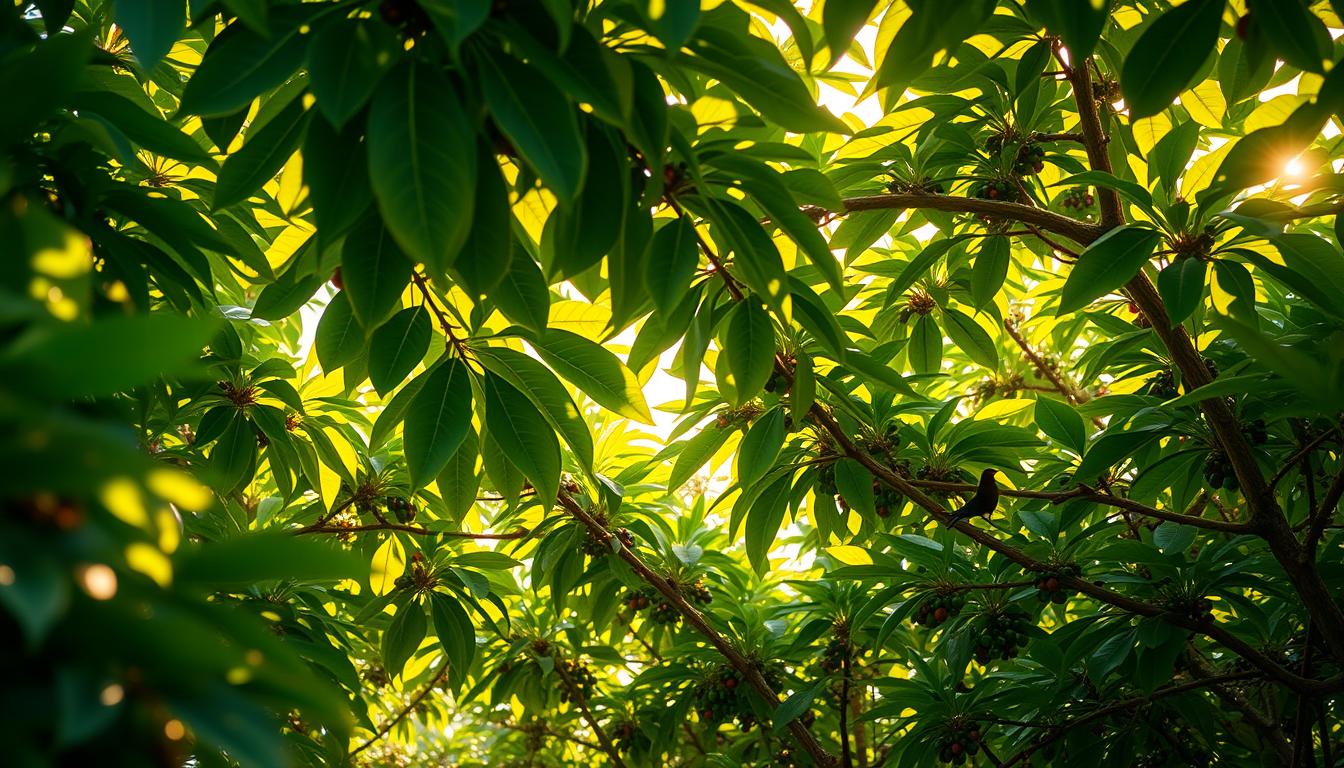
Guatemala is famous for its rich biodiversity and fertile lands. It’s home to some of the world’s most sustainable coffee farms. The country’s geography, with volcanic highlands and lush rainforests, is perfect for ecology-friendly coffee.
The main coffee areas in Guatemala, like Antigua, Huehuetenango, and Atitlán, focus on sustainable farming. These places not only grow high-quality coffee but also help protect local ecosystems.
Key Takeaways
- Ecological benefits of shade-grown coffee in Guatemala
- Sustainable farming practices in main coffee regions
- Contribution to biodiversity and ecosystem preservation
- Role of shade-grown coffee in supporting local communities
- Environmental impact of sustainable coffee production
Introduction to Shade-Grown Coffee
Shade-grown coffee is changing how we farm. It grows coffee plants under a tree canopy, like nature. This method boosts biodiversity and cuts down on harmful chemicals.
This coffee method is gaining fans worldwide. It’s good for the planet and helps farmers and their families. We’ll explore why shade-grown coffee is key in sustainable farming.
Definition of Shade-Grown Coffee
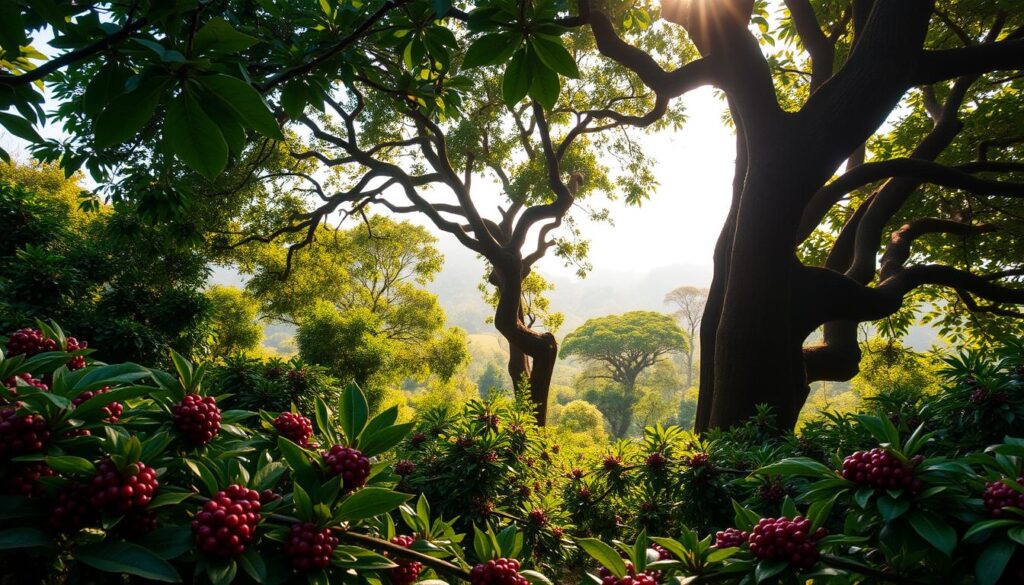
Shade-grown coffee grows under tree canopies. It mimics a natural forest, where coffee plants thrive in the shade. The trees protect coffee from extreme weather and support many species.
- Promoting biodiversity by providing a home for many species
- Reducing soil erosion thanks to tree roots
- Improving water quality by filtering out harmful substances
- Supporting ecosystem services like pollination and pest control
Importance in Sustainable Agriculture
Shade-grown coffee is vital for sustainable farming. It helps farmers use fewer chemicals, protecting water and wildlife. Also, these farms are rich in biodiversity thanks to the tree canopy.
Practices like shade-grown coffee also help local communities. They support rural growth and improve farmers’ lives. This is because they focus on eco-friendly farming.
The success of shade-grown coffee depends on balancing coffee production with environmental care. By doing so, farmers can keep the ecosystem healthy while making great coffee.
Guatemala: A Coffee Paradise
Guatemala is a haven for coffee, thanks to its volcanic soil and high altitudes. This creates a unique taste experience. The country’s diverse ecosystems and rich soil are perfect for growing top-quality coffee beans.
Coffee Production Overview
Guatemala uses shade-grown techniques for coffee production. This method adds to the coffee’s flavor and supports the environment. Coffee is grown in different regions, each with its own conditions that shape the coffee’s taste and quality.
The main factors that influence Guatemala’s coffee production are:
- Volcanic soil rich in nutrients
- High altitudes that slow down the ripening process
- Diverse ecosystems that support biodiversity
The Role of Coffee in Guatemalan Culture
Coffee is deeply rooted in Guatemalan culture and economy. It’s more than just a product; it’s a way of life for many farmers and their families. The coffee industry supports local communities and helps the country’s economy.
The cultural importance of coffee in Guatemala is seen in:
- Traditional farming practices passed down through generations
- Community-based coffee cooperatives that support fair trade practices
- Celebrations and festivals related to coffee harvesting
In summary, Guatemala’s coffee industry is crucial to its culture and economy. Its unique production methods and rich flavors make it a standout in the global coffee market.
Key Coffee Regions in Guatemala
Guatemala boasts several coffee regions, with Antigua, Huehuetenango, and Cobán leading the way. These areas are celebrated for their top-notch coffee and unique terroir. Each region’s distinct flavor and production methods are shaped by altitude, soil, and farming traditions.
Antigua: A Historic Coffee Hub
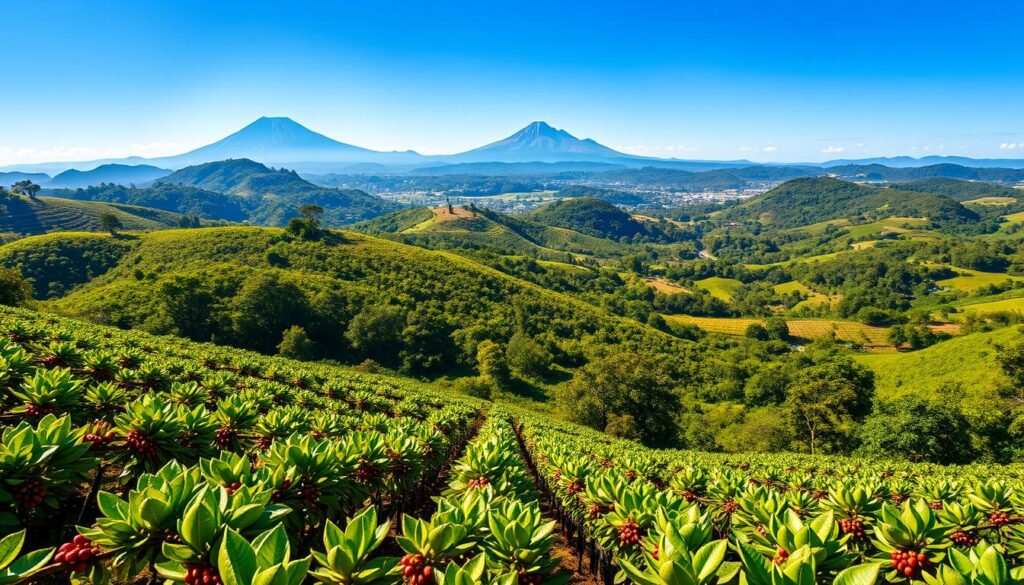
Antigua, nestled among three volcanoes, is a legendary coffee spot. Its volcanic soil and mild weather make it perfect for coffee. Antigua’s coffee is famous for its balanced taste, with hints of chocolate and spice.
Huehuetenango: High Altitude Wonders
Huehuetenango, in the highlands, is famous for its coffee farms at high altitudes. The area’s rugged terrain and cool air lead to dense, complex coffee beans. Huehuetenango coffee is known for its bright acidity and citrusy, fruity flavors.
Cobán: Rich Biodiversity
Cobán, in Alta Verapaz, is known for its biodiversity and coffee grown under shade. Its lush forests and cloud cover create a unique climate. This results in coffee with balanced acidity and flavors of fruit and flowers.
| Coffee Region | Altitude | Flavor Profile |
|---|---|---|
| Antigua | 1,500 – 1,700 meters | Balanced acidity, chocolate, spice |
| Huehuetenango | 1,800 – 2,000 meters | Bright acidity, citrus, berries |
| Cobán | 1,300 – 1,600 meters | Balanced acidity, fruit, floral notes |
The special traits of each region come from nature and sustainable farming practices. These practices not only improve the coffee’s taste but also help protect Guatemala’s natural beauty.
Sustainable Farming Practices
Guatemalan coffee farmers are now using sustainable farming practices. These efforts improve their coffee quality and help the environment. It’s key to keep coffee production and Guatemala’s nature in balance.
Overview of Sustainable Techniques
In Guatemala, farmers use shade-grown coffee, crop rotation, and organic fertilizers. These methods boost coffee quality and protect biodiversity. They also lessen the environmental harm from coffee making.
Shade-grown coffee is grown under trees, like nature. It keeps the soil healthy, saves water, and homes birds and wildlife.
Importance of Organic Certifications
Organic certifications are key for Guatemala’s coffee farmers. They help farmers get better prices and access top markets. This improves their lives.
Organic certifications mean no synthetic fertilizers or pesticides. This is good for the planet and makes coffee safer and better.
Fair Trade Initiatives in Coffee Production
Fair Trade is vital for Guatemala’s coffee. It ensures farmers get a fair price for their coffee. This boosts their income and living standards.
Fair Trade also supports democratic farmer cooperatives. It promotes sustainable farming. By choosing Fair Trade coffee, consumers help farmers and their communities.
The Unique Flavor Profile of Guatemalan Coffee
Guatemalan coffee is known for its rich flavor. This comes from the volcanic soil and varied altitudes. These factors make the taste complex and sought after by coffee lovers.
Volcanic Soil’s Influence on Flavor
The volcanic soil in Guatemala’s coffee areas is full of minerals. These minerals help the coffee plants grow strong. This is why Guatemalan coffee tastes so complex and deep.
The minerals like potassium and magnesium add to the coffee’s body and acidity. This makes the taste more balanced.
Effects of Altitude on Coffee Quality
Altitude is key to Guatemalan coffee’s quality and taste. Coffee grown at high altitudes matures slower. This makes the coffee more nuanced and flavorful.
The high altitudes in places like Huehuetenango give the coffee bright acidity. It also brings out distinct flavor notes.
| Altitude Range | Flavor Profile Characteristics |
|---|---|
| 1,500 – 1,800 meters | Bald, smooth, with hints of chocolate |
| 1,800 – 2,100 meters | Balanced acidity, notes of fruit and floral hints |
| 2,100 meters and above | Bright acidity, complex flavor with citrus and wine notes |
The mix of volcanic soil and altitude creates a special place for coffee. This place supports biodiversity and makes coffee production in Guatemala sustainable.
Shade-Grown Techniques in Detail
Coffee production is more than just beans. It’s about the environment where they grow. Shade-grown coffee has been around for centuries. It’s a farming method that makes great coffee and helps the environment.
Benefits of Shade-Grown Coffee
Shade-grown coffee is good for the environment and farmers. It has many benefits:
- Ecological Balance: These farms keep a diverse ecosystem alive, supporting many plants and animals.
- Increased Biodiversity: They help save biodiversity by keeping natural habitats intact.
- Improved Soil Health: The trees help the soil stay healthy by preventing erosion and adding organic matter.
These advantages help the environment and improve farmers’ lives. They get extra money from eco-tourism and selling forest products.
Common Tree Species Used for Shade
Choosing the right trees for shade is key. It depends on the region. Here are some common ones:
- Inga spp. (Ice cream bean trees)
- Gliricidia sepium (Mother of cocoa)
- Cedrela odorata (Cedar)
These trees provide good shade, improve soil, and attract good insects. Having different trees makes the ecosystem strong against diseases and pests.
Using shade-grown methods, coffee farmers in Guatemala make high-quality, eco-friendly coffee. This method helps coffee production last long and protects Guatemala’s biodiversity.
The Economic Impact of Shade-Grown Coffee
Shade-grown coffee has many economic benefits. It supports local economies and promotes biodiversity. This way of growing coffee is good for the environment and helps local communities.
Supporting Local Cooperatives
Smallholder farmers grow shade-grown coffee in local cooperatives. These groups help farmers by offering training and market access. By buying shade-grown coffee, you help these cooperatives thrive.
For example, La Voz que Clama en el Desierto in Guatemala helps farmers get organic and fair-trade certifications. This can really boost their income.
Job Creation in Coffee Communities
Shade-grown coffee needs a lot of work, creating jobs in rural areas. Jobs range from planting trees to harvesting coffee. This supports local economies.
Shade-grown farms also need extra work like tree pruning. This creates more jobs and helps with biodiversity conservation.
Community projects improve coffee quality and farm infrastructure. They also focus on environmental conservation. These efforts help farmers’ lives and make coffee production more sustainable.
Choosing shade-grown coffee helps these projects. As more people want sustainable coffee, the benefits will grow. This will help local economies and support biodiversity.
Community Projects and Farmer Livelihoods
Guatemalan coffee farmers are doing well thanks to education and environmental efforts. Community projects help these farmers a lot. They make sure farmers grow great coffee and take care of the environment.
Educational Initiatives for Farmers
There are programs to help farmers get better at farming. They learn about sustainable farming techniques and how to improve coffee quality. The Guatemalan Coffee Association teaches them about shade-grown coffee. This helps farmers grow more while keeping the environment balanced.
- Training on organic pest control methods
- Workshops on soil conservation techniques
- Seminars on climate change adaptation
These programs give farmers the skills to make smart choices. This leads to better lives for them.
Environmental Conservation Efforts
Protecting the environment is key in Guatemala’s coffee areas. There are reforestation programs, wildlife conservation, and efforts to clean water. For example, some groups help plant native tree species around farms.
- Reforestation with native tree species
- Protection of biodiversity through sustainable farming practices
- Implementation of water conservation techniques
These efforts help the environment and make coffee farming sustainable for a long time.
Historical Context of Coffee in Guatemala
Coffee in Guatemala started in the 19th century. It became a big part of the economy and a source of pride. Coffee has changed the country’s farms and culture.
In the 18th century, coffee came to Guatemala. But it really took off in the 19th century. The government helped it grow, changing farming ways.
The Rise of Coffee as an Economic Pillar
Coffee became key to Guatemala’s economy. The country invested in new ways to grow and process coffee. This led to more jobs and money.
Coffee helped Guatemala grow economically. The country’s different areas were perfect for coffee. Places like Antigua and Huehuetenango are famous for their coffee.
Historical Challenges Faced by Farmers
Farmers in Guatemala faced many problems. These included changing coffee prices, pests, and diseases. But farmers were very resilient and adaptable.
Guatemalan farmers’ ability to adjust helped the coffee industry survive. They started using sustainable methods like shade-grown coffee. This keeps the environment healthy and makes better coffee.
The story of coffee in Guatemala shows the country’s farming history and the need for green farming. Knowing this history helps us understand the challenges and successes of coffee farming in Guatemala.
Future of Shade-Grown Coffee in Guatemala
The future of shade-grown coffee in Guatemala looks bright. More people want coffee that’s good for the planet. This means more demand for coffee grown in a way that’s kind to the environment.
Guatemala is perfect for this trend. It’s known for its beautiful nature and coffee. The coffee farms there not only make great coffee but also help keep the environment healthy.
Trends in Coffee Consumption
How people drink coffee is changing. Now, more folks want specialty coffee that’s also eco-friendly. They’re willing to pay more for coffee that’s good for the planet.
A recent survey found that 75% of millennials are ready to spend extra on sustainable products. This is great news for Guatemala’s shade-grown coffee.
“The coffee industry is witnessing a paradigm shift towards sustainability, driven by consumer demand for environmentally friendly products.” –
This trend towards eco-friendly coffee is here to stay. Fair trade and organic certifications are becoming key for coffee lovers.
| Certification | Description | Benefits |
|---|---|---|
| Fair Trade | Ensures fair prices and working conditions for farmers | Improved livelihoods for farmers, community development |
| Organic | Promotes ecological balance and conserves biodiversity | Reduced chemical use, healthier ecosystems |
The Role of Technology in Sustainable Practices
Technology is making coffee farming better for the planet. It helps with everything from growing coffee to making sure it’s fair trade. This makes the coffee supply chain more efficient and open.
For example, drones and satellite imaging help farmers check on their crops. This means they can use fewer chemicals and fertilizers.
As the coffee world keeps changing, using tech and green practices will be key. This will help shape the future of shade-grown coffee in Guatemala.
Conclusion: The Significance of Shade-Grown Coffee
Shade-grown coffee in Guatemala is a mix of old farming ways and caring for the environment. It keeps nature’s balance and helps local people’s economy grow.
Economic and Environmental Benefits
Shade-grown coffee has many good sides. It helps farming stay green and keeps nature in balance. Coffee farms keep forests and grow many trees. This makes homes for lots of animals and keeps nature’s variety alive.
Supporting Conscious Consumption
More people now think about what they buy. Choosing shade-grown coffee helps make a difference. It keeps nature healthy and helps farmers in Guatemala.
The future of shade-grown coffee needs everyone’s help. Farmers, buyers, and others must work together. We must value nature and support fair farming to make the coffee world better.