
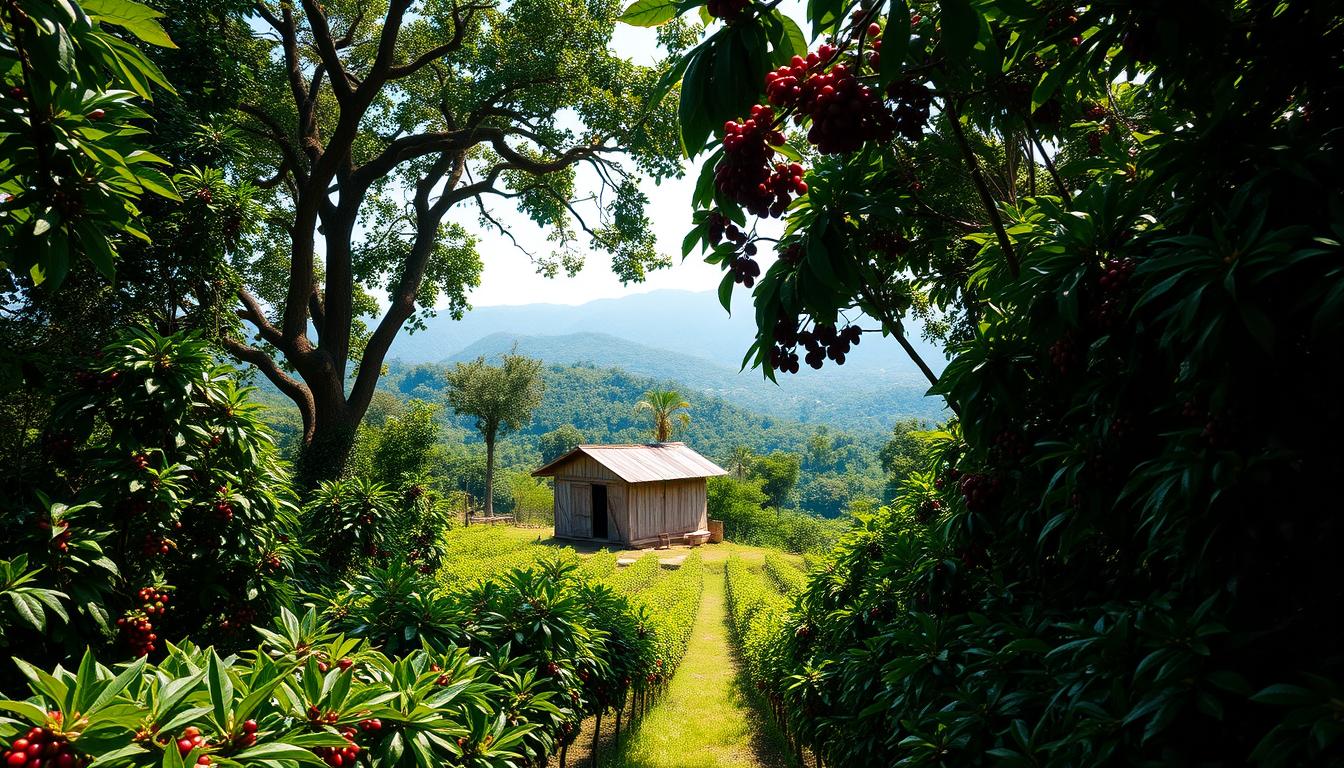
Guatemala’s coffee industry is changing fast. It’s moving towards sustainable practices because people want better, greener coffee. Places like Antigua, Huehuetenango, and Cobán are perfect for organic farming.
The push for certification helps Guatemalan coffee stand out worldwide. This means farmers are using new methods. These methods make their coffee better and help the environment too.
Key Takeaways
- Guatemala’s coffee regions are adopting sustainable practices.
- Organic farming is on the rise in Antigua, Huehuetenango, and Cobán.
- Certification enhances the global reputation of Guatemalan coffee.
- Innovative farming techniques improve coffee quality and environmental conservation.
- Guatemalan coffee is gaining recognition for its high quality.
Overview of Guatemala’s Coffee Industry
Coffee production in Guatemala has a long history, starting in the 19th century. The country’s geography, with volcanic highlands and rich soil, is perfect for growing coffee.
Historical Significance of Coffee
Coffee arrived in Guatemala in the late 18th century. But it wasn’t until the 19th century that it became a big crop. The coffee industry helped shape Guatemala’s economy and culture.
It influenced land ownership and social hierarchies. Coffee’s history in Guatemala is tied to its farming traditions. These traditions have made Guatemala famous for its high-quality coffee.
Economic Impact on Local Communities
The coffee industry is crucial for many local communities in Guatemala. It provides jobs and income. This helps keep the local economy stable.
Coffee certifications, like organic and fair trade, have a big impact. They give farmers a higher price for their coffee. They also promote sustainable farming and improve life for local communities.
| Economic Indicator | Impact on Local Communities | Certification Benefits |
|---|---|---|
| Employment | Jobs in coffee farms and cooperatives | Stable income through fair trade practices |
| Income | Supports local economies | Price premium for certified coffee |
| Sustainability | Promotion of sustainable farming practices | Organic certification encourages eco-friendly methods |
The coffee industry boosts Guatemala’s economy by being a top export. It brings in a lot of revenue, supporting the national economy.
Key Coffee Regions in Guatemala
Guatemala’s coffee regions are known for their unique traits and focus on organic farming. The country’s varied landscape has led to several distinct coffee areas. Each has its own taste and way of making coffee.
Antigua: A Blend of Tradition and Quality
Antigua is famous for its mix of tradition and quality coffee. Its coffee has balanced acidity and rich flavors. This is thanks to the volcanic soil and mild weather. Organic farming practices are common here, making the coffee even better.
“The coffee from Antigua is a testament to the region’s dedication to quality and tradition.”
Huehuetenango: High Altitude, Rich Flavor
Huehuetenango is known for its high altitude and rich flavors. The coffee grown here has complex tastes and bright acidity. Many farms in Huehuetenango use sustainable and organic farming practices. This improves the coffee’s quality and helps the environment.
| Region | Altitude | Flavor Profile |
|---|---|---|
| Antigua | 1,500 – 1,700 meters | Balanced acidity, rich flavors |
| Huehuetenango | 1,800 – 2,000 meters | Complex flavors, bright acidity |
| Cobán | 1,300 – 1,600 meters | Diverse flavors, floral notes |
Cobán: The Heart of Biodiversity
Cobán is known for its biodiversity and is called the heart of Guatemala’s coffee. The coffee here has diverse flavors and floral notes. This is thanks to the lush environment and organic farming methods. Cobán’s focus on biodiversity is seen in its coffee production.
In conclusion, Guatemala’s main coffee areas—Antigua, Huehuetenango, and Cobán—each offer something special. Their dedication to organic farming and sustainable practices improves their coffee quality. It also helps protect the environment.
Understanding Organic Coffee Certification
Learning about organic coffee certification helps us appreciate Guatemala’s coffee quality. It’s not just a label. It shows the hard work and green practices of coffee farmers.
What is Organic Certification?
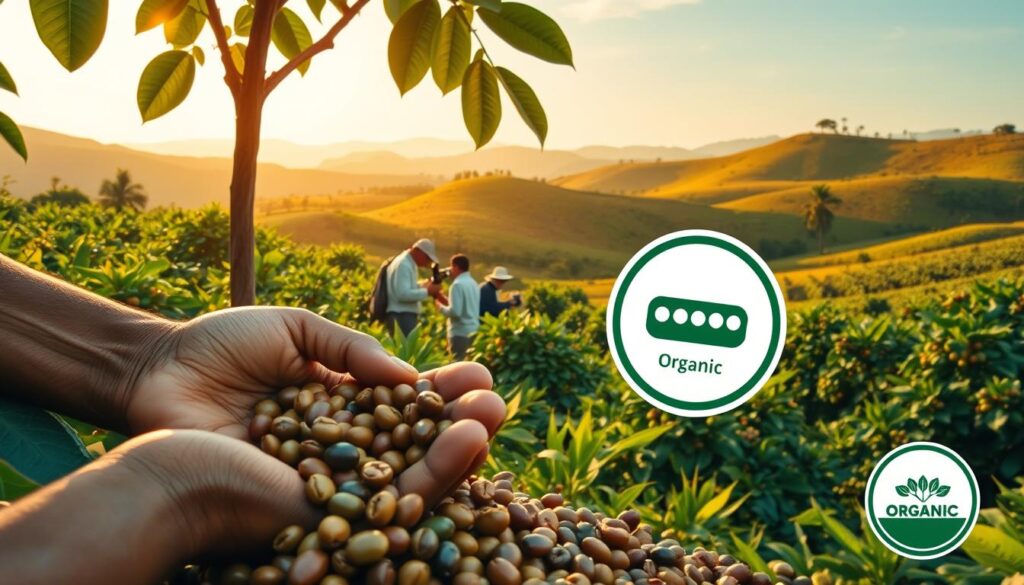
Organic certification means coffee is grown without harmful chemicals. In Guatemala, third-party groups check farms and processing places. They make sure everything meets organic standards.
The steps to get certified include:
- Application and Inspection
- Record Keeping and Annual Inspections
- Compliance with Organic Standards
Benefits of Certification for Farmers
Certification helps farmers a lot. They get to sell their coffee for more money. This helps farmers live better lives.
Key Benefits:
- Improved Market Access
- Higher Prices for Organic Coffee
- Environmental Sustainability
Organic coffee exports are big. They go to places like the U.S. and Europe. This is because of the demand for organic products.
| Year | Organic Coffee Exports (tons) | Value (USD) |
|---|---|---|
| 2020 | 10,000 | 50 million |
| 2021 | 12,000 | 60 million |
| 2022 | 15,000 | 75 million |
“Organic certification has opened new markets for us and improved our income. It’s a win-win for both the farmers and the environment.” – Maria Hernandez, Coffee Farmer
This quote shows how organic certification helps farmers and the planet. It’s key to Guatemala’s coffee success.
Sustainable Farming Practices
Sustainable farming is key in Guatemala’s organic coffee movement. It affects both coffee quality and the environment’s health. These practices are vital for keeping the ecosystem balanced and ensuring coffee can be grown for years to come.
Shade-Grown Techniques
Guatemalan coffee farmers use shade-grown techniques. They grow coffee under trees, which helps keep the environment healthy. This method also makes the coffee taste more complex.
Benefits of Shade-Grown Coffee
- Enhanced biodiversity
- Improved soil health
- Reduced chemical use
- Complex flavor profiles
Soil Management and Volcanic Influence
Guatemala’s volcanic soil is crucial for its coffee’s taste. Regions like Antigua and Huehuetenango have rich, nutrient-rich soils. Organic compost and cover crops help keep the soil healthy, improving the coffee’s quality.
“The rich volcanic soils of Guatemala’s coffee regions contribute to the country’s coffee being among the most flavorful in the world.”
| Coffee Region | Soil Type | Flavor Profile |
|---|---|---|
| Antigua | Volcanic | Balanced, with notes of chocolate and spice |
| Huehuetenango | Volcanic | Fruity, with hints of citrus and berries |
Water Conservation Methods
Water conservation is vital in Guatemala’s coffee farming. Farmers use rainwater harvesting and efficient irrigation. This reduces water waste and environmental impact.
Guatemalan coffee farmers are improving their coffee quality and protecting the environment. As people learn more about sustainability, they’ll want coffee made this way. This will help Guatemala’s coffee industry thrive for years.
The Role of Local Cooperatives
Local cooperatives are key in Guatemala’s organic coffee scene. They help farmers and push for green practices. These groups give farmers the tools, training, and ways to sell their coffee.
Cooperative Structures and Benefits
Cooperatives in Guatemala help farmers a lot. They let farmers join forces to get certification programs that make their coffee better. They also teach organic farming practices to keep the land healthy and water clean.
| Cooperative Benefits | Description | Impact on Farmers |
|---|---|---|
| Certification Support | Guidance through organic certification processes | Increased market access and higher prices |
| Training and Education | Workshops on sustainable farming practices | Improved crop quality and yield |
| Market Access | Connections to international coffee buyers | Stable and profitable sales channels |
Community Engagement and Support
Cooperatives do more than help farmers financially. They bring farmers together and support each other. They also work on projects like reforestation efforts and education, helping the environment and people.
When we support local cooperatives, we help Guatemala’s coffee industry and its farmers. Their work shows how important community efforts are for fair and green coffee making.
Fair Trade Initiatives in Coffee
Fair Trade has changed the coffee world in Guatemala. It gives farmers better prices and better work places. This helps farmers live better and makes coffee farming last longer.
Supporting Farmers Through Fair Trade
Fair Trade makes sure farmers get a fair price for their coffee. This helps them pay for green farming. It also means they can grow better coffee.
Also, Fair Trade gives farmers training and tools. This helps them grow more and better coffee. It’s key for them to keep up with the market and nature.
Impact on Local Economies
Fair Trade helps local economies a lot. It makes sure farmers get a fair price for their coffee. This boosts the economy and improves life for everyone.
It also supports projects like schools and health care. These projects get money from Fair Trade coffee sales. It shows how Fair Trade helps everyone.
In short, Fair Trade is very important for Guatemalan coffee farmers. It helps them get fair prices and better work places. It also supports community projects. Fair Trade is key for coffee farming in Guatemala to keep going strong.
Influence of Altitude on Coffee Flavor
Guatemala’s coffee-growing regions have different altitudes. These altitudes greatly affect the taste and quality of the coffee. Coffee grown at various heights has unique traits, shaped by the local climate, soil, and sunlight.
The Science Behind High Altitude Coffee
Coffee plants grow slower at higher altitudes. This slow growth allows for a more complex development of sugars and acids. This process makes the coffee’s flavor more nuanced and refined.
The cooler temperatures at high altitudes slow down ripening. This lets the coffee cherries develop fully, resulting in denser beans. These denser beans have a richer, more intense flavor.
Flavor Profiles from Different Regions
Huehuetenango is known for its high-altitude coffee farms. These beans have distinct flavors with citrus and floral notes. On the other hand, Antigua’s coffee, grown at slightly lower altitudes, has balanced acidity with chocolate undertones.
The varied altitudes in Guatemala’s coffee regions lead to a wide range of flavors. This makes Guatemalan coffee highly valued for its quality and complexity.
Understanding how altitude affects coffee flavor helps both producers and consumers. It shows why Guatemalan coffee is special. The use of organic farming also boosts these qualities. It ensures the coffee is grown in harmony with the environment, preserving natural ecosystems and biodiversity.
Community Projects for Environmental Protection
Community efforts are key in protecting Guatemala’s coffee-growing areas. These projects help the environment and improve local farmers’ lives.
Reforestation Efforts
Reforestation is vital in Guatemala’s coffee regions. Local cooperatives plant trees for coffee plant shade. This boosts biodiversity and cuts soil erosion.
In the Antigua region, a project has planted over 10,000 trees. This has greatly improved the local ecosystem.
Educational Programs for Farmers
Educational programs teach farmers about sustainable farming. They learn about sustainable agriculture techniques like organic farming and water use. This helps farmers grow more while harming the environment less.
These programs also teach about certification like organic certification. This can make their coffee more valuable. It helps farmers earn more and meets global demand for eco-friendly coffee.
Supporting these projects helps Guatemala’s coffee industry grow sustainably. It shows that coffee can be good for the planet and profitable.
Challenges Facing Organic Coffee Farmers
Climate change and market instability are big challenges for organic coffee farmers in Guatemala. Rising temperatures and unpredictable weather hurt coffee yields and quality. This makes farming harder.
Climate Change Impacts
Climate change affects coffee in many ways. Warmer temperatures bring more pests and diseases, like coffee leaf rust. This can destroy crops. Unpredictable weather patterns also make it hard for farmers to keep quality high.
Adaptation strategies are being tried. Some farmers use shade trees. These trees help with temperature changes and support biodiversity.
Market Access and Pricing Stability
Organic coffee farmers also face challenges in getting their products to international markets. Certification costs and following international standards can be tough for small farmers.
Global coffee prices can change a lot. This makes it hard for farmers to know how much money they’ll make each year. It’s hard to invest in their farms and support their communities.
To deal with these issues, many farmers join cooperatives and fair trade practices. These help get better prices and access to markets. They also support sustainable farming and community growth.
The Future of Organic Coffee in Guatemala
Guatemala’s organic coffee industry is set to grow. This is because more people want high-quality, eco-friendly coffee. The country’s rich soil, varied climates, and focus on organic farming make it a top choice in the global market.
Emerging Trends
Production trends are moving towards more sustainable methods. This includes organic farming and caring for the environment. This change is because of growing demand for green products and the need to protect Guatemala’s nature.
Because of this, Guatemalan coffee exports are likely to go up. More of these exports will be organic.
Global Market Predictions
The demand for organic coffee worldwide is expected to keep growing. This is because more people are looking for sustainable and top-quality coffee. Guatemalan coffee makers are in a good position to benefit from this trend.
They are committed to organic farming and making coffee for export. As the world’s love for specialty coffee grows, Guatemala’s role in the market is set to stay strong.