
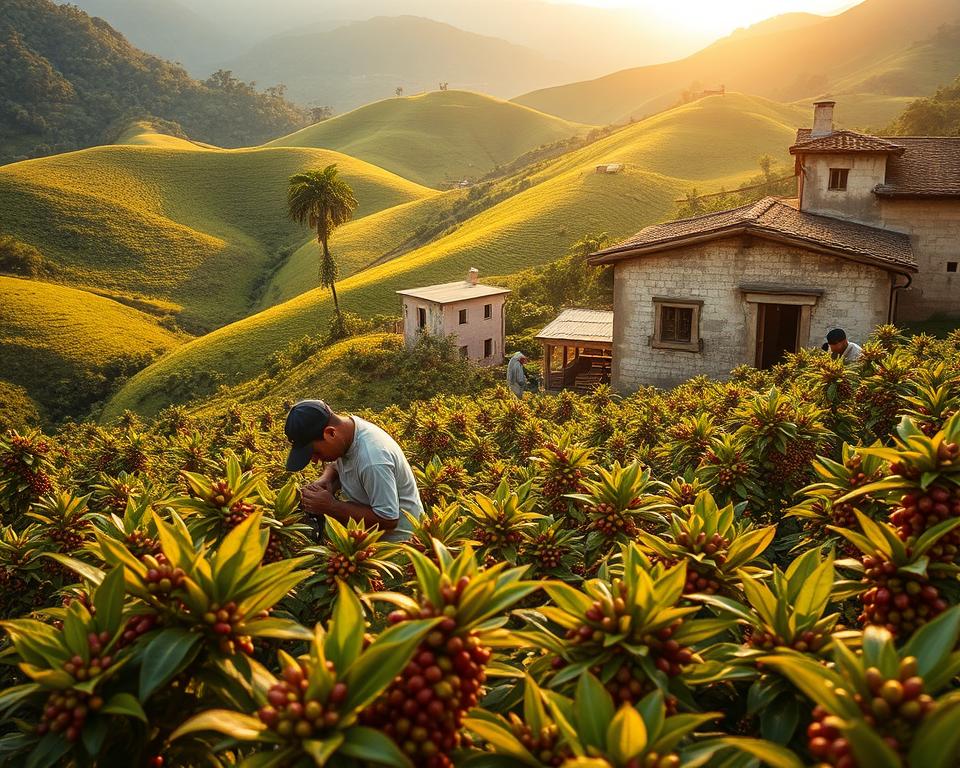
Guatemala is famous for its top-notch coffee. The coffee industry is a big part of the country’s economy. But, coffee farmers have to deal with many problems like climate change, pests, and diseases.
To tackle these issues, using the best coffee farming methods is key. Improving how coffee is grown can lead to more beans and better quality. This helps farmers make more money and keeps Guatemala’s coffee industry strong.
By using smart farming practices, Guatemala can keep its coffee quality high. This section will look at why optimizing coffee production is important. It will also talk about how it helps farmers and the coffee industry.
The Current State of Guatemala Coffee Production
Guatemala is famous for its top-notch coffee. But, it faces big challenges in keeping coffee farming sustainable. Coffee is a big part of Guatemala’s economy, so solving these problems is key.
Climate change is a big issue for Guatemala’s coffee. It’s making the weather conditions for coffee farming change. This includes warmer temperatures and different rain patterns.
Climate Change Impacts on Coffee Regions
Climate change is hurting coffee farming in many ways. It brings more pests and diseases, lowers yields, and changes the coffee bean quality. The FAO says climate change is a big threat to coffee worldwide.
Market Volatility and Price Pressures
Guatemala’s coffee also faces market ups and downs. When coffee prices change a lot, farmers struggle to make a steady income. This makes it hard for them to invest in better farming practices.
To tackle these issues, Guatemala needs to focus on sustainable coffee farming. It should use methods that can handle climate change and help farmers deal with price swings.
Understanding the Balance Between Productivity and Quality
To make better coffee, producers need to find a balance. This balance helps coffee farms stay profitable while making high-quality beans.
The taste of coffee is key to its quality.
Flavor Profile Development
Soil quality, climate, and how beans are processed all affect taste. Coffee makers should work on these areas to bring out the best flavors.
Keeping beans the right size and consistent is important. This ensures the coffee meets quality standards. Producers use careful sorting and grading for this.
By focusing on taste and bean quality, producers can make better coffee. This helps them stay competitive in the market.
How to Optimize Coffee Production Through Effective Planning
Farmers need a strategic plan to improve coffee growing. They must understand their farm’s conditions, like soil, climate, and resources.
Choosing the right coffee cultivation methods is crucial. By looking at past yields, farmers can spot areas for betterment. They can then plan to improve their coffee growing.
Creating a detailed schedule for farm activities is key. This includes planting, pruning, and harvesting. It ensures tasks are done on time and resources are used well.
| Planning Strategy | Description | Benefits |
|---|---|---|
| Soil Analysis | Regular testing to determine soil health and nutrient levels | Improved soil fertility, increased yields |
| Crop Monitoring | Ongoing observation of coffee plants for signs of disease or pests | Early detection and treatment of issues, reduced crop loss |
| Resource Allocation | Efficient distribution of labor, equipment, and materials | Reduced waste, lower costs, improved productivity |
By using these strategies, farmers can boost their coffee production. They’ll get more coffee and better quality. Planning is a continuous effort that needs constant monitoring and adjustments.
Soil Management Techniques for Higher Yields
Soil health is key for coffee farm productivity, especially in places like Guatemala. Good soil management keeps the soil quality high. This boosts coffee harvest efficiency and leads to better yields and quality.
Preventing erosion is crucial, especially on steep slopes.
Terracing Techniques for Steep Slopes
Terracing makes flat plots on slopes to stop erosion and keep water in. It keeps the soil healthy and lets more land be used for coffee plants.
Cover crops protect the soil, make it fertile, and home beneficial organisms. Legumes, for example, add nitrogen, cutting down on synthetic fertilizers and improving soil.
Using these methods, coffee farmers in Guatemala can see big improvements in their yields. These practices not only improve soil health but also make coffee farming more sustainable. This meets the growing demand for eco-friendly products.
Water Resource Optimization for Coffee Cultivation
Sustainable coffee starts with smart water use. Coffee needs lots of water, so using it well is key. This helps grow more coffee without losing quality.
Water-saving is crucial for farmers. They use drip irrigation to cut down on waste and give plants just the right moisture. Mulching also helps keep the soil moist, so plants don’t need to be watered as often.
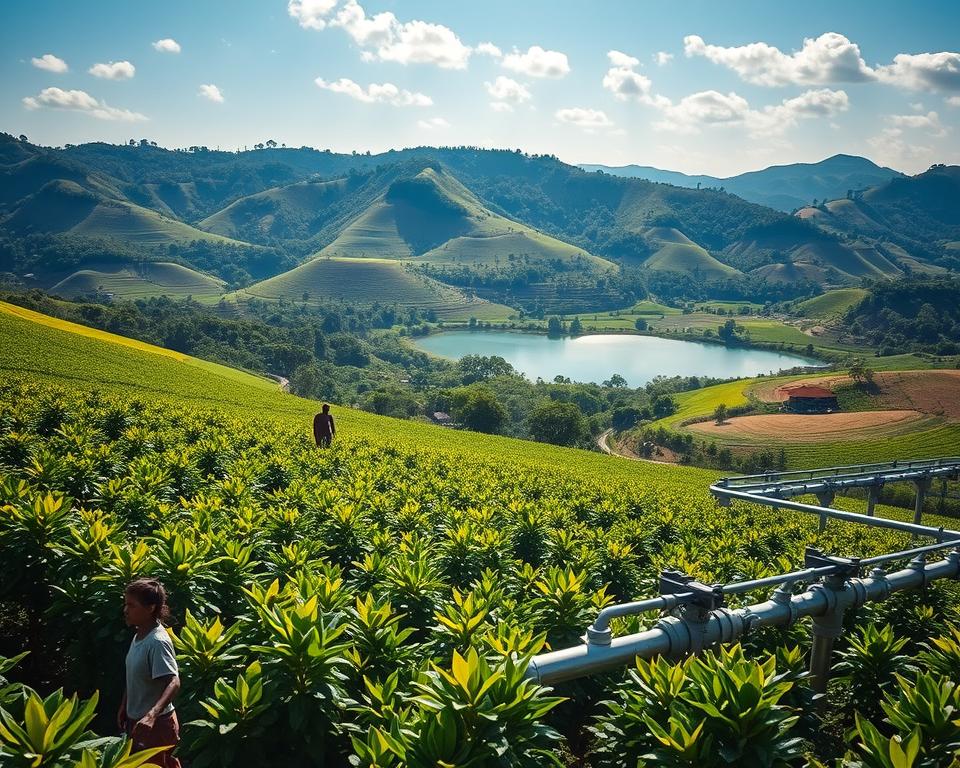
Checking soil moisture is also important. Farmers use sensors to see when plants need water. This saves water and stops problems like root rot.
| Water Management Technique | Benefits | Impact on Coffee Production |
|---|---|---|
| Drip Irrigation | Reduces water waste, precise watering | Increases yield, improves quality |
| Mulching | Retains soil moisture, reduces watering frequency | Enhances soil health, supports healthy plant growth |
| Soil Moisture Monitoring | Prevents under/overwatering, conserves water | Reduces root rot, improves plant health |
Using these water-saving methods, farmers help the planet and themselves. They save water and grow better coffee. This makes their work more rewarding and their coffee better.
Strategic Pruning and Plant Management
In coffee production, pruning is key to better productivity and quality. It keeps coffee plants healthy and strong. This affects how much coffee is made and how good it tastes.
Selective Pruning Methods
Selective pruning removes parts of the plant to help it grow well. It makes the plant less likely to get sick and lets more sunlight in. Farmers cut off dead branches, thin the plant’s center, and control its height.
Timing Considerations for Guatemala’s Growing Regions
When to prune matters a lot, depending on the area and weather. In Guatemala, pruning happens after the harvest. This lets the plants grow new leaves before the next harvest. Knowing the local weather and plant growth is key for the right pruning time.
| Region | Pruning Time | Benefits |
|---|---|---|
| Highland | After harvest (Dec-Feb) | Promotes new growth, reduces disease |
| Lowland | After harvest (Mar-May) | Enhances yield, improves quality |
By using smart pruning, coffee farmers in Guatemala can boost their coffee’s quality and amount. This helps them make a better living.
Pest and Disease Management Without Chemical Overuse
Farmers must find ways to manage pests and diseases without using too many chemicals. This method improves coffee quality and helps the environment.
Monitoring Systems for Coffee Leaf Rust
Coffee leaf rust is a big problem for coffee crops everywhere. It’s important to have systems that spot the disease early. These systems include regular checks and using technology to keep an eye on plant health.
Preventive Measures for Coffee Berry Borer
The coffee berry borer is a pest that can harm coffee crops a lot. To stop it, farmers can keep their fields clean, remove infected berries, and use natural controls. These steps help cut down on chemical use.
Managing pests and diseases well requires different methods. Here are some of the best ways to do it:
| Pest/Disease | Monitoring Technique | Preventive Measure |
|---|---|---|
| Coffee Leaf Rust | Regular field inspections, Use of drones | Use of resistant varieties, Fungicide application |
| Coffee Berry Borer | Monitoring traps, Field sanitation | Biological control, Cultural practices |
By using these methods, farmers can grow better coffee, use fewer chemicals, and make their coffee taste better.
Harvest Optimization Techniques
To get more coffee without losing quality, farmers in Guatemala use smart harvest methods. They mix old ways with new ones to make coffee farming better.
Good harvest methods need skilled workers and smart planning. Training workers is key.
Worker Training Programs
It’s important to teach workers how to pick coffee cherries right. They learn to handle the cherries carefully and work fast. This makes the coffee better and more plentiful.
Harvest Logistics Planning
Planning how to harvest is also crucial. This includes setting a harvest schedule and making sure workers and coffee get where they need to go. It also means processing facilities are ready. Good planning keeps coffee quality high.
Some important steps for better harvest planning are:
- Make a detailed harvest plan to use labor and tools well.
- Make sure there’s reliable transport for workers and coffee.
- Work with processing facilities to get them ready for the harvest.
By focusing on these areas, farmers can improve their coffee harvest. This leads to better coffee and a more sustainable farming process.
Post-Harvest Processing Improvements
Effective post-harvest processing can greatly improve coffee bean quality. This stage is key in coffee production. It affects the flavor, aroma, and overall quality of the coffee.
Improvements in post-harvest processing come from careful monitoring and optimization. Various techniques are used to enhance quality.
Fermentation is a crucial part of post-harvest processing. Monitoring fermentation is key to developing the right flavor and aroma in coffee.
Fermentation Monitoring Techniques
Checking temperature, pH levels, and fermentation time regularly is important. These checks help achieve a consistent flavor and prevent over-fermentation. Over-fermentation can cause bad tastes.
Drying is another vital step in post-harvest processing. The drying method used can greatly impact coffee quality.
Drying Methods That Preserve Quality
Drying patios or mechanical dryers that control temperature and air flow are good. They ensure even drying and prevent mold or over-drying. These can damage the beans.
By improving post-harvest processing, coffee producers can greatly enhance coffee quality. Using effective post-harvest techniques is essential for better coffee.
Technology and Innovation in Coffee Production
Technology is key in modern coffee making. It helps farmers grow better coffee and work more efficiently. By using new tech, farmers can make higher quality coffee and get more from their crops.
Mobile Applications for Farm Management
Mobile apps are now vital for managing farms. They let farmers keep an eye on their crops better. These apps track things like soil moisture, temperature, and how healthy the crops are. This helps farmers make smart choices.
- Track crop health and detect issues early
- Monitor soil conditions and optimize irrigation
- Manage farm operations and labor more efficiently
Weather Monitoring Systems
Weather systems give farmers important info on the weather. This helps them plan their work better. Knowing the weather, farmers can protect their crops from bad weather.
By using these technologies, coffee farmers can really improve their work. This leads to better coffee and more of it. As the coffee world keeps changing, using these tech tools will help farmers stay ahead and keep their farms going strong.
Conclusion: Implementing a Balanced Approach to Coffee Production
A balanced approach to coffee production is key for better yields and quality. Farmers in Guatemala can boost their income and help the environment by following best practices. This way, they contribute to sustainable coffee farming.
Effective planning, soil care, and smart water use are vital. Strategic pruning and pest control are also important. These steps help farmers work more efficiently, reduce waste, and protect the environment.
Technology and innovation are also crucial. They help farmers make better decisions and improve quality. By using new tools and methods, they can do their work more effectively.
By focusing on a balanced approach, Guatemala’s coffee industry can grow. It will also support sustainable practices that help the environment and local people.