
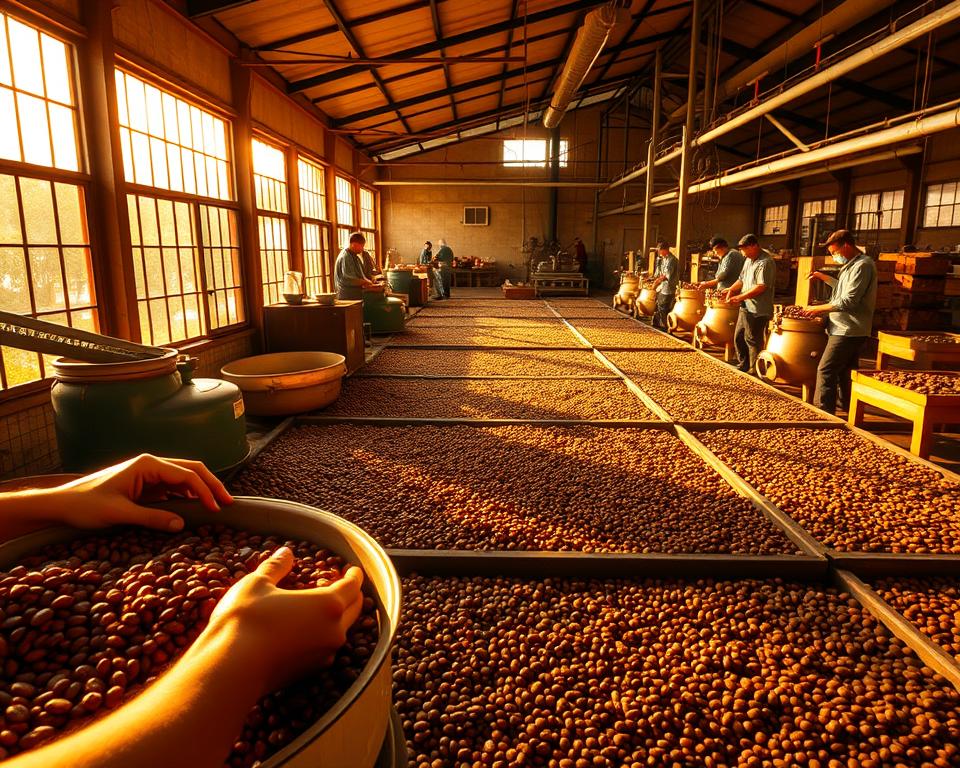
Guatemala is famous for its coffee culture and top-notch coffee beans. It’s a big player in the specialty coffee scene. The country’s varied regions and climates create a wide range of coffee flavors. This makes it perfect for microlot coffee production.
Microlots are small, special batches of coffee. They highlight the unique traits of a farm, harvest, or processing method.
Limited-edition coffees are rare and loved by coffee lovers. They’re made in small amounts. This is because of careful farming and processing, plus the right climate.
These coffees have unique flavors that are both complex and nuanced.
Making microlots and limited-edition coffees needs a lot of care and detail. Farmers and processors work hard to make each cup special. This hard work is what makes specialty coffee so special.
The Essence of Micro-Lot Coffee
Small batch coffee production is key to micro-lot coffee’s unique essence. It involves growing a small amount of coffee beans. This allows for careful attention to detail. As a result, micro-lot coffee from Guatemala is known for its distinct flavors and high quality.
The artisanal production of micro-lot coffee makes it stand out. Farmers pick the ripest coffee cherries by hand. They process the beans with precision to enhance the flavor. This hard work results in the exceptional taste of Guatemalan micro-lot coffee.
The characteristics of micro-lot coffee vary. This depends on the region, soil type, and climate. The table below shows some key characteristics of micro-lot coffee from different regions in Guatemala.
| Region | Flavor Profile | Altitude |
|---|---|---|
| Antigua | Balanced, with notes of chocolate and caramel | 1,500 – 1,700 meters |
| Huehuetenango | Fruity, with hints of citrus and berries | 1,700 – 2,000 meters |
| Atitlán | Smooth, with flavors of honey and nuts | 1,500 – 1,800 meters |
The unique essence of micro-lot coffee from Guatemala comes from its small batch production and artisanal care. The country’s diverse regions also play a role. This specialty coffee showcases Guatemala’s rich coffee heritage.
Guatemala’s Unique Position in the Specialty Coffee World
Guatemala is known for its perfect climate and rich soil. This makes it a top spot for growing specialty coffee. The country’s different regions offer the best conditions for coffee.
Guatemala’s coffee industry is strong because of its focus on sustainable farming. This approach ensures high-quality coffee and helps the environment. It also improves the lives of local people.
Guatemala’s use of direct trade coffee has boosted its reputation. Direct trade means farmers and buyers work together closely. This leads to better coffee and fairer prices for farmers.
The country’s geography is ideal for coffee. Volcanic highlands and rich soil make it perfect for growing many coffee types. Sustainable farming and direct trade make Guatemalan coffee very popular.
Guatemala’s commitment to quality, sustainability, and direct trade is paying off. This strategy helps the local economy and supports fair trade worldwide. It’s a win-win for everyone involved.
Selecting the Perfect Terrain for Premium Coffee
Guatemala is perfect for growing top-notch, single-origin coffee. Its varied geography and rich soil create a range of coffee flavors. These flavors are loved by coffee experts.
Choosing the right land is key for premium coffee. Altitude, soil, and sunlight affect coffee’s taste and quality. Guatemalan farmers know this and often follow fair trade to make their coffee both great and sustainable.
Places like Antigua, Huehuetenango, and Atitlán are famous for their coffee. They have the perfect mix of climate, soil, and height for coffee plants. By focusing on single-origin and fair trade, Guatemalan coffee meets the specialty market’s high standards.
In short, picking the right land is vital for Guatemalan coffee. Understanding terroir and using sustainable and fair trade methods helps farmers. This way, they keep delivering top-quality, single-origin coffee that coffee fans worldwide love.
Micro Lot Coffee Production: Step-by-Step Guide
The journey to create exceptional micro-lot coffee starts with careful planning and precise farming. In Guatemala, known for its rich coffee culture, farmers follow a detailed process. They aim to produce high-quality, organic coffee.
Selecting Coffee Varieties for Micro-Lots
The first step is to pick the right coffee varieties. These should match the local climate and soil. Varieties like Gesha, Bourbon, and Caturra are chosen for their unique flavors and quality.
Plot Isolation and Management
It’s important to isolate the micro-lot plot. This prevents mixing with other coffee varieties. Farmers use physical barriers or management techniques to keep the micro-lot pure.
Guatemalan farmers often use organic farming methods. They use natural fertilizers, compost, and pest control that’s safe for the environment. This helps grow premium coffee beans.
Shade Management Systems
Shade management systems are key for the health of coffee plants. Shade trees help control temperature, prevent soil erosion, and support beneficial insects and birds.
Precision Irrigation and Fertilization
The last step is precision irrigation and fertilization. This ensures the coffee plants get the right water and nutrients. It’s crucial for producing top-quality, organic coffee.
| Step | Description | Importance |
|---|---|---|
| Selecting Coffee Varieties | Choosing varieties suited to local conditions | High |
| Plot Isolation | Preventing cross-contamination | High |
| Organic Farming | Using natural fertilizers and pest control | Medium |
| Shade Management | Regulating temperature and soil health | High |
| Precision Irrigation and Fertilization | Ensuring optimal water and nutrient supply | High |
By following these steps, Guatemalan farmers can create exceptional micro-lot coffee. This coffee is highly valued in the specialty market. The careful planning, precise farming, and organic methods result in premium coffee beans. These are sought after by coffee lovers around the world.
The Harvesting Process for Limited-Edition Coffees
In Guatemala, making micro-lot coffee is a detailed and hard work. The country’s special land and weather help coffee grow slowly. This slow growth adds to the coffee’s rich flavors.
When picking limited-edition coffees, farmers carefully choose coffee cherries at their best. This careful picking is key to making top-notch micro-lot coffee.
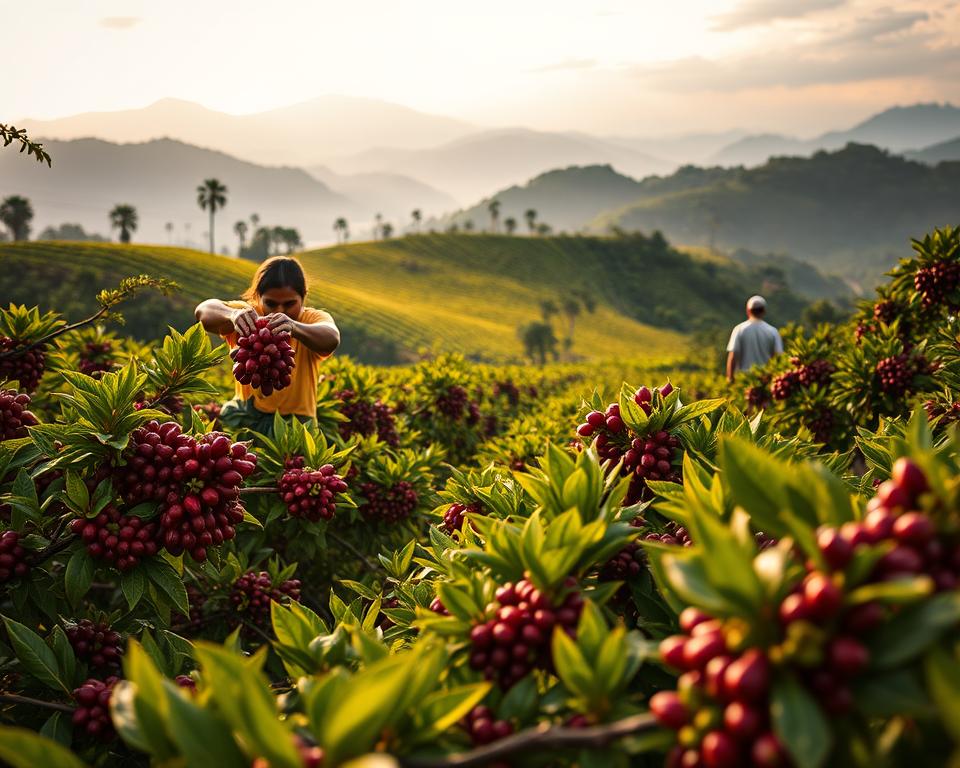
After picking, the cherries are treated with care to keep their special qualities. Farmers might wash and dry the cherries to highlight the coffee’s unique tastes and smells.
| Harvesting Method | Description | Impact on Flavor |
|---|---|---|
| Hand-picking | Coffee cherries are picked at peak ripeness. | Results in complex flavors and aromas. |
| Selective Processing | Cherries are processed immediately after picking. | Enhances the coffee’s unique characteristics. |
| Careful Drying | Coffee beans are dried to the optimal moisture level. | Preserves the flavors and aromas. |
The hard work in picking and processing makes Guatemalan micro-lot coffee special. It’s known for its quality and unique tastes. This is why Guatemalan coffee is loved by coffee lovers all over the world.
Processing Methods That Define Exceptional Micro-Lots
The way coffee is processed makes exceptional micro-lots stand out. In the small batch coffee world, how it’s processed greatly affects the taste.
There are a few ways to process micro-lot coffee, like washed, natural, and honey. Each method changes the coffee’s taste. Washed coffee tastes clean and bright, while natural coffee is fruitier and sweeter.
The honey process is a mix, offering a sweet body and clean acidity. Artisanal coffee makers try different methods to get the best taste for their micro-lots.
| Processing Method | Flavor Profile | Acidity Level |
|---|---|---|
| Washed | Clean, Bright | High |
| Natural | Fruity, Sweet | Low |
| Honey | Balanced, Sweet | Medium |
In Guatemala, coffee makers pay close attention to processing. Their care, along with the country’s unique soil, makes their micro-lots very popular.
Knowing about the different processing methods and their impact is key to understanding the skill behind exceptional micro-lots.
Quality Control and Cupping Standards
Quality control and cupping are key to finding the best micro-lot coffees in Guatemala. The journey starts with picking and watching over coffee cherries. This makes sure only the top beans are used.
Using sustainable farming methods is also important. It helps farmers grow better coffee. This way, they help the coffee industry be more green.
Direct trade coffee makes things even better. It connects farmers directly with buyers. This means farmers get paid fairly for their coffee. It also pushes them to keep their quality high.
Cupping, or tasting coffee, is a big part of checking coffee quality. Coffee experts look at the taste, acidity, and quality. They give feedback to farmers and producers.
Guatemalan micro-lot coffee producers use strict quality control, green farming, and direct trade. This way, they make sure their coffee is top-notch. It meets the high standards of specialty coffee lovers all over the world.
Challenges and Solutions in Micro-Lot Production
Micro-lot coffee production in Guatemala has its own set of challenges. These challenges affect the quality and availability of single-origin coffee. One major issue is the high cost of production. This includes the careful hand-picking and processing of coffee cherries.
Fair trade practices are key in tackling these challenges. They ensure farmers get a fair price for their coffee beans. This boosts farmers’ livelihoods and encourages the production of top-quality, single-origin coffee.
To tackle micro-lot production challenges, producers are trying new solutions. They are using better agricultural practices and more efficient processing methods. These steps help lower costs and improve coffee quality.
Guatemalan coffee producers are focusing on fair trade and single-origin coffee. This strategy helps them stay competitive in the global specialty coffee market. It benefits farmers and meets the growing demand for high-quality, single-origin coffee.
Economic Impact and Sustainability
Guatemalan micro-lot coffee is more than just quality. It’s also about helping local communities. Farmers earn more because of the high prices for these top-notch, organic coffee beans.
Using sustainable methods, like organic farming, makes Guatemalan coffee stand out. This method boosts the coffee’s taste and keeps the environment safe. It avoids harmful chemicals.
- Higher income for farmers due to premium prices for premium coffee beans.
- Environmental sustainability through organic farming practices.
- Improved quality of life for local communities.
Here’s a table to show the economic benefits:
| Production Method | Economic Benefit | Environmental Impact |
|---|---|---|
| Micro-lot Organic Coffee | Higher income for farmers | Sustainable, eco-friendly |
| Conventional Coffee | Lower income | Potential environmental harm |
In summary, Guatemalan micro-lot coffee production is good for the economy and the environment. It leads to better quality coffee and helps farmers and the planet.
Conclusion: The Future of Guatemalan Micro-Lot Coffee
Guatemalan micro-lot coffee has become a top choice in the specialty coffee world. The rich volcanic soil and varied climates make Guatemalan coffee stand out. The careful production methods add to its unique taste.
The future of Guatemalan coffee is looking good. More innovation in micro-lot coffee production is expected. This will help meet the growing demand for unique and high-quality coffee.
Guatemalan coffee is known for its quality and care for the environment. It’s set to keep leading the specialty coffee market. This is great news for producers, roasters, and coffee lovers everywhere.