
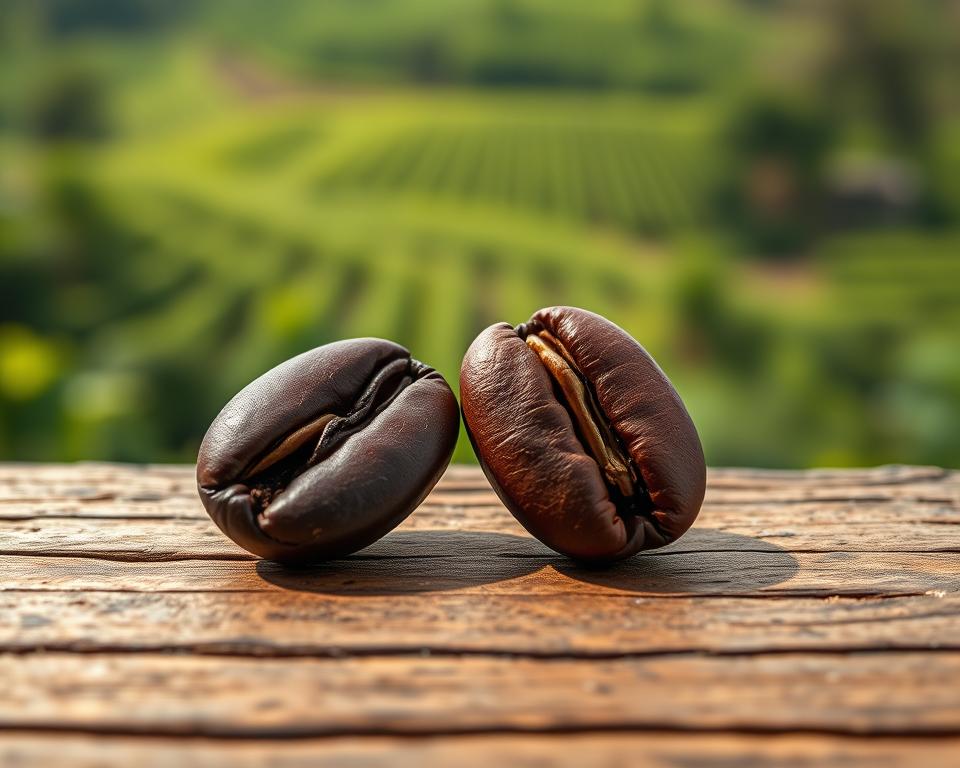
Guatemalan coffee is famous for its rich taste and high quality. The country’s unique terroir, with volcanic soil and diverse microclimates, is perfect for coffee. We’ll look at the differences between commercial and specialty coffee, focusing on Guatemalan coffee.
Commercial coffee is mass-produced and lacks unique flavors. On the other hand, specialty coffee is carefully made to highlight regional traits. Guatemalan specialty coffee is especially loved for its balanced acidity and rich flavors.
The World of Coffee Quality
Understanding coffee quality is more than just taste. It includes aroma, acidity, and body too. These elements all play a part in what makes coffee great.
Numerical Scoring Methods
Coffee grading uses numbers to measure quality. This system helps compare different coffee beans. It’s especially useful for beans from Guatemala.
The Specialty Coffee Association (SCA) has strict standards for coffee. They rate green coffee beans on a 100-point scale. Guatemalan coffee, known for its rich flavors, is often judged by these standards.
Knowing these standards helps coffee lovers appreciate Guatemalan coffee more. They can see why it’s considered high quality.
Commercial Coffee vs. Specialty Coffee: Key Distinctions
It’s important to know the difference between commercial and specialty coffee. This helps us understand what makes Guatemalan coffee special. The main differences are in how it’s made, its taste, and how it’s processed.
Mass Production Techniques
Commercial coffee focuses on making lots of coffee quickly. It uses machines to pick and process the beans. This way is cheaper but often makes the coffee taste less rich.
Typical Flavor Profiles
Commercial coffee tastes pretty basic. But specialty coffee, like Guatemalan coffee, has deep and complex flavors. Guatemalan coffee is famous for its balanced taste and hints of chocolate.
Specialty coffee comes from one place or farm. This lets the unique taste of that area show in the coffee. Places like Antigua or Huehuetenango in Guatemala are known for their special coffee.
Artisanal Processing Methods
Specialty coffee is made by hand, not by machines. This careful process makes sure the coffee is top quality. It also gives the coffee a more interesting taste.
To learn more about the differences, check out this detailed comparison.
Guatemala’s Coffee Heritage and Terroir
Guatemala’s coffee heritage is deeply rooted in its unique terroir. This terroir greatly influences the flavor of its coffee. The country’s diverse geography, with volcanic regions, high altitudes, and rich soil, makes it perfect for coffee production.
Altitude Effects on Bean Development
The high altitudes in Guatemala slow down coffee bean ripening. This allows for more complex flavor development. As a result, the beans are denser with a more pronounced acidity.
Volcanic Soil Benefits
Guatemala’s coffee regions have volcanic soil rich in minerals. This soil adds to the coffee’s distinct flavor profiles. The minerals enhance the coffee’s brightness and body.
| Region | Altitude | Soil Type | Flavor Profile |
|---|---|---|---|
| Antigua | 1,500 – 1,700 meters | Volcanic | Chocolate, Spice |
| Huehuetenango | 1,500 – 2,000 meters | Volcanic | Fruit, Floral |
| Atitlán | 1,500 – 1,800 meters | Volcanic | Citrus, Wine |
Exploring Guatemala’s Distinctive Coffee Regions
Guatemala is famous for its many coffee regions. Each one adds its own special taste to the country’s coffee. The mix of volcanic highlands and rich soil makes perfect spots for growing coffee.
The Antigua region is known for its balanced coffee. It tastes like chocolate and spice. On the other hand, Atitlán’s coffee is bright and fruity, thanks to its location by Lake Atitlán.
Huehuetenango is famous for its high-altitude coffee. It has a crisp taste. Cobán’s coffee is rich and balanced, thanks to its cloud forest.
When you buy coffee, knowing where it’s from is key. It helps you find the perfect coffee for you. Whether you like bright, acidic coffee or a smooth, balanced one, Guatemala has it all.
Exploring Guatemala’s coffee regions deepens your love for its coffee culture. It shows how different places make coffee unique.
How to Recognize Quality in Guatemalan Coffee Beans
Spotting top-notch Guatemalan coffee beans means looking at a few key things. Guatemalan coffee is famous for its deep flavors. These flavors come from the soil, climate, and how the beans are processed.
Bean Size and Uniformity
Bean size and how even they are show a lot about coffee quality. Bigger, even beans usually mean the coffee was made with care. This leads to a more consistent taste.
Color Assessment
The color of coffee beans tells us a lot about their quality and how they were made. Green beans are usually the best. They show the beans haven’t been roasted too much.
Freshness is key for great coffee. Looking at the harvest date and knowing how it was stored helps figure out if the coffee is fresh.
Processing Method Identification
The way coffee is processed greatly changes its taste. Guatemalan coffee often uses special methods to bring out its unique flavors.
| Attribute | High Quality Indicator | Low Quality Indicator |
|---|---|---|
| Bean Size | Uniform, larger beans | Variable, smaller beans |
| Color | Green, even color | Discolored, uneven |
| Harvest Date | Recent harvest | Old harvest |
| Processing Method | Careful, washed or honey processed | Poorly processed, dried on the ground |
By looking at these points, buyers can choose the best Guatemalan coffee. They can pick beans that meet their quality standards.
Step-by-Step Guide to Coffee Cupping
For coffee lovers, learning about Guatemalan coffee starts with cupping. This method checks the coffee’s flavors and smells. It’s key in the coffee world, helping to compare and understand different coffees.
Coffee cupping has several steps. First, green coffee beans are roasted to the right level. Then, they’re ground and put in a cupping cup. Hot water is added, and the coffee steeps.
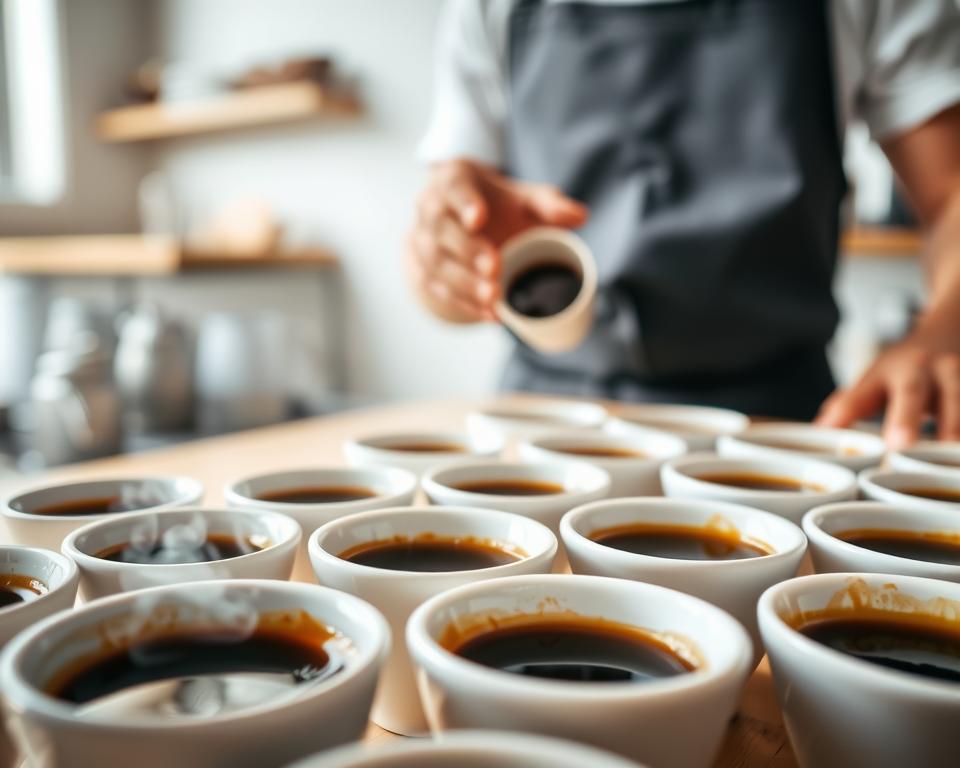
After steeping, the grounds are stirred, and the coffee is tasted. The flavors, acidity, and body are checked. The coffee gets a score based on these qualities.
To cup Guatemalan coffee right, follow a set process. Use the right coffee-to-water ratio and check the coffee at the same temperature. Use a cupping form to note your findings.
By following this guide, coffee fans can better understand Guatemalan coffee’s unique tastes. Whether you’re a pro or just starting, coffee cupping is a great way to explore coffee flavors.
Guatemalan Flavor Profiles: From Commercial to Specialty
Guatemalan coffee ranges from chocolatey to complex flavors. Its quality comes from the land and careful processing. This makes Guatemalan coffee stand out.
Guatemalan coffee can be divided into several groups. Each group offers a unique taste. The taste depends on where the coffee is from, how it’s processed, and its roast level.
Chocolate and Spice Notes
Many Guatemalan coffees have rich chocolate and spice flavors. These tastes come from the coffee’s volcanic soil. It gives a deep, satisfying flavor.
Citrus and Floral Undertones
Some Guatemalan coffees have bright citrus and floral notes. These add complexity to their taste. These notes are more noticeable in washed coffees.
Nutty and Caramel Profiles
Nutty and caramel flavors are common too. They’re found in coffees roasted to highlight these tastes. These flavors make the coffee smooth and balanced.
Guatemalan coffee’s variety is exciting for coffee lovers. Whether you prefer the chocolatey taste of commercial coffee or the complex notes of specialty coffee, there’s something for everyone.
Brewing Methods to Highlight Guatemalan Coffee Qualities
Guatemala’s unique terroir makes its coffee stand out. It has a balanced acidity and rich flavors. These can include chocolate, caramel, fruit, and floral notes.
Several brewing methods can enhance these flavors. Pour-over is one, allowing for control over brewing. It’s great for showing off Guatemalan coffee’s nuanced tastes.
French press is another good choice. It steep coarse coffee grounds in hot water, then presses them down. This keeps the coffee’s natural oils and sediment in, making it richer and more full-bodied.
The Aeropress is also versatile. It can make everything from espresso to pour-over style coffee. Its ability to brew at a lower temperature is perfect for highlighting Guatemalan coffee’s subtle flavors.
| Brewing Method | Flavor Profile | Coffee-to-Water Ratio |
|---|---|---|
| Pour-over | Bright, nuanced flavors | 1:15 to 1:17 |
| French press | Rich, full-bodied flavors | 1:12 to 1:15 |
| Aeropress | Smooth, balanced flavors | 1:10 to 1:13 |
Experimenting with brewing methods can unlock Guatemalan coffee’s full potential. Adjusting grind size, water temperature, and coffee-to-water ratio can make your cup more satisfying.
Understanding Sustainable Coffee Practices in Guatemala
Sustainable coffee practices in Guatemala are key for its future. The country is a big player in the coffee world. It must find a balance between growing coffee and protecting the environment.
Commercial Production Footprint
Commercial coffee farming in Guatemala can harm the environment. It often leads to deforestation and pollutes water. Chemicals used in farming can also damage soil and hurt animals.
But, there’s a shift towards better farming methods. This change is driven by people wanting eco-friendly coffee.
Specialty coffee farms in Guatemala are leading the way in conservation. They use organic and shade-grown methods. These practices help keep biodiversity alive and lower environmental harm.
Some farms even plant trees and protect wildlife. This shows their commitment to the planet.
| Practice | Commercial Coffee | Specialty Coffee |
|---|---|---|
| Farming Method | Intensive, often sun-grown | Shade-grown, organic practices |
| Environmental Impact | Higher risk of deforestation and pollution | Biodiversity conservation, lower environmental impact |
| Conservation Efforts | Limited conservation initiatives | Reforestation, wildlife conservation programs |
Knowing the difference between commercial and specialty coffee helps. It lets us choose coffee that supports the environment. This choice helps Guatemala’s economy and nature.
How to Source Authentic Guatemalan Coffee
Authentic Guatemalan coffee is more than just a label. It’s a promise of quality. With more people wanting specialty coffee, it’s key to know if it’s real.
First, you need to understand origin verification. Look for “Denominación de Origen” (DO) or “Consejo Nacional de Café” (CONACAFÉ) stamps. These show the coffee’s true origin and quality.
When buying Guatemalan coffee, check where it comes from. Know the region, farm, and how it was made. Buying directly from farmers or trusted roasters helps too.
| Region | Notable Characteristics | Flavor Profile |
|---|---|---|
| Antigua | Volcanic soil, balanced acidity | Chocolate, caramel, fruit notes |
| Atitlán | High altitude, complex flavor | Citrus, berries, honey |
| Huehuetenango | Dry processing, robust flavor | Dark chocolate, spices, wine notes |
By being informed and careful, you can find authentic Guatemalan coffee. This coffee will meet your high standards for taste and quality.
Creating Perfect Food Pairings with Guatemalan Coffee
Exploring food pairings with Guatemalan coffee can make meals more enjoyable. Its rich flavors and balanced acidity make it great for many dishes. This versatility makes it a top choice for pairing.
Think about the coffee’s flavor notes when pairing. Coffee with chocolate and caramel notes goes well with sweet treats. Meanwhile, citrus notes in coffee pair well with breakfast or fruit desserts.
Success in pairing comes from matching flavors. A coffee comparison can show which flavors work well together. For example, a coffee with bright acidity can balance the richness of fatty dishes.
When buying Guatemalan coffee, look at the region. Different regions have unique flavors. Knowing these differences helps in choosing the right coffee for your dishes.
Conclusion: Appreciating the Full Spectrum of Guatemalan Coffee
Guatemalan coffee is known for its wide range of flavors and qualities. From commercial to specialty grades, there’s something for everyone. Knowing the difference between Commercial Coffee and Specialty Coffee can make you appreciate this rich coffee culture more.
The unique terroir and distinct coffee regions in Guatemala make its coffee stand out. Exploring different flavor profiles and brewing methods lets coffee lovers fully enjoy Guatemalan coffee.
Whether you drink coffee casually or are a true connoisseur, Guatemalan coffee has something special to offer. Finding authentic Guatemalan coffee and supporting sustainable practices can make your coffee experience even better.