
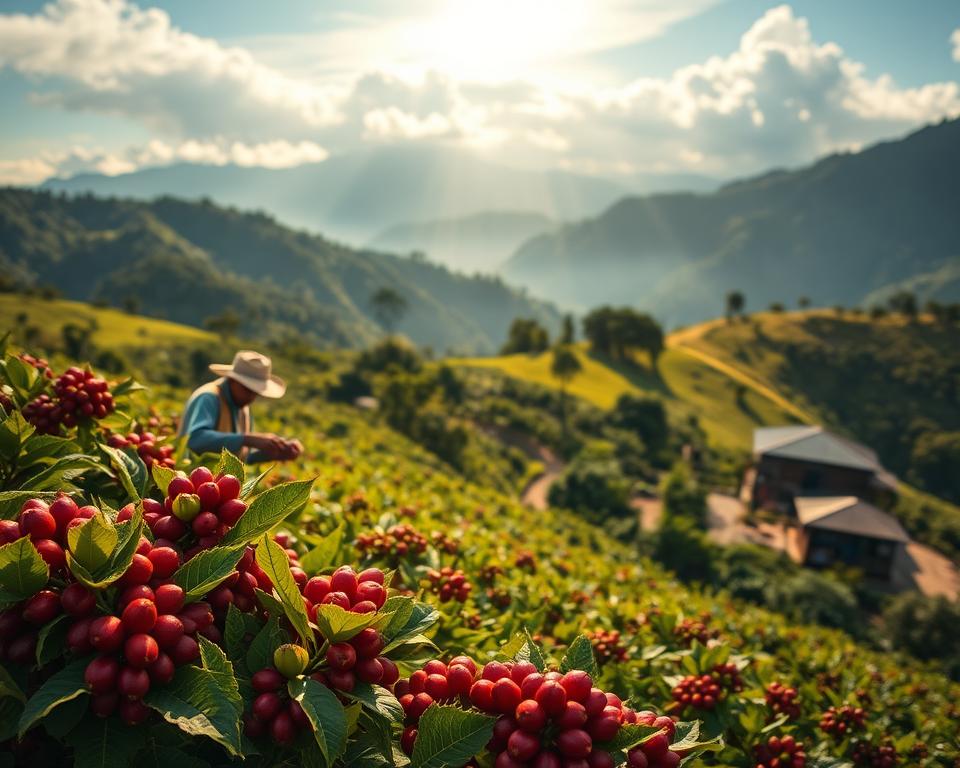
Guatemalan coffee is famous for its rich taste and high quality. This is thanks to the country’s varied altitudes. From the high mountains of Huehuetenango to the lower slopes of Atitlán, each place offers different growing conditions.
The altitude where coffee grows impacts its quality. Higher altitudes often mean more complex flavors. This is because coffee cherries mature slower at these heights. This results in denser beans and more nuanced flavors.
Knowing how altitude affects Guatemalan coffee helps us appreciate the skill in making specialty coffee. As we delve deeper, it’s clear that Guatemala’s unique conditions make it a top coffee producer.
Understanding Guatemala’s Coffee Geography
The geography of Guatemala’s coffee regions makes its coffee unique. Places like Antigua, Huehuetenango, and Atitlán have special conditions. These conditions affect the taste of the coffee.
Highlands vs. Lowlands Comparison
The highlands of Guatemala, like Huehuetenango, have cool climates and high altitudes. This means coffee beans mature slowly here.
On the other hand, the lowlands are warmer. This leads to coffee beans maturing faster.
- Highlands: Cooler climate, slower maturation, complex flavors
- Lowlands: Warmer climate, faster maturation, brighter acidity
Microclimates Within Regions
Inside these regions, microclimates play a big role in coffee quality. For example, areas near Lake Atitlán have a special microclimate. This microclimate adds to the coffee’s unique taste.
The Science Behind High-Altitude Coffee in Guatemala
Guatemalan coffee grown at high altitudes has a special mix of climate and geography. Studies show that high-altitude coffee matures slower, is denser, and has bigger temperature changes. These factors make it of premium quality and have unique flavors.
Slower Maturation Process
Coffee cherries ripen slower at higher altitudes. This slow ripening lets flavors develop more complexly. It’s key for making specialty coffee with rich taste notes.
Density and Hardness Factors
Coffee beans from high altitudes are denser and harder. These traits mean higher quality coffee. The density helps in roasting evenly, improving the taste.
High-altitude areas have big temperature changes, with cooler nights and warmer days. This helps in slowing down ripening and adds balanced acidity to the coffee’s flavor.
Stress Factors That Enhance Flavor
Coffee plants at high altitudes face stress from less oxygen, cooler temps, and more UV. This stress makes the plant’s natural defenses work harder. It results in coffee beans that are complex and resilient, typical of premium coffee.
| Factor | Impact on Coffee Quality |
|---|---|
| Slower Maturation | More complex flavor development |
| Density and Hardness | Even roasting, enhanced flavor |
| Diurnal Temperature Variation | Balanced acidity, flavor complexity |
| Stress Factors | More complex and resilient coffee bean |
For more detailed information on the science behind coffee quality, visitthis resource.
Defining Altitude Classifications in Guatemalan Coffee
Altitude classifications are key to understanding Guatemalan coffee quality. Coffee in Guatemala grows at various altitudes. These altitudes greatly affect the coffee’s flavor and quality.
Guatemalan coffee is sorted by altitude. The most important classification is SHB (Strictly Hard Bean). It means the coffee is grown at very high altitudes.
Cup Quality Differences Between Classifications
The coffee’s altitude affects its taste. Coffee grown at higher altitudes matures slower. This leads to a more complex flavor.
| Altitude Classification | Height (meters) | Cup Quality Characteristics |
|---|---|---|
| SHB (Strictly Hard Bean) | Above 1350 | Complex flavor, bright acidity |
| HB (Hard Bean) | 1200-1350 | Balanced flavor, moderate acidity |
| Altitude | 1000-1200 | Floral notes, lighter body |
Knowing these classifications helps us appreciate Guatemalan coffee’s varied flavors and qualities.
Flavor Profiles of High-Altitude Guatemalan Coffee
High-altitude Guatemalan coffee is known for its complex flavors. These flavors come from the coffee’s high-altitude growth.
Citrus and Floral Notes Above 5,000 feet
Coffees above 5,000 feet in Guatemala have bright citrus and floral notes. This is because they mature slower at high elevations. This slow process lets sugars and acids develop more fully.
Between 4,000 and 5,000 feet, Guatemalan coffees have rich chocolate and nut flavors. These flavors are balanced and smooth. They offer a sweet and satisfying taste.
The unique flavors of high-altitude Guatemalan coffee stand out in the specialty coffee world. Whether it’s the bright citrus at high altitudes or the deep chocolate at middle elevations, each cup is a unique journey.
How to Identify High-Altitude Coffee in Guatemala
Knowing the altitude of Guatemalan coffee is key to its quality and taste. High-altitude coffee has special traits. Several signs can help spot it.
Guatemalan coffee is sorted by altitude. Terms like SHB (Strictly Hard Bean) and SHG (Strictly High Grown) show it’s high-altitude.
SHB vs. SHG Terminology
SHB means the bean is dense. This happens because it grows high up where cherries ripen slowly. SHG is a mark for coffee grown very high.
When you see SHB or SHG on a label, it’s likely high-quality coffee. It’s grown at high altitudes, making its flavors complex.
By knowing these labels, you can find high-altitude Guatemalan coffee. This way, you can enjoy its unique taste.
Cultivation Techniques for High-Altitude Coffee Farms
Guatemalan coffee farmers at high altitudes use special methods to keep the soil healthy and diverse. They choose native trees for the best shade. This shade protects the coffee plants from too much sun and helps the ecosystem.
Native Tree Selection for Optimal Shade
Native trees are key for shade, which slows down coffee cherry ripening. This improves the flavor. Farmers pick trees that fit the local climate and soil.
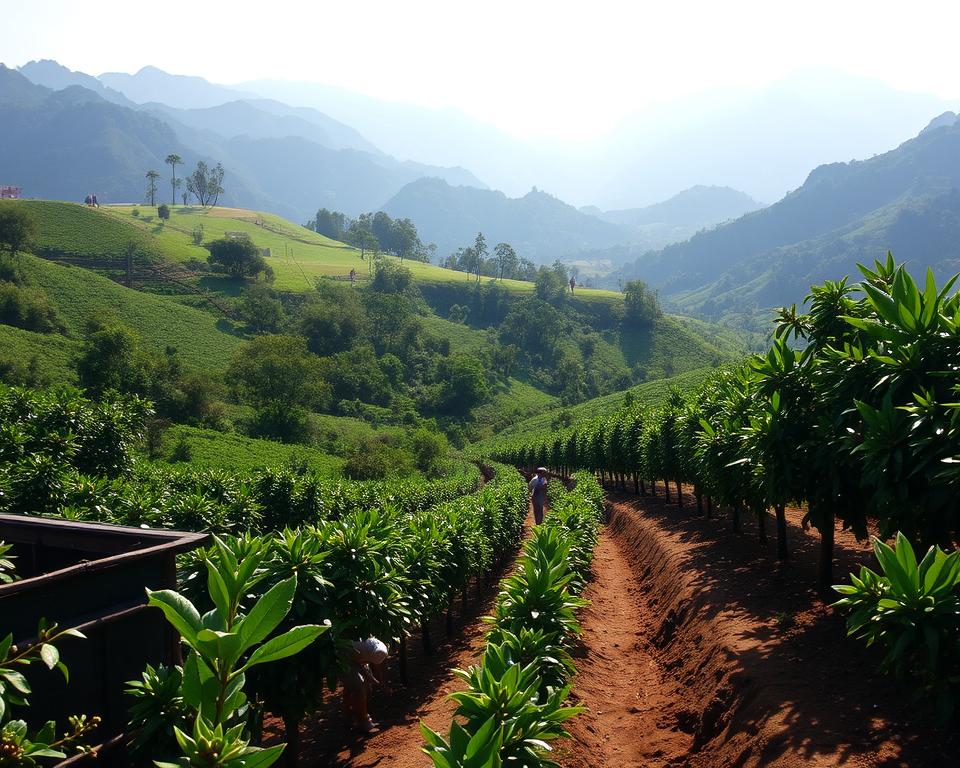
Managing the canopy is important for a good balance of shade and sun. Farmers prune and thin the canopy. This lets the right amount of sunlight reach the coffee plants, helping them grow well and stay disease-free.
Erosion Prevention Strategies
High-altitude farms face soil erosion from heavy rain. Farmers use terracing and cover crops to stop erosion. These methods keep the soil stable and fertile.
Nutrient Management in Highland Soils
Soil nutrients are crucial for high-altitude coffee farms. Farmers use organic fertilizers and compost. This keeps the soil fertile and ensures the coffee plants grow well.
Guatemalan coffee farmers use these sustainable methods. They produce top-quality, organic coffee. They also protect the environment and keep biodiversity.
Harvesting Practices for Quality Preservation
Harvesting coffee is key to keeping Guatemalan coffee top-notch. The way and when coffee cherries are picked greatly affects the taste and quality of the coffee.
Color-Based Selection Methods
Coffee farmers in Guatemala pick cherries based on color. They look for deep red cherries, which means they’re ripe and ready. This way, they only choose the best cherries.
The multiple passes technique is also used. Farmers go through the fields several times to pick cherries at their best ripeness. Since cherries ripen at different times, this method ensures quality coffee.
These harvesting practices help keep Guatemalan coffee quality high. Careful selection and timely picking lead to coffee known worldwide for its unique flavors and quality.
Processing Methods Unique to Guatemalan Highlands
Guatemalan coffee makers have created special ways to process coffee because of the high altitude. These methods help make Guatemalan coffee taste better and have a unique flavor.
Fermentation Time Adjustments for Altitude
The high altitude in Guatemalan highlands changes how coffee ferments. Coffee makers adjust the fermentation time to get the best flavor. Longer times can make the coffee taste more complex.
Water Quality Considerations
Water quality is very important in making coffee. In the Guatemalan highlands, coffee makers use clean, high-quality water. This helps keep the coffee’s taste good.
Raised bed techniques help with airflow and moisture around the coffee beans. This method stops mold and makes sure the beans dry evenly.
Managing Humidity Challenges
Handling humidity is key in Guatemala’s high-altitude areas. Coffee makers use different methods to control humidity. This ensures the coffee beans dry well and evenly.
- Adjusting fermentation times based on altitude
- Ensuring high-quality water for processing
- Utilizing raised bed techniques for better airflow
- Managing humidity to prevent mold and ensure even drying
These special processing methods, made for the high-altitude Guatemalan highlands, greatly improve Guatemalan coffee’s taste and quality.
Challenges of High-Altitude Coffee Production
Guatemalan coffee producers face many challenges at high elevations. The tough terrain and changing weather make it hard to keep quality and yields steady.
Cost-Benefit Analysis of High-Altitude Farming
High-altitude farming costs more. This is because of the need for special farming methods, more labor for picking, and transport issues. Yet, it offers the chance for better coffee beans and unique tastes that can fetch a higher price.
Even though starting out costs more, the long-term gains are worth it. This is because high-altitude coffee can sell for more.
Premium Pricing Strategies
Producers can use premium pricing to showcase high-altitude coffee’s unique qualities. They can talk about the special flavors, the hard work in making it, and the top-notch beans.
This way, Guatemalan coffee makers can draw in customers who are ready to pay more for quality, high-altitude coffee.
Sustainability Practices in Guatemalan Highland Coffee
Fair Trade and education are key in Guatemalan highland coffee. They improve coffee quality and help local communities.
Fair Trade Initiatives for Mountain Growers
Fair Trade ensures coffee farmers get a fair price. This helps them live better and invest in green farming. It also supports social justice and caring for the environment.
| Initiative | Benefits | Impact |
|---|---|---|
| Fair Trade Certification | Fair prices, social justice | Improved livelihoods, sustainable practices |
| Education Programs | Technical support, farming techniques | Enhanced coffee quality, environmental conservation |
Education and Technical Support Programs
Education and support are crucial for Guatemalan coffee farmers. They learn about green farming, coffee making, and quality control. This helps them grow more and earn more.
Guatemalan coffee farmers can make better coffee and help the planet by using sustainable methods. Fair Trade and education are essential for these goals.
Selecting and Brewing High-Altitude Guatemalan Coffee
High-altitude Guatemalan coffee is known for its bright acidity and complex flavors. It needs precise brewing techniques to bring out its best. Choosing the right roast level and brewing method is key to enjoying its unique qualities.
Light to Medium Roast Recommendations
For high-altitude Guatemalan coffee, light to medium roasts are best. They keep the coffee’s natural acidity and flavor complexity. These roasts let the coffee’s nuances shine, making the cup more vibrant and engaging.
Roast Development Indicators
Roast development indicators help find the perfect roast level. Look at the coffee’s color, aroma, and flavor notes. A well-developed roast has balanced acidity and a rich, complex flavor.
| Roast Level | Color | Flavor Profile |
|---|---|---|
| Light Roast | Lighter Brown | Fruity, Floral |
| Medium Roast | Medium Brown | Balanced, Nutty |
Pour-over brewing is great for highlighting high-altitude Guatemalan coffee’s acidity. Adjusting water temperature and brewing time brings out the coffee’s bright, fruity notes.
Espresso Parameters for High-Density Beans
When making espresso from high-altitude Guatemalan coffee, adjust the grind size and tamping pressure. This ensures a smooth, balanced shot with a rich crema.
Conclusion
Guatemalan coffee is famous for its unique tastes. These tastes come from the country’s different heights. High-Altitude Coffee in Guatemala is loved for its complex flavors.
The mix of high altitudes, rich soil, and careful growing makes Guatemalan coffee top-notch. Altitude, flavor, and how it’s processed all matter. They all help create the coffee’s final taste.
Knowing how altitude affects coffee quality helps everyone. It’s great for those who love coffee and want to try new things. Guatemalan coffee is a special treat for anyone.