
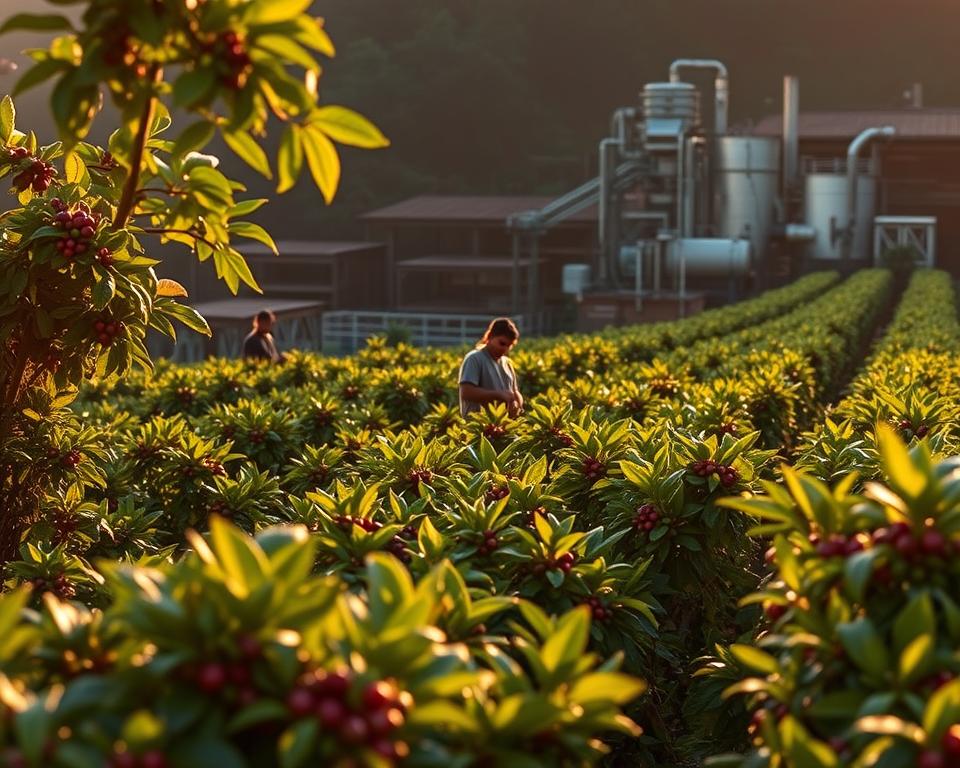
Guatemala is famous for its top-notch coffee, thanks to its rich biodiversity and effective pollination processes. Natural pollination is key in boosting crop yields, including coffee, by helping plants reproduce.
Natural pollination is vital in coffee making. Insect pollination can up yields by 18 to 71% for different crops. For coffee, it means better yields and quality beans, helping in sustainable coffee farming.
It’s crucial for coffee farmers in Guatemala to grasp the value of natural pollination. By supporting pollinators and keeping the environment balanced, farmers can improve their yields. This also helps make the coffee industry more sustainable.
The Vital Connection Between Coffee Pollination and Yield
Effective pollination is key to getting more coffee in places like the Guatemalan Highlands. Coffee plants need pollination to make more, and how well this happens affects how much they produce.
How Coffee Plants Reproduce
Coffee plants make more by using flowers that can pollinate themselves or need help from others. Honey bees and other pollinators help a lot, making the coffee plants produce more.
Timing of Flowering in Guatemalan Highlands
The timing of when coffee plants flower is very important. It changes with the weather. In the Guatemalan Highlands, it happens after the first rains, starting the plant’s reproductive cycle.
How well coffee is pollinated affects the size of the beans. Good pollination means bigger, more uniform beans, which are more valuable.
Effects on Flavor Profile Development
The quality of pollination also changes the taste of coffee. Coffee cherries that are well-pollinated taste more complex and balanced. This makes the coffee better.
| Pollination Factor | Impact on Coffee Yield | Effect on Flavor Profile |
|---|---|---|
| Quality of Pollination | Increased yield with proper pollination | More complex flavor profile |
| Timing of Flowering | Optimal timing results in higher yield | Balanced flavor development |
| Pollinator Presence | Presence of pollinators like honey bees enhances yield | Contributes to nuanced flavor profiles |
Native Pollinators of Guatemala’s Coffee Regions
In Guatemala’s coffee areas, many native pollinators like bees, butterflies, and birds help pollinate. These creatures are key for coffee production. They move pollen between plants, helping them to fertilize and grow fruit.
Stingless Bees (Meliponini)
Stingless bees are very important in Guatemala’s coffee lands. They pollinate coffee flowers well because of their social nature and unique way of vibrating. This vibration helps to release pollen from the anthers.
Honeybees and Wild Bees
Honeybees and wild bees also help a lot with coffee pollination. Honeybees are often kept for honey, but wild bees add extra help. Their pollination is crucial for getting more coffee.
Butterflies and Moths
Butterflies and moths also pollinate coffee plants, even if they’re not as well-known. They pollinate at different times and in different places. This helps bees with their work.
Birds and Bats as Secondary Pollinators
Birds and bats are not the main pollinators of coffee but can help. Some hummingbirds, for example, visit coffee flowers. They can also transfer pollen, helping with pollination.
| Pollinator Type | Role in Coffee Pollination | Significance |
|---|---|---|
| Stingless Bees | Efficient pollinators due to vibration behavior | High |
| Honeybees and Wild Bees | Provide primary pollination services | High |
| Butterflies and Moths | Complementary pollination during different times | Moderate |
| Birds and Bats | Secondary pollinators, occasional pollen transfer | Low to Moderate |
Evaluating Your Farm’s Pollination Health
Understanding your farm’s pollination is key to successful coffee farming. Good pollination helps increase coffee yield and quality.
Simple Observation Techniques
Observe your coffee plants during peak flowering. Look for bees and butterflies.
Documenting Pollinator Diversity
Record the pollinators visiting your plants. Use a log or a mobile app for tracking.
Check for signs of pollination success, like fruit growth. Healthy pollination means fruit is spread out evenly.
Yield Pattern Analysis
Look at your coffee yield over time. Steady or rising yields show good pollination. Falling yields mean problems.
| Pollination Indicator | Healthy Pollination Signs | Poor Pollination Signs |
|---|---|---|
| Flower Visitation | Frequent visits by diverse pollinators | Rare or no pollinator visits |
| Fruit Set | Evenly distributed fruit across the plant | Sparse or uneven fruit distribution |
| Yield Patterns | Consistent or improving yields | Declining yields over seasons |
These methods help farmers understand their pollination. They can then improve their coffee farming techniques.
Boosting pollination in coffee plants increases yield. It also makes farming more sustainable, benefiting the environment and the coffee industry.
Designing Pollinator-Friendly Coffee Farms
Creating a space that helps pollinators is key for growing coffee sustainably. By making coffee farms welcoming to local pollinators, farmers boost biodiversity. This also improves pollination and can lead to more coffee.
Strategic Placement Within Plantations
It’s important to place pollinator support wisely in coffee farms. Farmers should pick spots where pollinators can do their best work. They also need to create homes for these helpful creatures.
Connecting to Natural Forest Areas
Linking coffee farms to natural forests is a big plus for pollinators. These forests are full of different plants, which help many pollinator species thrive.
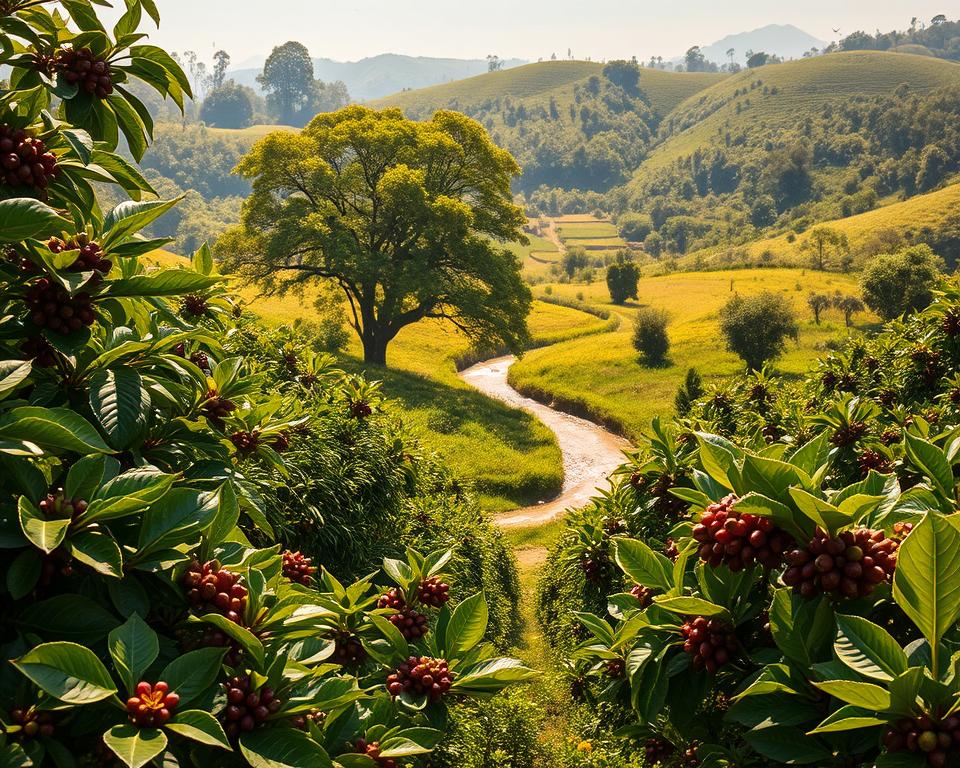
Adding native flowers around coffee farms helps pollinators all year. These flowers give pollinators nectar and pollen, keeping them healthy.
Herb and Shrub Integration Between Coffee Rows
Adding herbs and shrubs between coffee rows helps pollinators and the farm’s health. This method can make the soil better, reduce erosion, and add to the farm’s diversity.
By using these methods, coffee farmers can make their farms better for pollinators. This supports organic farming and improves how pollinators work. It leads to healthier ecosystems and stronger coffee crops.
Optimizing Coffee Pollination Yield Through Sustainable Practices
Coffee farmers can boost their yield by using sustainable methods that help pollination. These practices not only protect the environment but also make coffee better and more plentiful.
Managing pests and diseases without harming pollinators is key in sustainable coffee farming.
Alternatives to Pollinator-Toxic Pesticides
Farmers should opt for organic or integrated pest management (IPM) methods. These are gentler on pollinators. Some good options include:
- Biological control methods, such as introducing natural predators of pests.
- Organic pesticides that have a lower toxicity to pollinators.
- Cultural practices that prevent pest buildup.
Timing Applications to Minimize Impact
If chemical pesticides must be used, apply them at the right time. This means using them in the late evening or early morning. Pollinators are less active then.
Optimal Canopy Density for Pollinators
It’s important to keep the canopy density just right for pollinators. Too dense or too sparse can harm them. Research shows a moderate density is best for biodiversity.
Tree Species Selection for Dual Benefits
Choosing the right tree species for shade can help pollinators and biodiversity. Some trees attract pollinators and offer other benefits like nitrogen fixation or pest control.
Implementing Managed Pollinator Systems
Managed pollinator systems are key for better coffee pollination and yield. Coffee farmers can boost their production by managing pollinators well.
Hive Placement and Density
It’s important to place hives right for pollinator success. Hives should be near coffee fields for best pollination. They should also be far from threats.
- Place hives near coffee fields to enhance pollination efficiency.
- Maintain optimal hive density to avoid overcrowding and ensure adequate pollination.
Seasonal Management Considerations
Seasonal management keeps pollinators healthy and productive. Farmers should watch for pests and diseases. They also need to adjust hive care with the seasons.
Traditional Meliponiculture Techniques
Traditional meliponiculture uses native stingless bees for pollination. These methods have been around for centuries. They are a sustainable way to manage pollination.
Modern Box Hive Systems
Modern box hive systems offer a controlled pollinator environment. They make it easier to check and care for pollinator health.
A comparison of traditional meliponiculture and modern box hive systems is shown in the table below:
| Characteristics | Traditional Meliponiculture | Modern Box Hive Systems |
|---|---|---|
| Pollinator Type | Native stingless bees | Managed honey bees or native bees |
| Management Complexity | High | Moderate to High |
| Scalability | Limited | Highly Scalable |
By using these managed pollinator systems, coffee farmers can improve pollination and coffee production.
Addressing Pollination Challenges in Changing Climates
Coffee pollination is key for a good harvest, but climate change is making it tough. Higher temperatures and changes in rain patterns mess with the balance between coffee plants and their pollinators.
Managing Flowering Disruptions
Climate change messes with coffee plants’ flowering times, making it hard for pollinators to help. Farmers can try changing the shade or using water to help flowers bloom when pollinators are around.
Creating Microclimate Buffers
Creating a buffer around coffee farms can help fight off extreme weather. This can be done by planting native plants or trees. They offer shelter and keep the environment stable for coffee and pollinators.
Good water management is key for healthy pollinators. Farmers can use mulch and drip irrigation to save water. This way, water is there for plants and pollinators, even when it’s dry.
Erosion Control to Protect Nesting Sites
Erosion can ruin the homes of native pollinators, hurting coffee pollination. Farmers can use terracing, cover crops, and buffers to stop erosion. This protects the homes of these important helpers.
By using these methods, farmers can make their farms more resilient to climate change. This helps coffee production and keeps pollinators healthy. It’s good for the coffee and for the planet.
Measuring Success: Tracking Improvements in Coffee Yield
To see if pollination efforts are working, coffee farmers need to track several important signs. These signs show how healthy and productive their coffee crops are.
Pollinator Visitation Rates
How often pollinators visit coffee flowers is a key indicator. More visits usually mean better pollination and higher coffee yields.
Fruit Set Percentage Monitoring
Watching how many coffee flowers turn into fruit is also vital. This shows if pollination is working well.
| Metric | Description | Importance |
|---|---|---|
| Pollinator Visitation Rates | Frequency of pollinator visits to coffee flowers | High |
| Fruit Set Percentage | Percentage of flowers that develop into fruit | High |
| Pre- and Post-Intervention Data | Comparison of yield before and after implementing pollination strategies | Very High |
| Economic Impact Assessment | Evaluation of the financial benefits resulting from improved pollination | Very High |
Comparing Pre- and Post-Intervention Data
Looking at coffee yield before and after new pollination strategies is key. It shows how effective these strategies are.
Economic Impact Assessment
It’s also important to see the economic gains from better pollination. By measuring the increase in coffee yield and its value, farmers can see the financial benefits of their efforts.
By tracking these signs, coffee farmers can make their pollination strategies better. This leads to more coffee and better farm productivity over time.
Conclusion: Sustainable Pollination for Long-term Coffee Production
Sustainable coffee farming is key to keeping ecosystems healthy and coffee production going strong in Guatemala. Organic farming and focusing on pollination help farmers grow better coffee and more of it.
Good pollination is vital for coffee success. By making farms friendly to pollinators, farmers boost biodiversity. This makes their farms more resilient to climate changes.
The coffee industry needs to focus more on sustainable pollination. This way, farmers help the environment and support local communities. It’s a win-win for everyone involved.