
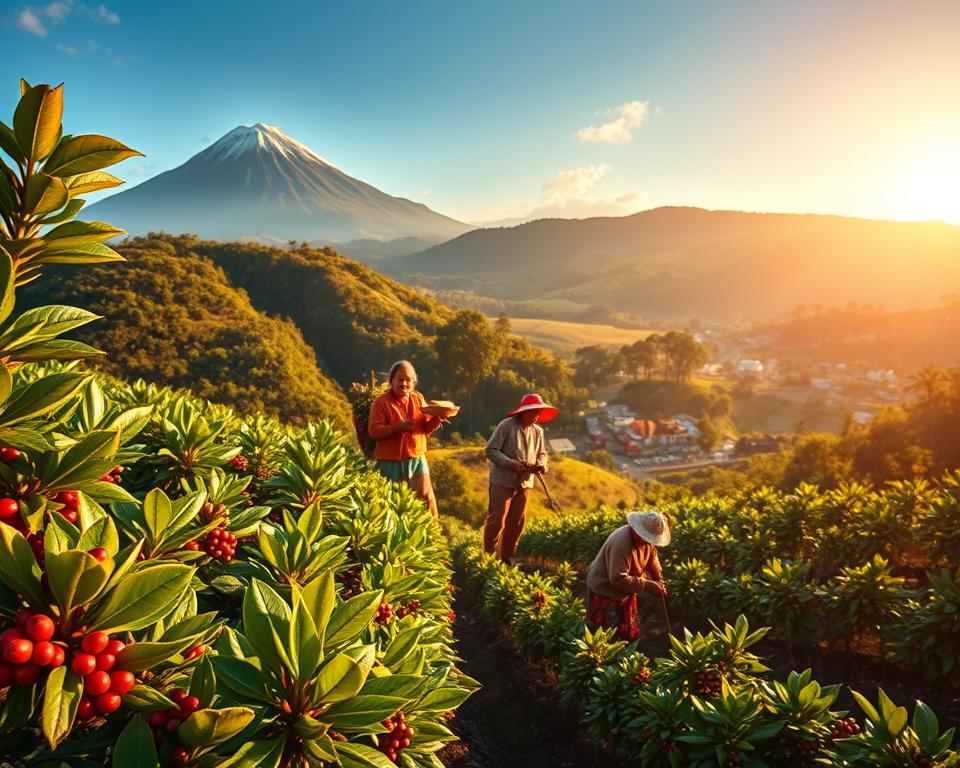
Coffee is very important in Guatemalan culture. The country’s coffee industry helps its economy a lot. Guatemala’s rich soil and good weather make it perfect for growing coffee.
The Guatemalan coffee industry is moving towards sustainability. This change helps the environment and makes coffee better. It also helps coffee farmers live better lives.
As more people want sustainable coffee, knowing about coffee and sustainability in Guatemala is key. This article will look at how sustainable practices in the coffee industry affect local culture.
The Rich Heritage of Guatemalan Coffee
Since the 1850s, coffee has been a big part of Guatemala’s culture. The country’s geography and climate make it perfect for growing top-notch coffee.
Evolution of Coffee Cultivation Since the 1850s
Coffee came to Guatemala in the 1850s and quickly became a key crop. Over time, farmers have used new methods and tools to boost quality and yields.
Coffee’s Role in Shaping Local Economy
Coffee is a big deal for Guatemala’s economy, offering jobs and income to many. It’s a crucial part of the country’s farming sector.
Guatemala has eight unique coffee-growing areas, each with its own taste. These spots include Antigua, Atitlán, Huehuetenango, and more.
Altitude and Flavor Profiles
The height where coffee grows changes its taste. Coffee from higher places often tastes more complex, with hints of chocolate and fruit.
Understanding Sustainability in Coffee in Guatemala
To grasp the sustainability of Guatemalan coffee, we must look at its environmental, social, and economic sides. Sustainability is key in countries like Guatemala, where coffee is a big part of the economy and culture.
Environmental Stewardship
Environmental care is a big part of sustainable Guatemalan coffee. This includes growing coffee under shade, using organic farming, and saving water. These steps help reduce harm to the environment and keep ecosystems healthy.
Social responsibility is also crucial. It means fair work, helping communities, and fair trade. It’s important for coffee farmers to get fair prices and work in good conditions for the industry’s future.
Climate Change Impacts
Climate change is a big problem for coffee in Guatemala. Warmer temperatures and changes in rain can make coffee less and lower quality. Farmers are using new methods to fight these effects.
Economic Pressures on Small Producers
Small coffee farmers face big economic challenges. Prices can change a lot, and costs go up. Helping them with fair trade and direct trade can keep them going.
Understanding these points helps us support Guatemalan coffee’s sustainability. It’s not just about the environment but also social fairness and economic strength.
How to Identify Sustainably Produced Guatemalan Coffee
To make sure your coffee is sustainably sourced, look for specific certifications. These certifications show that the coffee meets high environmental and social standards.
Rainforest Alliance and Bird Friendly Certifications
Certifications like Rainforest Alliance and Bird Friendly mean the coffee farms are eco-friendly. They work hard to keep natural resources and protect wildlife.
Organic and Fair Trade Symbols
Organic coffee is grown without harmful chemicals. This makes the environment healthier. Fair Trade coffee ensures farmers get a fair price, helping them improve their lives.
- Look for regional designations that indicate the coffee’s origin.
- Check for producer and cooperative details to understand the coffee’s supply chain.
For more info on sustainable coffee, check out this PDF document on sustainable coffee production.
Steps to Support Fair Trade Coffee from Guatemala
Guatemalan coffee farmers gain a lot when we choose fair trade coffee. Fair trade means they get a fair price for their coffee. This helps improve their lives and helps their communities grow.
There are several ways to support fair trade coffee from Guatemala:
Minimum Price Guarantees
Fair trade certification gives farmers a minimum price. This protects them from price drops. It lets them plan for the future and invest in their communities.
Community Development Projects
Fair trade groups start projects like education and healthcare. These projects make life better for coffee farmers and their families.
Buying fair trade coffee online helps farmers. Online stores buy coffee directly from fair trade farms in Guatemala.
Local Roasters with Direct Relationships
Local roasters with direct ties to farmers offer clear information. They show how they support fair trade. This means you can trust your coffee is helping farmers.
Choosing fair trade coffee from Guatemala helps farmers and their communities. It makes the coffee world fairer and more sustainable.
Guide to Appreciating Organic Coffee Production Methods
Understanding organic coffee production is key to appreciating it. It’s more than avoiding synthetic chemicals. It’s a complete approach that looks at the whole ecosystem.
Pest Management Without Chemicals
Organic coffee farms fight pests naturally. They use beneficial insects or organic pesticides. This keeps the ecosystem healthy and diverse.
Natural Fertilization Methods
Organic farms don’t use synthetic fertilizers. Instead, they compost and mulch. These methods make the soil better for plants, helping them grow strong.
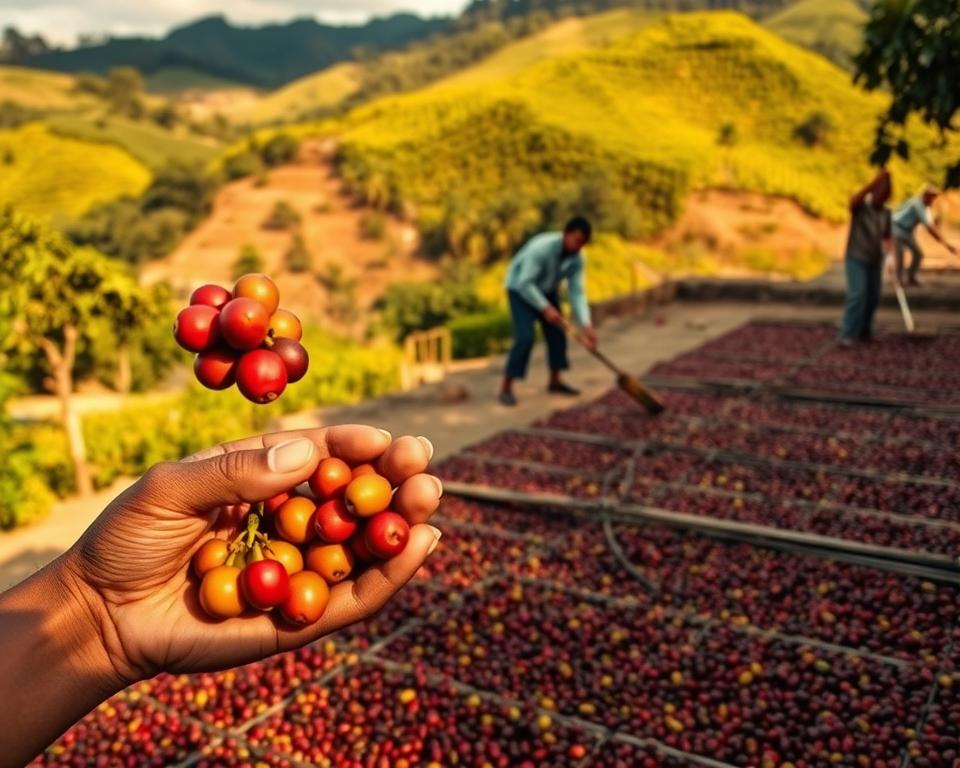
Organic coffee tastes different, often richer and more complex. The way it’s grown and processed adds to its unique flavor.
Cupping Techniques for Beginners
Cupping is a way to taste coffee. Beginners can learn by focusing on fragrance, flavor, aftertaste, acidity, body, and balance. This helps enjoy the special taste of organic coffee.
| Production Method | Impact on Flavor |
|---|---|
| Natural Fertilization | Enhances richness and complexity |
| Pest Management Without Chemicals | Contributes to a cleaner taste |
How to Engage with Ethical Sourcing Practices
Ethical sourcing is changing the coffee world. It makes trade fairer and more sustainable. This change is key for fairness and clear supply chains.
To really get into ethical sourcing, we need to focus on a few things. These are clear sourcing, direct trade, fair pay for farmers, and lasting partnerships.
Transparency Reports and Documentation
Being open is at the heart of ethical sourcing. It means showing how coffee is sourced. This lets buyers know what they’re getting.
A study on coffee sourcing shows that being open builds trust. It’s a big deal for both buyers and farmers.
Direct Trade Relationships
Direct trade cuts out the middlemen. This means more money goes to farmers. It helps farmers live better and grow better coffee.
Farmer Compensation
Farmers need to be paid fairly. This lets them farm sustainably and improve their lives.
Long-term Partnership Commitments
Long-term deals between buyers and farmers are key. They bring stability and encourage better farming. These partnerships are crucial for coffee’s future.
By following these ethical practices, the coffee world can become more sustainable and fair. As buyers, making smart choices can really help farmers and their communities.
Community Empowerment Through Coffee
In Guatemala, coffee has become a key driver for community growth. Coffee cooperatives lead this effort. They give small farmers the tools and support they need to succeed.
How Cooperatives Function
Coffee cooperatives in Guatemala work by combining resources from their members. This way, they can get better prices, help, and financial aid. They also focus on sustainable farming methods.
Benefits to Small-Scale Farmers
Being part of a cooperative greatly helps small farmers. They get training, better prices for their coffee, and a chance to improve their lives. Cooperatives also help make coffee better, which means higher earnings.
Female-Led Farms and Businesses
More and more women are leading farms and businesses in Guatemala’s coffee scene. These efforts empower women and boost the community’s growth. Women in charge help fight for equality and inspire the next generation.
Gender Equity Programs
Cooperatives are starting programs to ensure women get the same chances as men. These programs include training, leadership development, and access to resources. This way, cooperatives can work better and sustainably.
| Cooperative Benefits | Impact on Small-Scale Farmers | Role of Women |
|---|---|---|
| Better Market Access | Improved Livelihoods | Leadership and Empowerment |
| Technical Assistance | Higher Quality Coffee | Promoting Gender Equity |
| Financial Support | Better Bargaining Power | Role Models for Future Generations |
Implementing Sustainable Agriculture Techniques in Your Coffee Choices
Sustainable coffee production means using methods that are good for the environment and support biodiversity. Coffee farmers can make a big difference by using sustainable practices. This helps the planet stay healthy.
Using sustainable methods in coffee farming has many benefits. It cuts down on harmful chemicals, which means cleaner soil and water. It also keeps the soil healthy for future crops.
Biodiversity Preservation
Keeping biodiversity is key in sustainable coffee farming. Coffee farms that balance nature support many plants and animals. This makes the farm and the ecosystem healthier.
Water-Efficient Processing Methods
Using less water in coffee making is important. Methods like pulping and washing beans with less water save water. Using new technologies can also cut down water use.
Watershed Protection Initiatives
Protecting watersheds is vital for sustainable coffee farming. Healthy watersheds mean coffee farms can keep producing for a long time. This includes stopping water pollution and saving water.
Choosing coffee made with sustainable methods helps the environment and supports farmers. It’s good for the planet and helps coffee farming communities thrive.
The Future of the Guatemalan Coffee Industry
The Guatemalan coffee industry is evolving. It’s influenced by climate resilience and fair trade. Several trends and challenges will shape its future.
The industry is adapting to climate change. It’s developing
Drought-Resistant Varieties
to handle unpredictable weather. Finding coffee varieties that resist drought is key for coffee’s future.
Elevation Shifts in Production
are another strategy. Coffee producers are moving to cooler, higher elevations. This helps keep Guatemalan coffee’s quality and flavor.
is crucial. It supports farmers and encourages high-quality coffee production.
Also,
Advocating for Transparent Supply Chains
is vital. Transparency makes sure everyone knows how coffee is made and traded. It promotes fairness and equity.
By focusing on these areas, the Guatemalan coffee industry can face challenges head-on. It will continue to grow and succeed.
Conclusion: Embracing Sustainable Coffee Practices
The Guatemalan coffee industry is rich in heritage and culture. Sustainability is key for its future. By using sustainable practices, we can make the industry fair and green.
Supporting fair trade and organic coffee is important. It helps local communities and the environment. This way, we promote better farming methods.
Our choices as consumers matter a lot. By picking sustainable coffee, we help the industry grow better. Let’s keep supporting sustainable coffee in Guatemala for a brighter future.