
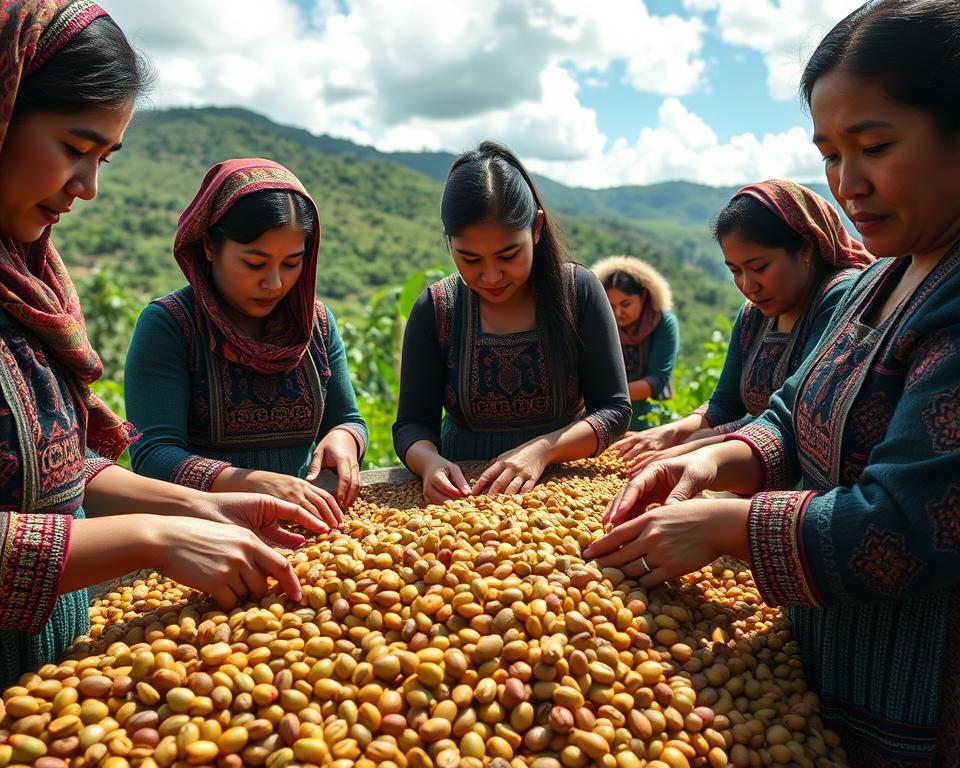
Guatemala is famous for its top-notch artisanal coffee. This is thanks to the hard work of female coffee producers. They are essential to the coffee-making process.
These women do more than just grow coffee. They also help with processing and checking the quality. Their work is key to Guatemala’s coffee success.
But their impact goes beyond just coffee. They also support their communities socially and economically. By focusing on their role, we learn more about Guatemala’s coffee world.
Guatemala’s Coffee Heritage and Women’s Historical Participation
For over a hundred years, Guatemalan women have played a key role in the country’s coffee industry. They have helped shape its growth and reputation worldwide. Guatemala is famous for its high-quality Arabica coffee, thanks in part to women’s hard work.
The story of coffee in Guatemala began in the 18th century with the introduction of coffee plants. But it wasn’t until the late 19th and early 20th centuries that coffee became a big deal economically. Women were crucial in coffee production, from planting to processing. They worked alongside men to make sure coffee was produced successfully.
Today, women’s roles in coffee have grown. They are not just workers but also farm owners, managers, and leaders in cooperatives. Their involvement has greatly helped the industry grow and stay sustainable. Knowing about women’s history in Guatemala’s coffee is key to understanding their current roles and challenges.
Understanding Guatemala’s Coffee Regions and Female Influence
Guatemala’s coffee regions are famous for their unique flavors. They are also where women are making a big difference in the coffee world. The country is known for its coffee, with seven main areas: Antigua, Atitlán, Huehuetenango, Cobán, Fraijanes Plateau, Oriente, and San Marcos.
Each area has its own special soil and weather. This makes Guatemalan coffee taste different. Women in these places are involved in many parts of coffee making, from growing to processing.
In places like Antigua and Atitlán, women are key in coffee farming. They use their skills to make the crops better. In Huehuetenango and Cobán, women focus on coffee processing. They make sure only the best coffee cherries are used.
The Fraijanes Plateau, with its volcanic soil, is another area where women are important. Their work not only makes coffee better but also helps their communities grow economically.
Women in Coffee Farming: Current Landscape in Guatemala
Women play a key role in Guatemala’s coffee farming. They are involved in every step, from planting to harvesting. Their work is vital for the quality and amount of coffee produced.
But, women face many challenges. They often don’t have access to land, credit, or technical help. This makes it hard for them to improve their farming and increase their yields.
Despite these challenges, there are opportunities for women. Programs aim to empower them in agriculture. These include training, financial help, and support for women-led cooperatives.
The scene for women in coffee farming in Guatemala is changing. It blends old ways with new ideas. As the industry grows, women’s roles will become even more important for Guatemalan coffee farming’s success.
The Coffee Production Process and Women’s Specialized Roles
In Guatemala’s coffee industry, women play a key role. They are involved from seed selection to quality assessment. Their specialized roles are crucial for the quality and uniqueness of Guatemalan coffee.
Techniques for Identifying Quality Seeds
Choosing quality seeds is the first step in coffee production. Women in Guatemala carefully pick seeds that are healthy and ready for planting. They check the seeds for any defects or diseases, making sure only the best seeds are used.
Nursery Setup and Maintenance Methods
After picking quality seeds, the next step is setting up the nursery. Women are essential in this stage, caring for the seedlings until they are ready to be transplanted. They ensure the seedlings grow well by controlling shade, watering, and protecting them from pests.
Selective picking is a detailed process that requires precision. Women lead this effort, picking only ripe coffee cherries. This method helps ensure the coffee cherries are of the highest quality.
Initial Quality Assessment in the Field
After picking, an initial quality check is done in the field. Women evaluate the coffee cherries for ripeness, damage, and disease. This step is important for deciding the next steps in processing and ensuring the coffee meets standards.
Women’s involvement in these stages improves coffee quality and empowers them in the industry. Their expertise is crucial for Guatemalan coffee production’s success.
Post-Harvest Processing: Where Women Excel
In Guatemala, women are key in coffee production’s post-harvest stage. This stage includes pulping, fermenting, and drying. These steps are vital for the coffee’s final quality.
Women stand out in post-harvest processing because of their focus on detail. They handle tasks like sorting and drying coffee beans. They make sure the beans are dried just right.
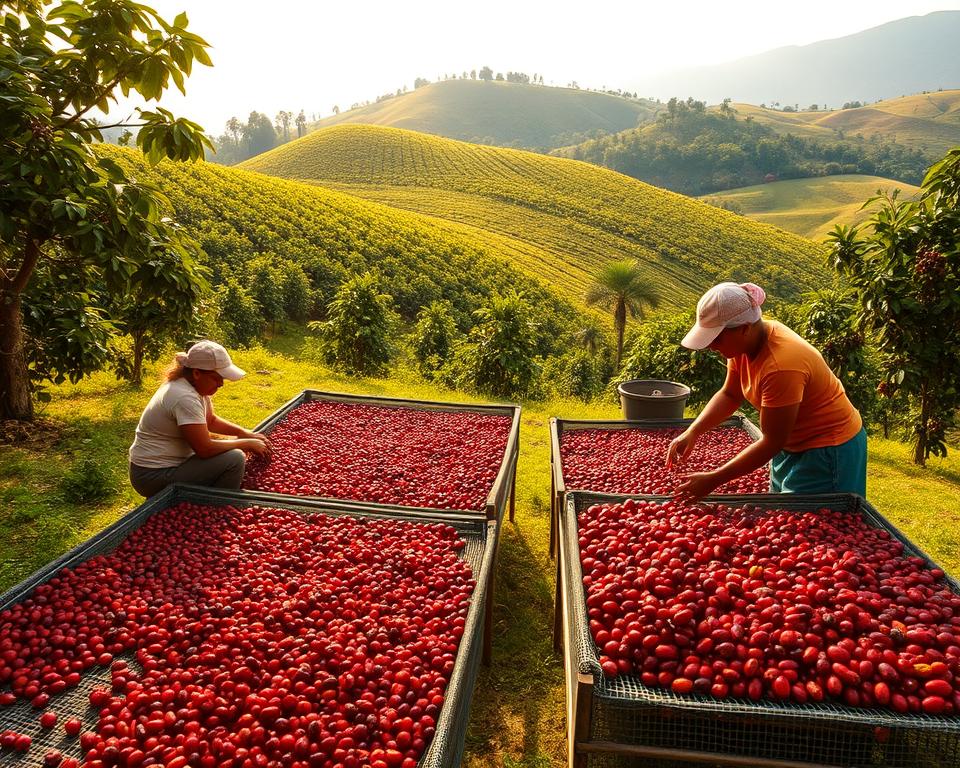
Women’s techniques in post-harvest processing are crucial for quality coffee. They do several important tasks:
- Careful sorting and grading of coffee cherries
- Monitoring the fermentation process to achieve the desired flavor profile
- Drying coffee beans to the optimal moisture content
These tasks need manual labor and a deep understanding of coffee production. Women’s skills in post-harvest processing greatly affect Guatemalan coffee’s quality and marketability.
Women’s hard work in post-harvest processing is vital for Guatemala’s coffee industry. Their efforts ensure the coffee meets global quality standards. This boosts Guatemalan coffee’s reputation worldwide.
Building Women-Owned Coffee Farms in Guatemala
Creating women-owned coffee farms in Guatemala involves legal, financial, and operational steps. Women are now leading in the coffee world. Starting their own farms is a big step towards empowerment.
To begin, owners must deal with the legal side. This means registering their business and getting the right permits.
Legal Requirements and Documentation
Legal steps include registering the farm and getting a tax ID. Owners must also follow local rules. Important documents like land titles and business certificates are needed.
- Register the farm as a sole proprietorship or corporation.
- Obtain a tax identification number.
- Comply with local agricultural regulations.
Financial Planning and Resources
Financial planning is key for women-owned coffee farms. It involves getting funding and managing money well.
For financial help, there are agricultural banks, microfinance groups, and government programs for women in farming.
Achieving Gender Equity in Guatemala’s Coffee Industry
To make Guatemala’s coffee industry last, we must achieve gender equity. This means making sure women get fair treatment and equal opportunities.
One important step is to have fair pay structures. Women in coffee often earn less than men. It’s key to pay them the same for the same work to support gender equity.
Fair Pay Structures
Fair pay means everyone gets paid the same for the same job. This can be done by setting clear pay scales and checking them often.
| Benefits of Fair Pay Structures | Impact on Women | Industry Impact |
|---|---|---|
| Equal pay for equal work | Increased financial independence | Improved industry reputation |
| Transparent compensation practices | Reduced pay disparities | Enhanced trust among stakeholders |
Leadership Development Programs
Another key strategy is to create leadership development programs for women. These programs help women gain the skills and confidence to lead.
By focusing on fair pay and leadership programs, Guatemala’s coffee industry can become more inclusive and sustainable.
Sustainable Coffee Production Practices Led by Women
Guatemalan women are leading the way in sustainable coffee production. Their work improves coffee quality and helps the environment.
They use organic fertilizers, which is good for the earth and the soil. This method cuts down on harmful chemicals.
Women are also key in saving water. They use smart irrigation systems. This cuts down water waste and protects this precious resource.
| Sustainable Practice | Benefits |
|---|---|
| Use of Organic Fertilizers | Reduces chemical use, improves soil health |
| Efficient Irrigation Systems | Conserves water, reduces waste |
| Shade-Grown Coffee | Promotes biodiversity, improves coffee quality |
Women are also pushing for shade-grown coffee. This method boosts coffee quality and keeps the natural world intact.
These green practices are great for the planet. They also make the coffee industry in Guatemala more sustainable.
Marketing and Selling Women-Produced Coffee
The global demand for specialty coffee has opened new opportunities for women coffee producers in Guatemala. They can now market their products. Effective marketing strategies are key to stand out in a competitive market.
Getting the right certifications is a crucial part of marketing women-produced coffee. These certifications show the quality of the coffee. They also give producers a competitive edge in the market.
Available Certifications and Requirements
Certifications like Fairtrade, Organic, and Rainforest Alliance are popular. To get these, farms must follow certain rules. These include sustainable farming and fair labor conditions.
Benefits of Certification for Market Access
Certification boosts market access for women-produced coffee. It adds credibility and can lead to higher prices. Certified coffee is also preferred by consumers who want sustainably produced coffee.
By using these certifications and focusing on quality, women coffee producers in Guatemala can market their coffee well. They can achieve better market access.
Conclusion: Empowering the Future of Guatemalan Coffee Through Women’s Leadership
The future of Guatemalan coffee is closely tied to empowering women in the field. Women are key in coffee production, from farming to processing. Their work is essential for Guatemalan coffee’s success.
It’s crucial to support women in leadership roles for the industry’s growth. This support will lead to a brighter future for Guatemalan coffee. It will be known for quality and sustainability.
Supporting gender equity and women’s empowerment is the next step. This move will make the industry more inclusive and sustainable. It will benefit not just the coffee sector but also communities across Guatemala.
Creating a space where women can lead will help the industry compete globally. It will also improve the lives of people in Guatemala. Empowering women is vital for Guatemalan coffee’s success.