
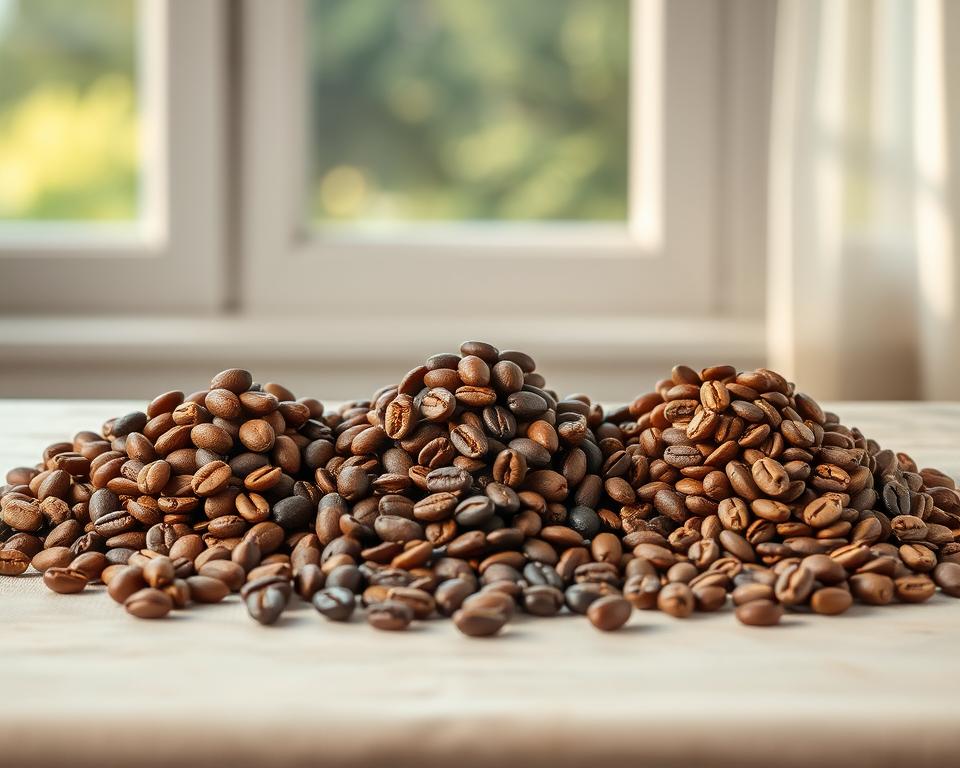
Coffee lovers often argue about the best coffee from around the world. Guatemalan, Colombian, and Ethiopian coffees are among the favorites.
Guatemalan coffee is famous for its deep, rich taste. It often has hints of chocolate and caramel.
Colombian coffee, on the other hand, is known for its balanced acidity and smooth taste. Ethiopian coffee is celebrated for its fruity and floral flavors.
Knowing the differences between these coffee origins helps coffee fans choose their favorite brews.
The Rich World of Coffee Origins
Coffee lovers often look for specialty coffee from different places to find unique tastes. The world of coffee is huge and varied. Each region adds its own special touch to the coffee’s flavor and quality.
Guatemalan coffee is famous for its balanced taste and rich flavor. This is because of the country’s volcanic soil and good climate. Colombian and Ethiopian coffees also stand out, each with its own taste. This is due to their unique climates, soil, and how they’re processed.
Knowing about coffee origins is key for comparing different specialty coffees. It helps coffee fans see the differences in each coffee. By exploring the world of coffee origins, we can truly appreciate the skill and care that goes into making great coffee.
Guatemala’s Coffee Heritage
Guatemala is famous for its coffee, thanks to its special terroir and climate. The country’s different regions offer a wide variety of coffee flavors. This makes Guatemalan coffee a favorite among coffee lovers.
Guatemala has several top coffee-producing areas, each with its own unique traits. Let’s look at some of the best regions:
Antigua
Antigua is famous for its balanced coffee. It tastes like chocolate and spice. The region’s volcanic soil and mild weather are perfect for growing coffee.
Huehuetenango
Huehuetenango is known for its bright coffee. It has citrus and berry flavors. The high altitude and dry climate give it a special taste.
Atitlán
Atitlán is known for its complex coffee. It has fruit and wine notes. The region’s varied microclimates and rich soil make the coffee even better.
Cobán
Cobán is famous for its earthy and herbal coffee. It has a full-bodied flavor. The region’s high humidity and rich soil add to its unique taste.
Guatemalan coffee is known for:
- Balanced acidity
- Diverse flavor profiles
- Rich body
Guatemala’s unique terroir, climate, and careful processing make its coffee complex and balanced. Whether you love coffee or are just starting to explore, Guatemalan coffee is worth trying.
Colombian Coffee: A Global Standard
Colombian coffee has a rich history and comes from diverse regions. It’s known for its Arabica beans, making it different from other origins like Guatemalan coffee.
The flavor of Colombian coffee comes from its main coffee-producing areas. Let’s look at some of these key regions:
Huila
Huila is famous for its high-quality coffee. It has balanced acidity and a rich body.
Nariño
Nariño’s coffee is known for its unique taste and high altitude. This gives it a distinct acidity.
Cauca
Cauca’s coffee has a wide range of flavors. You can find fruity to caramel-like notes in its coffee.
Compared to Guatemalan coffee, Colombian coffee has a smoother taste. It has less acidity. This
Knowing the differences between coffee origins like Colombian and Guatemalan can improve your coffee experience. Whether you love Arabica coffee or are exploring different origins, understanding the region and production methods matters a lot.
- Colombian coffee is known for its balanced flavor.
- Guatemalan coffee often has a brighter acidity.
- Both are popular among coffee connoisseurs for their distinct qualities.
Ethiopian Coffee: The Birthplace of Coffee
Ethiopian coffee has a rich history. It’s known as the birthplace of coffee. The country offers a wide range of flavors that are loved by coffee lovers.
Ethiopian coffee tastes different in each region. Places like Yirgacheffe, Sidamo, and Harrar are famous for their coffee. They each have their own special taste.
Yirgacheffe
Yirgacheffe coffee is loved for its light floral and citrus flavors. Its unique terroir and farming methods make it stand out.
Sidamo
Sidamo coffee has a balanced taste with fruit and chocolate notes. It’s known for its bright flavor and smooth finish.
Harrar
Harrar coffee is bold and fruity, with hints of wine. It has a unique taste that’s different from other Ethiopian coffees.
Ethiopian coffee’s varied flavors contrast with Guatemalan coffee. This variety is what makes specialty coffee so interesting. It gives coffee lovers many choices.
- Coffee from Ethiopia is known for its distinct taste profiles.
- Regions like Yirgacheffe, Sidamo, and Harrar offer unique flavors.
- Ethiopian coffee is highly regarded in the specialty coffee market.
Guatemalan vs Colombian Ethiopian Coffee: A Comprehensive Comparison
Guatemala, Colombia, and Ethiopia have unique terroirs that make their coffees special. Each coffee is different and delightful. Knowing these differences helps us appreciate coffee’s diversity.
Guatemalan coffee is known for its balanced taste. It often has chocolate and caramel notes with a hint of spice. The country’s regions, like Antigua and Huehuetenango, add to its complexity.
Colombian coffee is famous for its rich sweetness and medium body. It has citrus and balanced acidity flavors. This makes it a favorite around the world.
Ethiopian coffee is celebrated for its bright acidity and fruity tastes. It also has floral and wine-like notes. The regions in Ethiopia, like Yirgacheffe and Sidama, offer many flavor profiles.
| Coffee Origin | Flavor Profile | Acidity |
|---|---|---|
| Guatemalan | Balanced, chocolate, caramel, spice | Medium |
| Colombian | Rich, caramel-like, citrus | Balanced |
| Ethiopian | Fruity, floral, wine-like | Bright |
Each coffee origin offers a unique experience. Guatemalan coffee is great for those who like a balanced cup. Colombian coffee is sweeter, and Ethiopian coffee is vibrant with fruity notes.
In conclusion, comparing Guatemalan, Colombian, and Ethiopian coffees shows coffee’s rich diversity. By understanding each origin’s unique characteristics, coffee lovers can choose their favorite.
Bean Varieties and Processing Methods
Guatemalan coffee is famous for its unique flavors. These flavors come from the way the coffee is processed. The country grows many types of arabica coffee beans, like Bourbon, Caturra, and Gesha. Each type has its own taste.
Guatemala uses different ways to process coffee, such as washed, natural, and honey. Washed processing removes the skin and pulp before fermentation. This makes the coffee taste clean and bright. Natural processing, where the cherries are dried whole, gives a sweeter and fruitier taste.
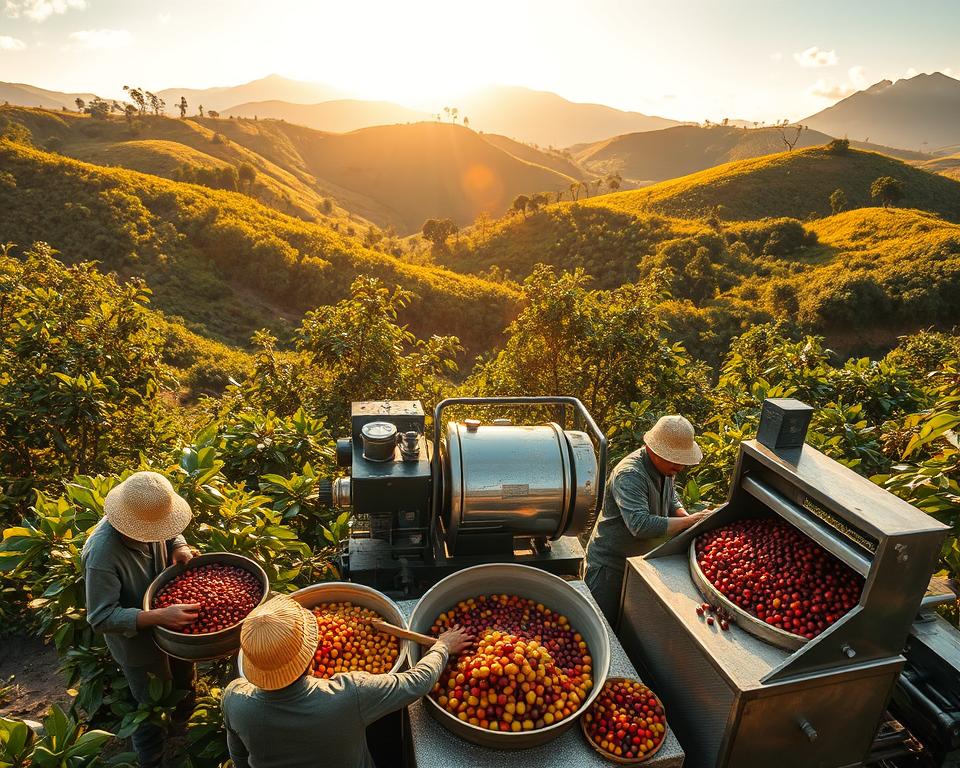
The method used to process coffee greatly affects its taste. For example, washed Guatemalan coffee often has citrus and floral notes. On the other hand, natural processing gives fruity and wine-like flavors. Colombian coffee, known for its balanced taste, also uses various methods, but washed is most common.
Ethiopian coffee, the birthplace of coffee, uses traditional methods. These methods create unique flavors. Ethiopian coffees are known for their bright acidity and fruity tastes, thanks to their processing.
In summary, the best coffee beans from Guatemala, Colombia, and Ethiopia are special because of their beans and processing. Knowing about these differences helps coffee lovers explore the wide world of coffee.
How to Identify Quality Beans from Each Origin
Finding quality coffee beans is an art that needs knowing the special traits of beans from different places. Coffee lovers know that top-notch beans are key to a great cup. To spot quality beans, look at the bean type, how they’re processed, and their taste.
Coffee from Guatemala, Colombia, and Ethiopia each has its own special taste. Guatemalan beans taste balanced, with chocolate and caramel notes. Colombian beans are known for their rich taste with fruit hints. Ethiopian beans stand out for their bright acidity and fruity flavors.
When checking out coffee beans, think about these points:
- Bean variety: Arabica beans are usually better than Robusta.
- Processing method: Washed, natural, and honey methods each add unique tastes.
- Taste profile: Specialty coffee is famous for its unique and detailed flavors.
| Coffee Origin | Typical Flavor Profile | Processing Method |
|---|---|---|
| Guatemala | Balanced, chocolate, caramel | Washed, honey |
| Colombia | Rich, balanced, fruit | Washed |
| Ethiopia | Bright acidity, fruity | Natural, washed |
By knowing these traits, coffee fans can find the best beans from each place. Whether you’re making Guatemalan, Colombian, or Ethiopian coffee, knowing what to look for will make your coffee better.
Step-by-Step Brewing Guide for Origin Coffees
Getting the perfect cup of coffee from any origin starts with the right brewing method. Whether you’re a coffee expert or just starting out, knowing how to brew coffee from different origins can make your coffee experience better.
Guatemalan coffee is known for its balanced acidity and rich flavor. It’s best brewed using a pour-over or French press. Start with fresh, cold water and a medium-coarse grind. The water should be between 195°F and 205°F.
Here’s a step-by-step guide for brewing Guatemalan coffee using a pour-over method:
- Measure out 1 tablespoon of coffee for every 6 ounces of water.
- Rinse the filter with hot water to remove any paper taste and preheat the pour-over.
- Add the ground coffee to the filter and gently shake to level the grounds.
- Pour a small amount of hot water over the grounds to saturate them, then wait for 45 seconds.
- Continue pouring the rest of the water in a circular motion, making sure to saturate all the grounds evenly.
Colombian coffee has a richer, caramel-like flavor. It’s best brewed using a drip method to bring out its full-bodied taste. Ethiopian coffee, with its fruity and floral notes, is best brewed in a Chemex to highlight its delicate flavors.
For a perfect cup, use high-quality, freshly roasted beans. Adjust the brewing parameters to match the coffee’s specific characteristics.
Try different brewing techniques and coffee-to-water ratios to find the perfect flavor balance for your favorite origin coffees.
Roast Levels and Their Impact on Origin Characteristics
Knowing how roast levels change coffee flavor is key to enjoying Guatemalan coffee. The roast level can greatly change the taste, showing off the coffee’s unique qualities.
Guatemalan coffee is famous for its balanced acidity and rich taste. It can be roasted in many ways, each highlighting different flavors. Lighter roasts keep the coffee’s natural acidity and fruit notes. Darker roasts reveal deeper, richer tastes with hints of chocolate and spices.
The roast level greatly affects the coffee taste. For Guatemalan coffee, a medium roast often offers a balanced taste. It shows the coffee’s natural qualities without being too strong. Trying different roast levels can help find the perfect taste.
In summary, the roast level is very important for Guatemalan coffee’s flavor. Understanding how roast levels change flavors helps coffee lovers make better choices.
Creating the Perfect Coffee Tasting Experience
Creating a perfect coffee tasting experience is an art. It needs attention to detail and a love for specialty coffee. To truly enjoy Guatemalan coffee, setting up a well-structured tasting session is key.
Begin by picking a variety of coffees from different places, including Guatemalan coffee. This lets you compare their unique flavors. Make sure the coffees are freshly roasted and of high quality.
When tasting, choose a neutral place that doesn’t distract from the coffee’s flavors. Use the same cups and brewing methods for each coffee. This ensures a fair comparison.
Notice the coffee’s aroma, acidity, body, and flavor notes. Take notes during the tasting. This helps you understand each coffee’s characteristics, including Guatemalan coffee’s distinct notes.
By following these steps, you can have a meaningful coffee tasting experience. It will highlight the unique qualities of specialty coffees from various origins, including Guatemalan coffee.
Pairing Food with Different Origin Coffees
Knowing the flavors of coffees from different places helps in finding the best food pairings. Guatemalan coffee, for example, has a balanced taste and rich chocolate flavors. It goes well with both sweet and savory foods.
A Guatemalan coffee with caramel and chocolate notes is great with tres leches cake. The coffee’s sweetness matches the cake’s richness, making for a wonderful taste experience.
Colombian coffee, on the other hand, has bright acidity and fruity flavors. It’s perfect with light dishes like salads or fruit desserts. Ethiopian coffee, with its floral and citrus notes, is best with spicy or aromatic foods. It makes the flavors even better.
When matching coffee with food, think about the coffee’s origin, roast, and how it’s brewed. Trying different pairings can lead to new tastes and make your cooking adventures more exciting.
Sustainability and Ethical Considerations in Coffee Production
Guatemalan coffee is known for its quality, but also for its focus on sustainability and ethics. As the coffee industry grows, using environmentally friendly practices is more important than ever.
Sustainable coffee production includes several key practices. These are:
- Shade-grown coffee, which helps preserve biodiversity
- Organic farming methods, reducing the use of chemical pesticides and fertilizers
- Water conservation techniques, essential for coffee processing
Guatemala has made big strides in sustainable coffee production. Many farms use environmentally friendly practices. Some have even gotten certifications like “Rainforest Alliance.”
When we compare Guatemala to Colombia and Ethiopia, we see different levels of sustainability. Colombia has also made big progress in sustainable coffee. But Ethiopia faces challenges due to limited resources.
In conclusion, sustainability and ethics are key in coffee production. By supporting sustainable practices, we can help make the coffee industry more environmentally friendly.
Conclusion: Choosing Your Perfect Origin Coffee
When we look at Guatemalan, Colombian, and Ethiopian coffees, we see big differences. Guatemalan coffee has a balanced acidity and rich taste. Colombian coffee is known for its smooth, balanced flavor. Ethiopian coffee stands out for its fruity and floral notes.
Each origin offers a unique coffee experience. You might love the chocolatey notes of Guatemalan coffee. Or maybe you prefer the caramel-like sweetness of Colombian coffee. Ethiopian coffee’s bright, fruity flavors are also a hit.
Choosing between Guatemalan, Colombian, and Ethiopian coffee is all about personal taste. Knowing what each origin offers helps coffee lovers find their favorite. Whether you’re a coffee expert or new to specialty coffee, there’s something for everyone in Guatemala, Colombia, and Ethiopia.