
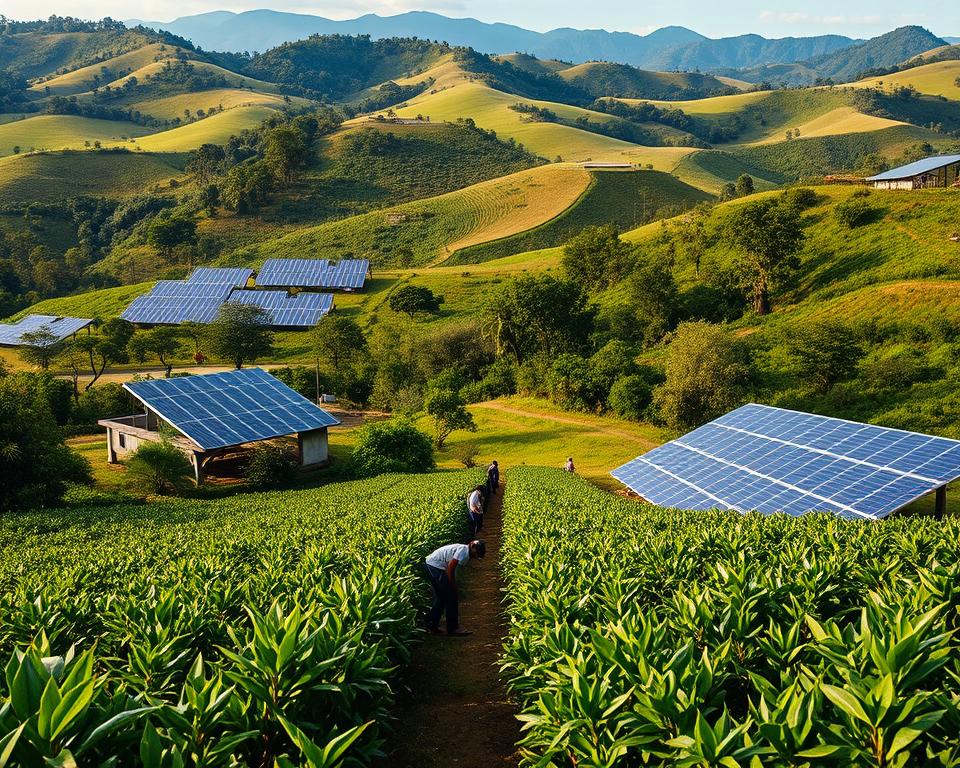
Guatemalan coffee producers are now using sustainable farming practices by adding solar energy to their farms. This change is making the coffee industry greener.
Using solar energy cuts down the carbon footprint of coffee making. It also gives farms a steady energy source. This helps producers save money and make their farming more sustainable.
This step towards solar energy is a big positive for the coffee world. It’s helping to create a greener future for coffee farming.
The Energy Challenge in Guatemalan Coffee Production
The Guatemalan coffee industry faces big energy challenges. These challenges affect both production costs and the environment.
Most coffee farms in Guatemala use non-renewable energy. This choice harms the environment and makes energy prices unpredictable.
The Guatemala Energy Situation report shows the country’s energy mainly comes from fossil fuels. This makes it hard for coffee producers to switch to renewable energy.
Energy challenges in Guatemalan coffee production are complex. High energy costs can cut into coffee producers’ profits.
Also, using non-renewable energy increases greenhouse gas emissions. This worsens climate change, which harms coffee yields and quality.
| Energy Source | Current Usage | Potential for Renewable Energy |
|---|---|---|
| Fossil Fuels | High | Limited |
| Solar Energy | Low | High |
| Other Renewables | Moderate | Moderate |
By choosing eco-friendly coffee production, Guatemalan producers can lessen their environmental impact. They can also make their businesses more stable.
Why Solar Energy is Ideal for Coffee Farms in Guatemala
Guatemala’s rich sunlight makes it perfect for solar-powered coffee farming. The country’s location near the equator means coffee farms get plenty of sun all year. This steady sunlight makes solar energy a great choice for powering coffee farms.
Solar energy helps reduce the harm coffee farming does to the environment. Using fossil fuels leads to pollution and greenhouse gases, which can hurt coffee crops. Solar energy lets farms lower their carbon footprint and help the planet.
Also, solar energy gives coffee farms a chance to be energy independent. By making their own power, farms don’t rely on expensive and unreliable outside sources. This can save money and make farming more efficient.
To sum up, Guatemala’s sun, energy independence, and environmental benefits make solar energy ideal for coffee farms. As the coffee industry grows, using solar energy is key to a green and sustainable coffee-making process.
Assessing Your Farm’s Solar Energy Potential
Starting to use solar energy on your coffee farm begins with knowing your land’s solar potential. You need to look at several important factors. These will tell you if your farm is good for solar power.
To figure out your farm’s solar energy potential, think about these:
- Sunlight exposure: Make sure your farm gets enough sunlight all year.
- Land availability: Find spots on your farm for solar panels without hurting coffee growth.
- Existing energy usage: Check how much energy you use now. This helps decide how big your solar system should be.
By looking at these points, you can see if solar energy is right for your farm. It could help your coffee grow greener and cut down on fossil fuels.
Essential Components of Solar Energy Systems for Coffee Farms
Switching to solar energy for coffee farms is a big step. It’s a move towards making coffee production more eco-friendly. This change involves several key parts.
The main parts of a solar energy system are:
- Solar Panels: These panels turn sunlight into electricity.
- Inverters: They change the DC power from the panels into AC power for the farm.
- Mounting Structures: These racks hold the panels at the right angle for sunlight.
- Energy Storage Solutions: These, like batteries, save extra energy for when it’s needed.
Let’s look at how these parts work together in a solar energy system for coffee farms:
| Component | Function | Importance |
|---|---|---|
| Solar Panels | Convert sunlight into electricity | High |
| Inverters | Convert DC to AC power | High |
| Mounting Structures | Hold panels in place | Medium |
| Energy Storage | Store excess energy | High |
By knowing and using these key parts, coffee farms can switch to renewable energy. This helps make coffee production more eco-friendly.
Step-by-Step Implementation of Solar Energy Coffee Farms
To add solar energy to coffee farms, a clear plan is key. You need to check your farm’s solar potential, design a solar system, and put it in place.
Start by checking your farm’s solar energy potential. Look at how much sunlight it gets and what energy your coffee needs. This helps design a solar system that fits your needs.
When setting up solar systems, you might face some issues. Problems like where to put panels, if the inverter works, and how to monitor the system can happen. For example, a study on solar coffee roasters shows the need to place panels right for best energy.
| Installation Issue | Solution |
|---|---|
| Panel Placement | Optimize panel angle and orientation for maximum sunlight exposure |
| Inverter Compatibility | Ensure the inverter is compatible with the solar panel system |
| System Monitoring | Implement a monitoring system to track energy production and detect issues |
By following these steps and solving common problems, coffee farmers can use solar energy well. This makes their farms more sustainable and less dependent on fossil fuels.
Powering Coffee Processing with Solar Energy
Solar energy is changing how coffee is made, making it cleaner and cheaper. Coffee making involves steps like drying, hulling, and roasting that use a lot of energy. Solar power lets coffee makers use less fossil fuel and save money.
Drying is a big part of coffee making where solar energy shines. Solar dryers dry coffee beans, cutting down on energy use. This keeps the coffee quality high.
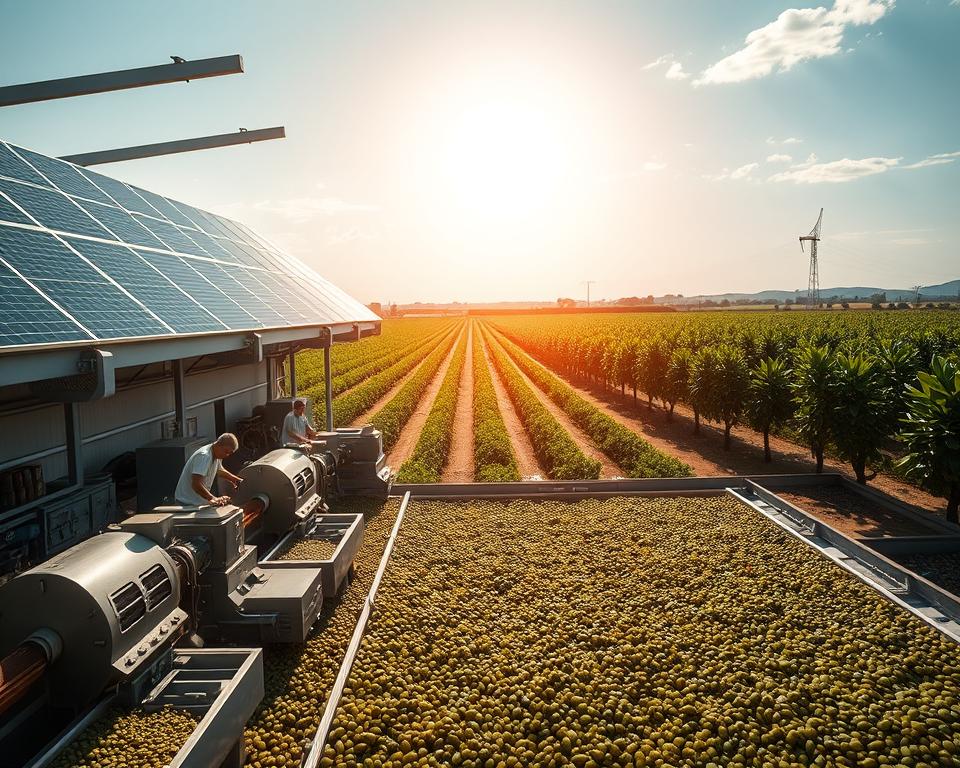
Using solar energy in coffee making has many benefits. Here are some of the main ones:
| Benefit | Description |
|---|---|
| Reduced Energy Costs | Lower operational costs due to reduced reliance on fossil fuels |
| Environmental Impact | Significant reduction in greenhouse gas emissions |
| Improved Coffee Quality | Better preservation of coffee beans during the drying process |
Switching to solar energy for coffee making helps the environment and improves coffee quality. This move towards green energy is key for sustainable coffee farming.
Irrigation and Farm Management Systems Using Solar Power
Solar energy is making a big difference in coffee farming in Guatemala. It helps manage water better, cuts down on energy costs, and boosts efficiency.
Solar-powered irrigation lets farmers control water use better. This means crops get the right amount of water at the right time. It also saves water and boosts crop yields.
Solar energy also powers farm management systems. This includes systems for fertilizers, pest control, and more. Using solar energy makes farming more sustainable.
Using solar power in irrigation and management is key to eco-friendly coffee farming. Guatemalan farms can lessen their environmental impact. This helps make the coffee industry more sustainable.
Financing Your Solar Transition
Coffee farmers in Guatemala can use different ways to get solar energy. This makes switching to renewable energy easier and more affordable.
There are many financing options for farmers who want to go green. These include:
- Loans from agricultural banks that offer good terms for renewable energy projects
- Grants from government programs and international organizations that support sustainable agriculture
- Incentives like tax credits and subsidies for solar energy systems
By looking into these options, coffee farmers can lower the upfront costs of solar energy. This helps them adopt green practices without hurting their finances.
Overcoming Common Challenges in Solar Adoption
Solar energy is great for coffee farming, but farmers face big challenges. The cost of solar panels and setup is high for small farmers.
The main issue is the high cost of solar systems. To solve this, farmers can look into loans and grants for green energy. Governments also offer help, making it easier to start.
Another problem is the technical side. Farmers can get help from solar experts. Regular checks can also prevent problems with the systems.
Knowing these challenges and finding ways to solve them helps farmers. They can switch to solar, cutting down on environmental harm and boosting sustainability.
Real Success Stories: Guatemalan Farms Transformed by Solar Energy
Many Guatemalan coffee farms have switched to solar energy. This change has cut their costs and made them more eco-friendly.
Finca El Injerto is a leading example. They installed solar energy to power their coffee processing. This move greatly reduced their use of fossil fuels.
Using solar energy has helped farms like Finca El Injerto. They’ve seen many benefits:
- Lower energy costs thanks to solar power
- More efficient coffee processing with solar equipment
- Less harm to the environment by reducing carbon footprint
- Better reputation for being eco-friendly
Other farms in Guatemala are also using solar energy. Their success shows solar energy’s power to make coffee production greener.
By choosing solar energy, these farms save money and help the planet. As the coffee industry grows, more farms will likely go green. This will lessen coffee’s environmental impact.
Environmental and Economic Benefits of Solar-Powered Coffee Production
Coffee farmers can cut down their environmental impact and boost their profits by using solar energy. This move towards renewable energy is key for sustainable farming.
Switching to solar energy brings many environmental perks. It cuts down on fossil fuel use, lowering greenhouse gas emissions and helping fight climate change. It also helps save water and makes irrigation systems more efficient.
From a financial standpoint, solar energy is a big win for farmers. It lowers their energy costs and shields them from price swings. Plus, it can make their coffee beans more valuable and of higher quality.
| Benefits | Environmental Impact | Economic Impact |
|---|---|---|
| Reduced reliance on fossil fuels | Decreased greenhouse gas emissions | Lower energy costs |
| Efficient irrigation systems | Reduced water waste | Increased profitability |
| Enhanced coffee quality | Sustainable farming practices | Higher coffee bean value |
In summary, using solar energy in coffee production is a smart choice for the planet and the wallet. As the coffee world grows, renewable energy will be more important than ever.
Conclusion: The Future of Solar Energy in Guatemala’s Coffee Industry
Guatemala’s coffee industry is set for a big change with solar energy. Solar power can help coffee farms use less diesel and cut down on pollution. This makes coffee production more eco-friendly.
Using solar energy on farms can also save money and improve coffee quality. As more farms switch to solar, the whole industry will benefit. This includes better environmental and economic outcomes.
The outlook for solar energy in Guatemala’s coffee industry is bright. More farms are likely to use solar, leading to new ideas and growth. Solar energy will become a key part of Guatemala’s coffee future, helping farms thrive.