
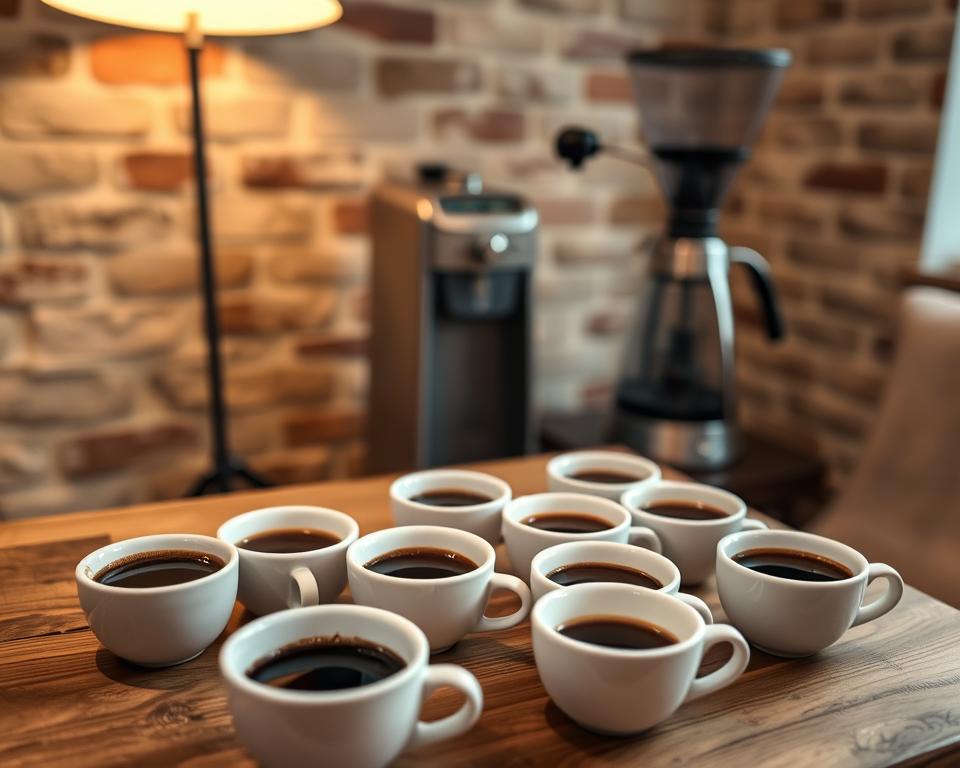
Coffee cupping is a sensory experience that lets coffee lovers evaluate coffee quality. It’s especially interesting for those who love Guatemala Coffee. Cupping helps discover the unique flavors and nuances of this coffee region.
You can do professional coffee tastings at home with a simple process. First, prepare your coffee samples. Then, observe their fragrance and evaluate their flavor profiles. For a detailed guide, check out a step-by-step guide on coffee cupping. It offers detailed instructions for a successful cupping session.
The Fundamentals of Coffee Cupping and The Unique Characteristics of Guatemalan Coffee
Coffee cupping is key to enjoying Guatemalan coffee’s unique tastes. It’s a way to taste and judge coffee’s flavor, aroma, and quality. This process looks at the coffee’s acidity, body, and flavor notes.
Guatemalan coffee stands out because of its varied flavors. This is thanks to the country’s different regions. Each area, like Antigua, Huehuetenango, and Atitlán, has its own special taste. For more on Guatemalan coffee, check out this guide.
Antigua, Huehuetenango, and Atitlán Flavor Profiles
Antigua coffee is known for its balanced taste, with chocolate and spice notes. It also has a bright acidity. Huehuetenango coffee is robust, with fruit and floral flavors.
Atitlán coffee, from around Lake Atitlán, has a complex taste. It mixes fruit, wine, and floral notes.

Cobán, Nuevo Oriente, and Other Regions, Altitude, Soil, and Climate Effects on Guatemalan Coffee Flavors
Cobán coffee is known for its balanced acidity and rich taste. It has hints of spice and fruit. Nuevo Oriente coffee is less known but offers unique flavors, from fruit to nuts.
The altitude, soil, and climate of these regions greatly affect Guatemalan coffee’s taste. Coffee grown at high altitudes matures slower, leading to more complex flavors.
| Region | Flavor Profile | Altitude Effect |
|---|---|---|
| Antigua | Balanced, chocolate, spice | Moderate altitude |
| Huehuetenango | Robust, fruit, floral | High altitude |
| Atitlán | Complex, fruit, wine, floral | Volcanic soil influence |
| Cobán | Balanced, spice, fruit | Varied altitude |
| Nuevo Oriente | Fruit, nuts | Lower to moderate altitude |
Knowing these regional differences helps coffee lovers enjoy Guatemalan coffee’s unique tastes. DIY coffee cupping is a great way to explore these flavors.
Essential Equipment for Home Coffee Cupping, Setting Up Your Home Coffee Cupping Environment, Selecting and Preparing Guatemalan Coffee Samples, The Step-by-Step Home Coffee Cupping Process, Developing Your Sensory Skills for Home Coffee Cupping, Evaluating Coffee Like a Professional Cupper, Common Challenges in Home Coffee Cupping and How to Overcome Them, Hosting a Guatemalan Coffee Cupping Event for Friends and Family, Conclusion: Elevating Your Coffee Experience Through Home Coffee Cupping
To improve your coffee taste, you need a home coffee cupping kit. First, get the basics like cupping bowls, spoons, and scales. Don’t forget grinders and tools for clean water, as they help you taste coffee’s true flavors.
Creating the Ideal Cupping Environment
For the best taste, control the light, temperature, and air. Pick a quiet, airy spot for your cupping sessions.
Selecting Guatemalan Coffee for Cupping
Guatemalan coffee is perfect for tasting because it has many flavors. Try single-origin or blends to see how different they taste. Make sure to grind and prepare your coffee right for the best taste.
To enjoy home coffee cupping, use a kit, try different Guatemalan coffees, and keep track of what you taste. With practice, you’ll get better at tasting coffee like a pro. The best coffee for tasting at home has unique flavors and a good acidity.