
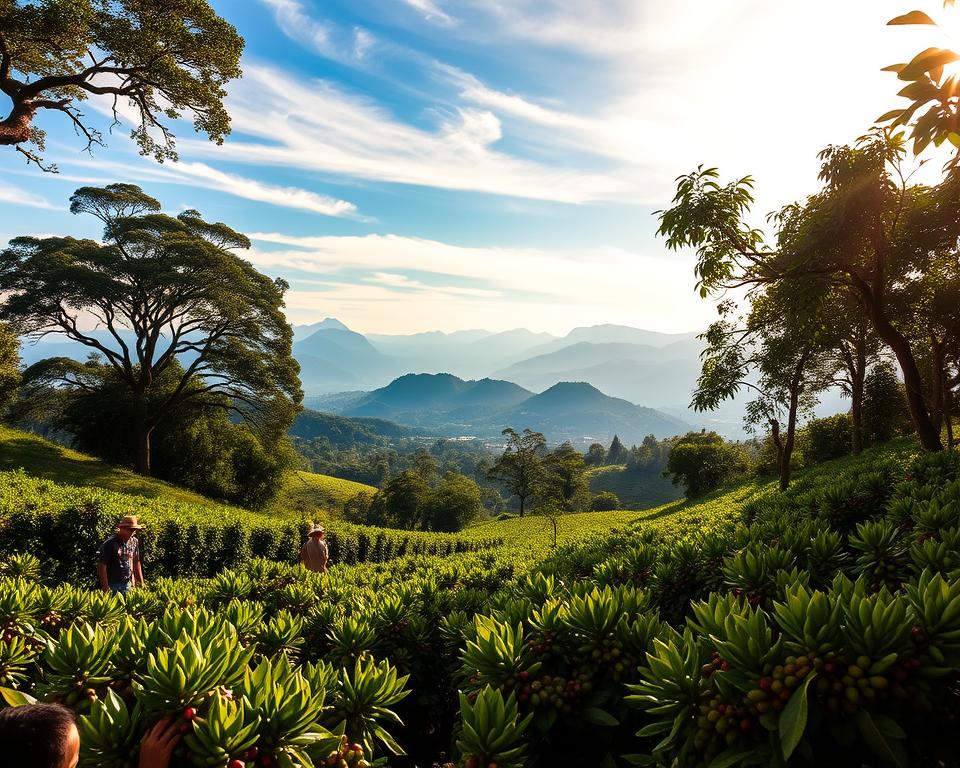
Guatemalan coffee is loved for its rich taste and quality. It’s a top choice for coffee lovers everywhere. The country’s volcanic soil and varied climates make it perfect for growing coffee.
More Guatemalan coffee farmers are using regenerative agriculture. This method boosts soil health, biodiversity, and ecosystem services. It makes farming more sustainable.
By using regenerative agriculture, farmers can make their farms stronger. They also reduce harm to the environment. This helps make the coffee industry more sustainable.
The Current State of Guatemalan Coffee Production
Climate change is hitting Guatemalan coffee hard. Rising temperatures and changing rain patterns are making it tough for coffee plants to grow. This leads to less coffee and lower quality.
Coffee farmers in Guatemala are struggling. Their old ways of growing coffee don’t work anymore because of the climate. They need new, sustainable methods to keep their crops going.
Organic coffee production is key to making Guatemalan coffee more sustainable. It focuses on keeping the soil healthy, supporting biodiversity, and using water wisely. This helps coffee plants survive climate change better.
It’s vital for Guatemalan coffee to adapt to climate change. This means using new farming methods and making sure the whole coffee-making process is green and sustainable.
Understanding Regenerative Agriculture in Coffee Farming
Regenerative agriculture is changing coffee farming in Guatemala for the better. It aims to make farming more sustainable. This method works on improving soil health, boosting biodiversity, and enhancing ecosystem services.
Key practices in Guatemalan coffee farming include using cover crops. These crops protect and enrich the soil. Farmers also add organic amendments to improve soil fertility. And, they use conservation tillage to lessen soil erosion.
By using regenerative agriculture, Guatemalan coffee farmers make their operations more environmentally friendly. This method not only improves soil health and biodiversity. It also helps fight climate change by storing carbon.
Regenerative agriculture also makes coffee farms more resilient to climate change. It helps farmers adapt to changing weather and reduces the chance of crop failure.
In summary, regenerative agriculture is a hopeful path for sustainable coffee production in Guatemala. It benefits both the environment and coffee farmers.
Why Regenerative Agriculture Guatemalan Coffee Matters
Guatemalan coffee is on the verge of a big change thanks to regenerative agriculture. This method makes farming more sustainable and helps farmers and their communities. It makes the coffee industry fairer and greener.
Regenerative agriculture is key for fair trade coffee in Guatemala. It makes sure coffee is made in a way that’s good for the planet and fair for farmers. This way, coffee is made with care for the environment and people.
Regenerative agriculture has many benefits for Guatemalan coffee. It improves soil health, saves water, and boosts biodiversity. These efforts lead to better crops and quality coffee, helping both local people and the world market.
This method also supports fair trade and ethical coffee. Guatemalan farmers can sell their coffee for more by focusing on sustainability and fairness. This boosts their income and helps make coffee production better for the planet.
To wrap it up, regenerative agriculture is vital for Guatemalan coffee. It ensures fair trade, promotes ethical sourcing, and improves coffee quality and sustainability. It’s a big step towards a better coffee industry for everyone.
How to Assess Your Coffee Farm for Regenerative Potential
Understanding your coffee farm’s potential for regrowth is crucial. Regenerative farming aims to improve the health of your farm’s ecosystem. This includes the soil, water, and biodiversity. Start by thoroughly checking your farm’s current state.
Soil testing is a key first step.
Simple Soil Testing Methods
Use a soil probe or shovel to collect samples. Then, test these samples for pH levels, nutrient content, and structure. This will show you where you need to make changes.
Don’t forget about biodiversity.
Biodiversity Assessment Techniques
Look at the variety of plants and animals on your farm. Check the health of your shade trees and water sources. Shade-grown coffee, for instance, thrives in a diverse environment.
By examining these areas, farmers can find ways to make their farms more sustainable. This will boost their farm’s ability to regenerate.
Building Healthy Soil: The Foundation of Regenerative Coffee
Healthy soil is key for regenerative coffee farming in Guatemala. It helps farmers grow top-quality, climate-friendly coffee. Soil health is vital for the farm’s success, affecting biodiversity, water, and carbon.
To make soil healthy, Guatemalan coffee farmers can try a few things. These include:
- Using organic amendments like compost or manure to boost soil fertility
- Practicing conservation tillage or no-till to lower soil erosion
- Planting cover crops to better soil structure and biodiversity
- Trying crop rotation and intercropping to improve soil health and fight pests and diseases
Improving soil health helps the environment and makes farms more resilient to climate change. By focusing on soil, farmers can grow better coffee, increase yields, and support a sustainable coffee industry.
Some signs of healthy soil are:
- Good soil structure for better water and air
- High organic matter for soil life and fertility
- Diverse soil microorganisms for decomposing and fighting diseases
By focusing on soil health, Guatemalan coffee farmers move towards regenerative agriculture. This improves their coffee and helps the environment.
How to Implement Water Conservation Practices
Effective water management is key for healthy coffee crops. It ensures the long-term success of coffee farms in Guatemala. Water conservation practices reduce environmental impact and lower costs.
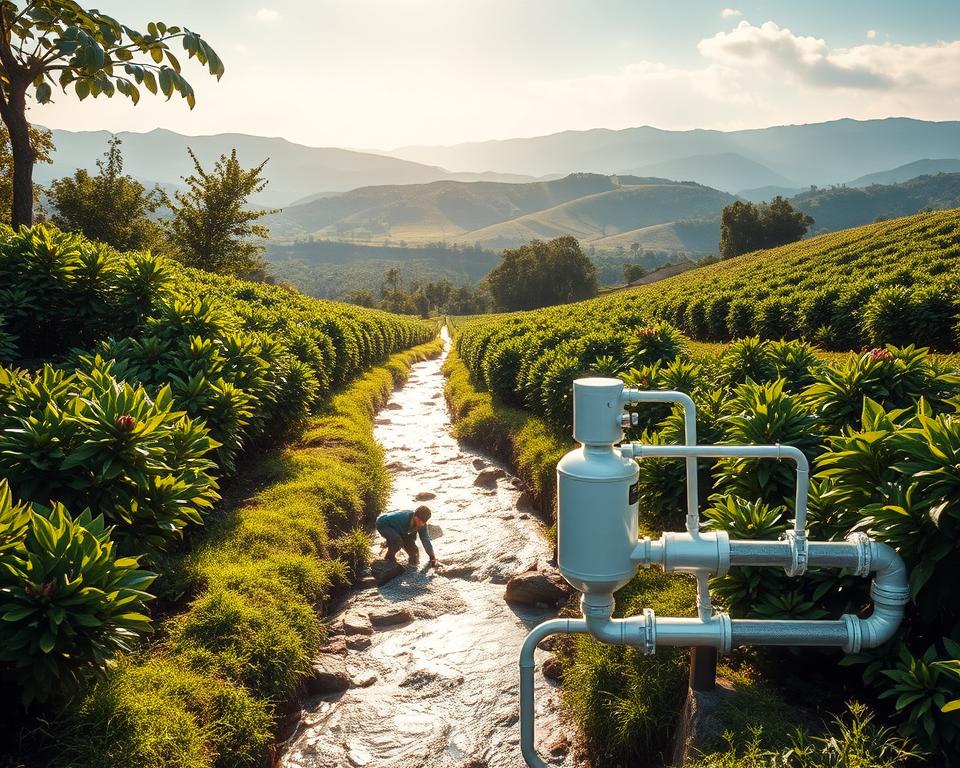
Using efficient irrigation systems is a main way to save water. These systems send water straight to the roots, cutting down on evaporation and runoff.
Materials and Construction Guide
Farmers need durable materials for their irrigation systems. This includes pipes, drippers, and controllers made for farming.
Maintenance Requirements
Regular maintenance is vital for the system’s long life and effectiveness. Farmers should check for leaks, clean filters, and inspect drippers for clogs or damage.
Guatemalan coffee farmers can make their coffee more sustainable by saving water. This boosts their direct trade coffee Guatemala offerings with eco-friendly practices.
Creating Biodiversity for Climate-Resilient Coffee Ecosystems
Regenerative agriculture is key for Guatemalan coffee’s future. It boosts biodiversity, making farms more resilient to climate change. By adding different plants, farmers can make their farms stronger against weather shifts.
Shade trees are a big part of this. They give coffee plants shade and help the soil. They also support local animals and increase farm biodiversity.
Other plants like native flowers and herbs also help. They draw in pollinators, improve soil, and balance the ecosystem. This makes the farm healthier and more diverse.
Practices like crop rotation and organic amendments are also important. They keep the farm healthy and diverse. Guatemalan farmers use these to make their farms more resilient to climate change.
Creating biodiversity in coffee farms is complex. It involves many plants and sustainable farming. Guatemalan farmers use these methods to keep their coffee sustainable and protect the environment.
Sustainable Farming Practices: Pruning and Harvesting
Pruning and harvesting are key to sustainable farming in Guatemalan coffee. Pruning keeps plants healthy and productive. Harvesting at the right time brings out the best flavor and quality.
Pruning removes sick, broken, or dead branches. This encourages healthy growth and boosts yields. The right pruning time is after the harvest season. Research shows it greatly improves coffee quality and quantity.
Timing and Tools
The best pruning time is right after harvesting. This lets plants grow new during the rainy season. Farmers use special tools like pruning shears and loppers for clean cuts.
Plant Health Indicators
Farmers watch for signs of plant health like leaf color and fruit load. Healthy plants grow better and fight off diseases without chemicals. This supports fair trade coffee Guatemala.
Environmentally Friendly Coffee Processing Methods
Guatemalan coffee makers are now using eco-friendly ways to make coffee. These methods help reduce harm to the environment. They save water, cut down on waste, and make farming more sustainable.
One important method is using sustainable practices to use less water. For example, the ‘pulped natural’ method saves water by not washing the coffee cherry completely. Shade-grown coffee beans also benefit from this, keeping their quality high and reducing harm to the environment.
They also use solar dryers to dry coffee beans. This cuts down on fossil fuel use and lowers carbon emissions. Plus, recycling coffee cherry husks and other organic waste turns it into valuable compost. This improves soil health and fertility.
By choosing these eco-friendly methods, Guatemalan coffee makers can lessen their environmental impact. They also make their coffee better. This move towards sustainability is key for coffee farming in Guatemala to thrive for years to come.
Ethical Sourcing: Marketing and Selling Regenerative Guatemalan Coffee
The marketing and sale of regenerative Guatemalan coffee rely on ethical sourcing. This practice benefits both consumers and producers. It ensures coffee farmers get fair prices for their high-quality, regeneratively produced coffee.
Direct trade is key to ethical sourcing. It removes middlemen, allowing coffee roasters to connect directly with farmers. This approach ensures fairness and transparency in transactions. It also helps farmers financially and builds a deeper connection between producers and consumers.
Today, consumers want coffee that’s not just good but also made responsibly. Regenerative Guatemalan coffee, with its focus on ethical sourcing, can sell for more. This is because of its unique production methods and the good it does for local ecosystems.
To market regeneratively produced Guatemalan coffee well, we must focus on its benefits. We should talk about direct trade, the environmental gains of regenerative farming, and the social good it brings to coffee communities.
By stressing ethical sourcing and direct trade, the Guatemalan coffee industry can stand out. It will attract consumers who are ready to pay more for coffee that matches their values.
Case Studies: Successful Shade-Grown Coffee Farms in Guatemala
Shade-grown coffee farms in Guatemala show how quality and sustainability can go hand in hand. These farms help protect the environment and improve the lives of local farmers.
In the Alta Verapaz region, a coffee farm stands out. It uses regenerative agriculture, keeping native trees to boost biodiversity and prevent soil erosion. This method has also made their coffee better.
These farms offer many advantages. They have healthier soil, use water wisely, and support more life. Plus, they can store more carbon than regular farms, helping fight climate change.
Farmers use different strategies to get these benefits. For example:
- They plant native trees with coffee plants
- They use organic fertilizers and pest control
- They install efficient irrigation systems
These examples prove that shade-grown coffee is a sustainable choice for Guatemala’s coffee industry.
Conclusion: The Future of Regenerative Coffee in Guatemala
Regenerative agriculture is changing how coffee is grown in Guatemala. It promotes farming that’s good for the planet and the soil. This method helps farmers grow crops that can handle changing weather.
The outlook for regenerative coffee in Guatemala is bright. It benefits the environment, farmers, and the coffee world. As more people want coffee that’s good for the planet, Guatemalan farmers are ready to meet this demand.
By choosing regenerative coffee, we help make the coffee industry better for everyone. This approach is key to the future of coffee in Guatemala. It ensures coffee will be grown in a way that’s good for the planet and for people.