
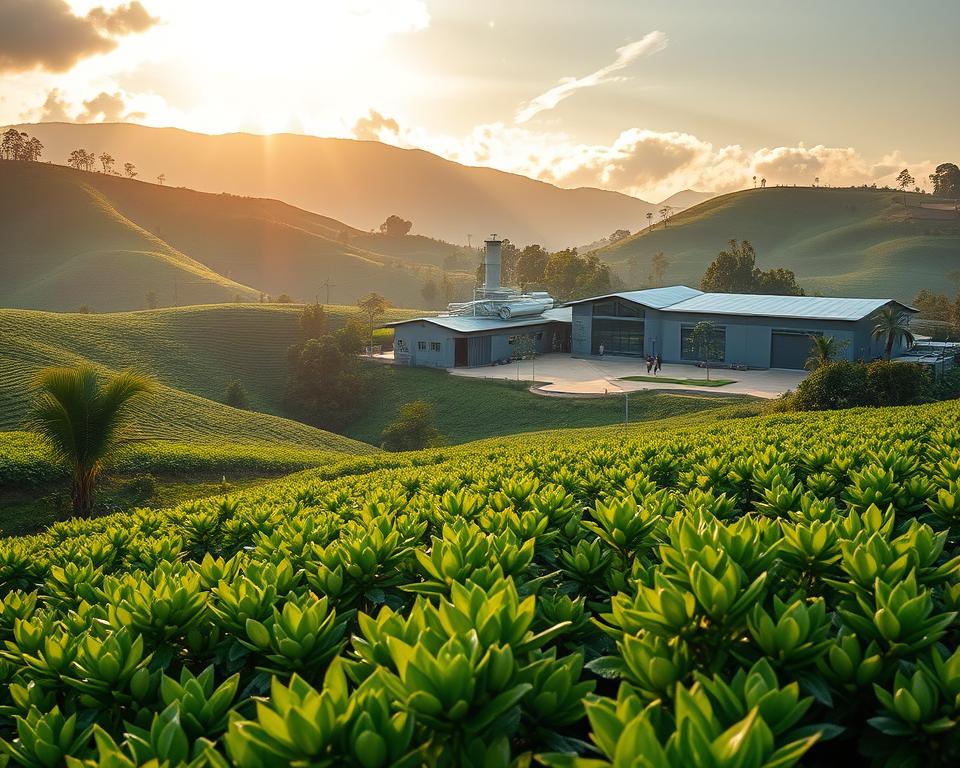
Guatemala’s coffee industry is changing fast. This is thanks to new technologies that make farming better and greener.
These new tools are key for coffee’s future. They help farmers work smarter and kinder to the planet.
Guatemalan coffee farmers are now using advanced tech. This tech boosts their harvests, cuts down on waste, and helps plants grow together. This makes coffee farming more eco-friendly.
Using green farming methods does more than help the earth. It also makes Guatemalan coffee better and more valuable. This helps it stand out in the world market.
The Current State of Coffee Farming in Guatemala
Coffee farming in Guatemala is marked by traditional methods and unique microclimates. It’s a key part of the country’s economy. Many smallholder farmers depend on it for their income.
Altitude and Microclimate Considerations
Guatemala’s varied altitude and microclimates are perfect for coffee. The high altitudes, between 1,500 to 2,000 meters, slow down the coffee’s maturation. This leads to a more complex flavor.
Manual Farming Methods Still in Use
Many Guatemalan coffee farmers stick to manual farming methods. These traditional techniques, passed down through generations, are hard work. But they can produce higher quality coffee.
Climate change is a big threat to coffee farming in Guatemala. It causes temperatures to rise and weather patterns to change. This can lead to lower yields and quality coffee.
Economic Pressures and Market Volatility
Coffee farmers in Guatemala face economic challenges and market ups and downs. These issues make it hard for them to invest in their farms. They struggle to adopt new, precise farming techniques.
| Challenges | Impact on Coffee Farming | Potential Solutions |
|---|---|---|
| Manual Farming Methods | Labor-intensive, potential for human error | Adoption of precision agriculture techniques |
| Climate Change | Reduced yields, lower quality coffee | Implementation of climate-resilient farming practices |
| Economic Pressures | Limited investment in farms | Access to financial services, market stabilization |
Why Coffee Farmers Need to Embrace Technological Innovations
For coffee farmers in Guatemala, using technology is not optional. It’s essential. The coffee industry is a big part of Guatemala’s economy. New tools can make farming more productive and improve coffee quality.
Coffee farming in Guatemala has always been hard work. It’s also affected by the weather. But now, with digital tools, farmers can get better at their job.
Production Statistics Before and After Technology Implementation
Technology has made a big difference in coffee farming. For example, precision farming lets farmers watch over their land better. This leads to more coffee and better quality.
| Year | Production (tons) | Yield (kg/ha) |
|---|---|---|
| 2018 | 1000 | 500 |
| 2020 | 1200 | 600 |
The table shows a big jump in production and quality after using new tech.
Meeting International Market Standards
Technology also helps farmers meet global standards. Digital tools help with tracking, quality checks, and following rules. This makes their coffee more competitive worldwide.
This not only boosts their market position. It also opens up new chances for selling more coffee and making more money.
Technological Innovations in Coffee Farming: An Overview
Technology is changing coffee farming, making it more efficient and productive. New farming methods are helping farmers grow better coffee and save on labor costs.
Field-Level Technologies
Tools like drones, satellite imaging, and sensors are being used in the fields. They help farmers check on their crops, spot problems early, and manage water better. For example, drones with special cameras can show farmers where their plants need help.
Processing Technologies
New machines are making coffee processing faster and more consistent. These machines do tasks like pulping, fermenting, and drying. This means better coffee and less work for farmers, saving them money.
Management tools like software and apps are also being used. They help farmers keep track of planting, weather, and stock. These tools are making farming decisions easier and more informed.
Case Study: Technology Transformation in Huehuetenango
In Huehuetenango, Guatemala, farmers are using new tech to improve their farms. They’ve adopted precision farming and automated processing. A report on technology’s impact shows these changes have boosted their yields and coffee quality. This has greatly improved their lives.
How to Implement Precision Agriculture in Coffee Cultivation
Precision agriculture is changing coffee farming by giving farmers data to improve their work. By using precision agriculture, coffee farmers in Guatemala can grow more and better coffee.
The first step is to pick the right sensors for your farm. These sensors check soil moisture, temperature, and more. For example, soil moisture sensors help farmers know when to water, saving water and keeping plants healthy.
Interpreting Soil Data for Decision Making
After collecting data, it’s key to understand it well. Farmers can spot areas needing more care, like bad soil or poor drainage. This info helps plan fertilizers and water, leading to better crops.
Affordable Options for Small Farms
Starting precision agriculture doesn’t have to cost a lot. Small farms can find cheap sensors and free software. For more on technology in coffee, check this link.
Free and Low-Cost Mapping Tools
Mapping tools are vital for precision agriculture. They let farmers see their data and spot trends. There are many free and cheap tools, like GIS software and apps. These help farmers map their land, track changes, and make smart choices.
Smart Water Management Solutions for Coffee Farms
Coffee farms are now using new ways to save water. This is because saving water is very important for coffee farming to keep going. They are using digital tools to manage water better.
Drip Irrigation Implementation Guide
Drip irrigation is a smart way to water plants. It sends water right to the roots, cutting down on waste. To start, farmers need to look at their land and soil. This helps them set up a good irrigation system for their farm.
Collecting rainwater is also a smart move for farms. It helps them use less outside water. They can build reservoirs or use tanks to save rainwater for later.
Using Sensors to Optimize Watering Schedules
Sensors help farmers manage water better by giving them real-time soil moisture data. This lets them water plants just right, when they need it most. Using sensors can make water use more efficient and keep plants healthy.
Optimizing Coffee Harvest with Modern Technology
Guatemalan coffee farmers are on the verge of a tech revolution. Modern tools are changing how they grow coffee. This means they can work better, spend less, and make better coffee.
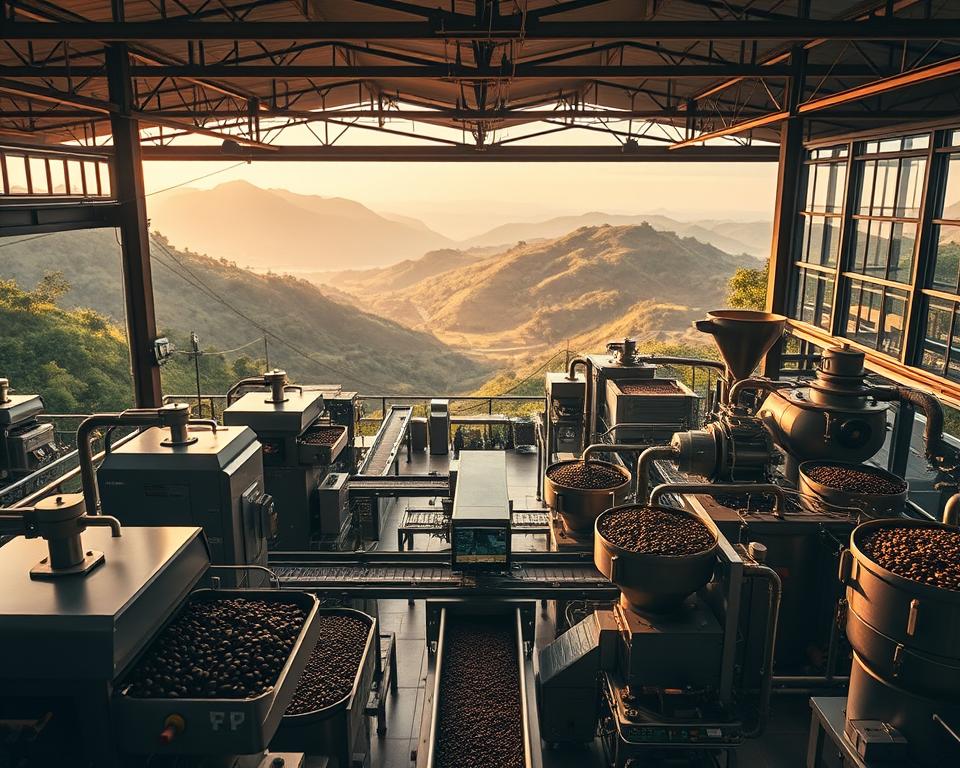
The tough terrain in Guatemala needs special gear. Farmers use portable harvesters and cableways to make picking easier. These tools help them work on steep and uneven lands.
Cost Analysis and ROI Calculations
Bringing in new tech means looking at costs and returns. The first cost is high, but the long-term gains are worth it. Better efficiency and quality coffee lead to big profits.
Handheld Devices vs. Smartphone Applications
Farmers can choose between handheld tools or apps for their crops. Handhelds have unique features, but apps are cheaper and easier to use. It depends on what the farm needs.
Modern Pulping and Drying Equipment
New pulping and drying tech has made Guatemalan coffee better. These machines control temperature and humidity perfectly. This means less waste and better coffee beans.
Guatemalan farmers are using these new technologies to improve their coffee. They’re working smarter, making better coffee. As the coffee world changes, using new tools is key to staying ahead.
Digital Farm Management Solutions for Coffee Growers
Coffee growers are now using digital farm management solutions to make their work easier and more productive. These new methods are changing how coffee is made. They help farmers make better decisions based on data.
Features to Look for in Management Systems
When picking a digital farm management solution, look for a few key things. These include being able to monitor your farm in real-time and keeping records automatically.
Also, look for alerts for pests and diseases. And make sure it can work with other digital tools.
Spanish-Language Options for Guatemalan Farmers
For Guatemalan coffee farmers, it’s important to have digital solutions in Spanish. Many platforms now offer Spanish options. This makes it easier for farmers to use these technologies.
Top 5 Apps for Coffee Production Management
Here are five popular apps for managing coffee production:
| App Name | Features | Language Support |
|---|---|---|
| Coffee Farm Manager | Real-time monitoring, automated record-keeping | English, Spanish |
| FarmLogs | Field mapping, yield analysis | English |
| Cropio | Precision agriculture, farm planning | English, Spanish, Russian |
| Agricircle | Farm management, supply chain management | English |
| Granular | Farm management, financial management | English |
Training Farm Workers on Digital Tools
To get the most out of digital farm management solutions, training is key. Workers need to know how to use the tools and understand the data. This training is crucial for success.
Sustainable Farming Technologies for Coffee Production
Sustainable farming technologies are changing coffee production in Guatemala. They offer a greener future for this important industry. These technologies help farmers use better practices, making their farms more productive and caring for the environment.
Integrated Pest Management Systems
Guatemalan coffee farmers are using Integrated Pest Management (IPM) systems more. These systems combine crop monitoring, biological control, and cultural controls. This way, farmers can fight pests and diseases without relying too much on chemicals.
Biological Control Methods Enhanced by Technology
Technology is making biological control methods better for coffee farming. By introducing beneficial insects or using microorganisms, farmers can control pests more effectively. This is thanks to new technologies that make these methods more precise and efficient.
Compost monitoring systems help farmers improve their composting. They check things like temperature, moisture, and the compost’s nutrient balance. This lets farmers make better choices for their soil.
Precision Application of Organic Inputs
Precision application of organic inputs is key in sustainable coffee farming. Farmers use precision agriculture to apply fertilizers and other organic inputs better. This reduces waste and helps the environment.
Solar Power Options for Processing Facilities
More coffee processing facilities are using solar power. Solar power cuts down on fossil fuel use. This lowers costs and reduces the carbon footprint of coffee processing.
| Sustainable Technology | Benefits | Impact on Coffee Production |
|---|---|---|
| Integrated Pest Management | Reduced chemical use, improved crop health | Increased yields, better quality coffee |
| Biological Control Methods | Targeted pest control, environmental sustainability | Healthier ecosystems, reduced pest resistance |
| Compost Monitoring Systems | Optimized composting, nutrient-rich soil | Improved soil health, increased fertility |
For more information on technology’s impact on coffee, visit this link. It shows how new technologies are changing coffee’s future.
Automation Technologies for Coffee Farming Operations
Automation is changing coffee farming. It makes farming more efficient and productive. Coffee farmers can now do more with less effort.
Aerial Monitoring and Mapping Techniques
Drones with high-resolution cameras are used for monitoring. They check crop health, find pests, and see damage. This helps farmers make quick, smart choices.
Automation in spraying pesticides and fertilizers is precise. It saves resources and protects the environment. This is great for big farms where manual work is hard and expensive.
Sorting and Grading Automation
Automated systems sort and grade coffee beans. They categorize beans by size and quality. This boosts coffee quality and farmer profits.
Financial Planning Templates for Technology Adoption
Buying automation tech is a big investment. Financial plans help farmers understand costs and benefits. They can plan their budgets and choose wisely.
Automation helps coffee farmers work better, save money, and make better coffee. This leads to more profit and a sustainable coffee industry.
Quality Control and Traceability Systems for Premium Coffee
Guatemala’s coffee sector is changing thanks to quality control and traceability systems. These systems help keep coffee quality high. They also give buyers details about where the coffee comes from.
Step-by-Step Setup Guide for Small Producers
Setting up these systems is easy for small producers. They start by finding important steps in their process. This includes checking coffee cherries, watching the fermentation, and looking at dried beans.
Portable Moisture and Density Meters
Portable moisture and density meters are key for producers. They help quickly check coffee quality. This is especially helpful for small producers who need to meet export standards.
Digital cupping score systems make evaluating coffee quality easier. They keep the evaluation process consistent and clear. This is important for both producers and buyers.
QR Codes and Digital Storytelling
QR codes and digital storytelling let producers share their coffee’s story. They talk about the farm, how the coffee is made, and the people involved. This adds value and builds a loyal customer base.
With these systems, Guatemalan coffee producers can stand out in the global market. They ensure their coffee is seen as premium quality.
Overcoming Barriers to Technology Adoption in Guatemala
Guatemala’s coffee farmers face many challenges when adopting new technology. These include limited access to money, lack of technical skills, and poor infrastructure.
Government Programs and Agricultural Loans
Government programs and loans are key to solving these problems. They offer financial help and technical support. This helps farmers use modern farming methods for coffee.
International Development Grants
Grants from international development also help a lot. They fund projects that bring in new tech and training for farmers.
Workshops and online courses in Spanish can help close the knowledge gap. Training that meets Guatemalan farmers’ needs can boost their use of new tools.
Community Models That Work in Rural Guatemala
Successful community models in rural Guatemala show the power of teamwork. These models often involve local cooperatives and farmer groups. They work together to adopt new technologies.
By using these resources and strategies, Guatemalan coffee farmers can beat the barriers to new technology. This will help them be more productive and sustainable.
Conclusion: The Future of Coffee Farming in Guatemala
Guatemala’s coffee industry is set for big growth thanks to new tech in farming. Precision agriculture and digital tools are changing how coffee is made. This shift is making farming more sustainable and efficient.
New tech in coffee farming boosts crop yields and helps farmers make smart choices. It also cuts down on waste and supports green practices. This means Guatemalan coffee farmers can compete better on the world stage.
The outlook for coffee farming in Guatemala is bright. There’s a chance for more crops, better quality, and greener farming. As tech keeps improving, it will likely help the economy and farmers’ lives.
By using new tech, Guatemalan coffee farmers can build a strong, green future. This will also help the country’s economy and protect the environment.