

Guatemalan coffee is known worldwide for its rich taste and quality. As people care more about the planet, they want sustainable coffee beans. This demand is growing fast.
Switching to eco-friendly coffee production is not just a trend. It’s a must. Coffee makers in Guatemala are now using green energy and smart water systems. These steps help them reduce harm to the environment.
This focus on sustainability will change the coffee world. It will make the industry greener and more caring for people and the planet.
The Rich Heritage of Guatemalan Coffee
For generations, Guatemalan coffee farmers have used traditional methods. These methods are now being updated for a greener future. This mix of old and new has created a unique way to grow coffee. It’s both good for the planet and helps farmers financially.
Guatemalan coffee is famous for its special tastes. These come from the country’s unique land and the careful work of its farmers. The use of green coffee farming practices has made Guatemalan coffee even better and more sustainable.
The story of Guatemalan coffee is more than just the coffee. It’s about the people and the land. It’s a tale of tradition, new ideas, and a strong bond with nature.
Understanding Organic Low-Carbon Coffee
The world is facing climate change, and organic low-carbon coffee is a key solution. It combines organic farming with methods that cut down carbon emissions. This makes coffee production more eco-friendly.
Organic farming means growing coffee without harmful chemicals. It helps the soil and supports many different plants and animals. Low-carbon methods aim to lessen the greenhouse gases from growing, processing, and moving coffee.
Organic low-carbon coffee has many good points. Organic farming makes the soil better, saves water, and keeps nature healthy. Low-carbon methods also fight climate change by lowering the carbon footprint of coffee.
Key Features of Organic Low-Carbon Coffee
| Feature | Description | Benefit |
|---|---|---|
| Organic Farming | Growing coffee without synthetic fertilizers or pesticides | Improved soil health and biodiversity |
| Low-Carbon Production | Reducing greenhouse gas emissions during production | Mitigating climate change |
| Sustainable Practices | Conserving water and protecting ecosystems | Enhanced environmental sustainability |
By using both organic and low-carbon methods, coffee makers help the planet. This way, they make the coffee industry greener. It also helps farmers by making their coffee better and more valuable.
In short, organic low-carbon coffee is key to making coffee production less harmful. As people care more about the planet, they’ll want coffee that’s good for the earth. This will push for more green coffee farming and production.
The Environmental Impact of Conventional Coffee Farming
Conventional coffee farming has big environmental problems, especially in places like Guatemala. The old ways of growing coffee lead to deforestation, water pollution, and soil damage. These issues threaten the future of coffee farming.
Deforestation is a big problem because forests are cut down for coffee farms. This loss harms biodiversity and adds to climate change by releasing carbon. In Guatemala, losing forests is especially worrying because of the country’s rich ecosystems.
Water pollution is another big issue with traditional coffee farming. Chemicals and fertilizers can pollute water, harming people and animals. Also, soil gets worn out from too much farming, making it less fertile and more prone to erosion.
To fix these problems, we need to switch to better farming methods. This means using practices that reduce carbon footprint and make eco-friendly coffee. Guatemalan farmers can protect the environment and keep their coffee quality high by doing this.
| Environmental Impact | Conventional Coffee Farming | Sustainable Coffee Farming |
|---|---|---|
| Deforestation | High risk due to land clearing | Low risk through shade-grown practices |
| Water Pollution | High risk due to chemical use | Low risk through organic practices |
| Soil Degradation | High risk due to intensive farming | Low risk through sustainable farming methods |
Benefits of Transitioning to Sustainable Coffee Practices
Switching to sustainable coffee practices brings big wins for the planet, people, and the economy. More and more, people want to buy sustainable coffee beans. This trend is growing fast.
One big plus is less deforestation and loss of wildlife. Sustainable farming helps the soil, saves water, and cuts down on harmful chemicals.
| Benefits | Conventional Coffee Farming | Sustainable Coffee Practices |
|---|---|---|
| Environmental Impact | High deforestation and chemical use | Reduced deforestation, biodiversity conservation |
| Social Responsibility | Limited farmer benefits, poor working conditions | Fair trade practices, improved working conditions |
| Economic Benefits | Fluctuating income for farmers | Stable income, premium prices for sustainable coffee beans |
In Guatemala, farms are moving to organic and low-carbon methods. This change helps the environment and improves farmers’ lives.
By going green, the coffee world can become better for our planet and society. This change meets the growing need for eco-friendly coffee.
Step-by-Step Guide to Implementing Organic Farming Methods
Organic farming is a great choice for Guatemalan coffee farmers. It helps them make their production more eco-friendly. This way, they can also improve soil health, lessen environmental harm, and grow more crops.
To start organic farming, improving soil fertility is key. Farmers can do this by making compost from local materials.
Composting Methods Using Local Materials
Composting is a smart way to make soil better. Farmers can use coffee cherry husks, vegetable scraps, and manure to make compost. This compost is full of nutrients.
- Collect organic waste materials.
- Mix the materials in a compost pit, ensuring a balance of ‘green’ (nitrogen-rich) and ‘brown’ (carbon-rich) materials.
- Regularly turn the compost pile to maintain aeration and speed up decomposition.
Cover cropping is also important in organic farming. It stops soil erosion and makes soil healthier.
Cover Cropping Strategies for Highland Farms
In highland farms, cover crops like legumes can be planted between coffee rows. They protect the soil and add to biodiversity.
- Choose cover crops that are suitable for highland conditions.
- Plant cover crops during the off-season to minimize competition with coffee plants.
- Regularly monitor and maintain the cover crops to ensure they do not become invasive.
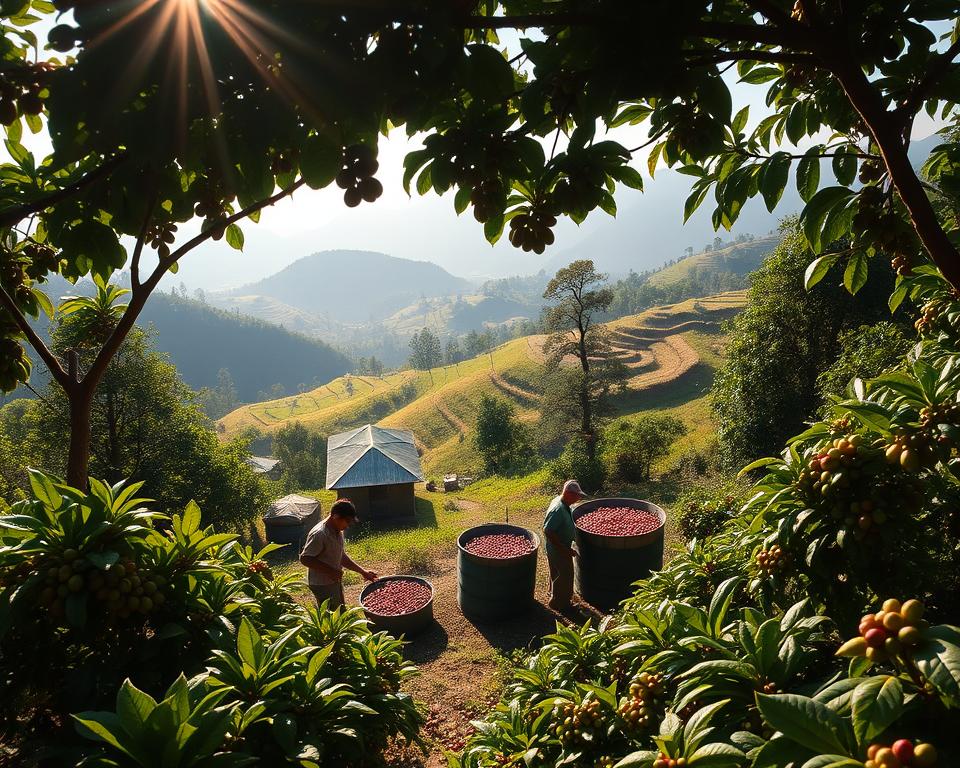
By using these organic farming methods, Guatemalan coffee farmers can greatly reduce their environmental impact. They can also improve the quality and amount of their coffee.
Reducing Carbon Emissions in Coffee Production
To make coffee production sustainable, we need to cut down on carbon emissions. One effective way is through shade management. This involves adding native tree species to coffee farms.
Shade management does more than just lower carbon emissions. It also boosts biodiversity. By adding native trees, farmers create a better environment for many plants and animals.
Native Tree Species for Shade Management
Choosing the right native trees is key for good shade management. Some top picks include:
- Guava trees, which provide shade and fruit
- Cedro trees, known for their timber and shade
- Inga trees, which are nitrogen-fixing and provide shade
Native trees offer many benefits. They help cut down carbon emissions and improve soil health. They also support local wildlife.
| Tree Species | Benefits | Carbon Sequestration Potential |
|---|---|---|
| Guava | Shade, Fruit | High |
| Cedro | Timber, Shade | Medium |
| Inga | Nitrogen Fixing, Shade | High |
By using shade management with native trees, coffee farmers can lower their carbon footprint. This method helps make coffee production more sustainable. It also improves the farm’s overall health.
In summary, using shade management with native trees is a smart way to reduce carbon emissions in coffee farming. It makes coffee production more eco-friendly and supports sustainable farming practices.
Water Conservation Techniques for Coffee Farms
Water conservation is key to reducing coffee production’s environmental impact in Guatemala. Coffee farms in Guatemala can greatly benefit from using eco-friendly water-saving methods. This ensures they can produce coffee sustainably.
Using efficient irrigation systems is vital for saving water. Drip irrigation sends water straight to the plants’ roots, cutting down on evaporation and runoff. Mulching also helps keep the soil moist, so plants don’t need to be watered as often.
Other good methods include collecting rainwater and planting cover crops. Rainwater harvesting lets farms use rainwater when it’s dry. Cover crops keep the soil healthy and prevent erosion.
By using these water-saving techniques, Guatemalan coffee farms can lessen their environmental impact. They can also make their crops more resilient. This helps make the coffee industry more sustainable.
Building Climate Resilience in Guatemalan Coffee Farms
Guatemalan coffee farms are facing big challenges due to climate change. Rising temperatures and unpredictable rain threaten their crops. This makes it hard to grow quality coffee.
To tackle these issues, farmers are getting creative. They’re growing different crops alongside coffee. This way, they’re not just relying on one crop. It makes them more resilient to climate shocks.
Improving soil health is also key. Farmers use mulching, composting, and cover cropping. These methods make the soil better, hold more water, and prevent erosion. They help coffee plants and add to the farm’s biodiversity.
Climate-smart farming is another strategy. Farmers are using drought-resistant coffee, efficient irrigation, and smart pest control. These steps help them face climate change better. They ensure coffee can be grown sustainably for years to come.
In short, Guatemalan coffee farms need to be more resilient. By growing different crops, improving soil, and using smart farming, they can beat climate change. This way, they can keep producing top-notch, sustainable coffee.
Community Cooperation for Sustainable Coffee Production
The journey to sustainable coffee starts with community help. In Guatemala, farmers are teaming up. They share knowledge and resources to better their lives and the environment.
Working together is key for eco-friendly coffee. Farmers can cut costs and boost coffee quality. They also get creative, trying new ways to farm.
| Benefits of Community Cooperation | Impact on Sustainability |
|---|---|
| Shared Knowledge and Resources | Improved Adoption of Sustainable Practices |
| Collective Innovation | Enhanced Quality of Coffee Beans |
| Mutual Support | Increased Resilience to Climate Change |
In Guatemalan coffee farms, teamwork pays off. Farmers use their combined skills for greener farming. This leads to better coffee that sells for more.
These stories show how teamwork makes sustainable coffee possible. As more people want eco-friendly coffee, working together will be crucial. It ensures coffee is made in a way that’s good for the planet and fair for farmers.
Certification and Marketing of Guatemalan Sustainable Coffee
Certification is key in marketing Guatemalan sustainable coffee. As more people want eco-friendly products, Guatemalan coffee makers are getting certified. This makes their coffee more appealing and trustworthy.
Guatemalan farmers often choose Fairtrade and Organic certifications. Fairtrade ensures farmers get a fair price. Organic means they farm without harmful chemicals. For more on these, check out this detailed guide.
To market their coffee well, Guatemalan producers can focus on their green and social efforts. Here’s a table showing what Fairtrade and Organic certifications offer:
| Certification Scheme | Key Features | Benefits |
|---|---|---|
| Fairtrade | Fair pricing, community development | Improved livelihoods for farmers |
| Organic | Sustainable farming practices, no synthetic chemicals | Environmental sustainability, healthier products |
By getting certified and using smart marketing, Guatemalan coffee makers help the environment. They also get ahead in the global market.
Conclusion: Embracing the Future of Guatemalan Coffee
Guatemalan coffee is set to lead in the earth-friendly coffee world. It will do this by using organic, low-carbon methods. This means using farming that’s good for the planet, cutting down on carbon, and saving water.
Switching to organic farming helps Guatemalan coffee farmers reduce their impact on the environment. It also makes their coffee better and more unique. This is good for both the planet and the taste of their coffee.
The future of organic, low-carbon coffee in Guatemala looks bright. As more people want sustainable products, Guatemalan coffee makers can benefit. They can do this by focusing on eco-friendly practices in their work.
Choosing sustainable coffee production helps the planet and ensures a bright future for Guatemalan coffee farmers. It’s a win-win for everyone involved.