
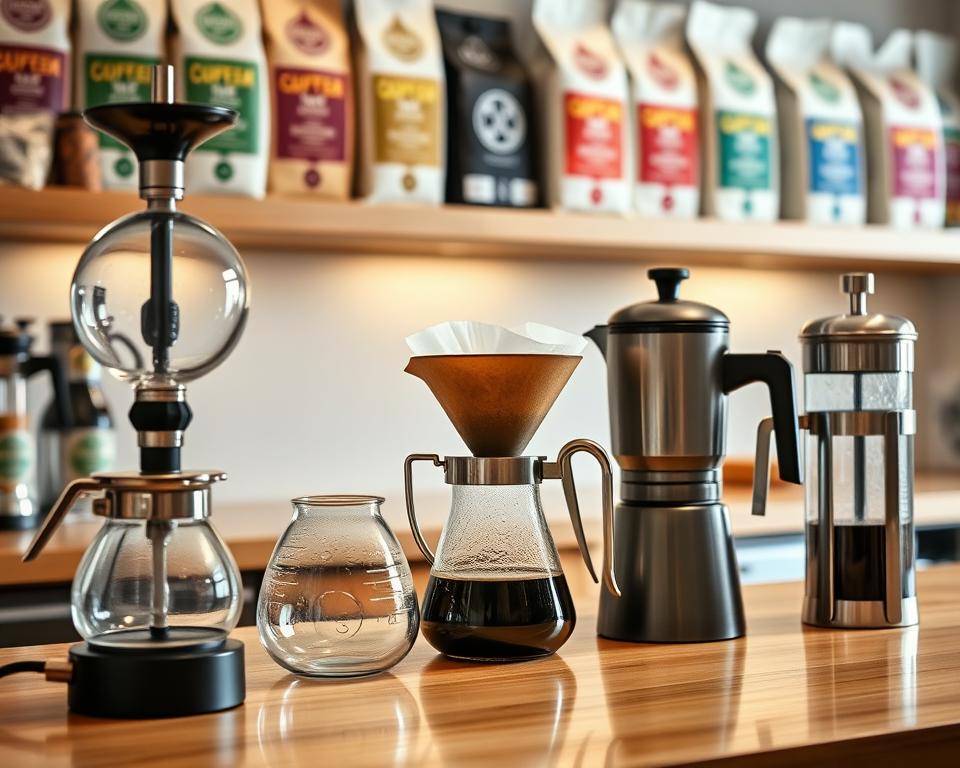
Guatemala Coffee is famous for its unique taste, thanks to the country’s rich soil and varied climate. Learning how to brew it well is key to enjoying its full flavor.
Guatemala Coffee’s special qualities make it perfect for studying how brewing affects its taste. By changing things like steeping time, coffee lovers can really change how intense the coffee is.
For those who love coffee, knowing the best ways to brew is crucial. As we explore brewing coffee, we see how important steeping time is.
Guatemala Coffee: A Unique Canvas for Brewing Experiments
Guatemala’s coffee is grown in areas with different altitudes. This gives it a complex flavor profile perfect for brewing experiments. The unique terroir and climate add to its distinct characteristics.
Altitude Effects on Bean Density and Brewing Requirements
The altitude where Guatemala Coffee is grown changes the bean’s density. Beans from higher altitudes are denser. This means you need to adjust your brewing techniques for the best extraction.
| Altitude Range | Bean Density | Brewing Requirement |
|---|---|---|
| Low (1,500-2,000 ft) | Less dense | Faster brewing time |
| Medium (2,000-2,500 ft) | Moderately dense | Standard brewing time |
| High (2,500-3,000 ft) | Dense | Longer brewing time for optimal coffee extraction |
Why Proper Steeping Time Matters for Guatemala’s Complex Profiles
Getting the steeping time right is key for Guatemala Coffee’s complex flavors. The correct steeping time ensures the best extraction. This enhances the coffee’s flavor and taste.
By understanding how altitude affects bean density and adjusting steeping time, coffee lovers can enjoy Guatemala Coffee’s full flavor. They’ll get a richer and more nuanced taste.
The Science Behind Coffee Steeping Time and Intensity
Knowing how coffee steeping time works is key to getting the right intensity. The time you steep coffee changes its strength and taste. When you brew Guatemala coffee, several things affect the taste.
Solubility Order: Acids, Sugars, and Bitter Compounds
Coffee has different compounds that are pulled out at different times. First, acids and salts are extracted, then sugars, and lastly, bitter compounds. This order is important because it shapes the coffee’s flavor balance.
The extraction process is more than just time; it’s about balance. Acids add bright, fruity notes, while sugars make it sweet. Bitter compounds, pulled out last, can make the coffee taste harsh if there’s too much.
How Guatemala’s Mineral Content Affects Extraction
Guatemala’s soil, rich in minerals, impacts how coffee is extracted. Minerals like potassium and magnesium help the coffee plant and change the coffee’s taste. The right minerals in the water can help pull out good compounds.
The minerals in Guatemala’s water change from place to place, affecting coffee taste. For example, areas with more magnesium might make sweeter coffee because they extract more sugars.
Optimal Temperature Ranges for Guatemala’s Regional Varieties
Temperature is also key in coffee extraction. The best temperature for brewing is between 195°F and 205°F. But, the perfect temperature can vary a bit for different Guatemala coffee types.
| Region | Optimal Temperature | Flavor Profile |
|---|---|---|
| Antigua | 198°F – 202°F | Balanced, with notes of chocolate and caramel |
| Huehuetenango | 200°F – 204°F | Fruity, with hints of citrus and berries |
| Atitlán | 195°F – 199°F | Smooth, with floral and nutty notes |
By understanding these factors and adjusting steeping times, coffee lovers can bring out the best in Guatemala coffee. They can get the perfect mix of intensity and flavor.
Coffee Steeping Time Intensity: Finding the Perfect Balance
Finding the right steeping time is key for the best Guatemala Coffee flavors. The time you steep your coffee greatly changes its taste and intensity.
Recognizing Flavor Indicators in the Cup
When you brew Guatemala Coffee, it’s important to notice the flavors in your cup. The steeping time can make the coffee taste fruity, floral, chocolatey, or nutty. Steeping it longer makes the flavor bolder and more intense.
To really see how steeping time changes taste, try tasting coffee at different times. You’ll notice how the flavor changes. For example, a shorter steep might make the coffee taste more acidic. But a longer steep can make it richer.
| Steeping Time | Flavor Profile | Intensity |
|---|---|---|
| Short (2-3 minutes) | Fruity, Floral, Acidic | Low |
| Medium (4-5 minutes) | Balanced, Chocolatey | Medium |
| Long (6-7 minutes) | Bold, Nutty | High |
Balancing Brightness with Body Through Timing
Getting the right balance of brightness and body is tricky but doable with the right timing. The perfect brew time brings out the best flavors, making a balanced cup. To improve your coffee, try different steeping times to find the perfect balance for Guatemala Coffee.
Understanding how steeping time changes the taste and intensity of Guatemala Coffee helps you improve your brewing. This way, you can make the coffee taste just right.
Essential Equipment for Controlling Steeping Time
The art of brewing Guatemala Coffee is all about the details. This includes the equipment used to control steeping time. To get the perfect cup, you need the right tools and techniques.
Digital vs. Analog Options for Home Brewers
Home brewers face a choice between digital and analog equipment. Digital devices are precise and easy to use. On the other hand, analog options offer a traditional, hands-on experience.
Burr Grinders vs. Blade Grinders: Impact on Extraction
The type of grinder you use can change the coffee’s flavor. Burr grinders are better because they offer consistent grinds. This leads to better extraction and flavor.
| Equipment | Key Features | Impact on Brewing |
|---|---|---|
| Digital Scale | Precise measurement, timer function | Consistent brewing results |
| Burr Grinder | Adjustable grind size, consistent grind | Optimal extraction, flavorful coffee |
| Gooseneck Kettle | Precise pouring, temperature control | Even extraction, nuanced flavors |
Gooseneck Kettles and Temperature Control
Temperature control is key in brewing coffee. Gooseneck kettles provide the precision needed for optimal extraction. They help in achieving a balanced flavor by controlling water flow.
Investing in the right equipment and learning how to use it can greatly improve your brewing experience. This way, coffee lovers can fully enjoy the rich flavors of Guatemala Coffee.
Immersion Methods: French Press and Guatemala Coffee
Immersion brewing, like French Press, highlights Guatemala Coffee’s unique flavors. It involves steeping coarse coffee grounds in hot water. This method brings out a rich, intense cup that shows off the coffee’s distinct notes.
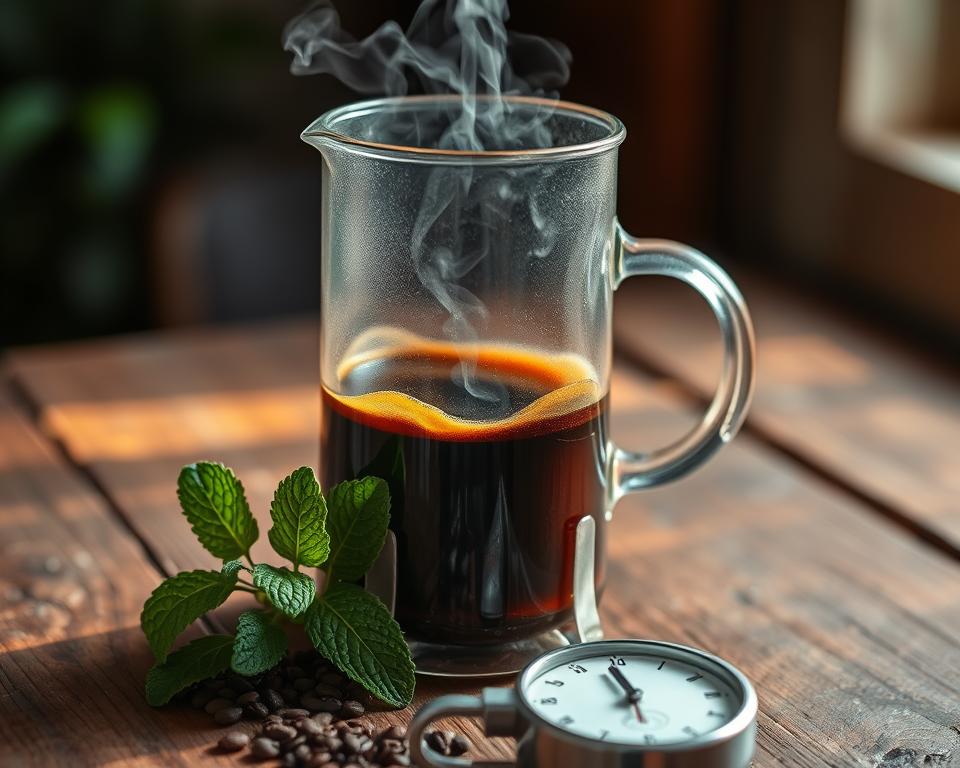
The standard steeping time for French Press is 4 minutes. This time balances flavor extraction and intensity well. But, you can adjust it based on your taste and the coffee beans’ characteristics. For example, a study on coffee brewing found that changing steeping times can greatly affect the coffee’s quality coffee brewing research.
Antigua vs. Cobán: Adjusting for Bean Characteristics
Guatemala Coffee from places like Antigua and Cobán taste different because of their terroir. Antigua coffee, with its balanced acidity and chocolate notes, might need a shorter steeping time. Cobán coffee, with its fruitier taste, might do better with a longer steeping time to boost its intensity.
Fixing Muddiness While Preserving Intensity
Muddiness is a common problem with French Press. It can ruin the coffee’s taste. To fix this, use the right grind size and stir the grounds while steeping. Also, pour the coffee right after pressing to keep the intensity and reduce sediment.
Mastering French Press and adjusting steeping time for the coffee’s type can make a great cup of Guatemala Coffee. This way, you can enjoy the coffee’s full intensity.
Pour-Over Methods: Enhancing Guatemala Coffee’s Nuanced Flavors
Pour-over brewing lets coffee lovers explore Guatemala coffee’s complex flavors. This method brings out the coffee’s unique tastes in a clean and detailed way.
The 2:30-3:00 Sweet Spot for Most Regions
In most Guatemala coffee areas, the best brewing time is between 2:30 and 3:00 minutes. This time gets the flavors just right, avoiding too weak or too bitter coffee.
Extended Draw-Down Times and Their Effects
Longer brewing times can change the coffee’s taste. They can add more body and rich flavors. But, they can also make the coffee bitter if not done right.
Pulse Pouring vs. Continuous Pour Techniques
Pulse pouring means pouring water in short bursts for even extraction. Continuous pouring is a steady flow of water. Both have their benefits. Pulse pouring gives more control, while continuous pouring is simpler.
Trying different pour-over ways can really improve Guatemala coffee’s taste. By changing steeping times and pouring styles, you can make your coffee just how you like it.
Espresso Preparation: Precision Timing for Guatemala’s Intensity
To get the best out of Guatemala coffee in an espresso, timing is key. Guatemala coffee is known for its complex flavors. It needs a careful brewing method to show its full intensity.
The grind size of Guatemala coffee beans greatly affects the espresso’s taste. Beans from different places might need different grind sizes. For example, beans from Antigua, known for their balanced acidity and rich taste, might need a finer grind than others.
When to Extend Extraction for Sweeter Notes
Getting the right extraction time is crucial for sweeter notes in Guatemala coffee. A longer extraction time can make the flavor sweeter and more balanced. But, it’s important to avoid over-extraction, which can make it bitter. The best extraction time depends on the roast level and the flavor you want.
Pre-Infusion Techniques for High-Grown Beans
Pre-infusion involves soaking the coffee grounds lightly before the main brewing. For high-grown Guatemala coffee, pre-infusion helps in getting a balanced extraction. It brings out the unique flavors of these beans. Adjust the pre-infusion time based on the bean’s origin and roast.
By learning these techniques—adjusting grind size, extending extraction, and using pre-infusion—coffee lovers can fully enjoy Guatemala coffee in their espresso. They’ll get a rich and intense coffee experience.
Cold Brew: Long Steeping for Smooth Guatemala Coffee
The cold brew method is perfect for enjoying Guatemala coffee. It involves steeping coarse-ground coffee in cold water for 12 to 24 hours. This technique brings out the coffee’s smooth and rich flavors.
This brewing method reduces bitterness, making it refreshing for hot days. It’s a great way to enjoy coffee without the usual bitterness.
Flavor Development Timeline for Different Regions
The flavor of Guatemala coffee changes with steeping time. The longer it steeps, the more complex the flavor becomes.
| Steeping Time | Flavor Profile |
|---|---|
| 12 hours | Mild, with notes of chocolate |
| 18 hours | Balanced, with hints of fruit |
| 24 hours | Strong, with deep caramel notes |
Room Temperature vs. Refrigerated Steeping
Steeping temperature also affects flavor. Room temperature brings out more flavor. Refrigerated steeping makes it smoother.
Concentrate Preparation for Maximum Flexibility
You can make cold brew concentrate by adjusting the coffee-to-water ratio. A stronger concentrate lets you adjust the flavor to your liking.
Mastering cold brew lets coffee lovers enjoy Guatemala coffee in a new way. They can experiment with steeping times and temperatures to find their ideal cup.
Troubleshooting Intensity Issues in Guatemala Coffee
The intensity of Guatemala coffee comes from several factors. These include steeping time and roast level. Changing these can help get the intensity you want.
Region-Specific Adjustments for Darker Roasts
Darker roasts from Guatemala’s Antigua region have balanced acidity and rich flavors. They might need a bit shorter steeping times to avoid over-extraction.
- Reduce steeping time by 15-30 seconds for darker roasts.
- Keep an eye on the coffee’s taste to adjust steeping time as needed.
Techniques for Preserving Acidity Without Sourness
To keep Guatemala coffee’s bright acidity without sourness, tweak the grind size and steeping time.
- Choose a medium grind size for balanced extraction.
- Steeping time should be between 3-4 minutes for the best acidity.
Different roast levels need different steeping times to reach the right intensity.
- Light roasts: 3-3.5 minutes.
- Medium roasts: 3.5-4 minutes.
- Dark roasts: 3-3.5 minutes.
By tweaking these settings, coffee lovers can fix intensity problems. They can then enjoy a perfectly balanced cup of Guatemala coffee.
Conclusion: Perfecting Your Guatemala Coffee Experience
Learning to brew coffee is key to enjoying Guatemala’s rich coffee. Knowing how steeping time affects flavor is important. This lets coffee lovers adjust their brewing to match their taste.
Methods like French press, pour-over, and espresso are great for trying different steeping times. Changing the steeping time can make flavors pop or fade. This helps in making the perfect Guatemala coffee.
Remember, the secret to a great cup is finding the right balance. With the tips from this article, you can brew amazing Guatemala coffee. It will highlight its unique flavors.