
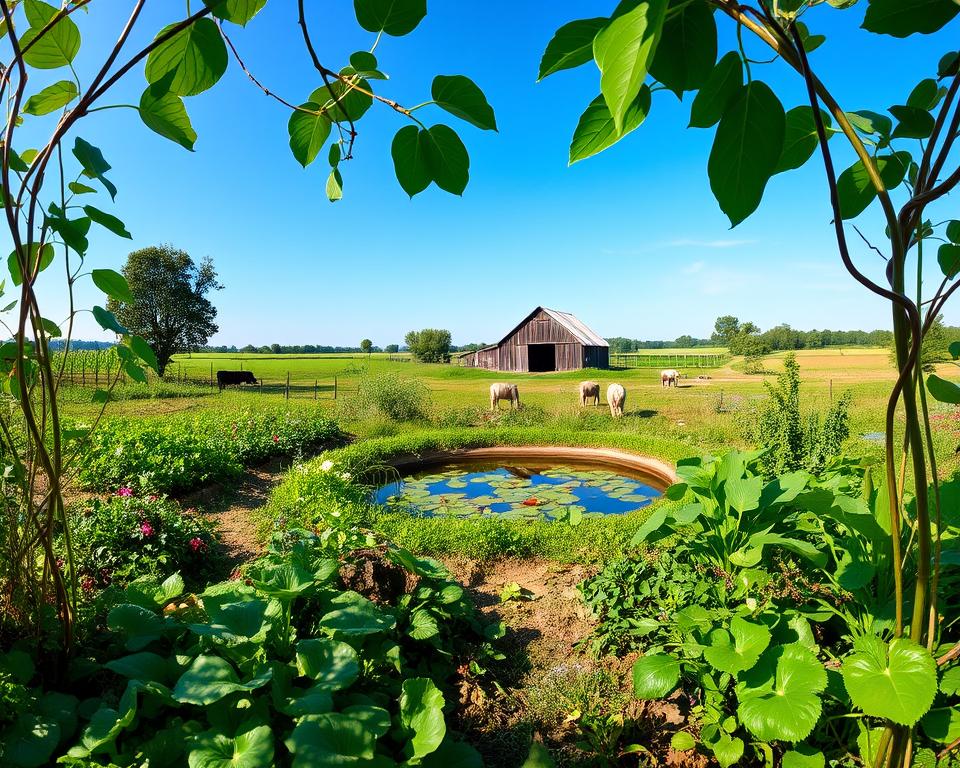
Guatemala is famous for its top-notch coffee, grown in areas with rich ecosystems. The country’s diverse plants and animals are key to keeping coffee farms healthy and sustainable.
Biodiversity in coffee farming is more than just about the environment. It also affects the quality of the coffee. Farms that use sustainable methods tend to have stronger ecosystems. This can result in better coffee quality and yields.
By focusing on biodiversity, coffee farmers in Guatemala can make their farming better. This helps ensure a sustainable future for their crops and the ecosystems around them.
Understanding Biodiversity in Coffee Ecosystems
Guatemala’s coffee-growing areas are full of diverse ecosystems. Biodiversity is key to keeping coffee plantations healthy and productive.
Plant Diversity in Guatemalan Coffee Landscapes
Coffee farms in Guatemala are shaded by many trees. This helps with ecosystem conservation. The variety includes native trees, fruit trees, and other crops, creating a complex ecosystem.
Animal and Insect Species Essential to Coffee Production
Many animals and insects are crucial for pollination and pest control in coffee ecosystems. Bees, butterflies, and birds are drawn to the diverse plants.
Regional Variations Across Guatemala’s Growing Regions
Guatemala’s different regions have unique ecosystems. This is because of climate, soil, and altitude differences. Knowing these variations is important for preserving biodiversity.
Indigenous Knowledge of Local Ecosystems
Indigenous communities have deep knowledge of local ecosystems. Their traditional wisdom is essential for sustainable coffee plantation management. It helps guide conservation efforts.
The History of Coffee Cultivation in Guatemala
Coffee has been grown in Guatemala for over a century. It has greatly affected the economy and the environment. The country’s volcanic highlands and rich soil make it perfect for coffee.
Pre-Industrial Coffee Growing Methods
Guatemalan farmers used to grow coffee under native trees. This method kept the soil healthy and protected biodiversity.
Now, many farmers grow only one type of coffee. This has caused deforestation and lost biodiversity. It has also led to soil erosion and worse water quality.
Success Stories from Guatemalan Farmers
But, some farmers have started using sustainable methods. They grow coffee under trees and use organic farming. These methods have helped the environment and improved farmers’ lives.
Why Biodiversity Coffee Cultivation Matters
Guatemala’s coffee industry is seeing the importance of biodiversity in farming. This is due to both environmental and economic gains. Biodiversity in coffee farming does more than protect ecosystems. It also boosts coffee quality and makes it more resilient.
Taste Differences Between Shade-Grown and Sun-Grown Coffee
Shade-grown coffee, grown under tree canopies, tastes different from sun-grown coffee. Its slower maturation leads to a richer flavor. This makes it a favorite among coffee lovers.
Practices like keeping shade and preserving natural habitats are key. They help coffee farms deal with climate changes. This ensures a sustainable future for coffee in Guatemala.
Premium Pricing for Biodiversity-Friendly Coffee
Coffee made with biodiversity-friendly methods gets a higher price. This is a big plus for farmers. It encourages them to restore habitats and keep biodiversity in their farms.
By focusing on biodiversity, Guatemala’s coffee industry helps the environment. It also helps farmers by offering better prices and more market chances.
Implementing Biodiversity in Your Coffee Farm
To keep your coffee farm thriving, adopting biodiversity is key. Biodiversity in coffee farming makes your farm stronger and helps the environment.
Start by checking what species are already on your farm. Look at the plants and animals living there.
Tools and Methods for Biodiversity Inventory
There are many ways to count biodiversity. You can use field observations, camera traps, and special software.
- Field observations: Trained observers record species presence and abundance.
- Camera traps: Useful for monitoring wildlife without human presence.
- Biodiversity assessment software: Helps in data analysis and species identification.
Realistic Timelines for Ecosystem Restoration
Fixing an ecosystem takes time. It can take 5 to 20 years, depending on your farm’s state and how much work it needs.
| Restoration Activity | Year 1-5 | Year 5-10 | Year 10-20 |
|---|---|---|---|
| Reforestation | Planting native species | Monitoring growth, replanting | Established forest ecosystem |
| Soil Conservation | Implementing terracing | Soil health improvement | Reduced erosion |
Start small with biodiversity. Begin with a part of your farm and grow it over time. This way, you can add biodiversity without hurting your crops.
By using these methods, coffee farmers can boost biodiversity. This improves the environment and supports sustainable farming.
Essential Plant Varieties for a Biodiverse Coffee Farm
Guatemalan coffee farmers are now using biodiverse farming. They plant many native tree species and coffee types. This method helps the ecosystem and makes coffee production more sustainable.
Native Guatemalan Tree Species for Coffee Shade
Native trees are key for coffee plants’ shade. This shade is vital for keeping biodiversity. Some good native Guatemalan trees for shade include:
- Guazuma ulmifolia (West Indian Elm)
- Inga spp. (Ice Cream Bean)
- Tabebuia spp. (Trumpet Tree)
Nitrogen-Fixing Plants for Natural Fertilization
Nitrogen-fixing plants are essential for natural soil enrichment. They cut down the need for synthetic fertilizers. This helps keep the soil healthy. Some examples are:
- Tephrosia spp. (Hoary Pea)
- Gliricidia sepium (Mother of Cocoa)
Traditional vs. Modern Coffee Cultivars in Guatemala
Guatemala has a wide range of coffee types. From traditional ‘Bourbon’ and ‘Typica’ to newer, disease-resistant ones. The choice depends on disease resistance, yield, and market demand.
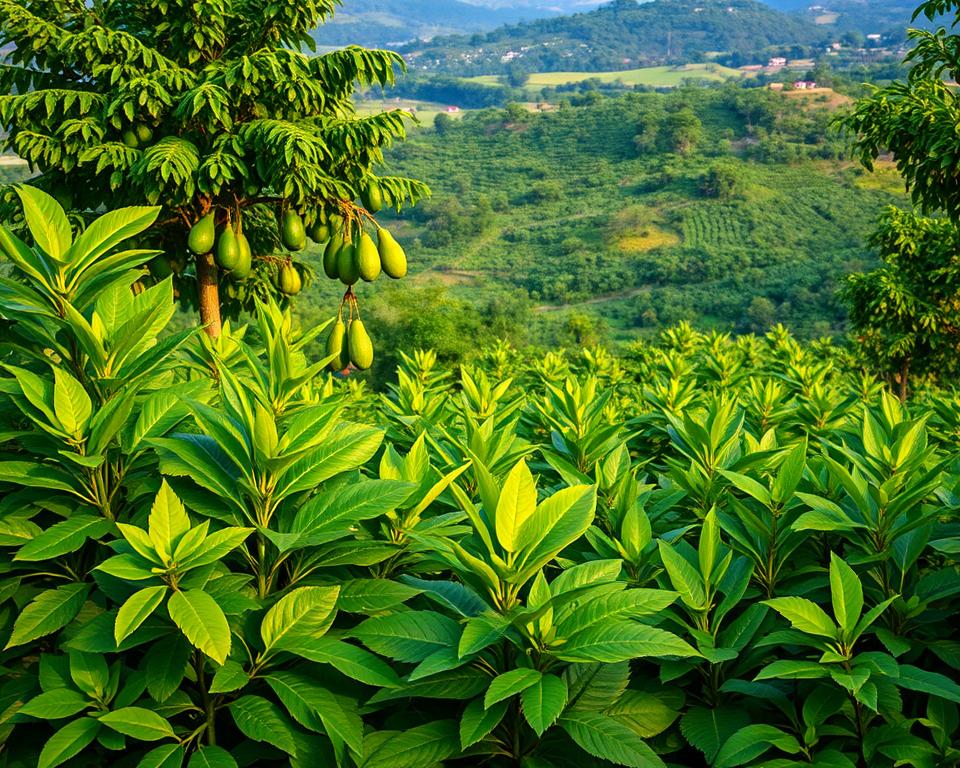
Guatemalan farmers mix native trees, nitrogen-fixing plants, and various coffee types. This creates a biodiverse farm. It’s both productive and sustainable.
Cultivating Beneficial Insects and Wildlife
Beneficial insects and wildlife are key to a healthy coffee ecosystem. By welcoming these organisms, farmers can boost biodiversity preservation and ecosystem services.
Creating Habitats for Native Bees and Butterflies
Native bees and butterflies are vital for pollination, increasing coffee yields. Farmers can attract them by:
- Planting various flowering plants around the farm.
- Keeping ecological corridors to connect habitats.
- Staying away from pesticides that harm them.
Predatory Insects That Control Coffee Pests
Predatory insects like ladybugs and lacewings control pests naturally. They reduce the need for harmful chemicals.
Coffee farmers can help local conservation by joining efforts. This supports habitat restoration and boosts biodiversity. It benefits the farm and the environment.
These actions make coffee ecosystems more balanced and resilient. They help both the farm and the environment.
Soil Health and Biodiversity
Soil health is key to organic coffee production. It supports a wide range of plants and animals. This is the base of a thriving coffee ecosystem.
Soil health is vital for biodiversity in coffee farms. It has beneficial microbes, good nutrient flow, and strong soil structure. These factors make a coffee ecosystem strong.
Microorganisms That Enhance Coffee Root Systems
Beneficial microbes are important for coffee roots. Mycorrhizal fungi, for instance, help coffee roots get nutrients and water better.
Coffee Pulp Composting Techniques
Coffee pulp composting boosts soil health. It turns coffee pulp into a nutrient-rich soil amendment. This improves soil fertility and structure.
Natural Alternatives to Synthetic Fertilizers and Pesticides
Natural options are key for soil health and biodiversity. Organic amendments like compost, green manure, and cover crops are good alternatives.
| Natural Amendment | Benefits |
|---|---|
| Compost | Improves soil fertility and structure |
| Green Manure | Enhances nutrient cycling and soil health |
| Cover Crops | Reduces erosion and promotes biodiversity |
By using these sustainable farming methods, coffee farmers can improve soil health and biodiversity. This leads to stronger and more productive coffee ecosystems.
Water Management in Biodiverse Coffee Systems
Water management is key to keeping biodiverse coffee ecosystems healthy. It’s crucial for coffee’s long-term growth, especially in places like Guatemala. This is because coffee is often grown on steep slopes.
Contour planting is a method where coffee trees are planted along slope lines. It cuts down on soil erosion and keeps water in the soil. Swales, or shallow ditches, also help by catching rainwater. This water then soaks into the soil.
Studies show these methods greatly lessen coffee’s environmental impact.
Root Systems That Stabilize Guatemala’s Steep Coffee Slopes
Shade trees and coffee plants’ roots are vital for soil stability on steep slopes. Deep roots keep the soil in place, preventing erosion and landslides. This is especially true in Guatemala, where coffee grows on steep slopes.
For more on shade-grown coffee’s benefits, check out this article.
Buffer Zones Around Springs and Streams
Creating buffer zones around water sources is essential. These zones keep water clean by filtering out pollutants. This helps protect aquatic life and ensures water quality.
By using these strategies, coffee farmers can preserve biodiversity. They also promote ecosystem services.
Overcoming Challenges in Transitioning to Biodiverse Cultivation
Guatemalan farmers are moving towards sustainable farming. They face many obstacles that can be helped with the right support. Changing to biodiverse coffee cultivation is a big step for many farmers.
Starting this change takes a lot of time and money. To help, farmers can find ways to make extra money while they learn.
Supplemental Income Strategies During Transition
- Diversifying crops to include other valuable products like fruits or timber
- Engaging in eco-tourism to showcase sustainable farming practices
- Producing value-added products from coffee, such as coffee liqueurs or cosmetics
There are also grants and programs to help Guatemalan farmers switch to biodiverse cultivation.
Grants and Programs Available to Guatemalan Farmers
| Program Name | Description | Benefits |
|---|---|---|
| Rainforest Alliance | Supports sustainable farming and forest conservation | Technical assistance, certification, and market access |
| Fairtrade International | Promotes fair trade practices and sustainable livelihoods | Fair prices, community development funds, and capacity building |
Community support is key for farmers making the switch to biodiverse cultivation.
Community-Based Learning and Support Systems
Farmers gain from joining local cooperatives and farmer groups. These groups share knowledge and resources. They offer support and guidance during the transition.
Conclusion: The Future of Biodiversity in Guatemala’s Coffee Sector
Guatemala’s coffee sector is set for a sustainable future. This is thanks to the use of biodiversity preservation practices. By saving ecosystems and promoting different coffee plants, farmers can keep their crops healthy for a long time.
Biodiversity is key to keeping ecosystems healthy. This health supports the coffee plants. By using biodiversity-friendly methods, farmers can lessen their environmental harm. They also make their farms more resilient.
The future of Guatemala’s coffee depends on balancing economic, social, and environmental needs. By focusing on saving biodiversity and ecosystems, the sector can thrive. This will benefit both the environment and the people who rely on it.