
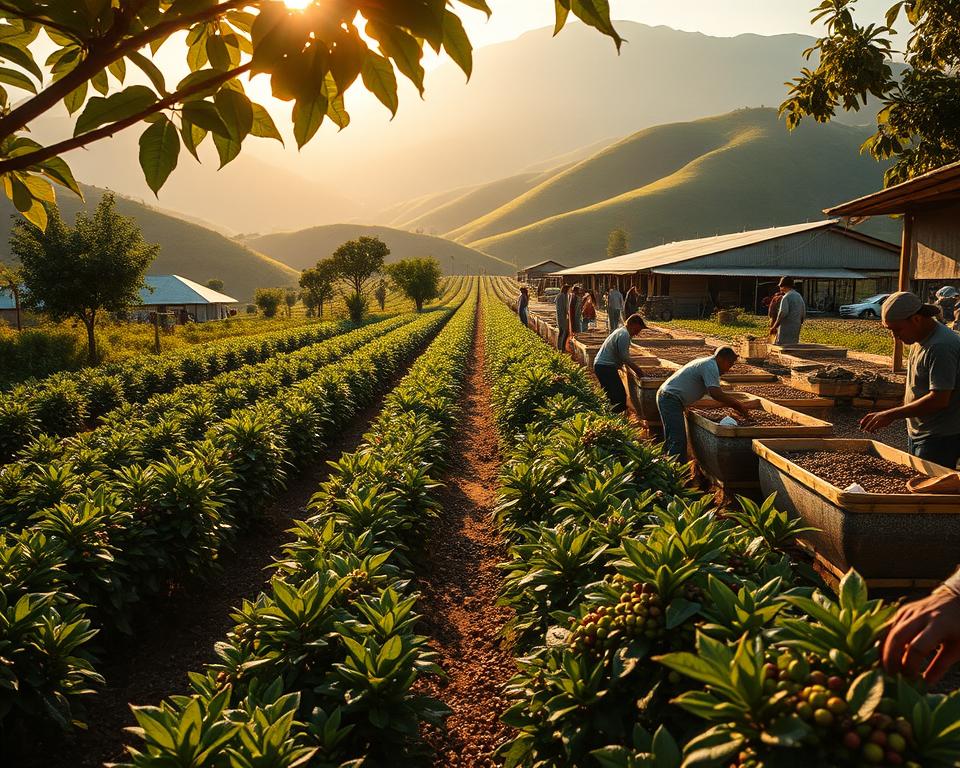
Guatemala’s coffee industry is a big deal worldwide. Its rich soil and varied climate make top-notch coffee beans.
Cooperatives play a key role here. They help local farmers grow and succeed. By teaming up, farmers can make better coffee, grow more, and reach more markets.
This teamwork is good for farmers and Guatemala’s economy. With more people wanting specialty coffee, cooperatives are more vital than ever.
Guatemala’s Coffee Heritage and Modern Market Position
Guatemala’s coffee heritage is deeply rooted in its culture and economy. For centuries, coffee has played a crucial role in Guatemalan life. It has shaped the country’s history, traditions, and economy.
The country’s geography is perfect for coffee. Its volcanic highlands and rich soil make it ideal for growing coffee.
Guatemala is famous for its high-quality Arabica beans. These beans are grown in different regions, each with its own unique flavor. The main coffee areas are Antigua, Atitlán, and Huehuetenango. These places help make Guatemala known for some of the world’s best coffee.
Today, Guatemala’s coffee market focuses on sustainable coffee production and efficient supply chains. Many farms and cooperatives are using eco-friendly methods. They are also improving their coffee sourcing networks to meet the demand for quality, sustainable coffee.
Guatemala stands out in the global coffee market for several reasons:
- High-quality Arabica coffee beans
- Diverse regional flavor profiles
- Sustainable production practices
- Strong coffee cooperatives and farmer networks
By focusing on these areas, Guatemala remains a top coffee producer and exporter. It also helps its coffee farmers and the environment.
What Are Coffee Cooperatives and How Do They Function?
Coffee farmers form cooperatives to tackle big challenges. They gain access to global markets more easily. These groups are owned by farmers who work together. They share resources, knowledge, and negotiate better coffee prices.
Cooperatives are run democratically. Each farmer has a voice in decisions. They meet regularly to discuss and vote on key issues.
Being part of a cooperative has many benefits. Farmers can save money and get better prices. They also get training to improve their coffee quality.
Cooperatives help promote fair trade. Many are certified by fair trade organizations. This ensures farmers get a fair price for their coffee. It helps farmers and makes the coffee industry more sustainable.
| Benefits | Description |
|---|---|
| Economic Benefits | Improved bargaining power, economies of scale, and better prices |
| Social Benefits | Democratic decision-making, member control, and community development |
| Environmental Benefits | Promotion of sustainable farming practices and environmental stewardship |
Coffee Cooperatives in International Trade: The Guatemalan Model
The Guatemalan model of coffee cooperatives is unique. It helps small-scale farmers succeed in international trade. By joining forces, Guatemala has grown its share in the global coffee market.
Coffee cooperatives in Guatemala are key to the coffee supply chain. They help farmers produce and process coffee. They also let small farmers reach global markets. This way, they can get better prices and compete with big companies.
Guatemalan coffee cooperatives excel in dealing with trade rules. They share resources and knowledge. This makes it easier to meet international standards.
Key Benefits of Coffee Cooperatives in Guatemala
| Benefit | Description | Impact |
|---|---|---|
| Economies of Scale | Cooperatives allow small-scale farmers to pool their resources. | Increased negotiating power and better prices. |
| Access to International Markets | Cooperatives facilitate access to global markets. | Expanded customer base and increased sales. |
| Quality Control | Cooperatives implement quality control measures. | Improved coffee quality and higher prices. |
Guatemala’s coffee cooperatives are big players in the global market. Their success shows the power of cooperative models in trade.
Step-by-Step Guide to Forming a Coffee Cooperative in Guatemala
Starting a coffee cooperative in Guatemala needs careful planning. First, you must know the laws that guide cooperatives here.
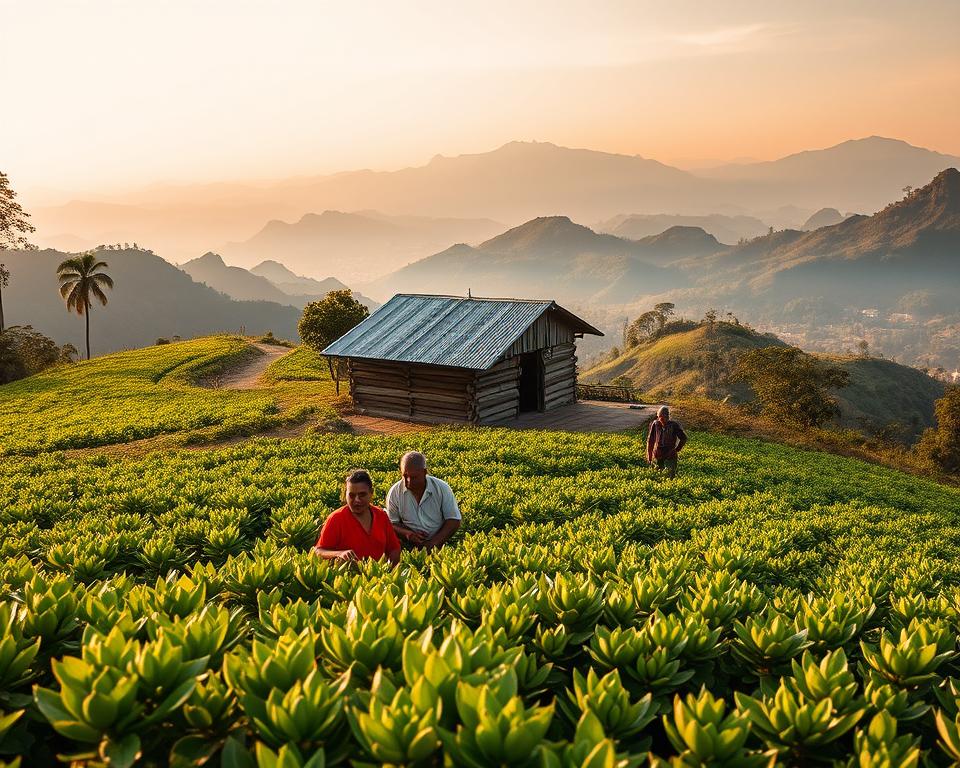
To start, you need some basic documents. These include the cooperative’s name, the names and addresses of the founders, and a detailed business plan. Then, you must get government approval by registering with the Ministry of Economy and the Registry of Cooperatives.
Timeline and Associated Costs
Setting up a coffee cooperative takes several months. Costs include fees for registration, legal help for bylaws, and setting up the cooperative’s base. Knowing these costs is key for success and sustainability.
Developing Bylaws and Decision-Making Protocols
Creating detailed bylaws is essential. They should cover the cooperative’s goals, who can join, how decisions are made, and money management. Clear rules for making decisions are also important for good governance and strong networks.
Establishing Membership Criteria and Responsibilities
Setting clear rules for who can join and what members must do is vital. This includes who can be a member, what benefits and duties come with it, and how members will help decide things. Good rules help keep the cooperative focused and quality high.
By carefully following these steps, coffee farmers in Guatemala can create a cooperative. This cooperative will help them succeed in the global market. Cooperatives are key for sustainable coffee and better lives for farmers.
Building Export Relationships: From Local Farms to Global Markets
The path from local farms to global markets is filled with challenges. Guatemalan coffee cooperatives need a solid plan and strong relationships to succeed. They must tackle the complex world of international trade.
Research Methods for Market Opportunities
Finding the right market is the first step. Guatemalan coffee cooperatives can study global trends and consumer tastes. They should also look into trade agreements to find buyers.
- Attend international coffee trade shows and exhibitions.
- Utilize online platforms and social media to connect with potential buyers.
- Engage with coffee trade organizations for market insights and networking.
Creating Compelling Coffee Profiles and Samples
It’s important to make your coffee stand out. Cooperatives should focus on what makes their coffee special. This includes unique flavors and sustainable production.
Key elements include:
- Detailed cupping notes.
- Information on processing methods.
- Certifications such as Fair Trade or Organic.
Getting fair prices and payment terms is crucial. Cooperatives need to know global coffee prices. They should be ready to negotiate.
Considerations include:
- Fixed-price contracts.
- Quality-based pricing.
- Payment terms that ensure cash flow stability.
Building Long-term Buyer Relationships
Building lasting relationships with buyers is essential. This means regular talks, reliable supply, and adapting to their needs.
Strategies for long-term relationships:
- Regular visits and communication.
- Consistent quality and supply.
- Flexibility in responding to market changes.
By focusing on these areas, Guatemalan coffee cooperatives can build strong, lasting relationships. This will help them grow in the global coffee market.
Quality Control and Certification Processes for Export Success
Quality control is key for coffee cooperatives in Guatemala aiming for global success. It’s not just about meeting standards. It’s also about standing out in a crowded market.
Cupping is a detailed method to check coffee quality and taste. Guatemalan cooperatives stick to strict cupping rules. They look at acidity, body, and flavor to judge the coffee’s quality. This helps spot any flaws and ensures only top beans are exported.
Processing and Storage Best Practices
Right processing and storage keep coffee beans in top shape. Guatemalan cooperatives use best practices. They handle beans carefully, dry them to the right moisture, and store them in clean, dry places. This keeps the flavor and aroma intact, meeting international quality standards.
Fair Trade, Organic, and Rainforest Alliance Certification Steps
Certifications like Fair Trade, Organic, and Rainforest Alliance are crucial for premium markets. The process includes applying, getting inspected, and following strict standards. For example, Fair Trade ensures fair labor and community support. Cooperatives can learn more from studies on Fair Trade’s impacts.
Cost-Benefit Analysis of Different Certification Programs
Each certification has its costs, like application fees and inspection costs. But, the benefits often make these costs worth it. Certified coffee can sell for more abroad. Cooperatives need to weigh the costs and benefits to choose the right certifications for their goals.
Financial Management for Sustainable Cooperative Growth
For coffee cooperatives in Guatemala to grow, they need strong financial management. This helps them make smart choices, use resources well, and handle market changes.
Record-Keeping and Financial Reporting
Keeping accurate records and sharing financial info openly is key. This means tracking money coming in, going out, and what members contribute.
- Implementing a robust accounting system
- Regular financial audits
- Timely reporting to members and stakeholders
Profit Distribution and Reinvestment Strategies
Cooperatives must share profits fairly and invest in their future. They can do this by setting up how profits are shared, improving quality, and growing their operations.
- Determining profit-sharing models
- Investing in quality improvement initiatives
- Expanding infrastructure and capacity
Getting money from microfinance and agricultural loans can help cooperatives grow. They should look into these options, understand the terms, and manage payments well.
- Exploring microfinance options
- Understanding loan terms and conditions
- Managing loan repayment
International Development Funding Sources
Money from international development can help cooperatives reach their goals. This includes better production and more market access. Cooperatives should find funding, write good proposals, and meet the requirements.
- Identifying potential funding sources
- Preparing grant proposals
- Compliance with funding requirements
By improving their financial management, Guatemalan coffee cooperatives can grow sustainably. This makes them stronger in the global market. It helps the coffee industry and keeps trade stable.
Overcoming Common Challenges in Guatemala’s Coffee Cooperative Sector
Guatemala’s coffee cooperatives face many challenges. These can hurt their success in the global market. The problems can be inside the cooperatives or outside them.
Conflict Resolution Mechanisms
It’s key to solve conflicts well in coffee cooperatives. Using clear decision-making and open talks helps a lot. Regular meetings and talking openly can stop problems before they start.
Maintaining Member Commitment
Keeping members involved is crucial for cooperatives. They can do this by offering training and making sure everyone gets a fair share. Recognizing what members do helps them feel part of the team.
Coffee cooperatives in Guatemala need to deal with environmental issues like climate change. They can use green farming, grow different crops, and build strong farms. These steps help them face environmental changes.
Risk Management for Market Fluctuations
To handle market ups and downs, cooperatives can sell to different places and form strong partnerships. They should also study the market and keep some money aside. This way, they can handle price changes better.
| Challenge | Strategy | Benefit |
|---|---|---|
| Conflict | Transparent decision-making | Harmony among members |
| Member Commitment | Training and fair benefits | Active participation |
| Environmental Challenges | Sustainable practices | Climate resilience |
| Market Fluctuations | Diversification and hedging | Financial stability |
Conclusion: The Future of Guatemala’s Coffee Cooperatives in Global Trade
Guatemala’s coffee cooperatives are key to the country’s coffee industry. They play a big role in the global coffee market. These cooperatives help local farmers and support global coffee networks.
The rise of fair trade coffee shows more people want coffee that’s made right. Fair trade coffee sales hit $5 billion a year. Even in tough times, fair trade coffee sales grew by 15 percent in 2009. This shows coffee cooperatives can handle changes well. For more on fair trade coffee benefits, check out this study.
Guatemala’s coffee cooperatives will keep growing and playing a big part in the global coffee world. They help farmers and keep the global coffee market stable. This is good for everyone involved.