
Guatemalan Coffee is famous for its deep and complex tastes. These flavors are greatly affected by the water quality used to brew it.
The unique terroir of different Guatemalan regions, from the highlands of Huehuetenango to the volcanic soils of Antigua, gives coffee beans their distinct flavors.
Knowing how water affects flavor extraction is key for coffee lovers and brewers. Water’s chemical makeup and temperature are crucial in revealing Guatemalan Coffee’s full flavor.
By understanding how water interacts with coffee, you can discover the true taste of this beloved drink.
The Chemistry of Water and Coffee Interaction
The way water and coffee mix is complex and changes how Guatemalan Coffee tastes. Water doesn’t just sit there; it actively pulls out flavors from the coffee. This affects the coffee’s final taste.
When coffee’s soluble parts, like acids and sugars, dissolve in water, the water’s quality matters. The minerals and pH level in the water are key to this process.
For example, water rich in calcium and magnesium can bring out better flavors. But water with too much sodium can make the coffee taste off. Knowing this chemistry helps make Guatemalan Coffee taste better.
By choosing the right water, coffee lovers can make their Guatemalan Coffee taste even better. This shows how important water is in making coffee.
Guatemalan Coffee’s Distinct Flavor Profile
Guatemalan coffee’s unique taste comes from the country’s special soil, climate, and high altitudes. It’s known for its balanced acidity and rich body. You can taste notes of fruit, flowers, chocolate, and nuts.
Guatemala’s varied geography adds to its coffee’s complexity. Places like Antigua, Huehuetenango, and Atitlán have their own coffee styles. High-altitude beans are bright and acidic, while volcanic soil beans are rich and chocolatey.
Improving coffee flavor with water is key. The right water quality and temperature can enhance or hide Guatemalan coffee’s flavors. Using water that’s balanced in minerals and temperature brings out the coffee’s best notes.
Brewing Guatemalan coffee is an art that goes beyond the beans. It’s about the water too. By choosing and adjusting the water carefully, coffee lovers can enjoy a more complex and satisfying cup.
The Water Role in Coffee Flavor Development
When brewing Guatemalan coffee, water’s role is key. It affects how coffee flavors are extracted. This makes water a vital part of the brewing process.
Acidity Enhancement Through Water Composition
Guatemalan coffee is known for its acidity. The right water can make this acidity shine. Water with lower pH levels can highlight the coffee’s bright notes. But, water that’s too alkaline can dull them.
Body Development and Water Minerals
The coffee’s body, or its feel in your mouth, is also shaped by water. Minerals like calcium and magnesium add to the body. Water rich in these minerals can make the coffee feel fuller and more enjoyable.
| Water Characteristic | Effect on Coffee Flavor |
|---|---|
| Low pH Level | Enhances Acidity |
| High Mineral Content (e.g., Calcium, Magnesium) | Contributes to Fuller Body |
| Balanced Mineral Composition | Optimizes Overall Flavor |
In conclusion, water plays a big role in Guatemalan coffee’s flavor. Knowing how water affects acidity and body helps brewers improve their coffee. This way, they can make the best coffee possible.
Water Composition: Minerals That Make or Break Your Cup
Guatemalan Coffee’s taste can be greatly affected by the minerals in the water. The role of water in coffee is huge. It changes how the coffee tastes.
The minerals in water are key because they affect how coffee flavors come out. Some minerals can make the coffee taste better, while others can make it worse.
- Calcium: Helps bring out the coffee’s flavors, making it richer.
- Magnesium: Helps in the process of extracting flavors, making the coffee brighter and more acidic.
- Sodium: Can make the coffee sweeter, but too much can make it taste bad.
- Bicarbonate: Changes the water’s pH, which can change how the coffee tastes.
Knowing how water quality affects coffee taste is key for brewing Guatemalan Coffee. By changing the water’s mineral content, you can make the coffee taste better.
For example, water with too much bicarbonate can make the coffee taste bitter. But water with the right minerals can make the coffee’s natural flavors shine.
Measuring and Adjusting Water Quality for Optimal Extraction
To get the best flavors from Guatemalan coffee, it’s key to check and tweak the water quality. The minerals in the water greatly impact the taste of the coffee.
For coffee from places like Antigua and Huehuetenango in Guatemala, you can adjust the water to match the coffee’s natural taste.
Antigua Region Water Recommendations
Coffee from Antigua has a balanced acidity and rich taste. Using water with moderate calcium (about 50 mg/L) and low sodium can boost these qualities.
Huehuetenango Region Water Recommendations
Huehuetenango coffee is known for its bright acidity and complex taste. Water with a bit more alkalinity can balance the acidity. A magnesium level of around 20 mg/L can also add sweetness.
By changing the water quality based on the region’s needs, coffee lovers can bring out the best in their Guatemalan coffee. This leads to a more balanced and enjoyable cup.
Temperature Precision: The Heat Factor in Extraction
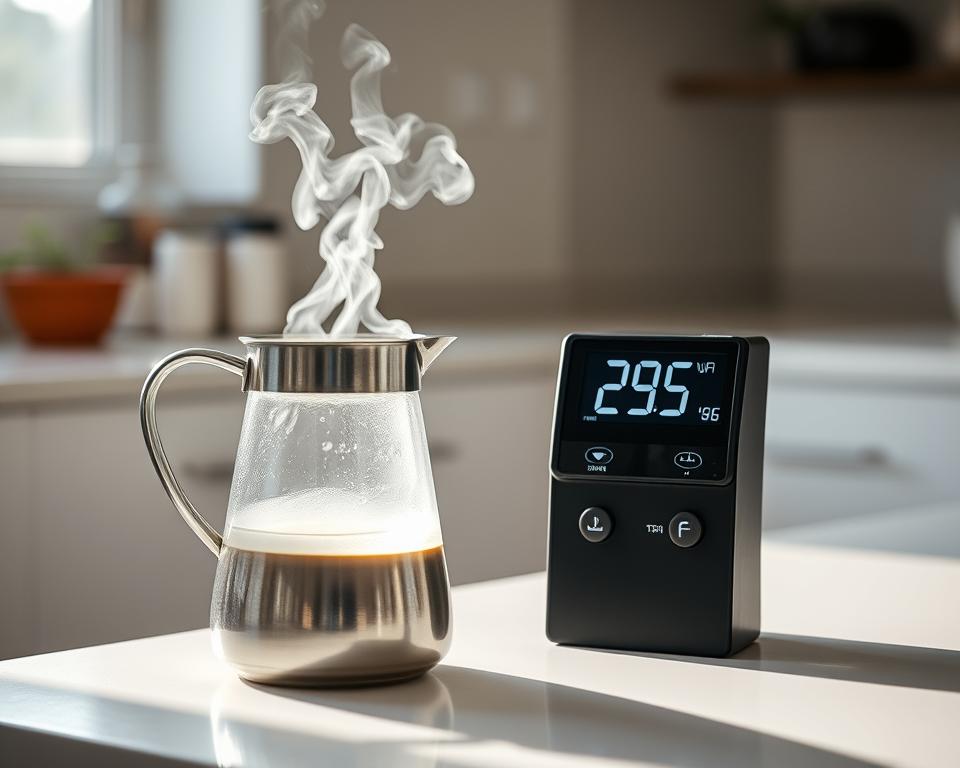
To get the perfect Guatemalan coffee, you need to control the temperature well. The best water temperature for brewing is between 195°F and 205°F. This temperature helps extract the flavors perfectly.
Guatemalan coffee is known for its complex taste. It needs careful temperature control. The type of processing, like washed or natural, also affects the best brewing temperature.
Washed Process Temperature Guidelines
Washed process Guatemalan coffees have bright acidity and fruit notes. They do best with a slightly lower temperature.
- Temperature range: 195°F – 200°F
- Brewing time: 3-4 minutes
Natural Process Temperature Guidelines
Natural process coffees have a heavier body and sweeter taste. They need a slightly higher temperature.
- Temperature range: 200°F – 205°F
- Brewing time: 4-5 minutes
| Processing Method | Optimal Temperature Range | Brewing Time |
|---|---|---|
| Washed | 195°F – 200°F | 3-4 minutes |
| Natural | 200°F – 205°F | 4-5 minutes |
Getting the right balance between water and coffee flavors is key. Temperature control is crucial for this balance. Try different temperatures to find your perfect cup.
Water-to-Coffee Ratios: Finding the Perfect Balance
For coffee lovers, knowing the right water-to-coffee ratio is crucial. It affects how well the coffee’s flavors come through. This ratio is key to enjoying Guatemalan Coffee’s unique tastes.
Roast levels and where the coffee comes from also matter. For example, light roasts from Cobán have a delicate taste. They need a careful ratio to avoid too much extraction.
Ratios for Light Roasts from Cobán Region
For light roasts from Cobán, use a ratio of 1:15 to 1:17. This balance brings out their floral notes perfectly.
Ratios for Medium-Dark Roasts from Lake Atitlán Region
Medium-dark roasts from Lake Atitlán need a bit more water. Aim for a ratio of 1:17 to 1:19. This brings out their rich, chocolatey flavors.
| Coffee Roast | Region | Recommended Ratio |
|---|---|---|
| Light | Cobán | 1:15 – 1:17 |
| Medium-Dark | Lake Atitlán | 1:17 – 1:19 |
Filtration Systems: Creating Ideal Water for Guatemalan Coffee
Filtration systems are key to making the perfect water for Guatemalan coffee. The unique taste of Guatemalan coffee shines when the water is top-notch. Water impurities can change the flavor, making filtration essential.
There are many filtration systems, each with its own perks. Activated carbon filters get rid of chlorine and enhance water taste. Reverse osmosis systems remove many impurities, including solids. Ultraviolet (UV) light filtration purifies water without losing good minerals.
The right filtration system can really affect Guatemalan coffee’s taste. Water that’s too pure might not bring out the coffee’s flavors. But water with the right minerals can make the coffee taste even better. A study on water hardness shows how important water solubility is for coffee extraction.
To get the best coffee, it’s important to pick the right filtration system. Knowing about the different options and their effects on water quality helps. This way, you can make the brewing process for Guatemalan coffee just right.
Common Water-Related Brewing Mistakes
The taste of Guatemalan coffee greatly depends on water quality. It’s key to steer clear of common brewing errors. One major factor is the water’s temperature when brewing.
Water that’s too hot can scorch the coffee. On the other hand, water that’s too cold can make the coffee taste weak. Another mistake is using the wrong water-to-coffee ratio. This can change the coffee’s flavor a lot.
| Water Quality | Effect on Guatemalan Coffee Flavor |
|---|---|
| Hard Water | Over-extracts, leading to bitter taste |
| Soft Water | Under-extracts, resulting in sour taste |
| Balanced Water | Optimal extraction, rich flavor |
To get the perfect cup, balanced water and the right water-to-coffee ratio are crucial. By avoiding these common errors, you can bring out the unique flavors of Guatemalan coffee.
Step-by-Step Guide: Optimizing Water for Guatemalan Coffee
Guatemalan coffee is famous for its rich taste. To get the best flavor, you need to optimize the water. This means knowing what affects how well the coffee tastes.
Start by checking and adjusting the water quality. Water that’s too hard or too soft can change the taste. The best water has just the right amount of minerals.
Then, think about the water’s temperature. It should be between 195°F and 205°F. If it’s too hot, it can burn the coffee. If it’s too cold, it won’t extract the flavors well.
The ratio of water to coffee is also key. Use about 1 gram of coffee for every 15-17 grams of water. Changing this ratio can help get the flavors just right.
| Parameter | Ideal Value | Impact on Flavor |
|---|---|---|
| Water Quality | Balanced mineral content | Affects extraction and flavor clarity |
| Temperature | 195°F – 205°F | Influences extraction rate and flavor balance |
| Water-to-Coffee Ratio | 1:15 to 1:17 | Determines the strength and balance of the brew |
By following these steps and adjusting the water, you can make Guatemalan coffee taste better. The most important thing is to keep trying until you find the perfect balance for your taste.
Advanced Water Techniques for Coffee Connoisseurs
Brewing Guatemalan coffee to perfection is more than just using good beans. It’s about knowing how to use water. Coffee lovers know that water quality greatly affects the taste of their coffee.
Adjusting the water-to-coffee ratio is a key advanced technique. Finding the right ratio brings out Guatemalan coffee’s balanced acidity and rich flavor.
The right water temperature is also crucial. It should be between 195°F and 205°F. This temperature range extracts flavors well without burning the coffee.
| Water Temperature | Effect on Flavor |
|---|---|
| Below 195°F | Under-extraction, leading to sour taste |
| 195°F – 205°F | Optimal extraction, balanced flavor |
| Above 205°F | Over-extraction, leading to bitter taste |
Trying different water qualities and brewing methods can lead to the perfect cup. By mastering these advanced water techniques, coffee lovers can enhance their Guatemalan coffee brewing.
Conclusion: Elevating Your Guatemalan Coffee Experience Through Water Awareness
Knowing how water affects coffee is key to enjoying Guatemalan Coffee fully. Water’s quality greatly influences the taste of the coffee.
The taste of Guatemalan Coffee can change a lot based on water use. Coffee lovers can improve their brewing to get the best taste.
Adjusting water quality, temperature, and ratio can enhance Guatemalan Coffee’s unique flavors. This makes the coffee more enjoyable to drink.
With the right water knowledge, coffee fans can improve their brewing. This leads to a more delightful coffee experience.