
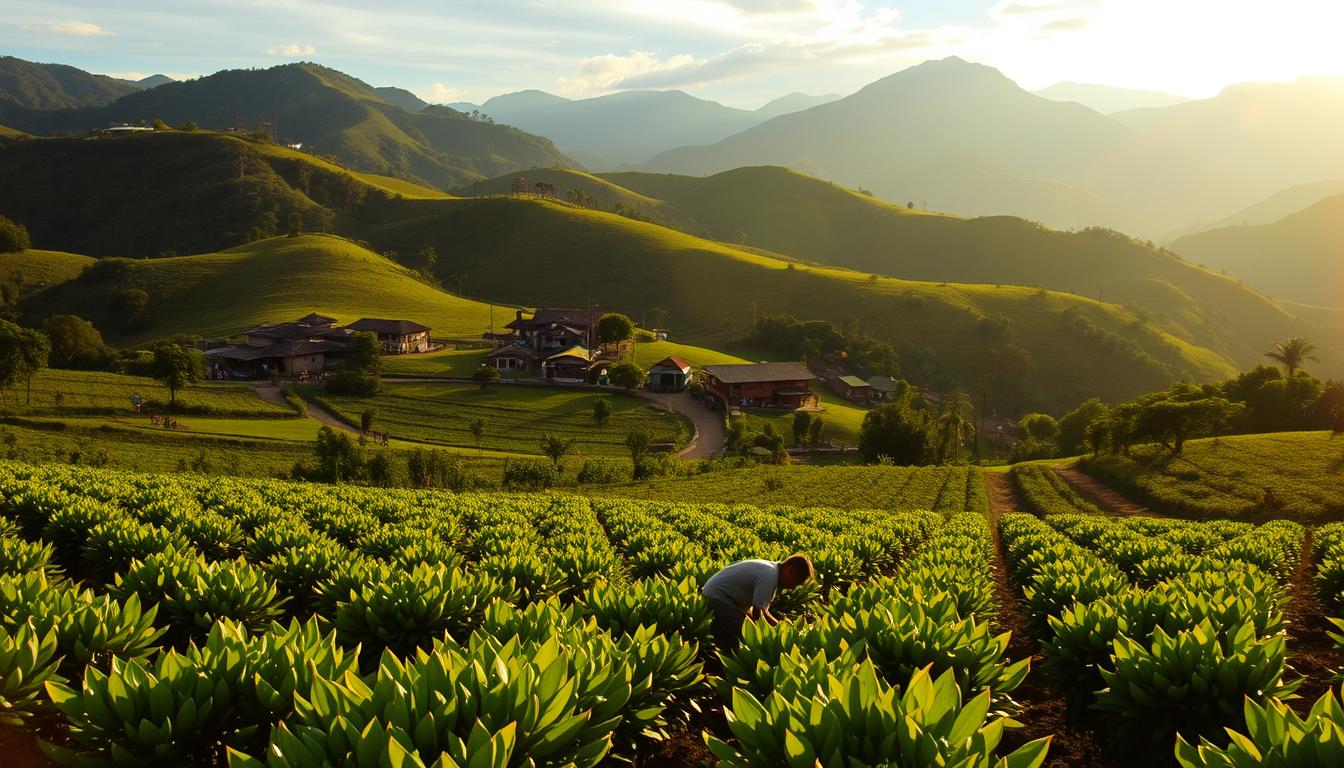
Exploring Guatemala’s rich culture, I see how important its farming traditions are. The land and weather here are perfect for growing crops that are key to its identity.
The lively festivals and daily moments where people enjoy their traditional drinks show the country’s rich cultural tapestry. In this article, we’ll look into Guatemalan coffee and cacao. We’ll explore their history, tastes, and cultural value.
Key Takeaways
- Guatemala’s agricultural sector is pivotal to its economy and cultural heritage.
- Coffee and cacao are integral to Guatemalan traditions and identity.
- The country’s unique climate and soil contribute to the distinct flavor profiles of its crops.
- Cultural festivals and rituals surround the harvest and consumption of these crops.
- The significance of these crops extends beyond their economic value to their cultural and social importance.
Introduction to Guatemala’s Coffee and Cacao
The story of coffee and cacao in Guatemala is truly captivating. These crops are key to the nation’s exports and its culture. They are not just crops; they are a big part of Guatemala’s history and identity.
Coffee has been a big deal in Guatemala since the 18th century. Places like Antigua and Huehuetenango are famous for their coffee. They make some of the world’s best coffee and help shape Guatemala’s identity.
A Brief History of Coffee in Guatemala
Coffee came to Guatemala in the 18th century and quickly became very important. Antigua and Huehuetenango are known for their coffee because of their perfect weather and soil. These areas help make Guatemala famous for its high-quality coffee.
Guatemalan farmers work very hard to make the coffee industry successful. Their skill and effort help Guatemalan coffee stay competitive worldwide. This greatly helps the country’s exports.
The Origins of Cacao in Guatemalan Culture
Cacao has a long history in Guatemala, going back to the ancient Mayans. The Mayans saw cacao as sacred, using it as money and in rituals. This importance has lasted, making cacao a big part of Guatemalan culture.
Today, Guatemala keeps growing cacao, mixing old ways with new methods. They make high-quality cacao that people all over the world want. Growing cacao is more than just farming; it’s about keeping a cultural tradition alive.
The Growing Regions of Coffee in Guatemala
Guatemala’s coffee regions offer a variety of flavors. From Antigua’s sweetness to Huehuetenango’s bright acidity, each region has its own taste. The country’s diverse geography adds to the coffee’s complex flavors.
Altitude and Climate: Ideal Conditions
Guatemala’s coffee-growing areas are at high altitudes with unique climates. This makes them perfect for growing coffee. The rich soil, enough rain, and sunlight hours all contribute to the coffee’s complex flavors.
Antigua, Huehuetenango, and Atitlán stand out for their terroir. Antigua’s coffees are known for their deep, chocolatey taste. Huehuetenango’s high altitude gives coffees bright acidity and fruit notes.
Key Coffee Growing Regions We Celebrate
Guatemala has several key coffee-growing areas, each with its own traits. Below is a table showing some celebrated regions and their flavors:
| Region | Notable Flavor Profiles |
|---|---|
| Antigua | Deep chocolate, caramel sweetness |
| Huehuetenango | Bright acidity, fruit notes, floral hints |
| Atitlán | Balanced acidity, notes of citrus and berries |
When I visit these regions, I see the farmers’ passion. The community comes together to celebrate the coffee harvest. From Antigua’s coffee shops to Huehuetenango’s farms, Guatemala’s coffee culture is vibrant.
The flavor profiles of Guatemalan coffee come from the natural conditions and the farmers’ and roasters’ skill. This hard work has made Guatemalan coffee famous worldwide for its quality and unique taste.
The Growing Regions of Cacao in Guatemala
Guatemala’s cacao industry is a treasure trove of flavors and stories. The lush forests and skilled farmers make it special. The rich cultural heritage and dedication of farmers are truly inspiring.
Guatemala has a wide range of cacao varieties, each with its own flavor. The country’s cacao-growing regions have rich volcanic soil, plenty of rain, and a great climate. This makes it perfect for growing cacao.
Unique Varieties of Cacao Grown
Guatemalan cacao is famous for its complex flavors. These flavors come from the different cacao varieties grown here. Some of these unique varieties include:
- Cacao Criollo, known for its delicate and nuanced flavor
- Cacao Forastero, which is robust and has a stronger flavor profile
- Trinitario, a hybrid of Criollo and Forastero, offering a balanced taste
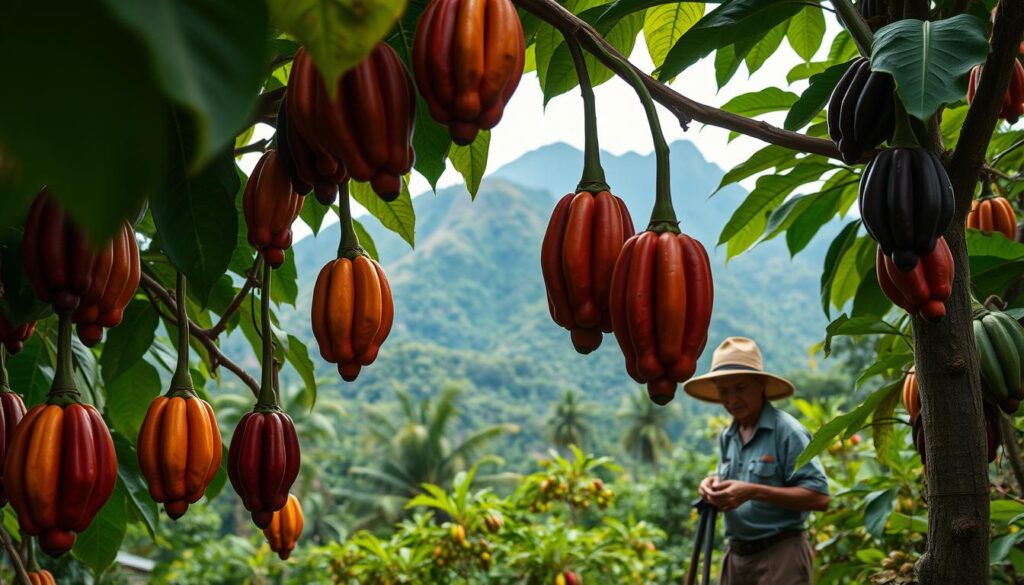
Essential Farming Practices for Quality Cacao
The quality of Guatemalan cacao comes from the varieties and farming practices. Traditional methods like hand-harvesting and fermenting are key. They help create the unique flavors of Guatemalan cacao.
Many small-scale farmers in Guatemala focus on sustainable farming. They ensure their cacao is high quality and eco-friendly. This dedication to quality and sustainability makes Guatemalan cacao stand out globally.
When comparing cacao and coffee farming, we see a common thread. Both have a deep connection to the land and a passion for quality. This comparison shows the unique qualities of each and the importance of preserving traditional farming.
Flavor Profiles: Coffee vs. Cacao
Guatemalan coffee and cacao show off the country’s rich farming history and varied landscapes. Both are known for their deep flavors of chocolate, fruit, and spices.
Factors Influencing Taste
The taste of Guatemalan coffee and cacao comes from many things. Soil, climate, and how they’re processed all play a part. These factors create unique tastes for each.
Guatemalan coffee’s bright taste comes from its high-altitude farms. The cooler weather lets the coffee flavors grow more complex. Cacao, on the other hand, gets its smooth feel from the rich volcanic soils where it’s grown.
“The flavor profile of Guatemalan coffee is characterized by notes of citrus, chocolate, and caramel, with a bright acidity that is both refreshing and invigorating.”
Our Favorite Flavor Notes
We love the citrus and chocolate notes in Guatemalan coffee. The bright acidity makes it refreshing. Cacao, with its deep chocolate flavors, is a favorite too.
| Beverage | Common Flavor Notes |
|---|---|
| Coffee | Citrus, chocolate, caramel |
| Cacao | Deep, rich chocolate, fruit, spices |
Whether you love coffee or chocolate, Guatemala has something special for you. Exploring Guatemalan coffee and cacao is a treat. Each has its own unique qualities to enjoy.
Caffeine Content: A Comparison
Coffee and cacao are two big deals in Guatemala, each with its own caffeine story. Coffee is known for its caffeine kick, but cacao has a lot less. This is key for those who watch their caffeine intake or have a preference.
Understanding the Differences in Caffeine Levels
Coffee packs a bigger caffeine punch than cacao. A single cup of coffee can have 60 to 200 mg of caffeine. Cacao, like dark chocolate, has about 6 mg per ounce.
The caffeine gap comes from how they’re made and the beans’ natural caffeine. Coffee beans naturally have more caffeine, which gets even stronger when brewed.
Health Benefits of Caffeine from Both Sources
Both coffee and cacao bring health perks, even with their caffeine differences. Coffee’s caffeine boosts alertness and energy, making it a morning favorite. Drinking coffee in moderation can also help your heart and lower disease risks.
Cacao, with less caffeine, is packed with antioxidants. It’s linked to better mood and heart health. The flavonoids in cacao are key to these benefits, making it a great diet addition.
| Beverage | Caffeine Content (per serving) | Health Benefits |
|---|---|---|
| Coffee | 60-200 mg | Enhanced alertness, improved heart health |
| Cacao (Dark Chocolate) | 6 mg per ounce | Rich in antioxidants, improved mood |
In summary, coffee and cacao offer unique health benefits despite their caffeine differences. Knowing their caffeine levels and health perks helps us choose wisely.
Processing Methods for Coffee and Cacao
Guatemala is known for its top-notch coffee and cacao. The care in processing these products greatly affects their taste and quality.
The Journey from Bean to Brew: Coffee
Coffee making in Guatemala starts with picking coffee cherries. These cherries are then processed in ways like washed, natural, or honey. Each method gives coffee its unique taste.
The beans are dried, hulled, and sorted. After that, they’re roasted to highlight their flavors.
Roasting is key. It needs a deep understanding to bring out the best in the beans. Guatemalan roasters aim for a perfect balance of acidity and body, making the coffee rich and fulfilling.
From Pod to Chocolate: Cacao Processing
Cacao processing is just as detailed. It starts with fermenting the beans to enhance their taste. Then, the beans are dried, usually in the sun, to remove moisture.
Next, they’re roasted to boost their flavor. After that, the shells are removed, leaving the nibs. These nibs are ground into chocolate liquor, which can be turned into different chocolate products.
The artisanal approach in Guatemala ensures the chocolate is rich and velvety. This method preserves the deep flavor of the cacao.
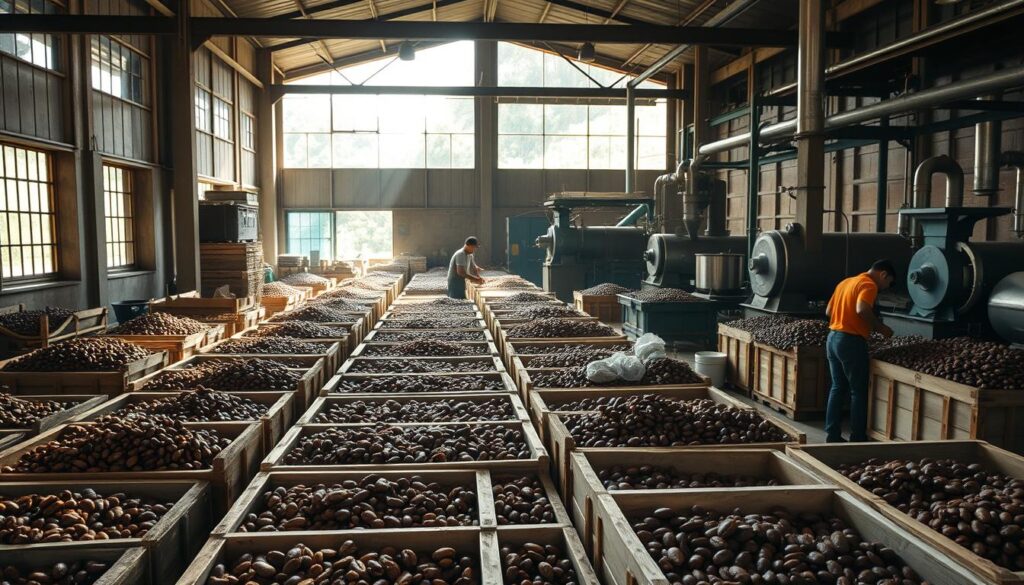
The skill in processing coffee and cacao shows Guatemala’s commitment to quality. Understanding these processes helps us appreciate the complex tastes and textures of Guatemalan coffee and cacao.
Economic Impact of Coffee and Cacao in Guatemala
The coffee and cacao industries are key in Guatemala’s economy. They create jobs and boost exports. These industries are crucial for the country’s financial health.
Employment and Livelihoods
Coffee and cacao farming need a lot of work. They give jobs to thousands in rural areas. Many families rely on the money they make from these farms.
Key statistics on employment:
| Sector | Number of People Employed | Percentage of Total Workforce |
|---|---|---|
| Coffee | 250,000 | 5% |
| Cacao | 100,000 | 2% |
Export Trends and International Markets
Guatemala’s coffee and cacao are famous worldwide for their quality. This makes them big export items. The demand for these products helps a lot with the country’s earnings.
Export trends comparison:
| Year | Coffee Exports (in tons) | Cacao Exports (in tons) |
|---|---|---|
| 2020 | 150,000 | 20,000 |
| 2021 | 160,000 | 25,000 |
| 2022 | 170,000 | 30,000 |
In conclusion, coffee and cacao have a big impact on Guatemala’s economy. They affect jobs, people’s lives, and exports. As more people want these products, their importance in Guatemala’s economy will keep growing.
Cultural Significance of Coffee and Cacao
In Guatemala, coffee and cacao are more than just products. They are at the heart of the country’s culture. For centuries, these items have shaped traditions, community life, and cultural practices.
Coffee Ceremonies and Community Gatherings
Coffee ceremonies are a big deal in Guatemala. They bring people together, creating moments of joy and laughter. Making coffee is seen as an art, with each step done with great care.
These ceremonies show how important coffee is in Guatemalan culture. They highlight the value of community and belonging. Coffee is not just a drink; it’s a way to connect with others.
Coffee plays a big role in Guatemalan life, from daily routines to special events. During festivals, coffee is a symbol of hospitality. Its aroma welcomes everyone, creating a sense of togetherness.
Cacao’s Role in Guatemalan Traditions
Cacao holds a special place in Guatemalan traditions, mainly among indigenous communities. It’s seen as a gift from the gods, used in rituals for spiritual growth and healing. This shows its deep cultural value, beyond just being a commodity.
In many communities, cacao is used in sacred rituals passed down through generations. These rituals involve making traditional cacao drinks. These drinks are consumed to promote unity and spiritual well-being. This shows Guatemalans’ deep respect for their heritage and the natural world.
Key aspects of cacao’s cultural significance include:
- Use in sacred rituals and ceremonies
- Symbolism of spiritual growth and healing
- Connection to ancestral heritage
- Representation of unity and community bonding
The cultural importance of coffee and cacao in Guatemala shows the country’s rich heritage. These items are crucial in everyday life and traditions. As Guatemala faces global market challenges, the cultural value of coffee and cacao remains key to its identity.
Sustainability Challenges in Coffee and Cacao Farming
The world’s growing demand for coffee and cacao highlights big sustainability challenges. These crops are vital for millions of farmers and their families. Yet, they also have big environmental impacts.
Environmental Concerns and Solutions
Coffee and cacao farming face environmental issues like deforestation, water pollution, and soil damage. Intensive farming harms biodiversity and disrupts ecosystems. To fix this, farmers are using sustainable methods like shade-grown crops, organic farming, and agroforestry.
“Sustainable agriculture is not just a trend; it’s a necessity for the long-term viability of coffee and cacao production,” says a leading expert in sustainable agriculture. These practices protect the environment, improve produce quality, and make farming more resilient to climate change.
The Role of Fair Trade Practices
Fair trade is key to sustainability in coffee and cacao farming. It ensures farmers get a fair price for their work. This helps them improve their lives and invest in sustainable farming. Fair trade also fights for social justice by empowering farmers and workers, mainly in poor communities.
- Fair trade practices ensure fair prices for farmers, improving their livelihoods.
- Fair trade promotes social justice by empowering farmers and workers.
- Fair trade certification encourages sustainable farming practices.
In conclusion, solving sustainability issues in coffee and cacao farming needs a broad approach. We must adopt eco-friendly farming and support fair trade. This way, we can secure a sustainable future for these industries.
Pairing Coffee and Cacao: Tasting Events
Exploring coffee and cacao pairing opens a world of flavors and smells. It shows how these two can create rich sensory experiences.
Tasting events that mix coffee and cacao let us see their unique flavors. These events highlight the differences in coffee and cacao varieties.
Ideas for Organizing a Tasting Event
To host a great tasting event, follow these steps:
- Choose a variety of coffee and cacao samples from different places.
- Have brewing gear and chocolate-making tools to show how it’s made.
- Get experts to help guests through the tasting.
It’s also key to make the event fun. Decorate with items that show the cultures of coffee and cacao.
Our Recommendations for Pairing
Some coffee and cacao pairings are perfect together. Here are a few:
| Coffee Type | Cacao Variety | Flavor Profile |
|---|---|---|
| Light Roast Coffee | Dark Chocolate | Fruity and floral notes with a hint of bitterness |
| Espresso | Milk Chocolate | Rich and creamy with a deep, bold flavor |
| Medium Roast Coffee | White Chocolate | Smooth and sweet with subtle nutty undertones |
These pairings show how versatile coffee and cacao can be. Trying different types and brewing methods can find new favorites.
Conclusion: The Future of Coffee and Cacao in Guatemala
Exploring Guatemala’s coffee and cacao culture has shown me a lot. The farmers, artisans, and communities are very dedicated. They work hard to make these products special.
Coffee and cacao are different in many ways. Their flavors and how they’re made set them apart. Guatemala’s coffee and cacao are big in the world market. They add a lot to the country’s culture.
Innovative Traditions
It’s important to mix new ideas with old traditions in Guatemala’s coffee and cacao. Supporting local farmers and using green practices is key. This way, we can look forward to a bright future for these valuable products.
Supporting Local Farmers
Helping local farmers is crucial for keeping Guatemalan coffee and cacao top-notch. By doing this, we get to enjoy their unique tastes and smells. These are what make these products so loved worldwide.