
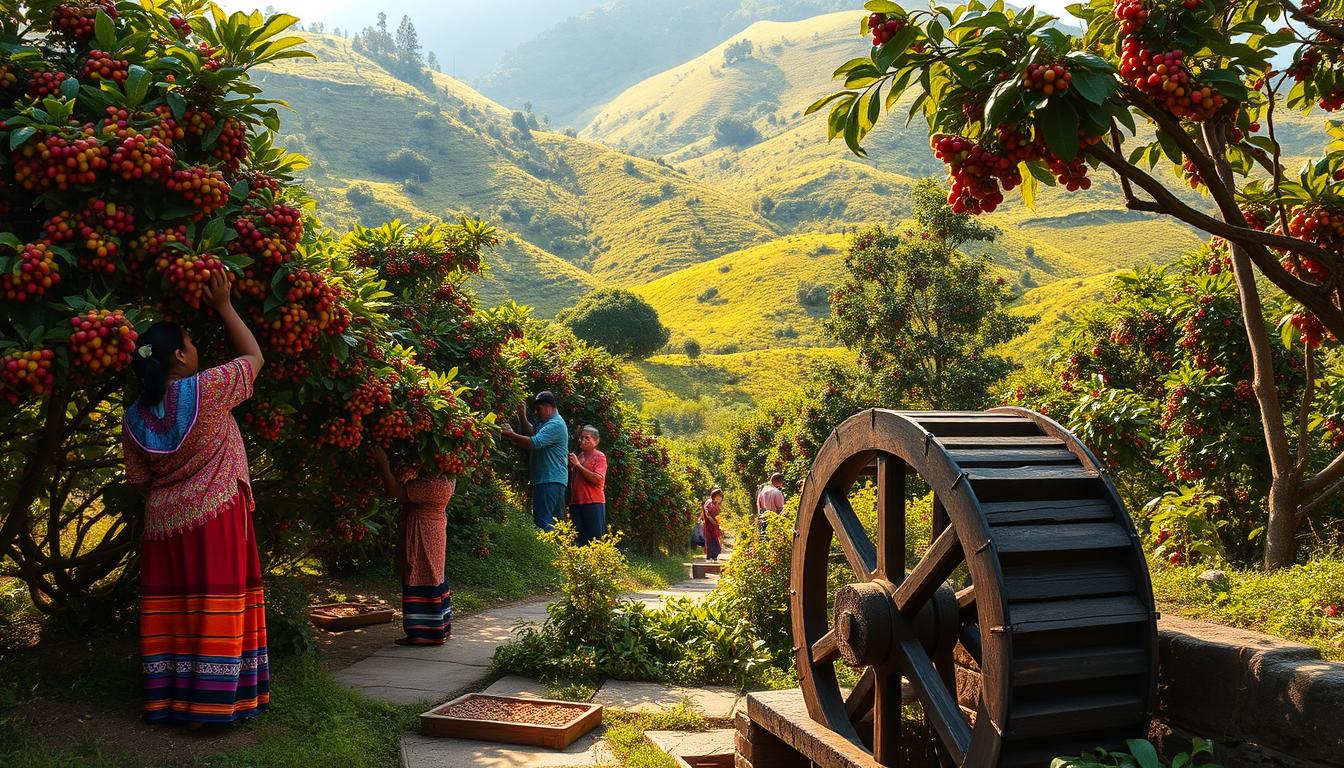
When I walked into a traditional Guatemalan coffee shop, the smell of fresh coffee hit me. It was warm and welcoming. It’s obvious that coffee traditions are a big part of Guatemalan life.
Guatemala’s history and coffee traditions go beyond just drinking coffee. They are about the people and the places that make some of the best coffee in the world. In this article, I’ll dive into this rich culture, from its history to its importance today.
Key Takeaways
- Guatemala’s coffee culture is deeply rooted in tradition and history.
- The country’s coffee is renowned for its high quality and distinct flavor profiles.
- Coffee plays a significant role in Guatemalan daily life and social interactions.
- The coffee industry is crucial to Guatemala’s economy and regional identity.
- Exploring Guatemala’s coffee culture offers insights into the country’s heritage and traditions.
The Rich History of Coffee in Guatemala
The history of coffee in Guatemala is a rich tapestry. It’s woven with tradition, innovation, and resilience. For centuries, coffee has been a big part of Guatemalan society. It has shaped the economy and the culture of the nation.
Early Beginnings and Traditions
Coffee came to Guatemala in the 18th century, thanks to Jesuit priests. The country’s volcanic highlands and rich soil were perfect for growing coffee. Early plantations were set up in places like Antigua, known for its top-notch coffee.
For generations, coffee has been made the traditional way. Many farmers still use old methods. These traditions are a source of pride and a key part of Guatemala’s culture.
The Role of Coffee in Guatemalan Society
Coffee has shaped Guatemalan society in many ways. It’s not just a crop; it’s a way of life in many rural areas. The coffee industry has given jobs and stability to many families, helping the country’s social fabric.
Coffee has also influenced Guatemalan culture, with coffee rituals and traditions being an integral part of daily life. Coffee is at the heart of social gatherings, bringing people together and creating a sense of community.
Major Historical Events Influencing Coffee Production
Guatemala’s coffee industry has seen many changes over the years. New technologies and global trends have had an impact. Political and economic events, like the coffee price crisis in the late 1990s, have also affected production.
Despite these challenges, Guatemalan coffee producers have shown great resilience. They have adapted to changes while staying true to quality and tradition.
Key Regions for Coffee Growing in Guatemala
Guatemala’s coffee is famous worldwide. This is thanks to its many regions, each adding its own special touch. I’ve seen how much local farmers care about their work. Coffee is a big part of their lives and community traditions.
Antigua: The Crown Jewel of Coffee
Antigua is known for its top-notch coffee. Its soil and climate are perfect for growing coffee. The area is full of history and lively communities, making it a key spot for coffee lovers.
I visited a coffee shop in Antigua. There, I saw the passion of the baristas. Coffee is very important in the community.
Huehuetenango: High Altitude, Rich Flavor
Huehuetenango is famous for its coffee’s rich taste. The high altitude and cool weather make the coffee special. Farmers here are proud of their work, using old methods to make their coffee.
Cobán: The Heart of Coffee Biodiversity
Cobán is in the heart of Guatemala. It’s known for its coffee diversity. The area’s unique environment supports many coffee types. Farmers here are leaders in sustainable farming.
| Region | Notable Characteristics | Flavor Profile |
|---|---|---|
| Antigua | Volcanic soil, mild climate | Balanced, with hints of chocolate |
| Huehuetenango | High altitude, rugged terrain | Rich, complex, with fruity notes |
| Cobán | Biodiverse ecosystem, varied coffee species | Diverse, with floral and spicy notes |
In conclusion, Guatemala’s coffee regions are a treasure trove of flavors and traditions. Each region adds something special to the country’s coffee culture. Supporting local farmers and sustainable practices is key to keeping this heritage alive.
The Coffee Production Process
In Guatemala, coffee production is more than just growing beans. It’s about keeping a tradition and a way of life alive. As I explore this process, I see the dedication and skill of those involved.
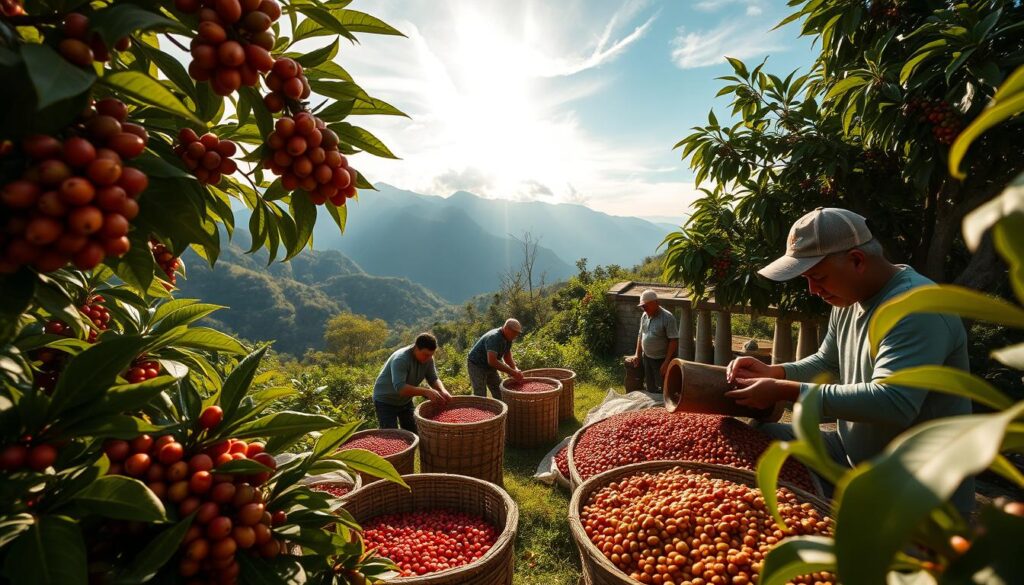
From Bean to Brew: An Overview
The journey of Guatemalan coffee is detailed and careful. It starts with flowering, when coffee trees bloom. Then, fruiting happens, and the cherries grow.
Next, the cherries are picked, processed, and dried. This gets the beans ready for roasting.
Each step is planned with care and requires skilled hands. Farmers pick cherries by hand when they’re ripe. This hard work shows the pride and craftsmanship of Guatemalan coffee farmers.
Importance of Sustainable Farming Practices
Sustainable farming is key for Guatemalan coffee’s quality and taste. Practices like shade-grown coffee and organic farming protect biodiversity. They also improve soil and reduce environmental harm.
These practices help farmers grow better coffee. They also make the environment healthier. This is why Guatemala’s coffee is known for its quality.
The Role of Local Farmers and Cooperatives
Local farmers and cooperatives are essential in Guatemalan coffee. They add their knowledge and passion at every stage. Cooperatives help farmers share knowledge and resources.
Together, farmers and cooperatives keep Guatemalan coffee standards high. They ensure it meets global expectations while keeping local traditions alive.
Cultural Significance of Coffee in Daily Life
Exploring Guatemalan culture, I found coffee is key to their identity. It’s more than a drink; it’s a sign of welcome, community, and tradition.
Coffee as a Social Connector
Coffee as a Social Connector
In Guatemala, coffee unites people, creating a sense of community. It’s present at family meetings, social events, and celebrations. At a local farm, I saw how coffee strengthens family ties through daily gatherings and stories.
“Coffee is the common language that unites us all, from the farmer to the consumer, in a shared appreciation for the craft and tradition behind every cup.”
Coffee shops in Guatemala are lively spots for locals to meet and chat. They share news and enjoy each other’s company over coffee. This shows Guatemala’s friendly and open nature.
Traditional Coffee Practices and Rituals
Traditional Coffee Practices and Rituals
Guatemalan coffee traditions are rich and varied, showing the country’s cultural diversity. One key ritual is brewing coffee with the “chorreador”, a wooden device that makes a rich brew.
| Region | Traditional Coffee Practice | Significance |
|---|---|---|
| Antigua | Using the “chorreador” for brewing | Preserves traditional brewing methods |
| Huehuetenango | Coffee ceremonies during special occasions | Strengthens community bonds |
| Cobán | Shade-grown coffee practices | Promotes biodiversity and sustainability |
Coffee is a big part of Guatemalan life, showing their values of community, tradition, and hospitality. My experience with Guatemalan coffee culture was eye-opening, highlighting the country’s rich heritage.
The Art of Brewing Guatemalan Coffee
To truly experience Guatemalan coffee, you need to learn how to brew it. This skill is deeply rooted in the country’s coffee culture. The rich flavors and aromas come from both the high-quality beans and the brewing techniques.
Guatemalan coffee is brewed in many ways, each highlighting different flavors. From pour-over and French press to cold brew, the brewing method greatly affects the taste.
Common Brewing Methods Used in Guatemala
In Guatemala, coffee brewing is a tradition passed down through generations. The chorreador is a traditional coffee maker that uses a cloth filter. It’s known for its clean and balanced flavor extraction.
The French press is also popular in Guatemala. It’s loved for its ability to bring out the coffee’s full-bodied flavors. The immersion brewing technique in French press results in a rich and nuanced taste.
Tips for Brewing Authentic Guatemalan Coffee at Home
To brew authentic Guatemalan coffee at home, start with high-quality, freshly roasted beans. Choose beans from reputable farms or cooperatives in Guatemala.
Here are some tips for brewing Guatemalan coffee:
- Use filtered water to prevent any impurities in the water from affecting the taste of the coffee.
- Adjust the grind of your coffee beans according to the brewing method you’re using.
- Experiment with different brewing times to find the optimal balance for your taste preferences.
| Brewing Method | Grind Size | Brewing Time |
|---|---|---|
| Pour-over | Medium-fine | 3-4 minutes |
| French press | Coarse | 4-5 minutes |
| Cold brew | Coarse | 12-24 hours |
By following these tips and experimenting with different brewing methods, you can enjoy authentic Guatemalan coffee at home.
Flavor Profiles of Guatemalan Coffee
Guatemalan coffee’s unique flavors show the country’s varied geography and climate. These flavors remind me of Guatemala’s rich coffee culture.
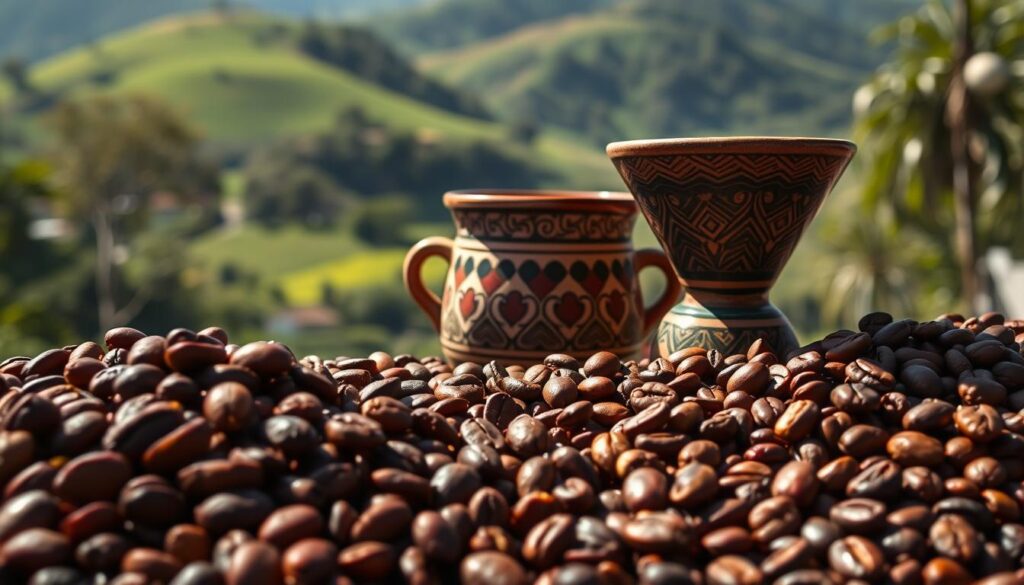
Understanding the Unique Tastes and Aromas
Guatemalan coffee is famous for its balanced acidity and rich tastes. These come from the soil, altitude, and how it’s processed. For example, coffee from Huehuetenango has bright acidity and fruity notes.
Coffee from Antigua has a balanced taste with chocolate and spice hints. Guatemala’s rich biodiversity adds to its coffee’s unique taste. The varied landscapes, from volcanoes to cloud forests, make the flavors complex.
How Geography Influences Flavor
Geography greatly affects Guatemalan coffee’s flavors. Volcanic areas like Antigua give coffee a mineral taste. On the other hand, Cobán’s rich biodiversity makes coffee taste floral and herbal.
“The geography of Guatemala is as diverse as the flavors of its coffee, with each region offering a unique sensory experience.”
Knowing how geography shapes flavor deepens our appreciation for Guatemalan coffee. It also highlights the cultural rituals around it. These traditions bring people together, creating a sense of community.
Coffee Festivals and Events in Guatemala
Guatemala’s coffee festivals, from Antigua to Huehuetenango, showcase the country’s rich coffee heritage. These events celebrate the hard work and dedication of coffee farmers. They bring together farmers, coffee lovers, and the community to appreciate the best coffee in the world.
Celebrating the Coffee Harvest
The coffee harvest season in Guatemala is a big deal. It’s marked by festivals that celebrate months of hard work. These festivals are key to Guatemalan culture, highlighting the country’s coffee traditions.
At these festivals, you can see traditional coffee processing methods. You can also taste some of the finest coffee and learn about its journey. It’s a time for local farmers to share their pride and passion with everyone.
Notable Festivals and Their Activities
Guatemala has many coffee festivals, each with its own special activities. The Antigua Coffee Festival is famous for its coffee competitions. The Huehuetenango Coffee Festival, on the other hand, offers coffee tasting sessions and workshops on sustainable farming.
The Cobán Coffee Festival celebrates the region’s coffee biodiversity. The San Marcos Coffee Festival is known for its vibrant cultural performances and coffee-themed events. These festivals promote Guatemalan coffee, boost the local economy, and support community development.
In summary, Guatemala’s coffee festivals reflect the country’s deep coffee culture and traditions. They offer a unique experience for everyone, celebrating the richness and diversity of Guatemalan coffee.
Guatemalan Coffee in the Global Market
The global market for Guatemalan coffee is growing fast. This is because of its high quality and unique flavors. Guatemalan coffee is now a top choice in the specialty coffee world.
Guatemalan coffee is known worldwide for its special taste. This is thanks to the country’s different regions and climates. From Antigua’s balanced acidity to Huehuetenango’s rich flavors, there’s a taste for everyone.
Exporting Quality: The Global Reach of Guatemalan Coffee
Guatemalan coffee is shipped to many countries. It’s loved for its quality and unique flavors. The country’s coffee industry is well-respected globally, attracting specialty coffee roasters.
Exporting Guatemalan coffee helps the country’s economy. It also promotes cultural exchange by sharing coffee traditions and rituals.
Challenges Faced by Guatemalan Coffee Farmers
Despite high demand, farmers face big challenges. These include the effects of climate change, market ups and downs, and the need for sustainable farming. Climate change is a big threat, as it can reduce yields and quality.
To tackle these issues, we must support farmers. This means backing sustainability and fair trade. Doing so helps keep Guatemalan coffee production going strong and farmers happy.
As consumers, we play a key role. We can help by choosing high-quality, sustainably grown coffee. By making smart choices, we support a fair and sustainable coffee industry.
Savoring the Experience: Coffee Shops in the U.S.
Guatemalan coffee is becoming more popular around the world. American coffee shops are now embracing this rich culture. They feature Guatemalan brews on their menus, from big cities to small towns.
Popular Cafes Featuring Guatemalan Coffee
I’ve found many coffee shops in the U.S. that serve top-notch Guatemalan coffee. Intelligentsia Coffee in Chicago and La Colombe in Philadelphia are great examples. They source their beans from Guatemala, offering a unique taste that highlights Guatemalan coffee culture.
Must-Try Coffee Shops
Blue Bottle Coffee in San Francisco and Cafe du Soleil in New York City are must-visits. They offer a variety of Guatemalan coffee blends. These shops not only serve amazing coffee but also promote Guatemalan coffee traditions and culture.