
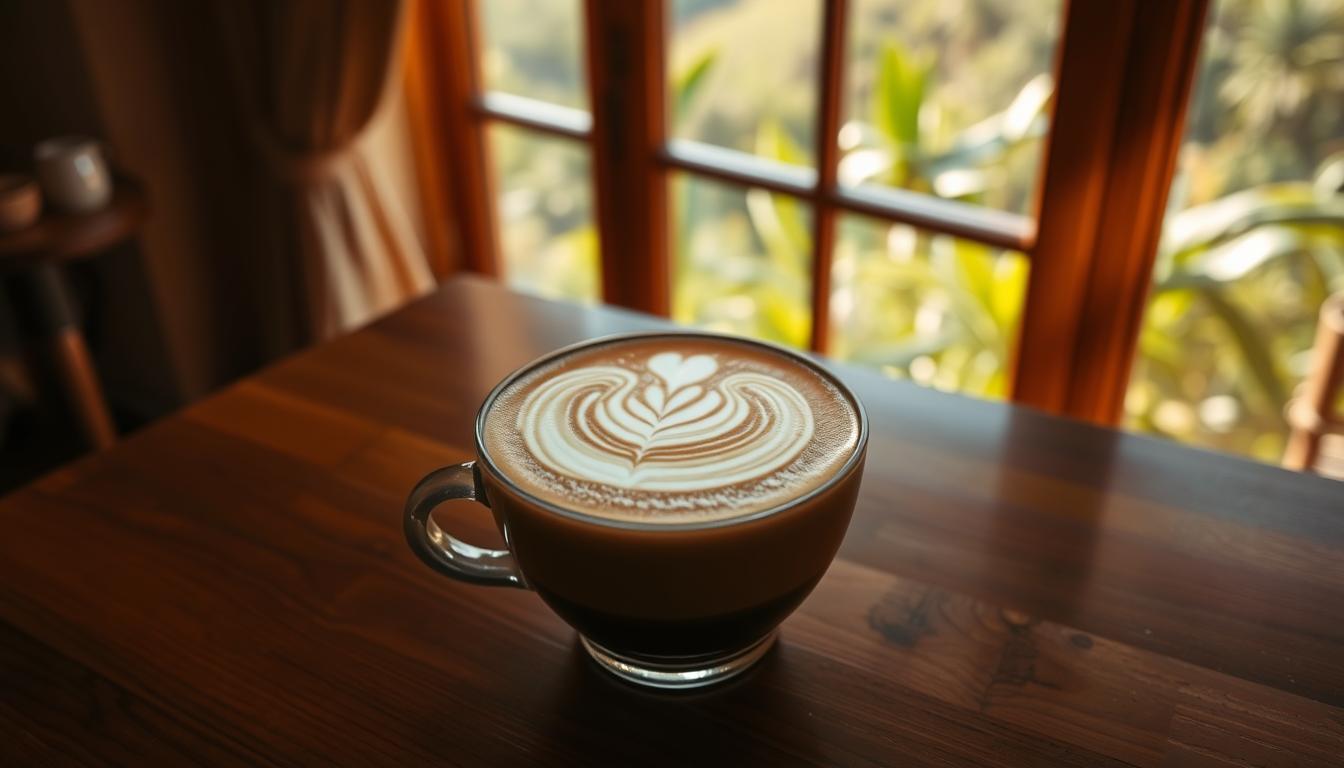
Guatemalan espresso is famous for its deep flavor. It’s perfect for making latte art. The coffee from places like Antigua and Huehuetenango adds special tastes that make coffee art better.
To begin, knowing the best way to brew is key. This includes the right grind size and how much coffee to use. By getting these right, baristas can make coffee designs that look great and taste even better.
Key Takeaways
- Guatemalan espresso offers a rich flavor profile ideal for latte art.
- Regions like Antigua and Huehuetenango produce distinct flavor notes.
- Optimal brewing parameters are crucial for bringing out the unique characteristics of Guatemalan espresso.
- Mastering grind size and ratios is essential for creating high-quality latte art.
- The art of coffee making is elevated by understanding the nuances of Guatemalan coffee.
The Rich Heritage of Guatemalan Coffee
The story of Guatemalan coffee is filled with tradition, innovation, and a focus on quality. For centuries, coffee has been a big part of Guatemalan life. It has shaped the country’s economy and social life.
Guatemala’s Coffee Growing History
Coffee in Guatemala started in the 18th century, thanks to Jesuit priests. Over time, coffee became a key part of the economy. The country’s unique land and weather make its coffee special. Today, Guatemala is known worldwide for its top-notch Arabica coffee.
Cultural Significance of Coffee Farming
Coffee farming is a big deal in Guatemalan culture. Many families depend on it for their income. The hard work of farming brings farmers together, creating a strong community.
Sustainable Practices in Guatemalan Coffee Production
Guatemalan farmers are now using sustainable methods like shade-grown coffee. These methods help the environment and make the coffee better. Many farms are now certified for their sustainability efforts.
Here’s a quick look at Guatemalan coffee’s heritage and its impact:
| Aspect | Description | Impact |
|---|---|---|
| History | Coffee introduced in the 18th century | Shaped economy and culture |
| Cultural Significance | Families rely on coffee farming | Fosters community and tradition |
| Sustainability | Adoption of shade-grown and organic methods | Enhances quality and environmental conservation |
Guatemalan coffee is special because of its rich history, cultural importance, and focus on sustainability. For baristas, knowing this heritage adds to their appreciation of the coffee. It helps them create latte art, like milk frothing, that brings out the best in Guatemalan espresso.
Exploring Guatemala’s Premier Coffee Regions
Guatemala’s coffee regions are known for their unique flavors. The country’s geography and climate make it perfect for coffee. Places like Antigua, Huehuetenango, and Cobán are famous for their top-quality coffee.
Antigua: Volcanic Soil and Complex Flavors
Antigua’s coffee is grown in volcanic soil. This gives it a rich and complex taste. It has notes of chocolate and spice and a balanced acidity, perfect for espresso.
Baristas love Antigua coffee for its versatility. It adds depth to many brewing methods.
Huehuetenango: High-Altitude Excellence
Huehuetenango is one of Guatemala’s highest coffee-growing areas. Its high altitude gives the coffee bright acidity and floral notes. The dry climate and rich soil make it a favorite among specialty roasters.
For baristas, Huehuetenango coffee is vibrant and refreshing. It makes for a great espresso.
Cobán: Misty Mountain Coffee
Cobán is famous for its misty mountains and lush cloud forests. This creates a unique microclimate for coffee. The coffee has distinctive fruit notes and a smooth, balanced flavor with hints of citrus.
Cobán coffee is loved by baristas for its clarity. It’s perfect for showcasing nuanced latte art.
Knowing about these regions helps baristas choose the right coffee. By using coffees from Antigua, Huehuetenango, and Cobán, they can improve their craft. This way, they can offer customers amazing coffee experiences.
- Antigua: Rich, complex, chocolate, and spice notes.
- Huehuetenango: Bright acidity, floral notes, high altitude.
- Cobán: Smooth, balanced, fruit and citrus notes.
Distinctive Flavor Profiles of Guatemalan Espresso
Guatemalan espresso is famous for its rich and complex flavors. These flavors change a lot depending on where the coffee is grown. Guatemala’s different coffee-growing areas each offer unique tastes.
Key Tasting Notes by Region
Each region in Guatemala gives its espresso a special taste. Coffee from Antigua has balanced acidity and chocolatey flavors. On the other hand, Huehuetenango espresso is bright and fruity.
Coffee from Cobán, in the misty mountains, tastes clean and floral. This shows how different regions in Guatemala make their espresso unique.
Acidity and Body Characteristics
The acidity and body of Guatemalan espresso are important. Guatemalan coffee usually has bright acidity, which can taste like citrus or flowers. The body can be medium to full, depending on how it’s roasted and brewed.
A good balance of acidity and body makes the espresso smooth. This smoothness is key for creating beautiful microfoam for latte art.
How Flavor Profiles Enhance Latte Art Presentation
The unique flavors of Guatemalan espresso make latte art even better. The rich tastes and smells add to the beauty of the coffee designs. This makes the coffee experience even more enjoyable.
Baristas can match their latte art designs with the espresso’s flavors. This creates a perfect balance between taste and beauty.
Essential Equipment for Creating Guatemalan Espresso
To make great Guatemalan espresso, you need top-notch equipment and skill. Baristas must choose the right tools to highlight Guatemalan coffee’s unique flavors.
Espresso Machine Requirements
A top-notch espresso machine is key for any coffee setup. For Guatemalan espresso, a machine that keeps temperature and pressure steady is essential. Look for machines with stainless steel or brass group heads for better heat retention. Temperature control is crucial for the brewing process. Machines with automatic temperature control help hit the perfect brewing temperature of 195°F to 205°F.
Grinder Specifications for Guatemalan Beans
The grinder is also vital in making espresso. For Guatemalan beans, a burr grinder is better than a blade grinder because it gives a consistent grind. Conical burr grinders are great because they don’t heat up much and grind evenly. This evenness is important for the best flavor and extraction.
Additional Tools for Precision Brewing
There are more tools that can make brewing better. A timer helps baristas control brewing time precisely. A scale ensures coffee and water are measured correctly. And a tamping tool is needed to press the coffee grounds evenly in the portafilter, for consistent extraction.
By getting these essential tools, baristas can greatly improve their Guatemalan espresso. This makes a great base for latte art.
Preparing Your Guatemalan Coffee Beans
To make amazing latte art, start with top-notch Guatemalan coffee beans. The prep process has several important steps. These steps greatly affect the taste and quality of your espresso.
Selecting the Optimal Roast Profile
Finding the right roast is key to highlighting Guatemalan coffee’s unique flavors. A medium to dark roast is best. It brings out the coffee’s sweetness and complexity. Baristas should try different roasts to match their latte art.
Ideal Grind Size and Consistency
The grind size and consistency are crucial for espresso. Guatemalan espresso needs a fine grind for good extraction. It’s important to have a uniform grind to avoid uneven flavors. A good grinder can greatly improve your espresso’s quality.
Proper Dosing and Ratios for Guatemalan Espresso
Getting the right dose and ratio is essential for a balanced espresso. For Guatemalan coffee, use about 18-20 grams of coffee. Aim for a 1:2 to 1:3 coffee to water ratio. Adjust these based on your equipment and desired espresso strength. Proper dosing and ratios are key barista tips for great flavor and crema, vital for latte art.
Brewing the Perfect Guatemalan Espresso Base
To make amazing latte art, start with a great Guatemalan espresso. Its rich flavors and unique notes are perfect for latte designs.
Step-by-Step Brewing Instructions
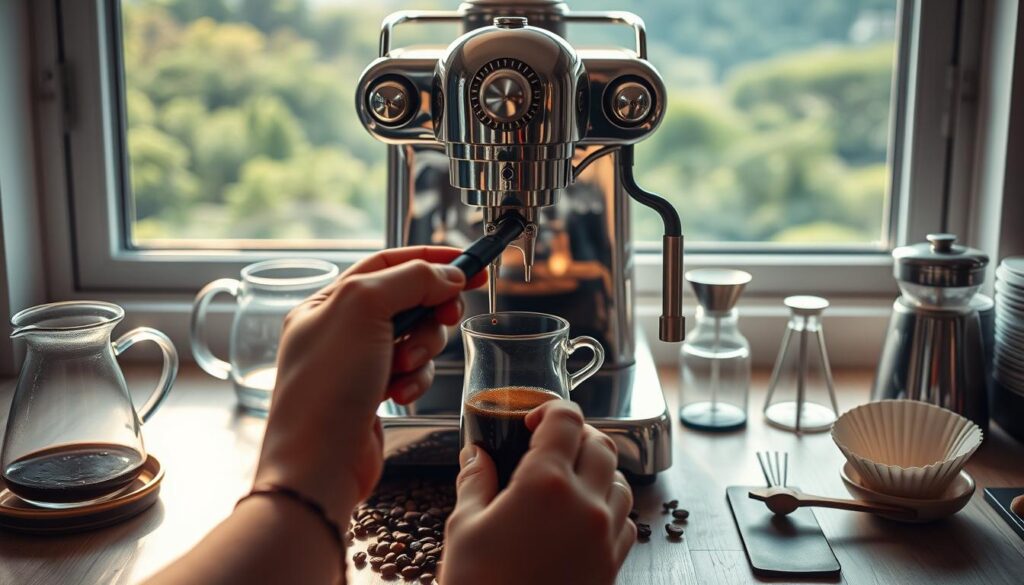
First, make sure your espresso machine is set right for temperature and pressure. Then, grind your Guatemalan beans finely but not too fine.
Put the ground coffee in the portafilter and tamp it well. Attach it to the machine and start brewing. Aim for 20-30 seconds and 9 atmospheres of pressure.
Temperature and Pressure Considerations
Temperature and pressure are key for Guatemalan espresso. Keep the temperature between 195°F and 205°F. Pressure should be about 9 bars for the best flavor.
Use a thermometer and pressure gauge to check these. Keeping them consistent makes your espresso balanced and flavorful, perfect for latte art.
Extraction Timing for Optimal Flavor
Extraction time is crucial for flavor. Aim for 20-30 seconds. Too quick, and it’s sour. Too slow, and it’s bitter.
Watch the time and adjust the grind or tamping as needed. This balance is key for a rich, creamy texture that’s great with steamed milk and latte art.
Mastering Guatemalan espresso brewing lets you create a top-notch base for latte art. This way, you can show off your creativity and skill.
Mastering Milk Preparation for Latte Art
To make perfect latte art, baristas need to get good at milk preparation. This includes picking the right milk and getting the texture just right. It’s all about understanding milk and how it works with espresso.
Selecting the Right Milk Type
The milk you choose can really change the latte art. Whole milk is popular for its creamy texture. But, there are other milks like oat or almond that can add different tastes and textures.
| Milk Type | Fat Content | Texture |
|---|---|---|
| Whole Milk | 3.5% | Rich, creamy |
| Oat Milk | 1.5% | Smooth, velvety |
| Almond Milk | 1.0% | Light, watery |
Proper Steaming Technique for Microfoam
Steaming milk to make perfect microfoam is an art. It needs precision and practice. You need to add air to the milk while heating it to the right temperature.
“The key to great latte art is not just the design, but the quality of the milk and espresso it’s made from.” –
Achieving the Ideal Milk Texture and Temperature
The perfect milk for latte art is silky and smooth. It should be between 140°F and 160°F. Getting this right means controlling the steaming process well.
By getting better at milk preparation, baristas can make latte art that looks amazing and tastes great.
Step-by-Step Latte Art Techniques Using Guatemalan Espresso
Guatemalan espresso is perfect for making stunning latte art. Its rich flavor is great for all sorts of designs.
Basic Heart Pattern for Beginners
For beginners, starting with a heart pattern is a good idea. First, learn to steam milk to the right consistency. This makes smooth microfoam.
- Pour steamed milk into the cup with espresso.
- Hold the pitcher close to the surface.
- Move the pitcher in a circular motion to create the heart shape.
Creating the Classic Rosetta
The rosetta is a bit more challenging. It needs precision and control. To make a rosetta, baristas should:
- Pour steamed milk in a circular motion.
- Move the pitcher back and forth to create the leaf-like pattern.
- Finish with a swift motion to define the rosetta’s edge.
Mastering the Tulip Design
The tulip design is all about layering milk. The pouring technique is key.
Pouring Technique for Multiple Layers
To get multiple layers, pour milk in different layers. Let each layer settle before adding the next.
Finishing Touches with a Thin Stream
The final step is to use a thin stream of milk. This creates the tulip’s center and defines its petals.
Advanced Latte Art Patterns
Once you’ve mastered the basics, try more complex designs. Experiment with different patterns and techniques to improve your skills.
Conclusion: Bringing Guatemalan Coffee Culture Home
Guatemalan espresso has a rich and complex flavor that’s great for latte art. By learning about Guatemalan coffee’s heritage, choosing the right gear, and mastering brewing and steaming, you can enjoy this vibrant culture at home.
Want to get better at latte art? Try different roast profiles and grind sizes. This will help you find the perfect mix that highlights Guatemalan espresso’s unique taste. With practice, you can make stunning latte art that shows off this amazing coffee’s flavors.