
Guatemalan coffee is famous for its deep flavor. It’s perfect for cold brew. The country’s areas, like Antigua and Huehuetenango, grow top-notch beans. These are great for a smooth, cool coffee.
Guatemalan coffee beans have special tastes, like chocolate and fruit. The cold brew method keeps these flavors alive. With a few brewing tips, you can make a tasty cold brew at home.
Key Takeaways
- Guatemalan coffee is well-suited for cold brew due to its rich flavor profile.
- Regions like Antigua and Huehuetenango produce high-quality beans.
- The cold brew process preserves the unique characteristics of the coffee beans.
- Simple brewing tips can help create a delicious cold brew at home.
- Guatemalan cold brew coffee features notes of chocolate and fruit.
The Unique Character of Guatemalan Coffee
Guatemalan coffee is famous for its unique taste. This is thanks to the country’s special growing conditions. Rich volcanic soil, enough rain, and different climates make it perfect for coffee.
Guatemala’s Coffee Growing Conditions
The country’s varied landscape greatly influences its coffee’s taste. Altitude and climate are key in how beans grow.
Altitude and Climate Effects on Bean Development
Higher altitudes mean beans mature slower, leading to a richer taste. The cooler air at these heights also keeps the coffee’s acidity sharp.
Seasonal Variations and Harvest Times
Coffee in Guatemala is usually picked from November to March. This timing ensures the beans are at their best, adding to their flavor.
What Makes Guatemalan Beans Special for Cold Brew
Guatemalan beans are perfect for cold brew. They have unique flavor compounds and just the right acidity. This makes the cold brew smooth and full of flavor.
Distinctive Flavor Compounds
The beans have flavors like chocolate, caramel, and fruit. These tastes are kept and even improved during cold brew.
Acidity and Body Characteristics
Guatemalan coffee has balanced acidity and a rich feel. This makes it great for cold brew. It creates a refreshing summer coffee that’s both rich and smooth.
Exploring Guatemala’s Premier Coffee Regions
Guatemala’s diverse geography leads to several top coffee regions. Each has its own unique traits. These areas are famous for their high-quality coffee beans, loved by coffee lovers everywhere.
Antigua: Volcanic Soil and Complex Flavors
Antigua is a top coffee spot in Guatemala, known for its volcanic soil and complex tastes. Its coffee is balanced, with a rich, velvety feel.
Tasting Profile and Characteristics
Antigua’s coffee tastes like chocolate, caramel, and fruit, with a hint of spice. Its complex flavors make it a hit among coffee fans.
Notable Farms and Producers
La Soledad, El Rosario, and Concepción are famous farms in Antigua. They’re known for their quality and eco-friendly farming.
Huehuetenango: High Altitude Excellence
Huehuetenango is another key coffee area in Guatemala, known for its high altitude. Its coffee is bright and has unique flavors.
Elevation Impact on Bean Quality
The high altitude in Huehuetenango makes the beans denser and more flavorful. It also boosts the coffee’s acidity, making it lively and snappy.
Signature Flavor Notes
Huehuetenango’s coffee often has citrus, berry, and floral notes. Its vibrant and refreshing taste is perfect for cold brew.
Cobán: Rainy Climate and Distinctive Notes
Cobán is famous for its rainy weather, which shapes its coffee’s flavor. Its coffee is rich and full-bodied, with unique notes.
Humidity Effects on Processing
Cobán’s humidity changes how coffee is processed. This leads to complex and full-bodied coffee. Wet processing is common, adding to the coffee’s bright acidity and clean taste.
Unique Taste Attributes
Coffee from Cobán tastes like fruit, chocolate, and spices, with a smooth texture. Its rich and satisfying flavor makes it great for cold brew.
| Region | Notable Characteristics | Flavor Profile |
|---|---|---|
| Antigua | Volcanic soil, balanced acidity | Chocolate, caramel, fruit |
| Huehuetenango | High altitude, bright acidity | Citrus, berries, floral hints |
| Cobán | Rainy climate, rich texture | Fruit, chocolate, spices |
The History of Coffee Cultivation in Guatemala
Coffee has been grown in Guatemala for centuries. The country’s culture and geography make it perfect for coffee. This has shaped its coffee history.
Colonial Origins and Development
In the 18th century, coffee came to Guatemala. The Jesuits brought coffee plants to the area.
Introduction of Coffee to Guatemala
Coffee’s arrival started a new chapter in Guatemalan farming. It thrived because of the local climate and soil.
19th Century Coffee Boom
The 19th century was a big time for coffee in Guatemala. Demand and government support fueled growth. This made Guatemala a key coffee producer.
Modern Guatemalan Coffee Industry
Now, Guatemala is famous for its top-notch coffee. Different areas give coffee its unique taste. The industry uses new methods and technology.
Farmer Cooperatives and Fair Trade Practices
Farmer cooperatives are key in fair trade and improving farmer lives. They help farmers get better prices and markets.
Challenges and Innovations in Production
The coffee industry faces challenges like climate change and market ups and downs. But, farmers keep innovating. They use sustainable methods and new ways to make coffee better and more resilient.
Selecting the Right Guatemalan Beans for Cold Brew Guatemala
Finding the perfect cold brew starts with picking the right Guatemalan coffee beans. Guatemalan coffee is famous for its balanced acidity and rich taste. This makes it perfect for cold brew.
Single-Origin vs. Blends
Choosing between single-origin or blends is your first step. Single-origin beans have a unique taste that shows off a region’s special qualities.
Benefits of Single-Origin for Cold Brew
- Unique flavor profiles that highlight regional characteristics
- Allows for a more nuanced tasting experience
- Often associated with higher quality and distinct notes
When to Consider Guatemalan Blends
Blends are great for a balanced taste and consistent flavor. They’re perfect if you prefer a simple cold brew without too many notes.
Roast Profiles and Their Impact
The roast of your Guatemalan coffee beans greatly affects the cold brew’s taste. Light to medium roasts are best for cold brew. They give a smoother, more balanced flavor.
Light to Medium Roasts for Cold Brew
These roasts keep the coffee’s natural acidity and fruit notes. This makes for a refreshing cold brew.
Dark Roast Considerations
Dark roasts add a bold, rich taste but can be too strong. They’re best for a strong cold brew.
Recommended Guatemalan Coffee Varieties
Some coffee varieties are better for cold brew because of their taste. Bourbon and Caturra are favorites among coffee lovers.
Bourbon and Caturra Varieties
Bourbon beans have balanced acidity and a sweet taste. Caturra offers a clean taste with a hint of fruitiness.
Specialty and Microlot Options
For a unique cold brew, try specialty or microlot Guatemalan coffee beans. They have distinct flavors and are of the highest quality.
Essential Equipment for Cold Brew Preparation
To make the best Guatemalan coffee cold brew, you need the right equipment. The right tools make brewing easier and improve the taste of your coffee.
Brewing Containers and Filters
Choosing between immersion brewers and DIY setups depends on what you like and need. Immersion brewers are easy to use, while DIY options let you customize and save money.
Immersion Brewers vs. DIY Options
Immersion brewers are great for beginners because they have built-in filters. DIY setups, though, offer more flexibility and can be cheaper.
Filter Types and Materials
Filters can be made of metal, paper, or cloth. The material you choose can change the taste of your cold brew. Metal filters let more oils through, while paper or cloth filters absorb some.
Grinders and Additional Tools
Grinders are key for getting the right grind size for cold brew. Tools like scales, timers, and storage containers also help a lot in the brewing process.
Burr vs. Blade Grinders for Cold Brew
Burr grinders are best for cold brew because they give a consistent grind. Blade grinders can heat up the beans, which is bad for flavor.
Scales, Timers, and Storage Vessels
Getting the coffee and water ratios right is crucial. Scales help with this, and timers make sure the brew steeps long enough. Storage containers should keep air out to keep the coffee fresh.
| Equipment | Description | Importance |
|---|---|---|
| Immersion Brewer | Simplifies brewing process | High |
| Burr Grinder | Consistent grind size | High |
| Scale | Accurate measurement | Medium |
| Timer | Controls steeping time | Medium |
| Storage Vessel | Preserves freshness | High |
Preparing Your Guatemalan Beans
Starting a great cold brew begins with the right Guatemalan coffee beans. You need to know the perfect grind size and coffee-to-water ratio. These steps help bring out the unique flavors of Guatemalan coffee.
Ideal Grind Size for Cold Brew
A coarse grind is key for cold brew coffee. It ensures the right amount of extraction during steeping.
Coarse Grind Technique
Use a burr grinder for a coarse grind. Blade grinders can heat up, harming the beans.
Consistency and Quality Checks
Feel the grind between your fingers. It should be coarse and even.
Measuring and Ratios
The standard cold brew ratio is 1:4 to 1:8 (coffee:water).
Standard Cold Brew Ratios
Start with a 1:6 ratio. Adjust it to your taste.
Adjusting for Guatemalan Bean Characteristics
Guatemalan beans have balanced acidity and rich flavor. You might need a different ratio. Try different ratios to find your perfect balance.
| Coffee-to-Water Ratio | Flavor Profile |
|---|---|
| 1:4 | Strong and rich |
| 1:6 | Balanced and smooth |
| 1:8 | Mild and subtle |
Step-by-Step Cold Brew Process
Making the perfect cold brew with Guatemalan beans needs focus and a clear plan. This guide will show you how to do it, from the start to the end. You’ll learn how to get a rich and smooth cold brew.
Initial Setup
Preparing Your Workspace
First, make sure your workspace is clean and tidy. You’ll need a big glass or plastic container, a fine-mesh filter, and a measuring cup. Use high-quality Guatemalan beans that have been stored right to keep their flavor.
Water Quality Considerations
The quality of your water is key to your cold brew’s taste. Use filtered water to avoid any bad tastes. The best water temperature is between 40°F and 50°F (4°C and 10°C).
Brewing Technique
Immersion Method Steps
The immersion method means soaking coarse-ground coffee in water. Mix 1 cup of coarse Guatemalan coffee with 4 cups of cold water in a container. Stir well, cover, and chill for 12-24 hours. The longer it steeps, the stronger it gets.
Slow Drip Alternative
The slow drip method slowly drips water through the coffee grounds. You need a special device and it takes about 3-4 hours. It makes a smoother flavor than the immersion method.
| Brewing Method | Steeping Time | Flavor Profile |
|---|---|---|
| Immersion | 12-24 hours | Strong, rich |
| Slow Drip | 3-4 hours | Smooth, nuanced |
Filtration Methods
Single vs. Double Filtration
Single filtration uses one filter layer, while double filtration uses two. Double filtration makes a cleaner brew. For Guatemalan coffee, it brings out the complex flavors better.
Clarifying Your Final Brew
After filtering, your cold brew might still have some sediment. You can clear it by passing it through a fine-mesh sieve or cheesecloth. This step is optional but can make your brew clearer and taste better.
Steeping Time and Temperature Considerations
Steeping time and temperature are key to your cold brew coffee’s flavor. Knowing how they work together is essential for a great brew.
How Time Affects Flavor Extraction
The time coffee grounds steep in water affects flavor. Longer times mean stronger, more concentrated coffee.
12-Hour vs. 24-Hour Steeps
A 12-hour steep gives a lighter, more subtle flavor. A 24-hour steep makes the coffee bolder and more intense. Try different times to find your favorite.
Tasting Throughout the Process
Check the brew often to adjust it. This ensures it’s just right for you.
Temperature Control Tips
Temperature is crucial for cold brew. The right temperature affects how flavors are extracted.
Room Temperature vs. Refrigerated Brewing
Brewing at room temperature (68-72°F) extracts flavors faster. It makes the coffee more complex. Brewing in the fridge slows down extraction, making the coffee smoother and less acidic.
Seasonal Adjustments for Optimal Results
Change your brewing temperature with the seasons. In warmer months, use cooler temperatures. In colder months, you can use slightly warmer ones.
| Steeping Time | Temperature | Flavor Profile |
|---|---|---|
| 12 Hours | Room Temperature | Lighter, nuanced |
| 24 Hours | Refrigerated | Bolder, smoother |
Tasting Notes of Guatemalan Cold Brew
Guatemala’s unique terroir gives its cold brew special tasting notes. These notes are both nuanced and captivating. The flavor is rich, refreshing, and complex.
Regional Flavor Profiles
Guatemala’s coffee regions add to the cold brew’s complexity. Each region has its own unique flavor profile.
Chocolate and Nutty Undertones
Beans from Antigua often have rich chocolate and nutty undertones. This gives the cold brew a smooth, velvety texture.
Fruity and Floral Characteristics
Beans from Huehuetenango may have fruity and floral characteristics. This adds a bright, lively dimension to the cold brew.
Acidity and Sweetness Balance
Guatemalan cold brew is known for its balance of acidity and sweetness. Beans from Cobán have a harmonious balance. This makes the brew refreshing and satisfying.
Identifying Quality in Your Brew
To fully enjoy Guatemalan cold brew, knowing quality indicators is key.
Visual and Aromatic Indicators
A high-quality cold brew should look clear and smell intoxicating. Clarity and aroma intensity show the brew’s quality.
Flavor Development and Aging Effects
The flavor of Guatemalan cold brew improves over time. The optimal flavor is usually reached a few days after brewing. Knowing how it ages enhances its nuances.
| Region | Flavor Profile | Notable Characteristics |
|---|---|---|
| Antigua | Rich, Chocolatey | Nutty undertones, Smooth |
| Huehuetenango | Fruity, Floral | Bright acidity, Complex |
| Cobán | Balanced, Sweet | Harmonious acidity, Refreshing |
Serving Suggestions and Storage
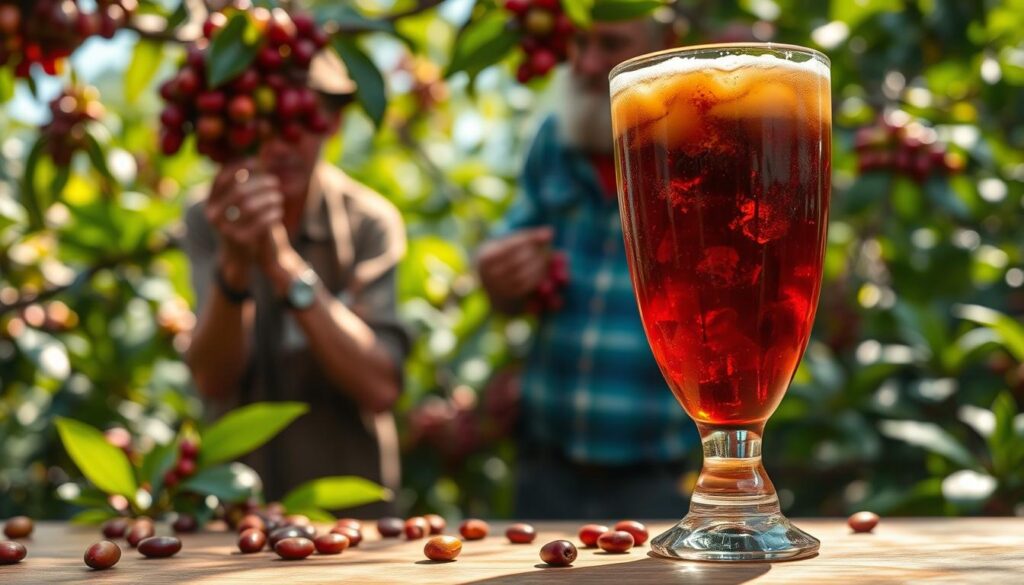
Guatemalan cold brew coffee is perfect for many serving styles and recipes. You can enjoy it alone or mix it into a complex drink. There are many ways to make your cold brew experience better.
Classic Cold Brew Presentations
Serving cold brew is easy. You can pour it over ice or drink it straight. Here are some classic ways to serve:
- Black vs. Diluted Servings: Drink your cold brew black for a rich taste. Or, dilute it with water or milk to your liking.
- Ice and Glassware Considerations: Use big ice cubes to keep it from getting watered down. Serve it in tall glasses to show off its color and clarity.
Creative Recipes Highlighting Guatemalan Notes
Guatemalan cold brew is great for making creative drinks. You can add flavors or turn it into a cocktail.
- Complementary Flavor Additions: Add vanilla, cinnamon, or citrus to bring out the coffee’s natural flavors.
- Cocktail and Non-Alcoholic Inspirations: Mix it with milk, sugar, and spices for a tasty coffee drink. Or blend it with ice and cream for a coffee frappé.
Proper Storage and Shelf Life
Keeping your cold brew fresh is key. Proper storage is important.
- Container Types and Materials: Store it in airtight containers made of glass or stainless steel to keep the flavor.
- Maximizing Freshness Over Time: Keep it in the fridge and drink it within a week or two for the best taste.
Conclusion
Cold brew coffee made with Guatemalan beans is perfect for summer. Guatemalan coffee’s unique flavors come from the country’s varied regions and rich soil. This makes it great for cold brew.
Choosing the right beans, like those from Antigua or Huehuetenango, is key. Following the right brewing methods helps create a smooth and complex cold brew. Trying different roast levels and steeping times can also improve the taste.
As summer gets closer, adding Guatemalan beans to your cold brew can make your coffee better. Guatemalan cold brew’s rich flavors and refreshing qualities will quickly become a favorite among coffee fans.