
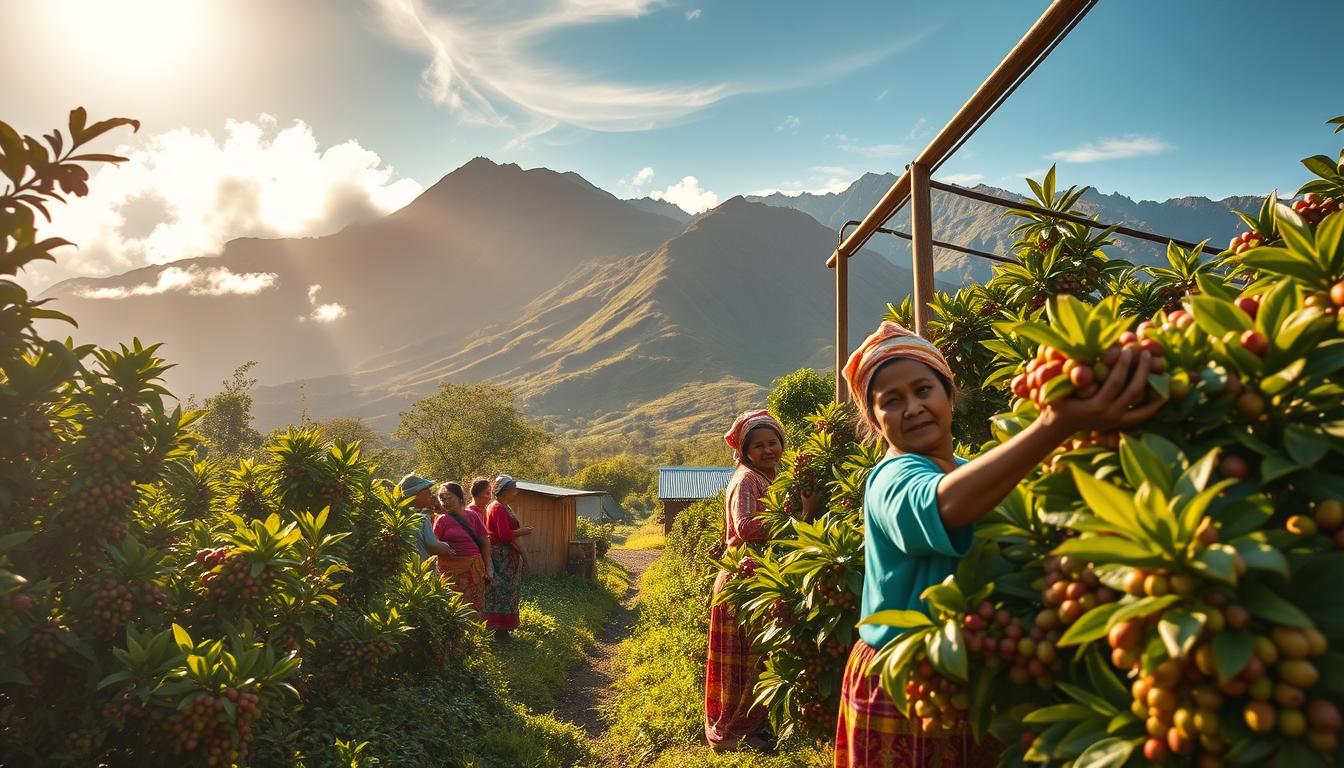
Exploring Guatemalan coffee, I’m amazed by its rich cultural heritage. Coffee is more than a drink here; it’s a big part of daily life and the country’s identity. Places like Antigua and Huehuetenango are famous for their top-notch coffee.
The coffee industry is changing, thanks to women producers. They’re not just making great coffee. They’re also leading the way for the industry’s future. Their efforts show how gender equality can spark innovation and growth.
Key Takeaways
- Women are playing a crucial role in transforming Guatemala’s coffee industry.
- Coffee is deeply ingrained in Guatemalan culture and national identity.
- Regions like Antigua and Huehuetenango are known for their high-quality coffee production.
- Women coffee producers are driving innovation and growth in the industry.
- Gender equality is essential for the future success of Guatemala’s coffee industry.
Overview of Women in Guatemala’s Coffee Sector
Guatemala’s coffee industry is changing, and women are playing a bigger role. They do everything from growing and picking coffee to processing and selling it.
Historical Context
Women have always been important in Guatemala’s coffee world. Even though men have led the industry, women have supported family farms and communities. Now, more women are working in coffee because they want to be independent and earn money.
Empowerment through leadership has helped women take on bigger roles in the industry.
Statistics and Facts
Women make up about 40% of the workers in Guatemala’s coffee fields. They are key in growing and processing coffee. When women earn money, they often use it to help their families and communities, boosting local economies.
Importance of Women in Agriculture
Women are vital in Guatemala’s coffee and agriculture. They bring new ideas and skills, making coffee better and more sustainable. Their leadership also helps fight for gender equality and supports other women in the industry.
Supporting women in agriculture can make Guatemala’s coffee industry stronger and more competitive. This benefits everyone involved.
Key Contributions of Women to Coffee Production
In Guatemala, women are making a big impact on coffee production. They work at every stage, from growing to selling coffee. This ensures top-quality coffee for everyone.
Roles in Cultivation and Harvesting
Women are key in growing and picking coffee. They keep the plants healthy by pruning, fertilizing, and controlling pests. They also pick the coffee cherries at the best time for quality.
Key tasks performed by women in cultivation and harvesting include:
- Pruning coffee plants to maintain health and productivity
- Applying fertilizers and pest control measures
- Monitoring coffee cherries for optimal ripeness
- Picking coffee cherries during harvest season
Involvement in Processing and Distribution
Women also work in processing and getting coffee to market. They turn coffee cherries into green beans through pulping, fermenting, and drying. They check the quality to make sure it’s up to standard. In distribution, they lead in getting coffee to stores.
| Stage | Women’s Roles | Impact |
|---|---|---|
| Cultivation and Harvesting | Pruning, fertilizing, pest control, picking | Ensures healthy plants and high-quality coffee cherries |
| Processing | Pulping, fermenting, drying, quality control | Produces high-quality green coffee beans |
| Distribution | Managing logistics, marketing | Ensures timely delivery to market and promotes coffee sales |
Women’s work in coffee production is vital and diverse. By supporting their efforts, we can make the coffee industry fairer and more sustainable.
Success Stories of Women Coffee Producers
In Guatemala’s coffee plantations, women are becoming major players. Their stories are about more than just coffee. They’re about empowerment, community growth, and overcoming obstacles.
Profiles of Leading Women Growers
Women like Maria Hernandez are making a big difference. Maria has grown coffee for over a decade. She’s improved her coffee quality and become a community leader.
Empowering Women through Coffee
- Training programs for women farmers
- Access to resources and equipment
- Support networks for women in coffee production
Impact on Local Communities
Women coffee producers are doing more than just farming. They’re creating jobs, boosting local economies, and supporting community projects.
| Community Project | Impact | Beneficiaries |
|---|---|---|
| Education Initiative | Improved literacy rates | Local children |
| Health Program | Better healthcare access | Community members |
| Economic Empowerment | Increased income opportunities | Women and families |
These women are more than coffee producers. They’re community leaders, making a real difference.
Challenges Faced by Women in the Coffee Industry
Women in Guatemala’s coffee industry face many obstacles. These issues affect their work in coffee production. They make it hard for women to move forward.
Access to Land and Resources
Getting land and resources for coffee is a big problem. Limited access to land ownership is a major issue. Women often can’t own land because of cultural barriers or lack of documents.
Economic constraints also play a big part. Women might not have enough money for good equipment, fertilizers, or other things needed for quality coffee.
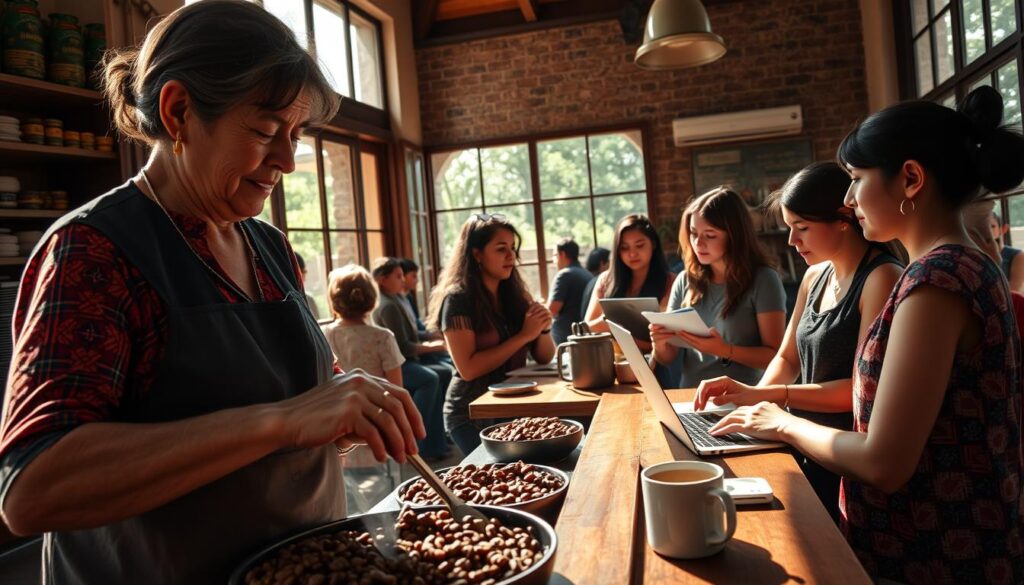
Gender Inequality in Leadership
Women are not in leadership roles enough. They are not often in charge of coffee cooperatives or organizations. This means they have little say in industry decisions.
This lack of representation comes from societal norms and stereotypes. These ideas stop women from leading or working in agriculture. They also might not have the right training or education for these jobs.
To solve these problems, we need to promote gender equality. We must support women with land, training, and money. We also need to work on changing societal norms that keep women from leading.
Empowerment Through Coffee Cooperatives
Women in Guatemala’s coffee industry are gaining power through coffee cooperatives. These groups give women a voice and access to resources. This way, women are becoming more involved in coffee making and trade.
Benefits of Joining a Cooperative
Women producers get many benefits from joining a coffee cooperative. They get better market access, training, and financial help. Cooperatives also let women share knowledge and best practices in coffee making.
Key advantages of cooperative membership include:
- Increased bargaining power for better prices
- Access to technical assistance and training
- Improved access to financial services and credit
- A collective voice in industry decision-making
As María, a member of a coffee cooperative in Guatemala, noted, “Being part of the cooperative has given me the confidence to participate in decision-making processes and to access markets that were previously out of reach.”
“Cooperatives are not just about economic benefits; they are about building a community and empowering women to take on leadership roles.” –
Case Studies of Successful Cooperatives
Many coffee cooperatives in Guatemala are empowering women. For example, the Asociación de Mujeres Cafetaleras (Association of Coffee Women) offers training and market access to its members.
| Cooperative Name | Location | Number of Members | Impact |
|---|---|---|---|
| Asociación de Mujeres Cafetaleras | Antigua, Guatemala | 150 | Increased income by 30% for members |
| Café Cooperativo | Huehuetenango, Guatemala | 200 | Improved quality ratings, achieving 90+ scores |
These cooperatives show how collective action can change the coffee industry for the better, helping women producers a lot.
Innovations Introduced by Women
Women in Guatemala’s coffee sector are leading the way with new ideas. They are making farming more sustainable and improving coffee quality. Their work includes adopting green farming methods and new ways to process coffee.
Sustainable Farming Practices
Women in Guatemala are leading the charge for sustainable farming. These efforts not only make coffee better but also help the environment. Some key practices include:
- Organic farming that skips synthetic fertilizers and pesticides.
- Agroforestry, which mixes coffee trees with other plants to boost biodiversity.
- Soil-saving methods that stop erosion and keep soil healthy.
| Sustainable Practice | Benefits | Examples |
|---|---|---|
| Organic Farming | Healthier soil, less chemicals | Farms using compost and natural pest control |
| Agroforestry | More biodiversity, fights climate change | Farms with native trees |
| Soil Conservation | Less erosion, better water use | Using cover crops and terracing |
New Processing Techniques
Women in Guatemala’s coffee world are also innovating in how they process coffee. They’re using new methods to make coffee taste better and be of higher quality. Some of these include:
- Trying out new fermentation methods for unique tastes.
- Improving how they wash and dry coffee to boost quality.
- Creating new packaging to keep coffee fresh and quality high.
These innovations help women coffee producers in Guatemala. They improve their lives and contribute to the global coffee industry’s future.
Education and Training Opportunities for Women
Empowering women through education and training is key for Guatemala’s coffee industry’s future. As the industry expands, it’s vital to equip women with the skills they need to fully participate.
Many workshops and programs aim to boost women’s abilities in coffee production, processing, and marketing. These efforts not only sharpen their technical skills but also increase their confidence and leadership.
Workshops and Programs
Regular workshops cover topics like sustainable farming, coffee quality control, and business management. For example, the Coffee Quality Institute runs training that highlights the role of quality in coffee making.
There are also programs on financial literacy and market access. These help women manage their coffee businesses better.
Partnerships with NGOs and Government
Collaborations between NGOs, government, and private sectors are crucial for women’s growth in coffee. Groups like Rainforest Alliance team up with local cooperatives to offer training and resources to women coffee producers.
Government programs also push for gender equality in coffee by giving subsidies and technical help to women-led farms.
These partnerships are vital for a more inclusive and sustainable coffee industry in Guatemala.
The Role of Technology in Supporting Women
Technology is helping women coffee producers in Guatemala a lot. It gives them tools and online places to sell. This makes them more productive and profitable.
Mobile Apps and Decision Support Tools
Mobile apps and tools are big helps for women farmers in Guatemala. They give insights and data on farming. This helps women make better choices for their crops.
Apps give updates on weather and soil moisture. This helps farmers plan better for water and fertilizer. Tools also help with pest and disease, reducing losses and boosting yields.
Key benefits of mobile apps and decision support tools include:
- Improved crop management through data-driven decisions
- Enhanced productivity and yield
- Better resource allocation
- Increased resilience to climate change
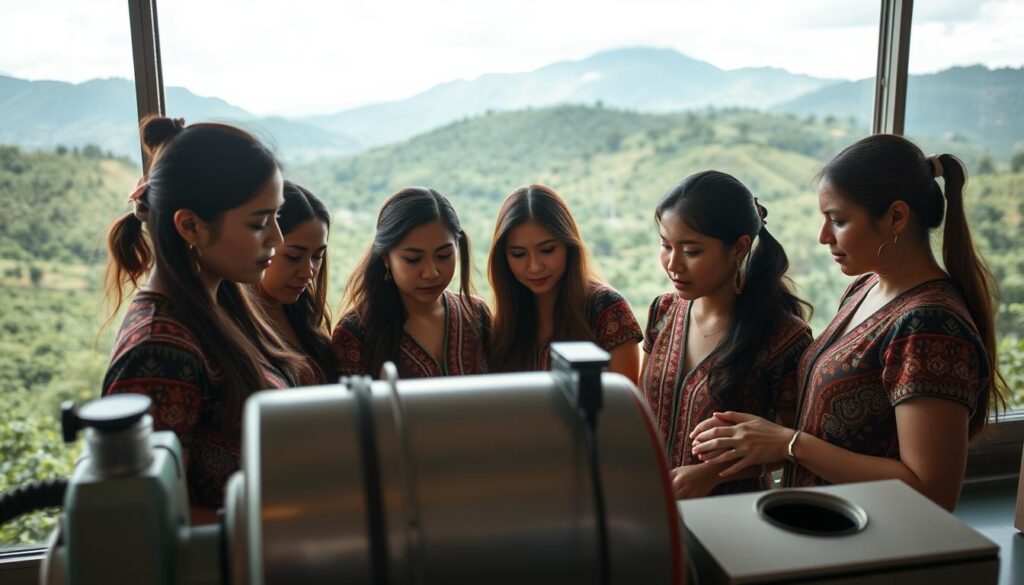
Online Marketplaces for Coffee
Online marketplaces are also big wins for women coffee producers in Guatemala. They connect producers directly with buyers, cutting out middlemen and boosting profits.
By selling directly, women get better prices for their coffee. Online platforms also let them share their stories and products. This builds loyalty and recognition.
The advantages of online marketplaces for women coffee producers include:
- Direct access to global markets
- Increased profitability through reduced intermediary costs
- Opportunities for brand building and customer engagement
- Access to market information and trends
In conclusion, technology is key to empowering women coffee producers in Guatemala. With apps, tools, and online marketplaces, women can farm better, produce more, and reach more markets.
Marketing and Branding Female Coffee Producers
Marketing and branding are key for female coffee producers to shine in a tough global market. They can stand out by sharing their unique stories and strengths. This way, they can draw in a dedicated group of customers.
Importance of Storytelling in Coffee Marketing
Storytelling is a strong tool in coffee marketing. It helps producers connect with buyers on a personal level. Women coffee producers can talk about their journeys, the hurdles they face, and the effort they put into their coffee.
This storytelling can build an emotional bond with buyers. It makes the coffee more relatable and appealing.
For example, a woman coffee producer might talk about learning from her parents. This adds a personal touch and shows the quality and tradition of the coffee.
Key elements of storytelling in coffee marketing include:
- Highlighting the producer’s personal journey and challenges
- Emphasizing the quality and uniqueness of the coffee
- Showcasing the care and dedication involved in coffee production
Promoting Specialty Coffees
Promoting specialty coffees is vital for female coffee producers. Specialty coffee is known for its high quality and unique tastes. This comes from careful production and processing.
Women producers can focus on the special qualities of their coffees. This includes flavor notes, acidity levels, and how it’s made. By teaching consumers about these, they can explain the higher price of specialty coffees. This attracts coffee lovers.
- Using social media to share interesting content about the coffee’s origin and making process
- Entering coffee competitions and events to show off their coffee’s quality
- Working with coffee roasters and sellers to host cupping sessions and tasting events
By using these marketing and branding tactics, female coffee producers can get noticed, make their products stand out, and thrive in the competitive coffee world.
The Impact on Fair Trade and Certification
Fair trade has changed the lives of women coffee producers in Guatemala. It has brought them empowerment and economic stability. Now, women get fair pay for their work in the coffee industry.
Fair trade certification helps make the coffee sector more equal for women. It makes sure coffee cooperatives follow rules that help women take on leadership roles.
Women’s Role in Fair Trade Practices
Women are key in fair trade, from growing to processing coffee. Their work has boosted their economic and social status in their communities.
- Participation in decision-making processes
- Access to training and resources
- Increased financial autonomy
Fair trade certification plays a big role in these benefits. It ensures producers get a fair price for their coffee, improving their lives.
Results of Certification on Women’s Empowerment
The certification process has empowered women in the coffee industry. Some key results are:
- Economic benefits through fair pricing
- Improved working conditions
- Increased participation in community development projects
The empowerment of women through fair trade and certification shows the coffee industry can change for the better.
Supporting fair trade and certification helps make the coffee industry fairer. It values and empowers women.
Looking Forward: Future of Women in Coffee
Women producers in Guatemala’s coffee sector have a bright future ahead. As the industry grows, women will play a bigger role in its development.
Trends and Outlook for Women Producers
The coffee world is moving towards sustainability and fairness, with women leading the way. More women are getting access to technology and training. This helps them farm better and reach global markets.
Market trends show a rise in demand for specialty coffees. Guatemalan women producers are excelling in this area. They focus on quality and unique flavors, earning better prices and improving their finances.
Potential Areas for Growth and Support
Despite the positives, women producers still face challenges. Access to finance is a big hurdle, stopping them from growing their farms and businesses.
Another key area is education and training. Women need the skills to succeed in the global coffee market. This is vital for their ongoing success.
- Enhancing technical skills through workshops and training programs
- Improving access to financial services tailored to women’s needs
- Strengthening women’s cooperatives to increase their bargaining power
By focusing on these areas, women can keep thriving in Guatemala’s coffee industry. They will drive positive change and help make the coffee sector more equitable and sustainable.
Conclusion: Celebrating Women in Guatemala’s Coffee Industry
The journey of women in Guatemala’s coffee industry shows their strength, hard work, and love. They play a key role from growing to selling coffee. Their work changes not just the farm but also the world.
Supporting Women Producers
Global coffee lovers can help by supporting women producers in Guatemala. Buying coffee from farms run by women helps them grow. It also fights for fairness and equality in leadership.
A Call to Action
We celebrate women in Guatemala’s coffee industry but there’s more to do. I urge coffee lovers to learn about the women who make their coffee. Support fair trade and push for equality. Together, we can make the coffee world better for all.