
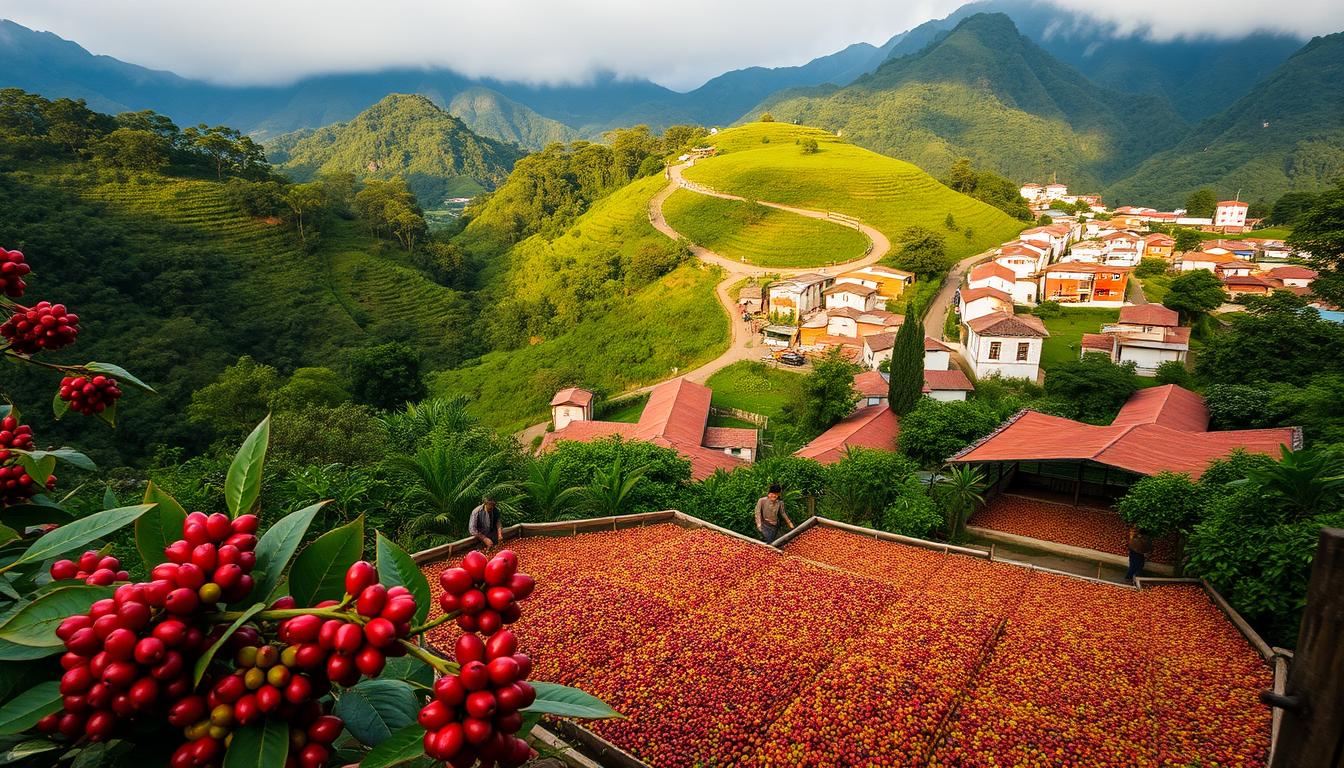
I’ve always been drawn to the rich culture of Guatemalan coffee. In Guatemala, coffee is more than just a drink. It’s a big part of the country’s identity, tied to daily life through rituals and traditions.
Looking into how climate change affects Guatemala’s coffee, I see a delicate balance. Rising temperatures and changing weather patterns are making it hard for coffee farmers. This threatens the heart of Guatemala’s coffee culture.
Key Takeaways
- The cultural significance of coffee in Guatemala is deeply rooted in local traditions.
- Coffee farmers in Guatemala face significant challenges due to climate change.
- Rising temperatures affect the quality and yield of coffee crops.
- Unpredictable weather patterns disrupt the traditional coffee farming calendar.
- Guatemala’s coffee industry is at a crossroads, balancing tradition with adaptation.
The Importance of Coffee in Guatemala’s Economy
Coffee plays a big role in Guatemala’s economy, thanks to places like Antigua and Huehuetenango. These areas are famous for their top-notch coffee. This coffee is loved by coffee lovers all over the world.
Overview of Coffee Production in Guatemala
In Guatemala, coffee grows in high places with rich soil and varied weather. This mix makes the coffee taste complex and is loved by coffee experts. The country has eight coffee-growing areas, each with its own taste.
Antigua and Huehuetenango stand out for their coffee. Antigua’s coffee is known for its balanced taste. Huehuetenango’s coffee is famous for its bright taste and fruity flavors.
Economic Contributions of Coffee
Coffee is key to Guatemala’s economy, giving jobs to many. It’s a big part of the country’s GDP and helps bring in money from abroad.
Coffee also helps the tourism industry. More and more people visit Guatemala to see how coffee is made. They get to see the farms and learn about coffee production.
Challenges Faced by Coffee Farmers
Guatemala’s coffee industry faces big challenges, like climate change. The weather changes are hurting coffee crops and quality. Farmers also deal with more pests and diseases because of the weather.
To tackle these issues, farmers are using green farming methods and new ways to grow coffee. They’re growing coffee under trees, planting different crops, and using water systems to save water.
Understanding the role of coffee in Guatemala’s economy and the problems farmers face helps us see why we need to find ways to keep coffee production going. This is important for the future of coffee in the region.
Understanding Climate Change and Its Impact
Climate change is making weather patterns and coffee plant growth worse. It’s not just an environmental issue. It’s also a big problem for the coffee industry, like in Guatemala where coffee is a major part of the economy.
Definition of Climate Change
Climate change means the Earth is getting warmer over time. This warming is mainly because of human actions, like burning fossil fuels. These actions release gases that trap heat in the atmosphere.
The effects of climate change are huge. They change ecosystems, weather, and how well crops grow. For coffee farmers in Guatemala, knowing about climate change helps them adjust their farming to the new environment.
Effects on Weather Patterns
Climate change changes weather patterns a lot. It causes warmer temperatures, different rain patterns, and more extreme weather. For coffee, these changes can mean:
- More droughts or too much rain, both bad for coffee crops.
- Seasons start and end at different times, affecting coffee growth.
- Warmer temperatures make some places less good for growing coffee.
Carlos, a farmer in Antigua, Guatemala, has seen these changes. “The weather is now more unpredictable,” he says. “We’ve had to change how we farm to protect our crops.”
Impact on Coffee Plant Growth
Climate change affects coffee plants in many ways. Warmer temperatures can lead to:
- More pests and diseases that like the heat.
- Lower yields because of stress from the heat and water changes.
- Changes in coffee taste because of stress and ripening changes.
Artisans and roasters are also seeing changes. “Coffee quality and taste are changing,” says Maria, a roaster in Guatemala City. “We’re adjusting how we roast to highlight the best in the beans.”
Being sustainable in coffee production helps fight these effects. Practices like shade-grown coffee, organic farming, and soil care make farms more resilient to climate change.
Key Climate Challenges Facing Guatemalan Coffee
Climate change is changing the future of Guatemalan coffee. It brings issues like temperature changes and pests. Guatemala is famous for its coffee, not just for making it but also for the community and coffee shops.
Temperature Increases
Rising temperatures are a big challenge for Guatemalan coffee farmers. Warmer weather can make coffee plants stressed. This leads to reduced coffee yields and lower quality coffee.
Altered Rainfall Patterns
Changes in rainfall patterns are also a big issue. Unpredictable rain can mess up coffee production timing. This makes coffee plants more likely to get diseases.
Increased Pests and Diseases
The warmer and more unpredictable climate helps pests and diseases grow. Coffee leaf rust is a disease that thrives in these conditions. It’s a big threat to coffee production.
Despite these challenges, Guatemala’s coffee culture is strong. From coffee shops in Antigua to community gatherings, the love for coffee is clear. As climate change affects coffee, farmers and the community must adapt and find ways to keep coffee production going.
Adapting Coffee Farming Practices
Guatemalan coffee farmers are changing their ways to fight climate change. They’re using new methods to keep their farms going. This change is not just to survive; it’s about growing and keeping the high quality of Guatemalan coffee.
Sustainable Farming Techniques
The coffee industry in Guatemala is turning to sustainable farming. They’re using organic fertilizers, smart irrigation, and caring for the soil. These steps help the environment and make their coffee crops stronger.
Key sustainable farming practices include:
- Organic pest control methods
- Efficient water management
- Soil health maintenance
Crop Diversification Strategies
Planting different crops with coffee is a big help against climate change. It makes farms more diverse and helps farmers earn more. This way, farms are healthier and farmers have more money.
| Crop | Benefits | Climate Resilience |
|---|---|---|
| Coffee | Primary income source | High |
| Banana | Shade provision, additional income | Medium |
| Macadamia Nuts | Diversified income, soil health | High |
Use of Shade-Grown Coffee
Shade-grown coffee is grown under trees. It’s good for the environment and helps with soil and carbon. It’s great for places where the weather is changing a lot.
The benefits of shade-grown coffee are multifaceted:
- Enhanced biodiversity
- Improved soil health
- Increased carbon sequestration
Guatemalan coffee farmers are using these strategies to fight climate change. They’re making their coffee better and more sustainable. This makes them proud and keeps their craft alive for the future.
The Role of Technology in Coffee Farming
Technology is changing how coffee is farmed in Guatemala, making it more sustainable. As the world faces climate change, tech is key to better farming.
Innovations in Agricultural Practices
Guatemalan coffee farmers are using new tech to improve their farms. Precision agriculture, with GPS and remote sensing, helps them check on crops and use resources wisely. A study shows this method can boost yields by 20% and cut water use by 15%. Precision agriculture is changing coffee farming by helping farmers make smart choices.
Visiting coffee farms in Guatemala is a treat. The smell of coffee, the sounds of birds, and the sight of healthy plants are all part of the experience.
Use of Data Analytics and Monitoring
Data analytics is crucial in modern coffee farming. Farmers use data from weather stations, soil sensors, and satellites to understand their crops better. This helps them spot problems early and plan better. Data-driven farming is now common in Guatemala’s coffee industry.
For example, farmers can track soil moisture and temperature. This info helps them decide on watering, fertilizing, and pest control. It leads to better coffee and less harm to the environment.
Drone Technology in Coffee Cultivation
Drone technology is also used in Guatemala’s coffee farms. Drones with cameras and sensors take detailed pictures of farms. This lets farmers check on crops, find pests, and see damage after storms. Drone technology is making coffee farming more efficient by giving farmers quick and accurate info.
Travelers can see the coffee culture in Guatemala by visiting farms with these new tools. Many farms offer tours and tastings. It’s a chance to learn about coffee making and enjoy Guatemalan coffee’s flavors.
“The future of coffee farming lies in embracing technology and innovation. By using data analytics, drone technology, and precision agriculture, we can make farming more sustainable, increase yields, and keep the coffee industry strong for years to come.”
The Impact of Global Markets on Coffee Prices
Guatemalan coffee farmers face big challenges due to global markets. The world’s coffee market is complex. It’s influenced by many things like supply and demand, economic conditions, and world events.
Guatemalan coffee has a long history, starting in the 19th century. The country’s geography and climate make it perfect for coffee. But, the global market’s impact on prices is a big challenge for farmers.
Export Challenges for Guatemalan Coffee
Guatemalan coffee exporters have many challenges. Global coffee prices often change a lot. This can be due to diseases, weather, or changes in demand.
In the late 1990s and early 2000s, a coffee price crisis hit hard. It led to poverty and migration for many farmers.
To show the export challenges, here’s a table:
| Year | Global Coffee Price (USD/lb) | Guatemalan Coffee Exports (bags) |
|---|---|---|
| 2018 | 1.20 | 3.5 million |
| 2019 | 1.05 | 3.2 million |
| 2020 | 1.10 | 3.0 million |
Trends in Global Coffee Consumption
Global coffee trends also affect prices. More people want specialty coffee. Guatemalan coffee, with its unique flavors, is in a good position to meet this demand.
Fair Trade and Ethical Sourcing
Fair trade and ethical sourcing are key in the coffee market. People are willing to pay more for coffee that’s fair trade or sustainably sourced. Guatemalan farmers can benefit by following these standards.
By focusing on fair trade and ethical sourcing, farmers can improve their lives. They also help make the coffee industry more sustainable. Looking ahead, the global market will keep shaping the coffee industry in Guatemala.
Implications for Coffee Quality
The changing climate is affecting Guatemalan coffee’s flavor and quality. Rising temperatures and unpredictable rain lead to stressed coffee plants. This stress changes the coffee’s taste and smell.
Changes in Flavor Profiles
Higher temperatures mess with the balance of flavors in Guatemalan coffee. Some areas now have bitter tastes, while others lose their bright acidity. A local farmer says, “Our coffee’s flavor has changed a lot in ten years. It’s not just about how much we grow; it’s about the quality.”
Quality Assessment Techniques
Coffee farmers in Guatemala are using new ways to check their coffee’s quality. They do sensory analysis and cupping. These methods help them see how good their coffee is. They can then decide how to process and roast it better.
Consumer Preferences and Trends
People want unique coffee flavors, which is pushing Guatemalan coffee quality up. Coffee makers are using sustainable methods and focusing on quality. An expert says, “People are willing to pay more for better coffee. This is making Guatemala’s coffee industry grow and innovate.”
Guatemala’s coffee industry is changing, and adapting is crucial. By using new methods and meeting consumer tastes, coffee makers can keep Guatemalan coffee popular worldwide.
Building Resilience Among Coffee Farmers
Helping coffee farmers in Guatemala deal with climate change is crucial. Climate change impacts coffee production in many ways. It changes weather patterns, increases pests, and diseases.
To build resilience, a multi-faceted approach is needed. This includes education and training programs. These programs teach farmers how to adapt to climate change.
Education and Training Programs
Education and training are key to enhancing farmers’ resilience. Programs on climate-smart agriculture give farmers tools to predict and prepare for extreme weather. They learn about weather forecasting, irrigation, and crop management.
These programs also cover financial literacy and business management. This helps farmers make better decisions about their coffee production and marketing. By diversifying income and improving economic stability, farmers can better face climate change impacts.
Community Support Initiatives
Community support is vital for building resilience. Initiatives that promote community cohesion and support networks help farmers cope with climate stressors. This includes forming farmer cooperatives to share knowledge and resources.
Such initiatives offer emotional and social support. They also help farmers share best practices and innovative solutions. By working together, farmers can manage climate-related challenges more effectively.
Access to Resources and Funding
Access to resources and funding is essential for farmers to build resilience. This includes climate-resilient coffee varieties, agricultural inputs, and technologies for adaptation.
Access to funding through grants, loans, and insurance is also crucial. Governments, NGOs, and private entities can provide these resources. They support farmers in their resilience-building efforts.
In conclusion, building resilience among coffee farmers requires a comprehensive approach. This includes education and training, community support, and access to resources and funding. By supporting these efforts, we can ensure the long-term sustainability of Guatemala’s coffee industry.
Contributions of NGOs and Government Support
The resilience of Guatemala’s coffee industry against climate change is boosted by NGOs and government support. These groups are key in promoting sustainable practices, offering financial help, and encouraging climate-resilient coffee farming.
Role of Non-Profit Organizations
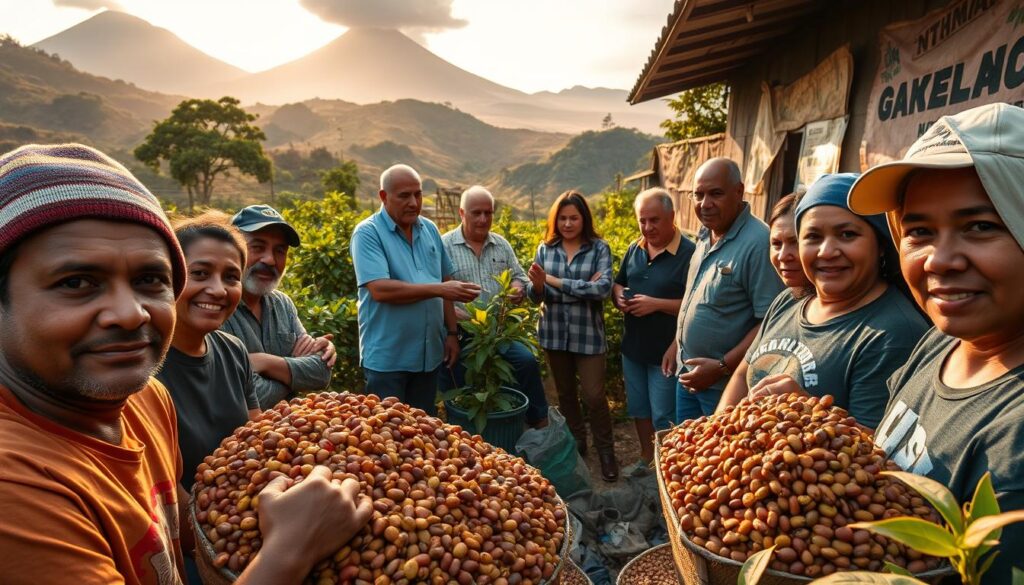
Non-profit groups lead in supporting Guatemala’s coffee farmers. They offer training in sustainable farming, help with climate-resilient coffee varieties, and assist in getting certifications. For example, Rainforest Alliance plays a big role in teaching sustainable agriculture to coffee farmers.
NGOs also support community events and local festivals. These gatherings celebrate Guatemala’s coffee culture and help farmers share knowledge and best practices.
Government Policies and Regulations
The Guatemalan government supports the coffee industry with policies and regulations. They work on improving infrastructure, giving financial aid to farmers, and researching climate-resilient coffee varieties. Programs also aim to improve coffee quality through training and technical help.
Government policies also push for sustainable farming practices. Shade-grown coffee, for instance, helps fight climate change and preserves biodiversity.
Collaborations for Sustainable Development
Collaborations between NGOs, government, and private sector are vital for Guatemala’s coffee industry. These partnerships share resources, expertise, and funding to help farmers adopt climate-resilient practices.
For example, working with international groups has brought in new technologies and farming methods. These improve coffee quality and productivity. Partnerships also support community-led projects for sustainable livelihoods in coffee farming communities.
Reflecting on the work of NGOs and government, it’s clear their teamwork is crucial for a sustainable coffee future in Guatemala. Their efforts help farmers deal with climate change, ensuring the coffee industry’s long-term success.
A Call to Action for Coffee Consumers
Coffee lovers can greatly help Guatemalan farmers by choosing wisely. As coffee demand rises, our choices shape the future of coffee in Guatemala.
Supporting Ethical Brands
Choosing ethical brands is a powerful way to help. Look for Fairtrade, Rainforest Alliance, or Organic certifications. These ensure farmers get fair prices and work sustainably.
- Research brands that source coffee from Guatemala.
- Check for certifications that guarantee fair trade and sustainable practices.
- Read reviews and testimonials to understand the brand’s commitment to ethical sourcing.
Importance of Sustainable Practices
Sustainable farming is key for coffee’s future. It helps farmers grow more, protect the environment, and face climate change better.
Key sustainable practices include:
- Crop diversification to reduce dependence on a single crop.
- Use of shade-grown coffee to preserve biodiversity.
- Implementation of efficient irrigation systems to conserve water.
Ways Consumers Can Make a Difference
Consumers can drive change by choosing wisely. Here are ways to positively impact:
- Buy coffee directly from farmers or through fair trade channels.
- Support organizations that provide training and resources to coffee farmers.
- Advocate for policies that promote sustainable agriculture and fair trade.
In conclusion, our choices shape Guatemalan coffee’s future. By supporting ethical brands and sustainable practices, we can help create a fair and sustainable coffee industry.
Our Coffee Future: What Lies Ahead?
Looking ahead, the coffee industry in Guatemala faces big challenges due to climate change. Yet, I’m hopeful about a sustainable and growing coffee industry.
Projecting a Sustainable Future
Future plans for coffee farming show a need for new ways and ideas. Guatemalan farmers can fight climate change by using green farming and tech. This way, they can keep coffee sustainable.
Working Together for a Common Goal
Everyone must work together for coffee’s future. This includes farmers, consumers, NGOs, and governments. Together, we can push for green and fair trade.
By focusing on sustainability and teamwork, we can make a better future for Guatemalan coffee. With a commitment to green coffee and working together, the industry can grow despite climate change.