
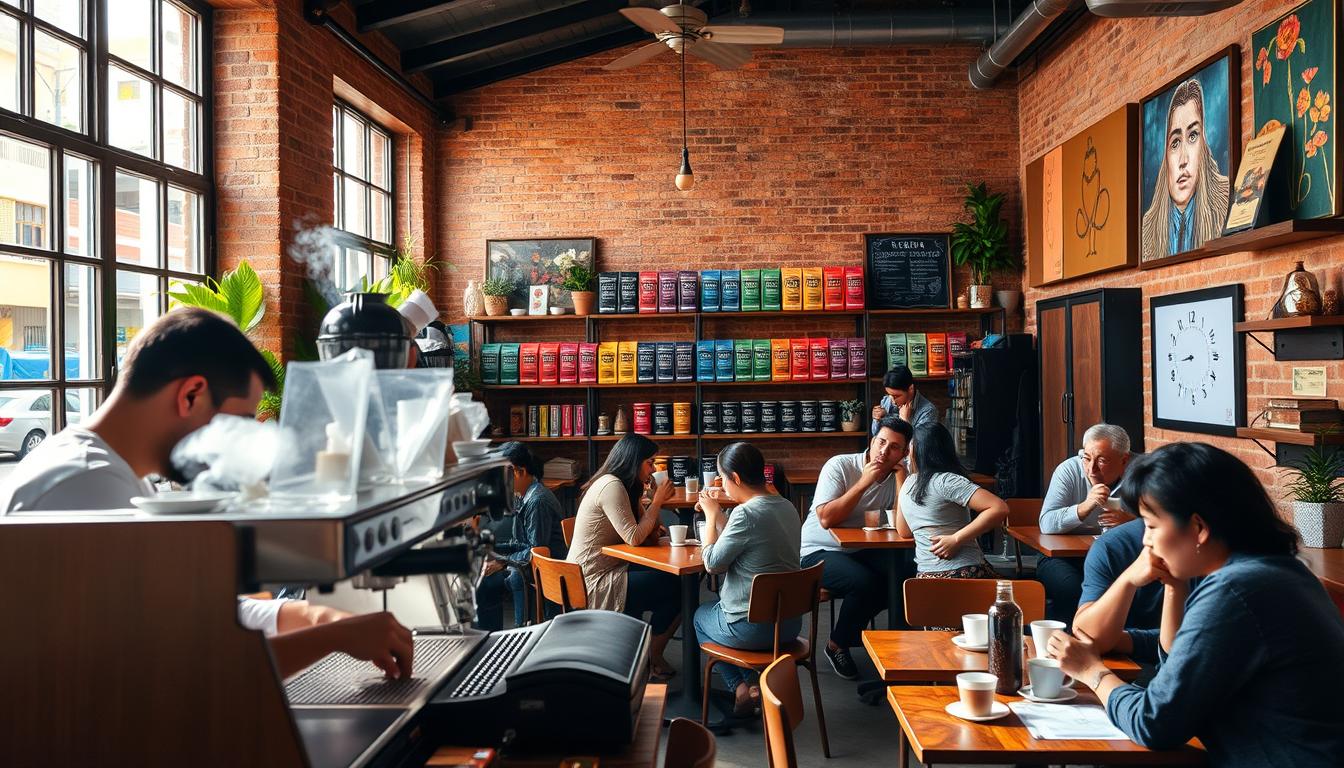
Exploring the world of coffee, I’m amazed by the passion and skill of Guatemalan baristas. They are elevating Guatemala’s coffee culture. Their rich cultural heritage and deep connection to the land shine through in every cup.
These baristas are not just making great coffee. They are also keeping traditional practices alive. Their dedication to innovation is clear in every cup. They mix flavors and techniques in a unique way.
By sharing their stories and traditions, we learn more about Guatemalan coffee culture. It’s not just about the coffee. It’s about the people and traditions behind it.
Key Takeaways
- Coffee culture in Guatemala is rich and vibrant, with a deep connection to the land and cultural heritage.
- Talented baristas are driving the coffee revolution, crafting exceptional coffee and preserving traditional practices.
- Innovation is key to the Guatemalan coffee scene, with baristas expertly balancing flavors and techniques.
- Guatemalan coffee culture is not just about the coffee, but also about the people and traditions behind it.
- The passion and skill of Guatemalan baristas are putting Guatemala on the world stage.
The Rise of Guatemalan Coffee Culture
Guatemala has a long history of coffee making. Its unique geography and climate have helped its coffee culture grow. The first coffee plants arrived in the early 18th century.
Historical Influences on Coffee Production
Many factors have shaped Guatemalan coffee. European immigrants, like Germans and Spaniards, introduced coffee cultivation. Over time, Guatemalan farmers mixed old ways with new tech.
Antigua and Huehuetenango are key in Guatemala’s coffee story. Antigua’s coffee is balanced, thanks to its soil and climate. Huehuetenango’s coffee is known for its bright taste and complex flavors.
“Guatemala’s coffee is known for its high quality, thanks to the country’s unique terroir and the dedication of its farmers,” says a local coffee expert.
The Journey from Farm to Cup
Turning coffee from farm to cup is a detailed process. Guatemalan farmers are very proud of their work. They make sure every step is done with care.
- Coffee cherries are hand-picked at the peak of ripeness to ensure optimal flavor.
- The cherries are then processed using either the washed or natural method, depending on the desired flavor profile.
- After processing, the coffee beans are dried to the appropriate moisture level.
- Lastly, the coffee is roasted to bring out its unique characteristics.
This careful process, along with Guatemala’s perfect climate and soil, makes high-quality coffee. It’s coffee that tells a story of tradition and passion.
Why Guatemalan Coffee is Unique
Guatemala’s coffee is special because of its volcanic soil, climate, and high altitude. This mix creates coffee that is complex and nuanced. Exploring Guatemalan coffee shows how the country’s geography shapes its flavors.
Flavor Profiles and Growing Regions
Guatemalan coffee has diverse flavor profiles. Flavors range from bright acidity and fruity notes in the highlands to rich, chocolatey tastes in the lower slopes. Each growing region, like Antigua, Huehuetenango, and Atitlán, adds its own twist to the coffee.
In famous coffee shops and community gatherings, Guatemalan coffee is a big hit. Locals and visitors enjoy its rich flavors together. These moments are about more than just coffee; they celebrate the culture and community it brings together.
The Role of Altitude
Altitude is key in Guatemalan coffee’s flavor. Coffee grown high up matures slower, leading to more complex tastes. Coffee grown lower matures faster, often tasting sweeter.
Guatemala’s varied altitudes allow for many flavor profiles. From the bright, citrusy notes of high-altitude coffee to the deep, chocolatey tastes of lower slopes, there’s a wide range to explore.
Meet the Talented Guatemalan Baristas
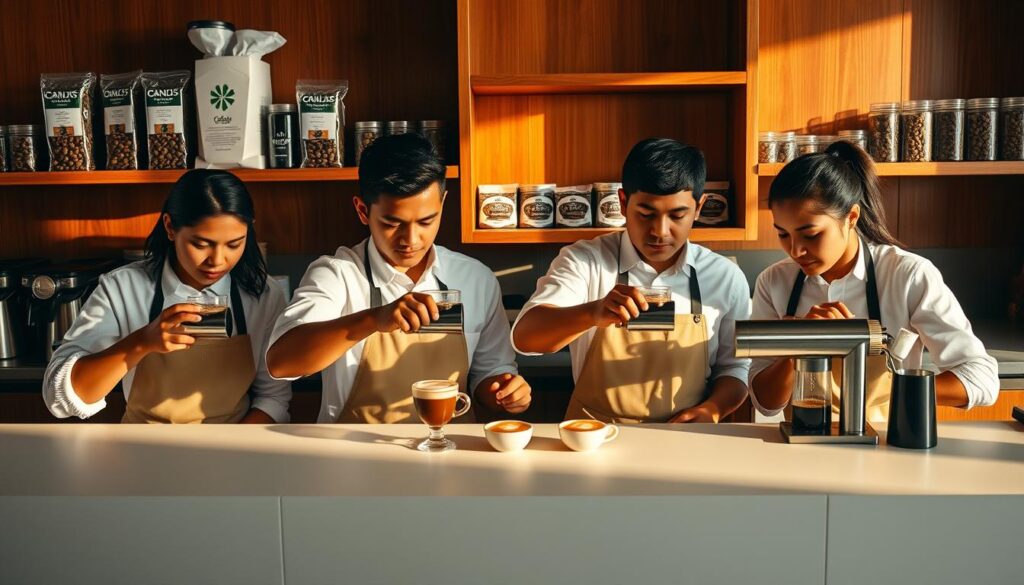
In Guatemala, a new wave of baristas is changing the coffee scene. They love coffee and want to share Guatemalan coffee’s special flavors with the world.
Profiles of Notable Baristas
Guatemala is home to some of the world’s best baristas. Each has their own story and helps the coffee world grow. Juan Pérez is a national champion who has competed globally. He started in coffee at a young age on his family’s farm.
María Rodríguez is known for her creative brewing and focus on sustainability. She buys beans from local farmers, helping the community. Her work is recognized worldwide for its quality and care for the environment.
“The art of being a barista is not just about making coffee; it’s about telling the story of the coffee, from the farmer to the cup.” – Juan Pérez
Their Inspirations and Backgrounds
These baristas draw inspiration from their diverse backgrounds. Many started with family traditions and a love for coffee. The unique tastes of Guatemalan coffee inspire them to try new things.
Some baristas have formal training, while others learned on their own. But they all bring something special to Guatemala’s coffee scene.
Exploring Guatemalan baristas shows their passion goes beyond just making coffee. It’s about keeping traditions alive and sharing Guatemalan coffee’s stories.
The Art of Coffee Brewing
Brewing coffee is more than a recipe; it’s an art form. Guatemalan baristas have mastered it with dedication and passion. They understand coffee, technique, and equipment, creating an exceptional cup.
Techniques Used by Guatemalan Baristas
Guatemalan baristas are creative and innovative in brewing coffee. They use various techniques, from traditional pour-overs to modern espresso machines. Each method is chosen to highlight the coffee’s unique flavors.
The pour-over method is key. It allows for control over brewing parameters like temperature and coffee-to-water ratio. This method is great for showing off Guatemalan coffee’s nuanced flavors.
“The pour-over method gives us the flexibility to experiment with different roasts and brewing times, allowing us to showcase the full potential of our coffee beans.” – Carlos, Guatemalan Barista
Popular Brewing Equipment
Guatemalan baristas use diverse and sophisticated equipment. From manual devices like French presses and pour-over drippers to automated espresso machines, the choice depends on the brewing technique and coffee type.
| Brewing Method | Equipment Used | Flavor Profile |
|---|---|---|
| Pour-over | Pour-over dripper | Clean, nuanced, with notes of fruit and floral hints |
| Espresso | Espresso machine | Rich, bold, with a thick crema and deep chocolate notes |
| French Press | French press coffee maker | Full-bodied, with a rich texture and deep, smoky flavors |
The pride and craftsmanship in every cup show the strong bond between baristas, coffee, and community. Guatemalan baristas continue to innovate in coffee brewing, mastering techniques and using top-notch equipment.
Coffee Competitions and Awards
The world of coffee competitions is where skill meets creativity. Guatemalan baristas are leaving their mark. These events are crucial for baristas to showcase their talents, innovate, and gain recognition on a global scale.
Coffee competitions have become an integral part of the coffee culture. They provide a platform for baristas to demonstrate their expertise. Guatemalan baristas have been actively participating in these competitions, bringing unique flavors and techniques influenced by their local coffee culture.
Major Competitions Participated In
Guatemalan baristas have made a significant impact in several prestigious coffee competitions. Some of the major events they have participated in include:
- The World Barista Championship
- Latte Art Championships
- Cupping Competitions
These competitions not only test the baristas’ technical skills but also their creativity and ability to innovate. The World Barista Championship, for instance, requires competitors to prepare a variety of coffee drinks, showcasing their mastery over different brewing techniques.
Recognition for Guatemalan Baristas
The achievements of Guatemalan baristas in these competitions have not gone unnoticed. They have received numerous accolades, including:
| Year | Competition | Award |
|---|---|---|
| 2018 | World Barista Championship | Top 10 Finalist |
| 2020 | Latte Art Championship | 2nd Place |
Such recognition not only honors the individual baristas but also puts Guatemalan coffee on the world stage. It highlights its quality and unique flavor profiles.
“Participating in coffee competitions has been a transformative experience for me. It has allowed me to showcase Guatemalan coffee and connect with the global coffee community.” – Ana G., Guatemalan Barista
Local rituals and festivals also play a significant role in celebrating coffee culture in Guatemala. Events like the “Feria de Café” bring together coffee producers, baristas, and enthusiasts. They celebrate the rich heritage of Guatemalan coffee.
In conclusion, Guatemalan baristas are making a significant impact in the world of coffee competitions. They bring recognition to their country and its coffee. Their participation in major competitions and local festivals underscores their passion and dedication to the craft.
Community Impact of Baristas
Guatemalan baristas have a big impact on their community. They help local farmers and coffee lovers in many ways. Their work goes beyond just serving coffee.
Supporting Local Farmers
Guatemalan baristas buy coffee beans from local farmers. This helps their businesses stay strong and boosts the local economy. They also improve the lives of farmers by paying them fairly.
Many baristas help farmers by teaching them how to grow better coffee. This helps both sides. Baristas get great coffee, and farmers get better pay and skills.
| Program | Description | Benefit to Farmers |
|---|---|---|
| Farm-to-Cup | Direct trade program connecting baristas with local farmers. | Fair prices and technical assistance. |
| Coffee Quality Improvement | Training for farmers on best practices for coffee production. | Enhanced coffee quality and increased income. |
Engaging with Coffee Enthusiasts
Guatemalan baristas also connect with coffee lovers. They host workshops and tastings. This helps people learn more about Guatemalan coffee.
By sharing their knowledge, baristas grow a loyal fan base. This creates a lively coffee culture. People enjoy the skill that goes into every cup.
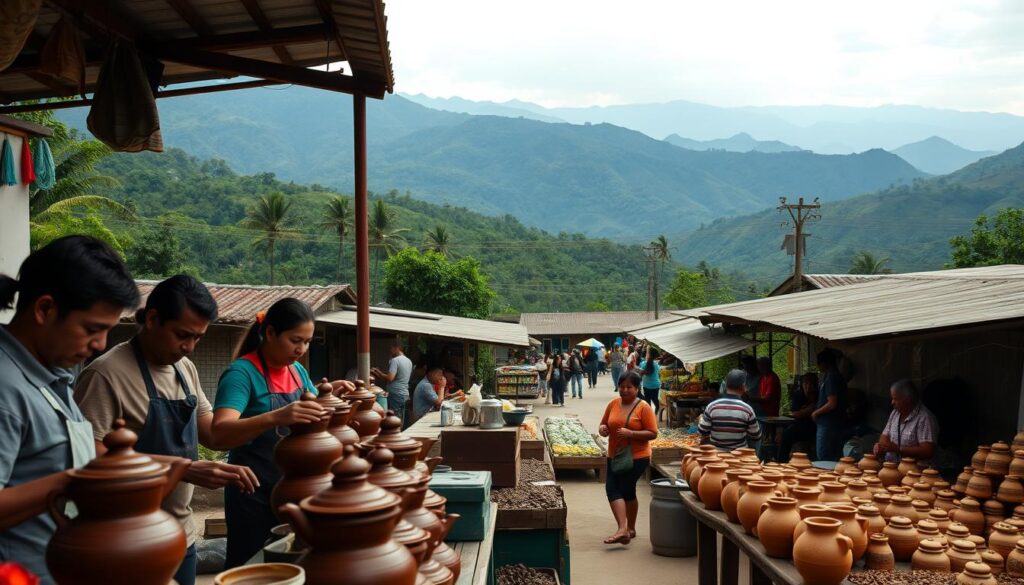
Coffee is a big part of life in Guatemala. It shapes how people start their day and socialize. The coffee community shows how baristas bring people together through their love for coffee.
Education and Training Opportunities
Coffee tourism is growing in Guatemala, leading to more education and training for baristas. This is key for improving coffee skills and the culture in the area.
More institutions are offering courses in coffee making and barista skills. These programs help people learn the skills needed to succeed in the coffee world.
Barista Schools in Guatemala
Guatemala now has several barista schools with comprehensive training programs. Some top schools include:
- Guatemalan Coffee Association’s Barista Training Program: Teaches coffee brewing, roasting, and presentation.
- Café Arte: Focuses on specialty coffee, offering hands-on and theoretical training.
- Coffee Academy Guatemala: Offers courses from basic barista skills to advanced roasting.
| Institution | Course Offerings | Duration |
|---|---|---|
| Guatemalan Coffee Association | Barista Training, Coffee Roasting | 3 months |
| Café Arte | Specialty Coffee, Barista Skills | 2 months |
| Coffee Academy Guatemala | Basic Barista, Advanced Roasting | 4 months |
Mentorship Programs Available
Mentorship programs are also crucial in Guatemala. They help baristas learn from experienced professionals.
Some notable programs include:
- Barista Mentorship Initiative: Pairs new baristas with mentors for guidance.
- Coffee Craft Mentorship: Focuses on technical skills and business knowledge through workshops and mentorship.
Guatemala is perfect for those interested in coffee. Visitors can explore coffee farms, attend festivals, and learn about Guatemalan coffee culture.
Travelers should visit the highlands for coffee plantations and join local events to meet coffee professionals.
The Global Influence of Guatemalan Baristas
Guatemalan baristas are making waves in coffee trends worldwide. Their skills and love for coffee are changing the global coffee scene in big ways.
At the core of Guatemalan coffee culture is the bond between baristas and farmers. Many baristas team up with farmers to find top-notch coffee beans. They also push for sustainable farming methods. This teamwork boosts coffee quality and helps local economies.
Their Impact on International Coffee Trends
Guatemalan baristas are always trying new things with coffee. They experiment with different brewing methods and tools. This innovation helps create new coffee styles and trends.
Carlos Medina, a famous Guatemalan barista, says, “Our coffee is more than just taste. It’s the story of every bean.”
“The relationship between the barista and the farmer is crucial. It’s a partnership that elevates the entire coffee experience.” – Carlos Medina
Collaborations with Global Coffee Brands
Guatemalan baristas are teaming up with big coffee brands around the world. They bring their special skills and views to the global coffee scene. These partnerships lead to new coffee blends and brewing methods that highlight Guatemalan coffee’s unique tastes.
For example, a Guatemalan barista and a global coffee brand might work together. They might use beans from local farms and traditional Guatemalan roasting. This teamwork not only spreads Guatemalan coffee but also brings new ideas to the coffee world.
As the global coffee scene keeps changing, Guatemalan baristas’ impact will likely grow. They will help shape the future of coffee culture everywhere.
Challenges Facing Baristas in Guatemala
As the world’s love for specialty coffee grows, Guatemalan baristas face big economic and environmental hurdles. The coffee scene in Guatemala is a mix of tradition, economic needs, and environmental issues. These factors deeply affect the lives of those in the industry.
Economic Struggles
Many Guatemalan baristas face tough economic times. The cost of top-notch coffee beans and the need for training and gear is high. They often find it hard to earn a fair wage, and their income can swing wildly due to tourism.
The table below shows some of the main economic hurdles for Guatemalan baristas:
| Economic Challenge | Description | Impact |
|---|---|---|
| High Cost of Coffee Beans | The expense of sourcing high-quality beans | Reduces profit margins for baristas |
| Limited Financial Resources | Insufficient funding for training and equipment | Hinders the ability to improve coffee quality |
| Volatile Income | Dependence on tourism and global market fluctuations | Makes it difficult for baristas to budget and plan financially |
Environmental Struggles and the Coffee Price Crisis
Environmental factors greatly influence Guatemalan coffee production. Climate change brings unpredictable weather, impacting coffee quality and yields. The coffee price crisis, caused by global market changes, adds to the problem for producers and baristas.
The coffee price crisis directly affects coffee farmers and baristas. When prices drop, farmers may not cover their costs. This can lead to lower coffee quality, impacting baristas’ work.
To tackle these issues, some Guatemalan baristas are adopting sustainable practices. They also seek help from international groups. By using eco-friendly farming and improving their businesses, they aim to strengthen the coffee industry.
The Future of Guatemalan Baristas
The future of coffee in Guatemala is bright, thanks to a new generation of baristas. They are all about quality and innovation. Emerging trends in coffee making will shape the industry’s future.
Emerging Trends in Coffee Making
New brewing techniques and technologies are exciting trends. Guatemalan baristas are trying out pour-over, siphon, and cold brew. These methods are improving Guatemalan coffee’s flavors and boosting the country’s innovation reputation.
Innovative brewing methods are mixing with traditional ones. This creates a unique taste that’s distinctly Guatemalan. For example, using locally sourced coffee beans in new brewing ways shows off the variety of flavors from different regions.
Predictions for the Next Generation
The next generation of Guatemalan baristas will keep pushing for innovation. They have better training and education, preparing them for the global stage. Their connection to Guatemala’s coffee culture ensures they keep traditional practices alive while embracing new ideas.
Places like Antigua and Huehuetenango will remain key in shaping Guatemala’s coffee identity. These areas are famous for their coffee and cultural heritage. As specialty coffee demand rises, Guatemalan baristas are ready to showcase their country’s coffee and culture.
In conclusion, Guatemalan baristas have a bright future ahead. They are driven by innovation, emerging trends, and a strong coffee culture. It will be thrilling to see how they influence the global coffee scene.
Getting Involved: Supporting Guatemalan Coffee Communities
Exploring Guatemalan coffee shows the big impact baristas have. To help more, we can support fair trade and visit coffee farms. These actions really make a difference.
Fair Trade Initiatives
Supporting fair trade is a great way to help. It promotes sustainable farming and fair prices for farmers. Choosing fair trade coffee helps improve Guatemalan farmers’ lives.
Experiencing Coffee Farms
Visiting coffee farms in Guatemala is another good step. Farms offer tours and learning programs. It’s a chance to see coffee making up close and support local economies.
Every effort helps the Guatemalan coffee industry. Whether it’s fair trade or farm visits, we all play a part. Our actions positively impact these communities.