
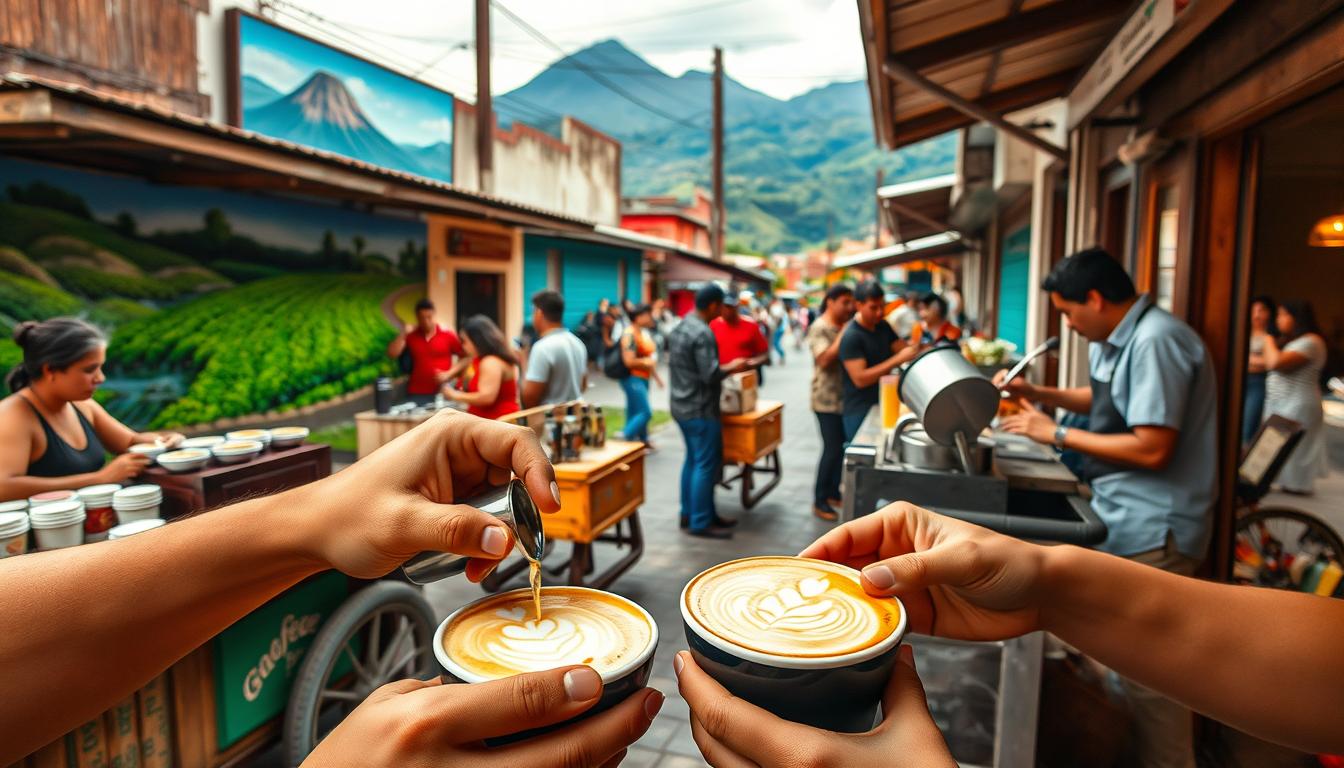
I’m fascinated by the world of Guatemalan coffee art. Here, cultural stories and traditions are brought to life. In Guatemala, coffee is not just a drink. It’s a big part of everyday life, tied to local customs and celebrations.
Exploring Guatemala’s rich culture, I see coffee’s big role in telling stories. It shows the country’s identity and history. The detailed designs in coffee art highlight Guatemala’s rich cultural landscape.
Key Takeaways
- Coffee is deeply ingrained in Guatemalan daily life and culture.
- Local rituals and festivals revolve around coffee, shaping the community.
- Coffee art reflects Guatemala’s identity and rich cultural heritage.
- The country’s cultural landscape is intricately linked with coffee traditions.
- Storytelling through coffee art is a unique aspect of Guatemalan culture.
The Rich History of Coffee in Guatemala
Coffee has been a big part of Guatemala for centuries. It has shaped the country’s culture and economy. The country’s volcanic highlands and rich soil make it perfect for growing coffee.
In the 18th century, coffee first came to Guatemala. It has since become a key part of the country’s farming. Coffee has given many Guatemalans a way to make money and has helped shape the country’s culture.
Origin of Coffee Cultivation
The story of coffee in Guatemala starts in the 1700s. Jesuit priests brought coffee plants to the country. At first, it was grown for locals, but soon it became a big export.
The first places to grow coffee were Antigua and Huehuetenango. These areas have special climates that make their coffee stand out.
- Antigua: Known for its well-balanced coffee with notes of chocolate and spice, Antigua’s coffee is highly regarded for its quality.
- Huehuetenango: This region produces coffee that is known for its bright acidity and fruit notes, making it a favorite among coffee connoisseurs.
Historical Significance to Local Communities
Coffee has deeply affected local communities in Guatemala. It has created jobs and helped the local economy. Coffee is also a big part of these communities’ culture, with many families involved in coffee for generations.
The way coffee is farmed in Guatemala is traditional. These methods help keep the coffee quality high and protect the environment.
- Traditional farming techniques are used to cultivate coffee, ensuring high-quality beans.
- Local communities are involved in every stage of coffee production, from planting to harvesting.
- The coffee industry supports local economies and contributes to community development.
The Coffee Plantations: A Cultural Landscape
Exploring Guatemala’s coffee plantations reveals a rich cultural tapestry. It’s a mix of history, community, and a deep bond with the land. These places are more than just coffee farms; they showcase Guatemala’s vibrant heritage.
The variety in Guatemala’s coffee plantations is stunning. Different regions grow different coffee types. This biodiversity extends beyond the coffee plants to the ecosystems around them.
Biodiversity and Coffee Types
Guatemala is famous for its diverse coffee types, each with its own taste. You’ll find Bourbon, Caturra, and Gesha coffee here, among others. The varied climate and soil across regions add to this diversity.
| Coffee Type | Region | Flavor Profile |
|---|---|---|
| Bourbon | Antigua | Sweet, with notes of chocolate |
| Caturra | Huehuetenango | Fruity, with hints of citrus |
| Gesha | Atitlán | Floral, with tea-like subtlety |
The plantations’ biodiversity goes beyond coffee. They support a wide range of plants and animals. This diversity is key to the health of the plantations and the quality of the coffee.
Traditional Farming Methods
Guatemalan coffee farmers use traditional methods passed down through generations. These methods, along with the country’s fertile soil and climate, produce high-quality coffee. Shade-grown coffee, for example, protects plants and boosts biodiversity.
Coffee shops and community gatherings celebrate Guatemala’s coffee culture. These places are where locals and visitors share the country’s coffee heritage. Through stories and experiences, these gatherings build community and connection.
In conclusion, Guatemala’s coffee plantations showcase the country’s rich culture and tradition. Exploring these landscapes, we learn about the unique stories and practices behind Guatemalan coffee.
Guatemala’s Unique Coffee Growing Regions
Guatemala’s coffee regions vary from volcanic highlands to rugged mountains. Each area has its own unique flavors and qualities. This diversity is both geographical and in the coffee’s taste.
Antigua: The Crown Jewel of Coffee
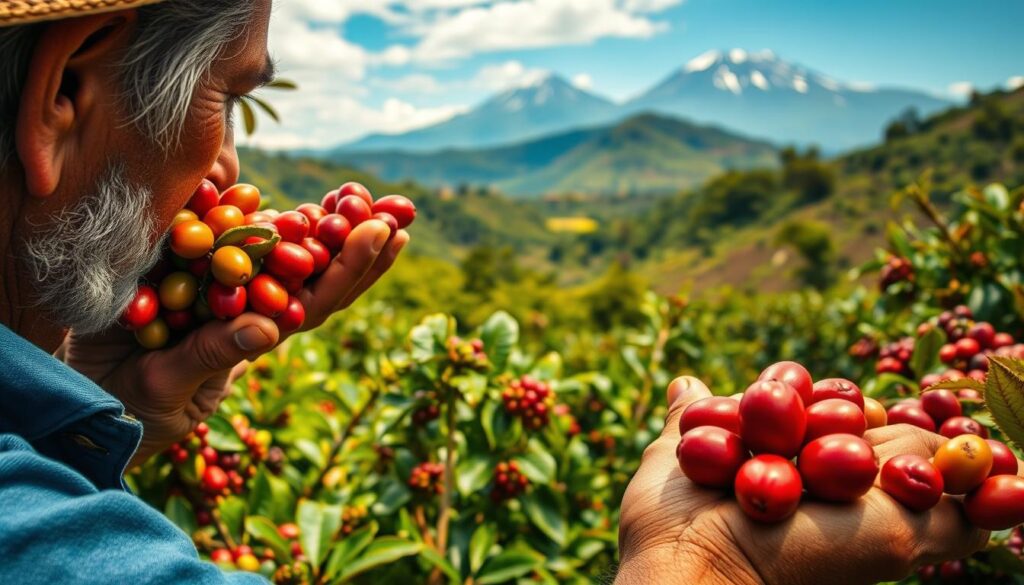
Antigua is known as the “Crown Jewel of Coffee.” It has historic significance and beautiful landscapes. The coffee here grows in rich volcanic soil, perfect for coffee.
Antigua’s coffee is famous for its balanced acidity and rich flavor. Coffee lovers seek it out. The traditional farming methods add to the coffee’s high quality.
Huehuetenango: High Altitude Excellence
Huehuetenango is known for its high-altitude coffee. The cool climate and rugged terrain make the coffee bright and complex. It tastes like citrus and berries, loved by many.
The high altitude and dry climate slow down the coffee cherries’ maturation. This adds to the coffee’s depth of flavor. Huehuetenango shows how Guatemala’s unique conditions make its coffee stand out.
Both Antigua and Huehuetenango are key to Guatemala’s coffee industry. They show the country’s rich culture and passion for coffee. Their unique qualities add to Guatemalan coffee’s diversity.
The Artistry Behind Coffee Preparation
In Guatemala, making coffee is more than a task; it’s an art that shows the country’s history. The taste and smell of Guatemalan coffee come from careful brewing methods passed down through generations.
Brewing Techniques That Celebrate Tradition
Guatemala’s coffee-making methods are deeply rooted in its culture. Techniques like pour-over, French press, and espresso highlight each coffee bean’s unique traits. For example, pour-over brings out the coffee’s acidity and flavor notes.
The art of brewing coffee is often a family tradition. Recipes and techniques are shared from parents to children. This tradition is seen in how coffee is made and enjoyed in Guatemalan homes.
Key traditional brewing techniques include:
- Pour-over: Emphasizes the coffee’s acidity and nuanced flavors.
- French press: Brings out the rich, bold flavors of the coffee.
- Espresso: Concentrates the coffee’s flavors, creating a rich and intense experience.
The Role of Baristas as Artists
Baristas in Guatemala are not just coffee makers; they are artists who add creativity and passion to their work. They turn a simple cup of coffee into a cultural experience.
Many baristas train hard to master their skills. They learn about brewing techniques, coffee roasting, and presentation. Their creativity is seen in the designs they make on the coffee’s surface, making each cup a piece of art.
The story of Juan, a barista from Antigua, shows the dedication and passion of Guatemalan baristas.Juan spent years honing his technique and opened his own coffee shop. There, he serves coffee that reflects his heritage and showcases his skill.
By sharing the stories of farmers and artisans, we appreciate the craftsmanship in every cup of Guatemalan coffee. The art of coffee preparation celebrates Guatemala’s rich culture and the people who create it.
Integrating Art into Coffee Presentation
Exploring Guatemalan coffee reveals the importance of its presentation. The way coffee is served shows the country’s rich culture. It also highlights the creativity and skill of its baristas.
Visual Aesthetics of Coffee Drinks
The look of coffee drinks is key to a great experience. Baristas in Guatemala focus on making drinks that taste good and look amazing. They create designs on the coffee’s surface, from simple to complex.
Latte art is very popular, adding beauty to the coffee experience. This focus on detail and quality is what makes Guatemalan coffee special.
Latte Art and Its Cultural Significance
Latte art is more than just pretty; it’s deeply rooted in Guatemalan culture. It shows the country’s tradition of craftsmanship and art. It highlights the skill and creativity of its people.
| Aspect | Description | Significance |
|---|---|---|
| Creativity | Baristas use various techniques to create unique designs. | Reflects the artistic talent of Guatemalan baristas. |
| Cultural Heritage | Latte art is influenced by Guatemalan traditions and patterns. | Preserves and showcases Guatemala’s cultural identity. |
| Quality | The quality of latte art reflects the quality of the coffee. | Enhances the overall coffee experience. |
By adding art to coffee presentation, Guatemalan coffee shops improve the coffee experience. They also help keep and share the country’s cultural heritage.
Coffee Art as an Expression of Identity
The art of coffee in Guatemala is deeply tied to the country’s history and traditions. Coffee art shows the nation’s identity through colors, patterns, and stories.
Colors and Patterns Reflecting Heritage
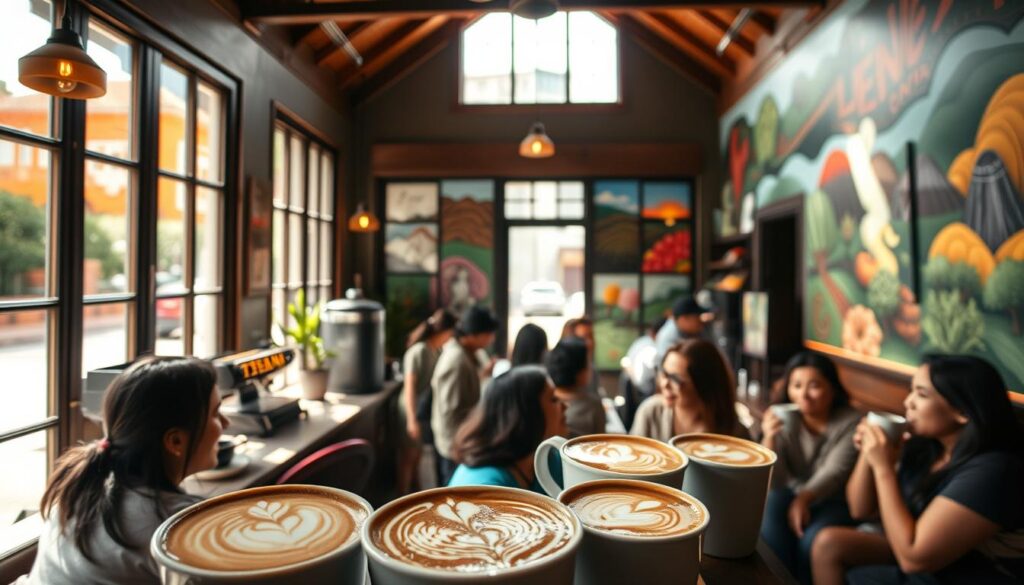
Guatemalan coffee art is known for its bright colors and detailed patterns. These reflect the country’s rich heritage. Traditional Mayan motifs and symbolic colors connect the art to Guatemala’s history.
The color red stands for the sacred earth, and blue for the sky and the divine. These colors are not just pretty but hold deep cultural meaning.
The designs in coffee art mirror Guatemala’s diverse regions. Each region has its own culture and traditions. Coffee artists honor this diversity through their work.
Stories Behind the Designs
Every design in Guatemalan coffee art has a story. These stories come from the country’s history, myths, and legends. For example, the ceiba tree is a symbol of connection between earth and sky in Mayan mythology.
These stories are told through the art itself and the process of making it. Baristas often explain the meaning behind their designs to customers. This helps people appreciate Guatemalan culture more.
The cultural significance of coffee art in Guatemala is huge. It connects the past to the present, showing a sense of continuity and identity. Coffee art is a way for Guatemalans to celebrate their heritage and share it with the world.
Through coffee art, Guatemalans honor their heritage and tell their stories globally. It’s a unique and important part of Guatemala’s culture.
The Role of Local Artists in Coffee Culture
Local artists add a special touch to Guatemala’s coffee scene. They make the culture richer and connect the community to coffee in a deeper way.
Collaborations with Coffee Shops
Local artists team up with coffee shops in big ways. Together, they create unique designs for cups, walls, and the shop’s feel. For example, Café Cool and La Estación have made murals that show off Guatemala’s culture.
These partnerships go beyond just art. Coffee shops also host live music and performances. This mix of art and music makes the coffee shops lively places for both locals and visitors.
Promoting Guatemalan Talent
Coffee shops help local artists by supporting them. They do this through exhibitions, art contests, and workshops. The Antigua Coffee Festival, for instance, has an art contest where artists can show their work. Coffee shops often help sponsor these events.
These efforts help artists and celebrate Guatemala’s culture. The coffee scene becomes a place for artists to share their talents. It brings the community together to enjoy local art.
| Coffee Shop | Collaboration Type | Impact |
|---|---|---|
| Café Cool | Mural Art | Enhanced ambiance, attracted more customers |
| La Estación | Live Music | Increased customer engagement, fostered community |
| Antigua Coffee | Art Exhibitions | Promoted local artists, supported cultural heritage |
The table shows some coffee shop and artist collaborations. It highlights the types of projects and their effects on the coffee culture and community.
Global Appreciation of Guatemalan Coffee Art
Guatemalan coffee art is loved worldwide for its rich flavors and detailed designs. It’s exciting to see how it’s celebrated in coffee competitions and exhibitions. These events highlight the art’s excellence.
Guatemalan coffee art’s presence in international competitions shows its quality and the skill of Guatemalan baristas. These events let coffee artists share their stories and talents. This enriches the global coffee culture.
Coffee Competitions and Exhibitions
Coffee competitions are key in the coffee world, with Guatemalan coffee art leading the way. These events celebrate the skill and creativity in making beautiful coffee drinks. Guatemalan baristas always impress judges with their talents.
Guatemalan coffee art has shone in events like the World Barista Championship and the World Latte Art Championship. These competitions show off baristas’ technical skills and creativity. They also highlight the storytelling in each cup.
Impact on International Coffee Culture
Guatemalan coffee art has a big impact on coffee culture worldwide. It inspires new coffee lovers and baristas with its unique flavors and beauty. It also shows the value of quality and craftsmanship in coffee.
Here’s a table showing how Guatemalan coffee art influences the world:
| Aspect | Description | Global Impact |
|---|---|---|
| Coffee Quality | High-quality Arabica beans | Raises standards for specialty coffee worldwide |
| Barista Skills | Expertise in brewing and latte art | Inspires baristas globally to innovate and improve |
| Cultural Storytelling | Rich cultural heritage and stories behind the coffee | Enhances the coffee experience, making it more personal and engaging |
Guatemalan coffee art’s global popularity promotes Guatemalan culture and shapes international coffee culture. Its unique heritage and innovative spirit keep it at the forefront of the specialty coffee world.
The Future of Coffee Art in Guatemala
The future of Guatemalan coffee art looks promising. There’s a big push for sustainable practices, quality, and showing off cultural identity through coffee. The bond between farmers, artisans, and coffee experts is key to its growth.
Eco-Friendly Innovations
Guatemalan coffee makers are embracing sustainable practices. These efforts cut down on environmental harm and boost coffee quality. Some of these steps include:
- Organic farming that supports biodiversity
- Water-saving methods to reduce waste
- Green packaging to lower carbon emissions
These actions are good for the planet and add to Guatemalan coffee’s unique taste.
The Pursuit of Excellence
Guatemalan coffee pros are always striving for better quality and creativity. This is seen in the careful attention to detail in coffee making, from start to finish. It’s also in the art of presenting coffee.
Key factors in this drive include:
- Trying out new coffee types and ways to process them
- Using the latest roasting tech
- Working together to share knowledge and methods
By focusing on these areas, Guatemalan coffee experts make coffee that’s top-notch. It also highlights the country’s rich cultural background.
How We Can Support Guatemalan Coffee Art
To support Guatemalan coffee art, we need to understand its importance. It’s more than just a drink; it’s a symbol of the country’s culture and heritage. The skill and creativity in coffee designs come from deep-rooted traditions.
Purchasing Fair Trade Coffee
Buying fair trade coffee is a great way to help. It ensures farmers get a fair price for their coffee. This lets them keep their traditional farming ways and make high-quality coffee. Choosing fair trade coffee helps Guatemalan farmers and their communities.
Raising Awareness through Education and Events
Spreading the word about Guatemalan coffee art is also key. By sharing the stories of the coffee and its makers, we grow our appreciation for it. Events and exhibitions can highlight the country’s rich culture. They encourage more people to explore and enjoy it.