
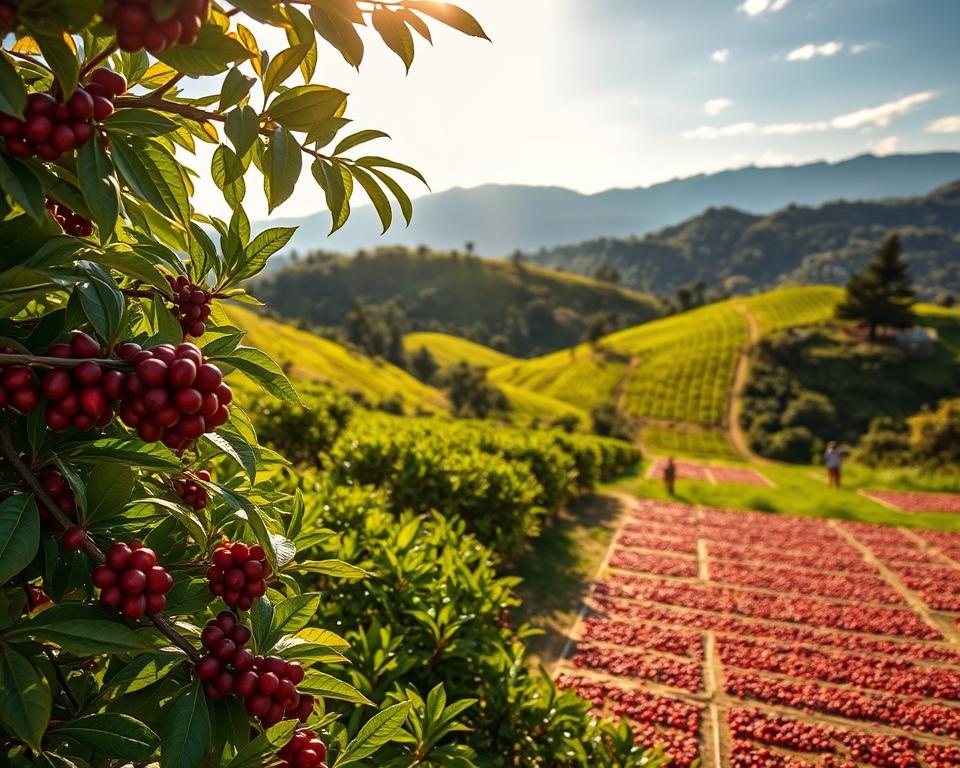
Guatemalan coffee is famous worldwide for its top-notch quality and unique tastes. This is thanks to the country’s special geography and climate.
The rich history and varied coffee-growing areas in Guatemala have made it a top coffee producer. This has earned it a great reputation.
Coffee is a big part of Guatemala’s economy and culture. Different areas in the country offer unique flavors that coffee lovers all over the world adore.
The Origins of Coffee in Guatemala (1750s-1850s)
Coffee arrived in Guatemala in the 1750s. It marked the start of Guatemala’s journey as a top coffee producer. The country’s rich soil and good weather made it perfect for growing coffee.
At first, many doubted coffee farming. But as Guatemalan coffee’s quality and demand rose, so did its appeal to farmers.
By the early 1800s, coffee was a big deal in Guatemala. Many farmers switched from old crops to coffee. New farming methods and technology helped increase production.
The Guatemalan government also supported coffee farming. They offered farmers incentives and improved the country’s infrastructure.
The coffee industry’s growth changed Guatemala’s economy. Coffee exports became a key source of income, helping the country grow economically. The industry also created jobs, both on farms and in related fields.
Despite early challenges like price swings and pests, the coffee industry kept growing. By the mid-1800s, Guatemala was known worldwide for its coffee.
The Golden Age of Guatemalan Coffee (1860s-1920s)
From the 1860s to the 1920s, Guatemalan coffee production reached its peak. This time was called the “Golden Age.” It was marked by the growth of coffee plantations in areas with rich soil and good weather.
The coffee industry in Guatemala grew thanks to better farming methods and more trade. Coffee from Guatemala became famous for its quality. People in Europe and North America loved it.
The coffee boom helped Guatemala’s economy a lot. It led to better roads, schools, and homes. Guatemala became a big name in the global coffee market.
Guatemalan coffee farmers started using new ways to grow coffee. They used shade-grown coffee and better processing methods. These changes made Guatemalan coffee even more popular around the world.
Coffee Production in Guatemala Through the 20th Century – 300 words
The 20th century was a mixed bag for Guatemalan coffee. It brought both chances and hurdles, shaping its fame for top-notch coffee beans.
Guatemalan coffee faced big hurdles, like coffee leaf rust, a disease that hurt coffee crops everywhere. Also, world coffee prices changed a lot, affecting farmers’ lives.
To tackle these issues, Guatemalan coffee makers started new ways to keep their coffee quality high. They grew disease-resistant coffee and improved farming methods.
Politics in Guatemala also changed coffee production. The country’s civil unrest and policy shifts sometimes helped, sometimes hurt coffee farming.
Yet, Guatemalan coffee kept its quality high. Farmers’ hard work and ability to adapt kept Guatemala at the top of coffee production.
Guatemala’s Coffee Growing Regions: A Practical Guide – 350 words
Guatemala is famous for its coffee, thanks to its rich volcanic soil and varied climate. The country has several key coffee-growing areas. These places are known for their coffee flavors, ranging from bright and acidic to smooth and chocolatey.
The main coffee-growing regions in Guatemala are Antigua, Huehuetenango, and Atitlán. Each area has its own climate, soil, and elevation. These factors greatly affect the coffee’s flavor.
Elevation is key in determining the taste and quality of Guatemalan coffee. Coffee grown at higher elevations is more complex. It has a slower maturation process, leading to a more balanced flavor.
The following table provides an overview of the main coffee-growing regions in Guatemala, their characteristics, and typical tasting notes:
| Region | Elevation (meters) | Typical Tasting Notes |
|---|---|---|
| Antigua | 1,500 – 1,700 | Chocolate, caramel, fruit notes |
| Huehuetenango | 1,500 – 2,000 | Bright acidity, citrus, floral notes |
| Atitlán | 1,500 – 1,800 | Balanced acidity, fruit, chocolate notes |
Guatemala’s diverse coffee-growing regions make it a top producer of high-quality coffee. A lot of its coffee is exported worldwide. This boosts Guatemala coffee exports.
Understanding Guatemalan Coffee Varieties – 300 words
Guatemalan coffee is famous for its many varieties. Each one brings its own special taste to the country’s coffee tradition. The coffee-making process in Guatemala has created high-quality beans loved by coffee lovers everywhere.
The main coffee types in Guatemala are Arabica, Bourbon, and Gesha. Arabica is known for its mild taste and is grown in Guatemala’s high places. Bourbon is loved for its balanced acidity and deep flavor.

Gesha is a variety known for its unique floral and citrus tastes. It’s become popular among specialty coffee roasters. These varieties are not just valued for their taste but also for fighting off diseases and growing well.
- Arabica: Known for its mild flavor and grown in high-altitude regions.
- Bourbon: Prized for its balanced acidity and rich flavor profile.
- Gesha: Recognized for its distinctive floral and citrus notes.
The variety of Guatemalan coffee adds a lot to the country’s coffee world. It offers many flavors for different tastes. Knowing about these varieties helps us understand and enjoy Guatemalan coffee’s complexity and quality.
The Coffee Production Process in Guatemala – 350 words
Coffee production in Guatemala combines old techniques with new tech. The country is famous for its top-notch Arabica beans. These beans are processed using the washed or natural method.
The method used in Guatemala changes the coffee’s taste. There are two main ways: the washed process and the natural process.
Washed Process Steps
The washed process removes the coffee cherry’s skin and pulp before fermentation. The steps are:
- Pulping: Taking off the outer skin of the coffee cherry.
- Fermentation: Letting the beans ferment in water tanks.
- Washing: Rinsing the beans to get rid of any leftover pulp.
- Drying: Drying the beans to a moisture level of about 11%.
Natural Process Techniques
The natural process dries the coffee cherries whole, without taking off the skin or pulp. The steps are:
- Drying: Drying the whole coffee cherries in their fruit.
- Hulling: Taking off the dried fruit and skin from the beans.
- Sorting: Sorting the beans by size and density.
Both methods give Guatemalan coffee its unique tastes. The washed process makes the coffee taste cleaner and brighter. The natural process makes it fruitier and sweeter.
The careful coffee processing in Guatemala shows the country’s dedication to quality. The Guatemalan coffee industry keeps growing. It uses new tech while keeping traditional methods to make some of the world’s best coffee.
How to Identify Guatemalan Coffee Flavor Profiles – 300 words
The taste of Guatemalan coffee comes from many things. These include the coffee type, how it’s processed, and its roast level. Guatemala’s coffee farming history is rich. Knowing these factors helps spot Guatemalan coffee’s unique tastes.
Guatemalan coffee is famous for its balanced acidity and full body. It tastes like chocolate, caramel, fruit, and spices. The different places in Guatemala where coffee grows add to its complex flavors.
To figure out Guatemalan coffee’s flavors, look at these points:
- Coffee Variety: Different types, like Bourbon and Gesha, have unique tastes.
- Processing Method: The way it’s processed, like washed or natural, changes its flavor.
- Roast Level: Lighter roasts keep the coffee’s natural acidity and fruitiness. Darker roasts bring out deeper, richer tastes.
When tasting Guatemalan coffee, notice the first flavors, the body, and the finish. You might find:
- Fruit notes, like citrus or berries
- Chocolate and caramel sweetness
- Spices, such as cinnamon or nutmeg
Coffee farming in Guatemala aims for top-quality coffee. By knowing what affects flavor, coffee lovers can enjoy Guatemalan coffee’s variety and complexity.
Sustainable Coffee Farming Practices in Guatemala – 300 words
Guatemalan coffee farms are now using sustainable methods. These practices help the environment and the farmers. Shade-grown coffee is a big part of this. It means coffee grows under trees, cutting down on pesticides and fertilizers.
This method also helps many animals find a home. Organic farming is another growing trend. It avoids harmful chemicals, keeping the soil healthy and saving water.
For more on Guatemalan coffee, check out Guatemala Coffee Origin Report.
Keeping biodiversity is key in Guatemala’s coffee farms. These farms support many plants and animals. This makes the farms better for the environment and the coffee plants.
| Sustainable Practice | Benefits |
|---|---|
| Shade-Grown Coffee | Reduces need for pesticides and fertilizers, provides wildlife habitat |
| Organic Farming | Preserves soil health, conserves water, reduces environmental impact |
| Biodiversity Conservation | Supports diverse ecosystems, enhances ecological value, improves plant health |
These green practices are good for the planet and the farmers. They help farmers grow more coffee, make better coffee, and support a greener coffee industry.
Navigating Challenges in Modern Guatemalan Coffee Production – 300 words
The Guatemalan coffee industry faces many challenges today. Climate change is a big problem, causing temperatures to rise and rain to become unpredictable. This affects how much coffee is grown and its quality.
Coffee diseases, like coffee leaf rust, have also hurt coffee production a lot. Farmers are now growing climate-resilient coffee and using better farming methods. These include growing coffee under shade and taking care of the soil.
Another challenge is market changes. Coffee prices can go up and down based on global demand. To deal with this, Guatemalan coffee makers are selling to more places. They’re focusing on specialty coffee and improving their brand to get better prices.
Guatemalan coffee farmers are very resilient and adaptable. They’re using sustainable practices and new ideas to face these challenges. This helps the industry work towards a stronger future.
Some strategies being used include:
- Adopting climate-resilient coffee varieties
- Improving farming practices through training and certification programs
- Diversifying market channels to reduce dependence on traditional buyers
These steps show the industry’s dedication to making top-quality coffee. They also aim to make sure coffee production in Guatemala is sustainable for the future.
Understanding the Global Market for Guatemalan Coffee – 250 words
Guatemala is a top coffee producer in the world. Its coffee is famous for its quality and unique taste. This makes it very popular in markets all over the globe.
Guatemalan coffee goes to many countries, like the United States, Europe, and Japan. The demand for it keeps growing. This is because of its rich flavor and the country’s focus on sustainable coffee.
- The United States is the largest market for Guatemalan coffee, accounting for a significant portion of the country’s coffee exports.
- European countries, such as Germany and the UK, also import substantial quantities of Guatemalan coffee.
- Japan is another key market, with a growing demand for high-quality, specialty coffee.
The global market is looking for more specialty and sustainable coffee. Guatemala is ahead in these areas. So, Guatemalan coffee producers and exporters are set to keep their country’s top spot in coffee production.
Conclusion: The Future of Guatemalan Coffee – 250 words
The future of Guatemalan coffee is bright, thanks to its rich history and the coffee-making process in Guatemala. Since the 18th century, Guatemalan coffee has grown a lot.
The country’s coffee-growing areas and focus on sustainability make it a top player in the global market. New ways to make coffee in Guatemala will help tackle climate change and market ups and downs.
With more people wanting high-quality, eco-friendly coffee, Guatemalan producers are in a great spot. By focusing on sustainability, quality, and new ideas, Guatemalan coffee can look forward to a bright future.