
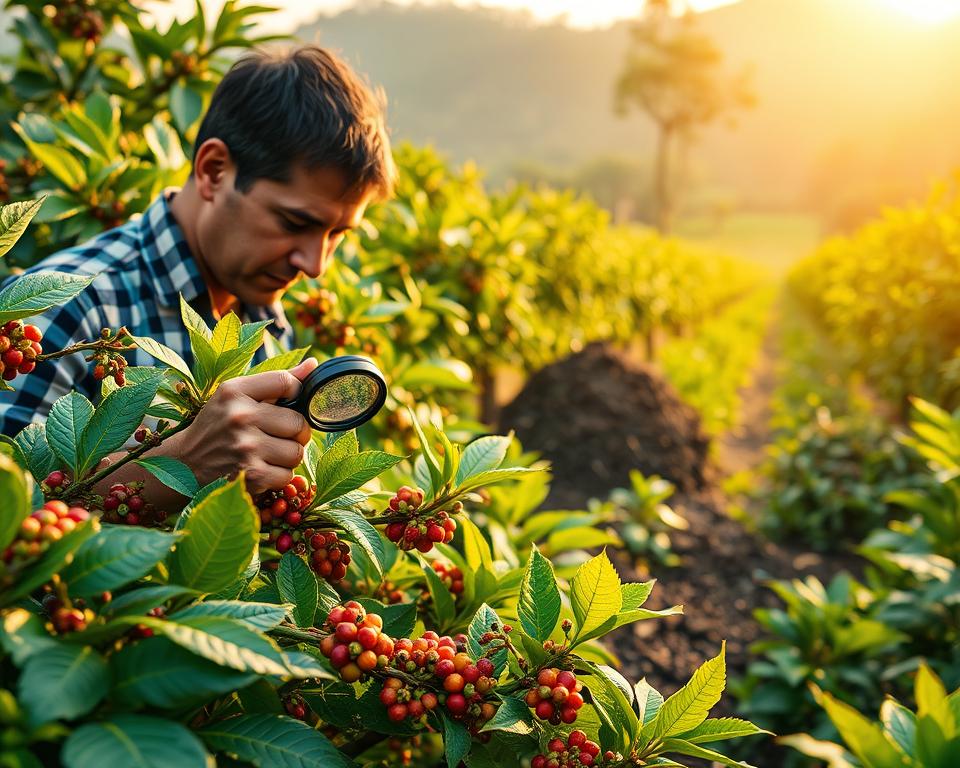
Coffee is a big deal in Guatemala, being a main export. But, coffee farmers struggle with pests and diseases. These problems can cut their yields way down.
Chemical pesticides are often used to fight these issues. But, they can harm the environment and people’s health. Eco-friendly methods are a better choice, helping the planet and coffee farming.
Using organic pest control coffee helps Guatemalan farmers. It lets them keep their coffee quality high while being kinder to the environment.
The Coffee Pest Challenge in Guatemala
Pests and diseases are big threats to coffee in Guatemala. The country’s coffee faces many dangers, like the coffee berry borer, leaf miners, coffee leaf rust, and anthracnose.
The coffee berry borer is very harmful. It damages coffee yields by boring into the berries. You can spot it by looking for small holes in the berries and finding the borer inside.
Leaf Miners and Coffee Leaf Rust Vectors
Leaf miners harm coffee plants by eating leaves. They also spread coffee leaf rust, a fungal disease that weakens the plant.
Coffee Leaf Rust (Roya) Symptoms
Coffee leaf rust, or roya, shows up as orange or yellow spores on leaves. It can cause leaves to fall off and lower coffee yields.
Anthracnose and Other Fungal Threats
Anthracnose is a fungal disease that affects coffee plants. It causes lesions on leaves and fruits. It’s important to manage these diseases to keep coffee crops healthy.
To manage pests and diseases, use natural repellents and non-toxic methods. This protects coffee plants without harming the environment.
- Monitoring for pests and diseases regularly
- Implementing organic pest control methods
- Maintaining healthy soil and plants
Why Choose Organic Pest Control Coffee Methods
Choosing organic pest control for coffee is smart for the planet and the farmer’s wallet. It keeps coffee ecosystems in balance.
Preserving Beneficial Insects and Pollinators
Organic methods protect good bugs and pollinators, key for coffee plant health. Without chemical pesticides, these helpers stay safe, keeping coffee ecosystems strong.
Protecting Water Sources and Soil Health
These methods also safeguard water and soil from chemicals. This keeps soil rich and water clean, helping the environment.
Organic coffee gets a higher price in the market. People are willing to pay more for quality, eco-friendly coffee. This boosts coffee farming’s financial side.
Reduced Input Costs Over Time
As soil health grows, the need for outside help drops. This cuts costs, making organic coffee farming both green and profitable.
Organic pest control in coffee farming means a better environment, better crops, and more money for farmers.
Building Healthy Coffee Plants for Natural Resistance
Healthy coffee plants are key to eco-friendly pest control. By keeping plants healthy, farmers use fewer pesticides.
Traditional vs. Hybrid Varieties for Guatemala
Picking the right coffee variety is crucial. Traditional types, like Arabica, fight off pests and diseases better than hybrids.
- Traditional varieties fit local conditions well.
- Hybrids might grow faster but are more disease-prone.
Planting Strategies for Disease Prevention
How plants are planted is important for staying disease-free. Planting them far apart helps air move, cutting down on fungal diseases.
Using organic fertilizers keeps plants healthy. Fertilizing during the rainy season helps plants absorb nutrients better.
- Fertilize at the start of the rainy season.
- Choose compost or manure for rich nutrients.
Pruning Techniques for Airflow and Health
Pruning boosts airflow and gets rid of sick or damaged parts. Regular pruning keeps coffee plants healthy.
- Take out any diseased or damaged branches.
- Prune to let sunlight in and improve airflow.
By using these methods, coffee farmers in Guatemala can grow strong, pest-resistant plants. This supports green coffee pest control.
Biological Control Strategies for Coffee Pests
Biological control strategies are a great way to manage coffee pests without using harmful chemicals. They use living things to control pests, which is good for the environment and sustainable.
One good strategy is to use parasitic wasps. These wasps eat coffee pests, keeping their numbers down.
Introducing and Supporting Parasitic Wasps
Parasitic wasps are natural enemies of coffee pests. Coffee farmers can help these wasps by planting diverse plants. This attracts and supports the wasps.
Creating Habitats for Predatory Beetles
Predatory beetles also help control pests. Farmers can create homes for these beetles by keeping the area diverse and full of life.
Beauveria bassiana is a fungus that fights the coffee berry borer. This fungus is safe for the environment and helps control the borer.
Bacillus-Based Products for Caterpillar Control
Bacillus-based products are good for fighting caterpillars. These products have bacteria that kill caterpillars, offering a safe way to manage pests.
| Biological Control Method | Target Pest | Benefits |
|---|---|---|
| Parasitic Wasps | Various Coffee Pests | Effective pest control, environmentally friendly |
| Predatory Beetles | Coffee Pests | Sustainable, supports biodiversity |
| Beauveria Bassiana | Coffee Berry Borer | Non-toxic, targeted control |
| Bacillus-Based Products | Caterpillars | Effective, natural pest repellent |
By using these methods, coffee farmers in Guatemala can manage pests in a safe and sustainable way. This approach fits well with the idea of using natural and non-toxic methods.
Natural Fungus Management in Coffee Plantations
Fungal diseases are a big problem for coffee crops. Coffee farmers in Guatemala and around the world are using safe pest control products. This helps manage fungal infections without harming the environment.
One important part of managing fungus is using organic fungicides correctly.
Proper Mixing and Application Methods
Using the right amount and applying it at the best time makes these treatments work better.
Timing Applications for Maximum Effectiveness
When you apply fungicides is key. Applying during the dry season helps stop fungal spores from spreading. Also, treating early in an infection can stop it from getting worse.
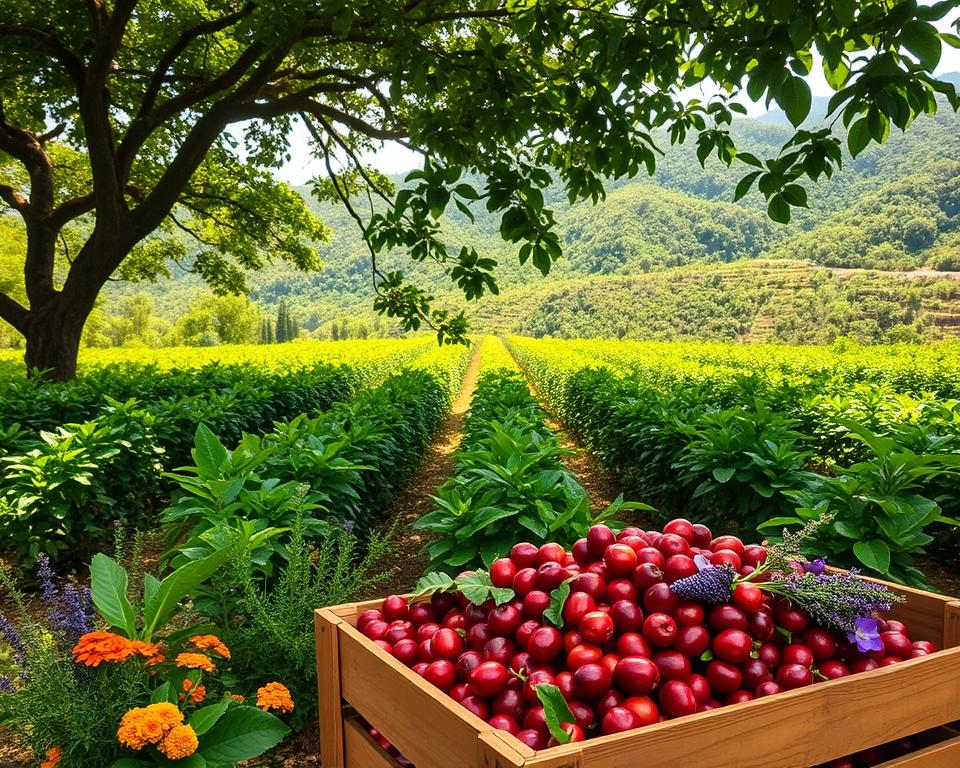
Some natural extracts are good at fighting fungal diseases in coffee plantations.
Garlic and Chili Pepper Extracts
These extracts are known for fighting fungi. Garlic extract, in particular, stops many fungal pathogens from growing.
Neem Oil and Citrus Seed Extracts
Neem oil is a strong natural fungicide for many fungal infections. Citrus seed extracts are also a natural way to fight fungal diseases.
| Natural Fungicide | Application Method | Effectiveness |
|---|---|---|
| Garlic Extract | Spray Application | High |
| Neem Oil | Foliar Spray | Very High |
| Citrus Seed Extract | Soil Drench | Moderate |
By using these natural methods, coffee farmers can protect their crops. This also helps make coffee production more sustainable. Organic pest control coffee methods not only fight fungal diseases but also make the ecosystem healthier.
Creating Your Own Organic Pest Control Coffee Sprays
Making your own organic pest control sprays can change the game for coffee plantations. Guatemalan coffee farmers can manage pests naturally without chemical pesticides. They use natural ingredients and homemade recipes.
Cinnamon and clove oil are great for pest control. They have natural properties that fight off common pests in coffee plants.
Cinnamon and Clove Oil Formulations
To make a strong pest control spray, mix cinnamon and clove oil. Start with 2 tablespoons of cinnamon powder in 1 liter of water. Add 5 drops of clove oil. Stir well and let it sit for 24 hours before use.
Application Techniques and Safety Precautions
When using these sprays, follow the right steps and safety tips. Spray in the early morning or late evening to avoid sunlight. Wear gloves and a mask to protect yourself from irritation and inhaling the spray.
Coffee Pulp Recycling for Pest Control
Coffee pulp can be recycled to keep pests away. Compost it and use it to enrich the soil. This improves soil health and lowers pest pressure.
Herbal Infusions from Native Guatemalan Plants
Guatemala is full of plants that help fight pests. Neem, chili peppers, and garlic can be used to make sprays. These sprays can tackle pests like aphids and coffee berry borers.
Using these green methods, Guatemalan farmers can protect their coffee plantations. They help the environment and keep their coffee healthy and productive.
Shade Management and Intercropping Systems
Organic coffee beans for pest control often rely on shade management. Shade protects coffee plants from too much sun. It also helps create a diverse environment that naturally fights pests.
Native vs. Introduced Shade Species
It’s important to choose between native and introduced shade species. Native species help local biodiversity and need less care. Introduced species might become invasive. A balanced choice that respects the local ecosystem is key.
Canopy Management Techniques
Effective canopy management involves pruning and thinning shade trees. This helps control the microclimate around coffee plants. It can also lower humidity, reducing fungal diseases.
Planting aromatic herbs like lemongrass or basil among coffee rows can repel pests. These herbs boost biodiversity and help with eco-friendly pest control.
Strategic Placement Within Coffee Rows
Placing shade trees and herbs strategically in coffee rows maximizes their benefits. For example, taller shade trees on the north side prevent coffee plants from being shaded during important sunlight hours.
Integrating shade management with intercropping systems makes coffee farms more resilient and diverse. This method helps control pests and improves the health and productivity of coffee plantations.
Soil Health as a Foundation for Pest Resistance
A strong soil ecosystem is key for coffee plants to fight off pests and diseases. Healthy soil, full of good microbes and organic matter, helps coffee plants grow strong. This makes them better at fighting off pests.
Composting Methods for Small and Large Farms
Composting is vital for better soil. Small farms can use simple composting with farm waste. Big farms can use more advanced methods. Both ways make the soil more fertile and better structured.
| Composting Method | Farm Size | Benefits |
|---|---|---|
| Simple Composting | Small | Low cost, easy to implement |
| Mechanized Composting | Large | High volume, efficient processing |
Cover Cropping Between Coffee Rows
Cover crops between coffee rows help fight pests and diseases. They also make the soil better and add more life to it. Legumes, for example, add nitrogen to the soil, helping coffee plants grow.
Mycorrhizal fungi work with coffee roots to get more nutrients. This makes the plants healthier and less dependent on chemical fertilizers.
Compost Teas and Biofertilizers
Compost teas and biofertilizers add good microbes to the soil. This creates a healthy environment for coffee plants. It helps them stay strong against pests.
By improving soil health, coffee farms can use green pest control methods. This reduces harm to the environment from harmful chemicals.
Implementing Integrated Pest Management for Coffee Farms
Effective integrated pest management (IPM) is key for sustainable coffee in Guatemala. It uses a mix of controls to manage pests well. This includes physical, cultural, biological, and chemical methods.
Monitoring pest populations is a big part of IPM. Farmers can do this by setting up insect traps and sampling methods. These help farmers understand the pests on their farm.
Setting Up Insect Traps and Sampling Methods
- Use sticky traps to catch flying insects.
- Implement pitfall traps for pests that live on the ground.
- Do regular sampling to keep track of pests.
Keeping records of pest populations is also important. By keeping detailed records, farmers can spot patterns in pest numbers over time.
Record Keeping for Pest Populations
- Keep a log of pest sightings and counts.
- Record the date, time, and place of pest observations.
- Use this data to make better management decisions.
Knowing economic thresholds for treatment is crucial. It helps farmers know when to take action against pests. This way, they can avoid using too much pesticide.
Economic Thresholds for Treatment
- Find out the pest population level that needs control action.
- Think about the potential damage and economic impact.
- Choose the right control method based on the threshold.
Finally, selecting the right control method for each situation is vital for effective IPM. Farmers need to pick from various options, like cultural, biological, and chemical controls.
Selecting the Right Control Method for Each Situation
- Think about the type of pest and its life cycle.
- Look at the environmental impact of different control methods.
- Pick the most effective and sustainable control method.
Seasonal Calendar for Organic Coffee Protection
Protecting organic coffee in Guatemala needs a deep understanding of pests and diseases by season. By using a seasonal calendar, farmers can fight pests and diseases on time. This way, they use fewer chemical pesticides.
Fungal Disease Prevention During High Humidity
High humidity can cause fungal diseases to harm coffee crops. To prevent this, farmers can prune plants to improve air flow. They also remove sick plants and use eco-friendly fungicides.
Insect Management During Peak Activity Periods
Knowing when insects are most active is key to controlling them. Farmers can introduce helpful insects, use organic pesticides, and keep the farm clean.
Soil Preparation and Preventative Treatments
Healthy soil helps plants fight pests better. Farmers can improve soil with organic materials and use treatments to keep plants strong.
Pruning and Farm Sanitation Practices
Regular pruning and keeping the farm clean can stop pests and diseases. By removing sick plants and debris, farmers can stop diseases from spreading.
| Season | Pest/Disease | Management Strategy |
|---|---|---|
| High Humidity | Fungal Diseases | Improve air circulation, remove infected plants |
| Peak Insect Activity | Coffee Pests | Introduce beneficial insects, organic insecticides |
| Pre-Season | Soil Health | Soil preparation with organic matter |
Conclusion: Embracing Sustainable Coffee Production
Coffee production is moving towards more sustainable ways. This is because we need to protect our environment and keep coffee farming alive for the future. By using sustainable pest control solutions, farmers can cut down on chemical pesticides. This helps keep their ecosystems healthy.
Organic coffee beans are becoming a hit for pest control. They offer a natural and effective way to fight pests and diseases. This method is good for the environment and helps make coffee culture healthier and more sustainable worldwide.
By using integrated pest management and natural predators, farmers can boost their yields. They can also lessen their environmental impact. As more people want sustainable coffee, it’s key for farmers to adopt these practices for coffee’s future.