
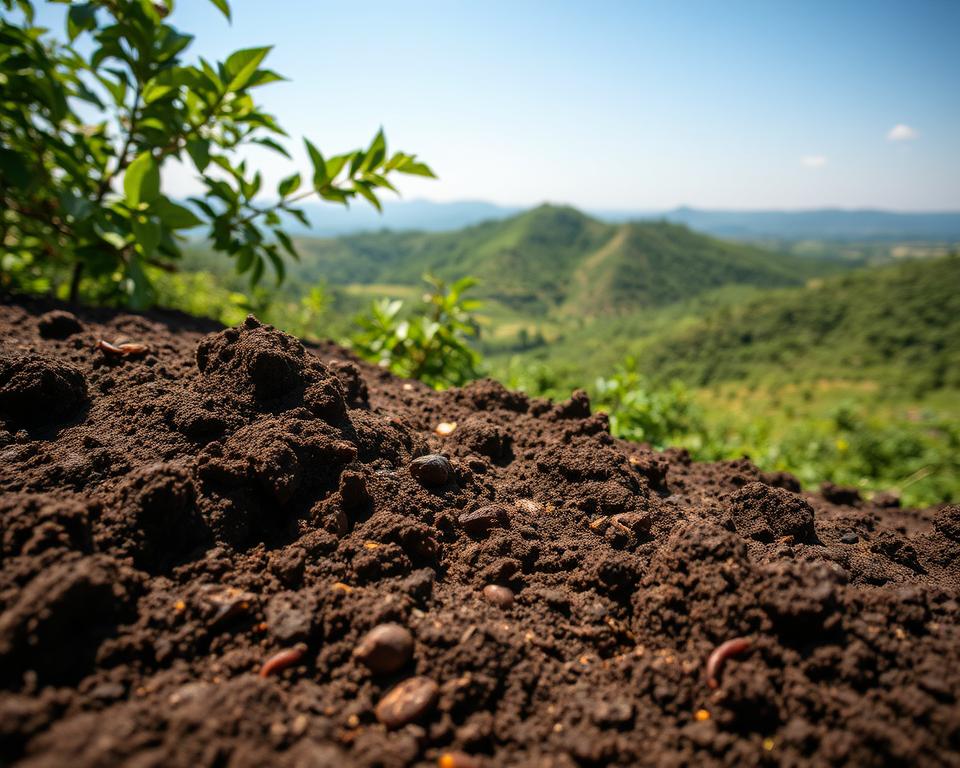
Guatemala is famous for its coffee, with many places perfect for growing top-notch coffee. Making the right soil is key for growing coffee well.
Growing coffee at high places has its ups and downs. The right soil can make a big difference in taste and quality. Knowing the best soil conditions is important for farmers and coffee lovers.
This article will look into the main steps for making the perfect soil for coffee. We’ll share the best ways and methods for getting the soil just right.
The Guatemalan High-Altitude Coffee Advantage
Guatemala’s coffee is special because of its high altitude, rich soil, and unique climate. These factors make its coffee beans stand out. They have complex flavors that come from the country’s varied land.
Coffee farms in Guatemala sit between 1,500 to 2,000 meters high. At these heights, coffee cherries grow slower. This makes the beans denser and more flavorful.
The climate in Guatemala also affects the coffee’s taste. The dry and wet seasons add to the coffee’s unique flavor. This makes Guatemalan coffee highly sought after by coffee lovers.
In summary, Guatemalan coffee is known for its quality and taste. It’s a top choice for those who love specialty coffee.
Mapping Guatemala’s Premier Coffee Growing Regions
Guatemala is famous for its high-quality coffee. Its rich volcanic soil and varied climate make it perfect for coffee. The country has several coffee-growing regions, each with its own special features.
Antigua, Huehuetenango, and Atitlán are the top spots for coffee in Guatemala. They have the right soil, climate, and rain for premium coffee cultivation.
- Antigua: Known for its balanced coffee with notes of chocolate and spice.
- Huehuetenango: Produces coffee with bright acidity and flavors of citrus and berries.
- Atitlán: Characterized by its coffee with complex flavors, including notes of fruit and wine.
Farmers in these regions focus on soil health, water, and shade. They use sustainable farming to keep their coffee and land healthy.
Guatemala’s coffee regions offer a wide range of flavors. This makes Guatemalan coffee famous around the world. By knowing each region’s unique traits, farmers and roasters can create top-notch coffee that highlights Guatemala’s best.
Evaluating Your High Altitude Coffee Soil
Checking your soil quality is key to better coffee at high altitudes. Soil at these heights can really affect coffee quality and how much you get. Knowing what your soil is like helps you make smart choices about how to care for it.
Coffee farms at high altitudes, like those in Guatemala, have special soil problems. The high altitude changes the soil’s nutrients, how water drains, and the health of tiny living things in the soil.
DIY Testing Methods for Small Producers
Small coffee farmers can use simple tests to check their soil. These include:
- Looking at the soil’s color and feel
- Testing how well water drains by digging a small hole
- Doing a quick pH test with things you might have at home
- Feeling the soil to see what it’s made of
These tests can give you important info about your soil’s health and any problems it might have.
Professional Lab Analysis Options
If you want a deeper look, getting your soil tested by a lab is a good idea. Labs can do detailed tests, like:
- Checking the levels of important nutrients
- Measuring the soil’s pH level
- Looking at the soil’s texture and structure
- Testing how active the tiny life in the soil is
Lab tests can help you figure out exactly what your soil needs. This way, you can plan how to make it better for growing coffee.
By checking your high-altitude coffee soil, you’re on your way to improving your coffee. You can use simple tests or get a lab to do a detailed analysis. Either way, knowing your soil is crucial for growing great coffee.
Essential Soil Requirements for Specialty Coffee Production
The nutritional profile of the soil is key to the flavor and quality of specialty coffee. Coffee farmers in Guatemala must understand and manage soil nutrients well. This is crucial for producing high-quality coffee.
Nitrogen, Phosphorus, and Potassium Balance
A mix of nitrogen (N), phosphorus (P), and potassium (K) is vital for coffee plants. Nitrogen helps with leaf growth. Phosphorus supports root development and flowering. Potassium boosts overall plant health and disease resistance.
| Nutrient | Function | Impact on Coffee |
|---|---|---|
| Nitrogen | Promotes leaf growth | Enhances photosynthesis, leading to healthier plants |
| Phosphorus | Supports root development and flowering | Improves plant’s ability to absorb nutrients and produce flowers |
| Potassium | Maintains overall plant health | Boosts resistance to disease and environmental stress |
Micronutrients for Flavor Development
Micronutrients like magnesium, calcium, and sulfur are also important for coffee flavor. Magnesium is key for photosynthesis and fruit production. Calcium helps in cell wall development. Sulfur is involved in flavor and aroma synthesis.

For organic and sustainable coffee farming, a balanced nutrient profile in the soil is essential. This ensures healthy and productive coffee plants. It also contributes to the coffee’s rich flavor and quality.
Step-by-Step Guide to Preparing High Altitude Coffee Soil
To grow top-notch coffee at high places, you need a clear plan for soil prep. This means knowing what high-altitude coffee needs and how to make the soil better for it.
Composting Methods for Coffee Farms
Composting is key for getting high-altitude coffee soil ready. It turns organic stuff into a nutrient-rich mix that coffee plants love.
- Collect organic waste from the farm, including coffee cherry husks and other plant materials.
- Layer the organic materials in a compost pile, ensuring a mix of “green” and “brown” materials.
- Maintain the compost pile by regularly turning it and monitoring its moisture levels.
Good composting boosts soil health, making it better for coffee growth and taste.
Incorporating Green Manures
Green manures are special crops that help the soil. For coffee farms at high altitudes, legumes are great because they fix nitrogen.
| Green Manure Crop | Nitrogen Fixing Ability | Impact on Soil Structure |
|---|---|---|
| Legume (e.g., beans) | High | Improves soil porosity |
| Grasses (e.g., rye) | Moderate | Enhances soil aggregation |
| Brassicas (e.g., mustard) | Low | Breaks up compacted soil |
Adding green manures to the soil makes it more fertile and better for coffee.
By composting and using green manures, you can make your high-altitude coffee soil better. This will improve your coffee’s quality and yield.
Sustainable Soil Management for Organic Coffee Farming
Sustainable soil management is key for organic coffee farming in high places. It uses various methods to keep soil healthy and boost farm productivity.
Preventing erosion is a big deal, especially in high-altitude areas. Soil can easily get washed or blown away.
Terracing Techniques
Terracing is a great way to fight soil erosion on sloping lands. It creates flat areas on slopes. This helps:
- Reduce soil runoff
- Keep more water in the soil
- Make the soil more stable
Contour planting is another smart move. It plants coffee trees along slope lines, not up and down. This:
- Reduces soil erosion by slowing water flow
- Keeps soil moisture better
- Makes soil temperature more even
By using these methods, organic coffee farmers can make their farms healthier and more productive. They also help the environment.
In short, terracing and contour planting are vital for organic coffee farming in high places. They ensure the farm’s long-term success.
Seasonal Soil Maintenance Calendar for Premium Coffee Cultivation
Keeping the soil healthy is key for growing top-notch coffee, especially in places like Guatemala. A seasonal soil care plan is essential to keep the soil in perfect condition all year.
Mulching Strategies
Mulching helps keep the soil moist and weeds away in coffee farms. Using organic mulches like coffee cherry husks or parchment is good for the environment and works well.
- Apply a 5-10 cm layer of mulch around coffee plants.
- Replenish mulch as needed, typically every 2-3 months.
- Keep the mulch a few inches away from the plant stem to prevent rot.
Irrigation Considerations
Right watering is crucial for coffee, especially when it’s dry. Adjust the watering schedule based on weather and soil moisture.
| Season | Irrigation Frequency | Mulch Replenishment |
|---|---|---|
| Dry Season | Every 7-10 days | Every 2 months |
| Rainy Season | As needed | Every 3 months |
| Transition Period | Every 10-14 days | Every 2-3 months |
By sticking to this seasonal care plan, Guatemalan coffee farmers can improve their growing methods. This leads to better coffee quality.
Good soil care through mulching and smart watering leads to healthy coffee plants. It also supports sustainable coffee farming.
Overcoming Common Soil Challenges in Elevated Terrain Coffee Production
The rugged terrain of mountain-grown coffee regions presents distinct soil-related hurdles. Coffee farmers in these areas face challenges such as soil erosion and nutrient deficiencies. These can significantly impact the quality and yield of their coffee.
Soil erosion is a major concern in elevated terrains. This is due to the steep slopes and heavy rainfall common in these regions. To mitigate this, farmers can implement terracing and contour planting.
These techniques help to reduce soil runoff and retain moisture. Nutrient deficiencies are another challenge. The high altitude and unique soil composition can lead to deficiencies in essential nutrients like nitrogen, phosphorus, and potassium.
Regular soil testing is crucial to identify these deficiencies. Based on the test results, farmers can apply targeted fertilizers. This addresses the specific needs of their soil.
Strategies for Soil Management
- Implementing cover crops to protect the soil and enhance its fertility.
- Using organic mulch to retain moisture and suppress weeds.
- Adopting crop rotation practices to maintain soil health.
By understanding the altitude impact on coffee beans and adopting these strategies, coffee farmers in elevated terrains can overcome common soil challenges. This not only ensures the sustainability of their farms but also contributes to the production of high-quality, mountain-grown coffee.
Conclusion: Cultivating Excellence Through Proper Soil Management
Effective soil management is key for top-notch specialty coffee beans in high-altitude areas. Coffee farmers in Guatemala can boost their crop quality and yield by understanding and using the best soil conditions.
High-altitude places like the Guatemalan highlands are great for coffee. Their volcanic soils are full of organic matter and minerals. Farmers need to manage their soil well to give their coffee plants the best chance to grow.
By following the tips in this article, coffee makers can tackle soil problems and get their soil just right. For more on high-altitude Arabica cherries, check out General Warfield’s Coffee to see why high-altitude coffee is special.
Proper soil care is essential for making top-quality specialty coffee. It helps farmers grow coffee that meets the high standards of coffee lovers around the world.