
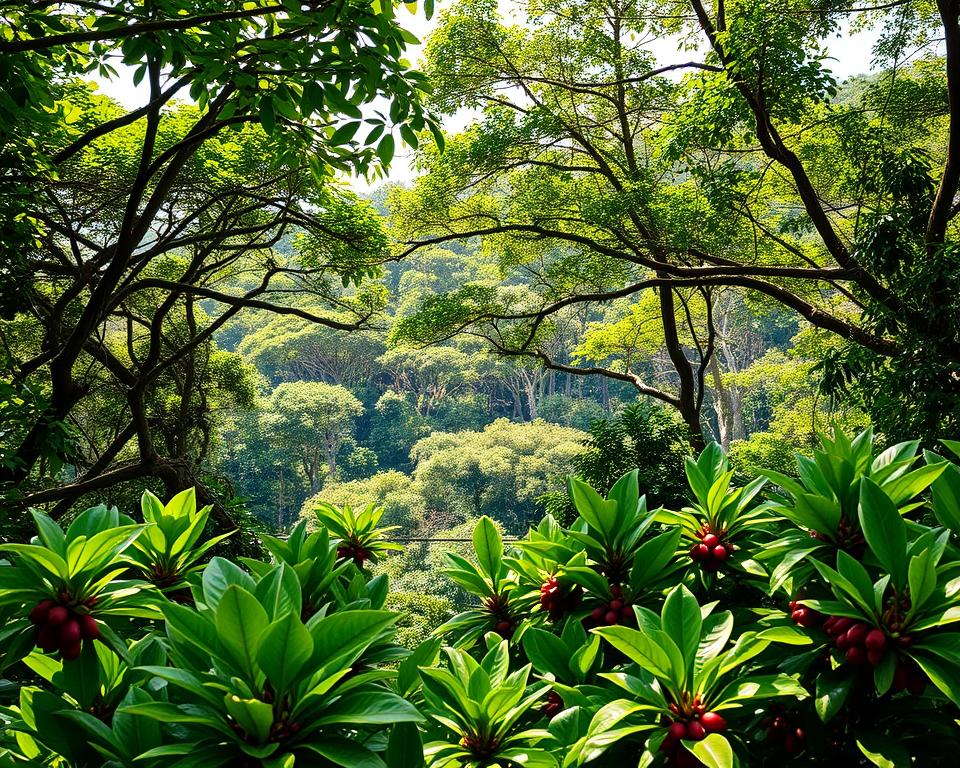
In Guatemala, a country known for its rich biodiversity and top-notch coffee, a new way of growing coffee is becoming popular. This method mixes coffee plants with native trees, creating a balance in nature and helping local farmers.
Coffee farmers in Guatemala are using sustainable agroforestry to grow more coffee while keeping the environment safe. This method helps save native trees and makes the coffee industry stronger.
When coffee and native trees work together, they make a better ecosystem. This helps both the environment and the people living there. As more people want coffee that’s good for the planet, Guatemala is ready to meet that need.
The Principles of Agroforestry Coffee Production in Guatemala
In Guatemala, growing coffee among native trees follows key principles. These principles aim to keep the ecosystem in balance. They also boost biodiversity and help the ecosystem’s health.
Agroforestry in Guatemala mixes native trees with coffee plants. This method mirrors nature, offering shade for coffee and homes for many species. It makes farming more diverse and strong.
Organic farming is key in Guatemala’s agroforestry. Farmers skip synthetic fertilizers and pesticides. This cuts down on harm to the environment and makes great coffee. It also keeps the soil healthy and uses water wisely.
Biodiversity is another big deal in coffee farming here. Keeping many tree species around helps create a balanced ecosystem. This balance is vital for coffee farming’s long-term success.
To wrap it up, agroforestry coffee in Guatemala focuses on balance, organic farming, and biodiversity. These values help the environment and make top-notch coffee.
Environmental Benefits of Growing Coffee Under Native Trees
In Guatemala, growing coffee under native trees is a traditional method. It supports biodiversity and soil health. This method, called agroforestry, preserves the local ecosystem and improves coffee quality.
The benefits of agroforestry coffee production are many. Some key advantages include:
- Soil conservation through the shade provided by native trees, which reduces soil erosion.
- Enhanced biodiversity, as the native trees provide habitat for a variety of flora and fauna.
- Improved water cycling, with trees helping to maintain soil moisture and reduce the need for irrigation.
Research shows that integrating coffee with native trees makes farming systems more resilient. For more information, check out studies on sustainable agriculture, like those in scientific publications.
Guatemalan coffee farmers can help the environment by using agroforestry. This method keeps farms productive while supporting local ecosystems. It makes coffee production more sustainable overall.
Assessing Your Land for Agroforestry Potential
The first step in creating a sustainable coffee farm through agroforestry is to evaluate your land’s potential. This involves assessing various factors that can influence the success of integrating coffee with native trees.
Key factors to consider include climate, soil type, and existing biodiversity. Understanding these elements will help determine whether your land is suitable for agroforestry systems.
| Factor | Ideal Condition | Assessment Method |
|---|---|---|
| Climate | Mild temperatures, adequate rainfall | Review historical climate data |
| Soil Type | Well-drained, rich in organic matter | Conduct soil tests |
| Biodiversity | Presence of native tree species | Survey existing flora and fauna |
By carefully assessing these factors, you can determine the agroforestry potential of your land. This will help you make informed decisions about implementing sustainable coffee production practices.
Selecting Compatible Native Tree Species
Choosing the right native tree species is crucial in coffee agroforestry. It affects both the environment and the farm’s income. The correct trees offer shade, improve soil, and add variety to farm products.
Inga Species and Their Benefits
Inga species are popular in coffee agroforestry. They grow quickly and fix nitrogen in the soil. This helps coffee plants get the right amount of sunlight and keeps the soil healthy.
Native Hardwoods for Long-Term Value
Native hardwoods like cedar and mahogany are valuable for timber. They can be part of coffee agroforestry systems. This adds another way for farmers to make money.
| Tree Species | Benefits | Growth Rate |
|---|---|---|
| Inga spp. | Nitrogen fixation, shade | Fast |
| Cedar | Timber production | Moderate |
| Mahogany | Timber production, shade | Slow |
By picking the right native tree species, coffee farmers in Guatemala can make their agroforestry systems more sustainable and profitable.
Designing Your Agroforestry Coffee Production System
Creating an agroforestry coffee system needs careful planning. It’s about making a diverse and strong ecosystem. You must think about tree density, coffee variety, and how they’re arranged.
It’s key to find the right balance between coffee and trees. Studies say 15-25 trees per hectare is best. This amount of shade is good for coffee and keeps the ecosystem healthy.
Choosing the right coffee varieties is also important. Look for ones that do well in the shade. ‘Bourbon’ and ‘Maragogype’ are good choices.
| Coffee Variety | Shade Tolerance | Yield Potential |
|---|---|---|
| Bourbon | High | Moderate |
| Maragogype | High | Low |
| Caturra | Moderate | High |
How you arrange trees and coffee plants matters too. A random or clustered layout helps create a natural feel. It also boosts biodiversity.
By designing your agroforestry system well, you make a sustainable ecosystem. This system is good for your coffee and the environment. It shows how shade-grown coffee can be sustainable.
Establishing Coffee Plants in Agroforestry Systems
To grow coffee plants in agroforestry systems, several steps are important. You need to pick the right coffee varieties, manage the nursery well, use the right planting methods, and give them the first care they need.
Managing the nursery is key. It means picking healthy coffee seedlings and making sure they get used to the shade. Research shows that coffee grown in the shade is good for the environment.
- Choose coffee varieties that are suitable for shade and local climate conditions.
- Ensure proper nursery management to produce healthy seedlings.
- Plant coffee seedlings during the optimal planting season.
Initial care is also important. This includes mulching, watering, and watching out for pests and diseases. 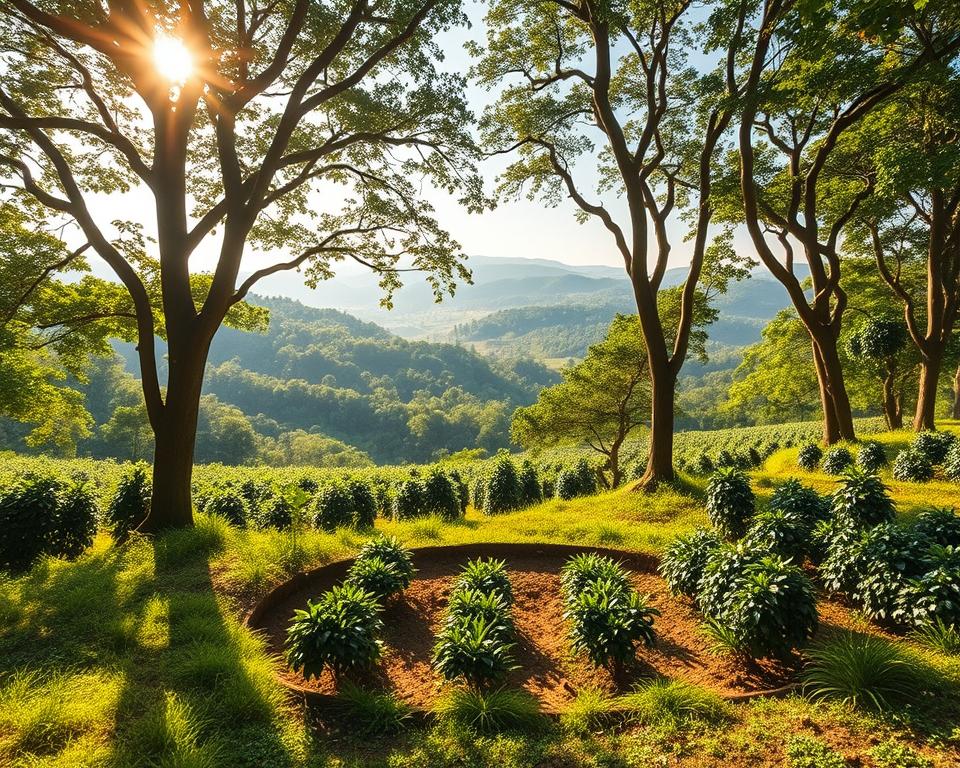
By following these steps, farmers in Guatemala can grow coffee plants in agroforestry systems. This helps in sustainable coffee production and organic farming.
Managing Trees for Optimal Coffee Growth
Agroforestry coffee management is all about finding the right balance. This balance is key in Guatemala’s varied landscapes. It helps keep coffee quality and quantity high.
Pruning trees is a big part of this balance. By pruning trees to the right density, coffee plants get enough sunlight. This also keeps the agroforestry system healthy. Plus, it helps get rid of sick or broken branches to stop diseases from spreading.
Keeping trees healthy is also important. Farmers need to watch for pests and diseases. This stops them from harming both trees and coffee plants. Using methods that don’t rely on chemicals helps keep farming organic.
The good things about managing trees in agroforestry systems are many:
- It makes coffee taste better because it grows in the best conditions.
- It helps keep native tree species alive, which is good for biodiversity.
- It also helps the environment by keeping soil healthy and storing carbon.
By using these agroforestry methods, coffee farmers in Guatemala can grow more coffee. They also help make coffee farming better for the planet.
Organic Pest and Disease Management
Effective organic pest and disease management is key for agroforestry coffee systems in Guatemala. Farmers use the system’s biodiversity to cut down on chemical pesticides. This keeps the ecosystem healthy.
Biodiversity in coffee production helps prevent pests and diseases. Native trees offer shade, which can lower pest and disease levels. They also support beneficial insects and microorganisms.
Organic coffee farming uses beneficial insects and natural fungicides. This makes coffee plants more resilient. For instance, introducing predators that eat common pests can lessen the need for chemicals.
Some organic pest and disease management strategies include:
- Using compost to improve soil health and plant resilience
- Planting a diverse range of coffee varieties to reduce disease susceptibility
- Implementing integrated pest management (IPM) practices that combine physical, cultural, and biological controls
Guatemalan coffee farmers can make their operations more sustainable by using these organic practices. They also help preserve biodiversity in coffee production.
Soil Fertility in Agroforestry Coffee Systems
The health of the soil is key to the success of coffee grown in agroforestry. Soil fertility affects coffee yield and quality. It’s a big deal for farmers to manage.
To keep or boost soil fertility, farmers use organic amendments, mulching, and cover cropping. These methods increase soil nutrients and make ecosystems more diverse and strong.
Organic amendments like compost or manure add vital nutrients. Mulching keeps moisture in and weeds out. Cover cropping fixes nitrogen and makes soil better.
| Strategy | Benefits | Implementation |
|---|---|---|
| Organic Amendments | Enhances nutrient content, improves soil biota | Apply compost or manure during the rainy season |
| Mulching | Retains moisture, suppresses weeds | Use organic materials like leaves or straw around coffee plants |
| Cover Cropping | Fixes nitrogen, improves soil structure | Plant legumes between coffee rows |
By using these methods, farmers can make their soil better. This leads to more sustainable and eco-friendly coffee in agroforestry systems.
Harvesting Quality Coffee from Agroforestry Plantations
Coffee farmers must be very careful when harvesting to get the best taste. They start by picking ripe coffee cherries and then dry them.
First, farmers pick the right coffee cherries. They look for cherries that are bright red and ripe. This ensures the coffee tastes great.
- Inspect the coffee cherries regularly for ripeness.
- Use appropriate tools to avoid damaging the cherries or the trees.
- Pick cherries at the peak of ripeness for optimal flavor.
After picking, processing the cherries is key. There are many ways to do this, like washed, natural, and honey processing. The method used can change how the coffee tastes.
Drying is also very important. Coffee beans need to be dried to about 11% moisture to stay fresh. This can be done by sun drying on concrete or raised beds.
Good harvesting and processing are essential for great coffee. They make shade-grown coffee cultivation successful.
Marketing and Certifying Your Agroforestry Coffee
As more people want coffee that’s good for the planet, knowing how to market and certify your coffee is key. Good marketing and certification can really boost your coffee’s value and appeal.
Certifications like organic and fair-trade give you an edge. They show your coffee meets high standards for sustainability and quality. Plus, they attract buyers who are willing to pay more for eco-friendly products.
| Certification Type | Benefits | Target Market |
|---|---|---|
| Organic | Ensures no use of synthetic fertilizers or pesticides, enhancing environmental sustainability. | Consumers prioritizing environmental sustainability. |
| Fair-Trade | Promises fair prices to farmers, improving livelihoods and community development. | Consumers concerned with social equity and fair labor practices. |
| Shade-Grown | Encourages biodiversity and sustainable farming practices. | Environmentally conscious consumers and specialty coffee markets. |
By using these certifications, agroforestry coffee makers can reach special markets. They can also get better prices for their eco-friendly coffee.
Conclusion: Cultivating a Sustainable Coffee Future
Agroforestry coffee production in Guatemala is a bright spot for a greener coffee industry. It mixes coffee plants with native trees. This way, farmers boost biodiversity and keep ecosystems healthy.
This method does more than just help the planet. It also makes life better for coffee farmers. As more people want eco-friendly coffee, agroforestry is ready to answer.
By using agroforestry, Guatemala’s coffee can be both good for the planet and top-notch. This green way of making coffee helps farmers and protects the environment. It’s a win-win for everyone involved.